
Results
-
 £60.99
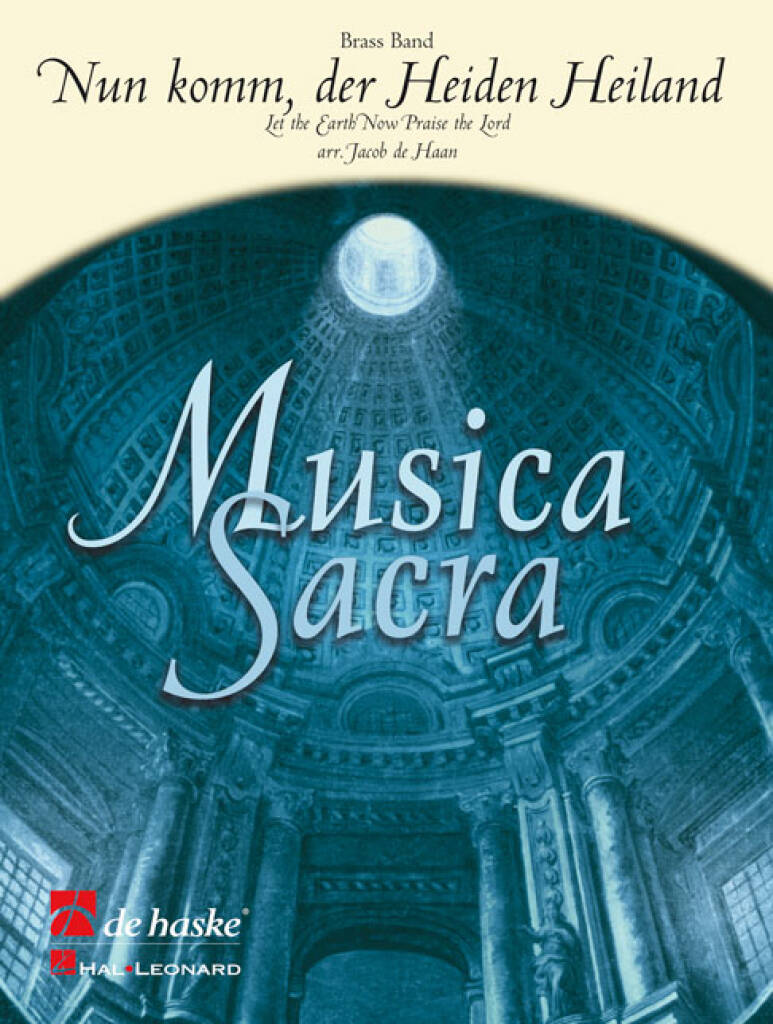
Nun komm, der Heiden Heiland - Traditional - Jacob de Haan
The well-known chorale Nun komm, der Heiden Heiland (Let the Earth Now Praise the Lord) was written by Martin Luther in 1524 and derives from a translation of a hymn from the 4th century before Christ. The melody was composed by JohannWalter, however Johann Sebastian Bach used it as a basis for many cantatas. This arrangement by Jacob de Haan gives your band the chance to perform an attractive version of this beautiful chorale.
Estimated dispatch 5-14 working days
-
 £69.99
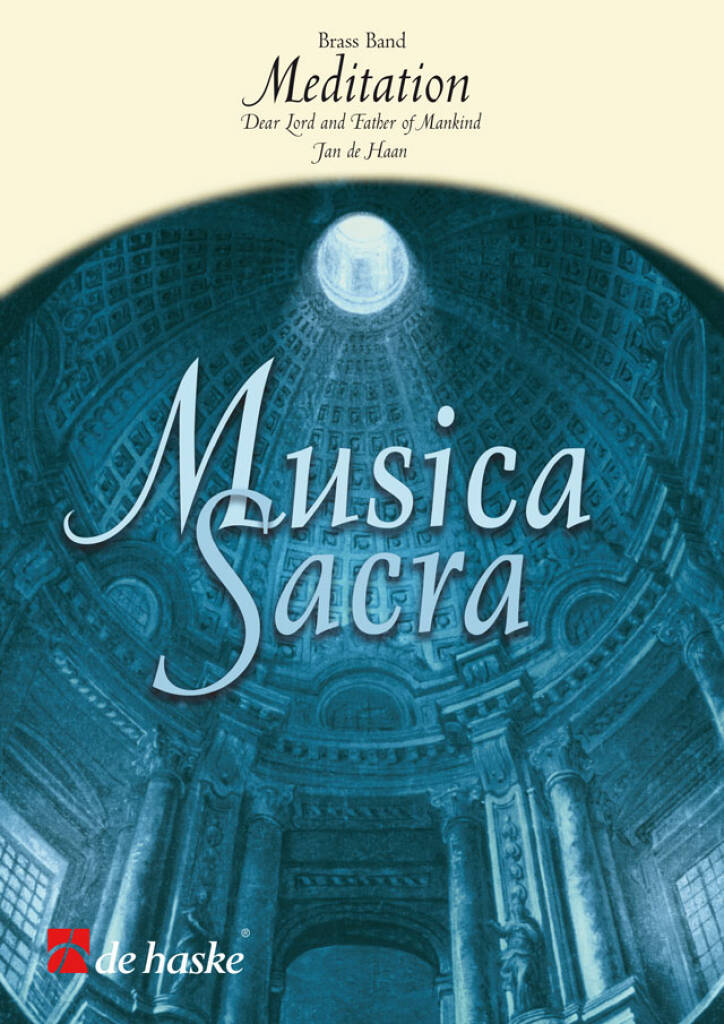
Meditation - Jan de Haan
Meditation is based on Dear Lord and Father of Mankind (1887) by the English composer and organist Frederick Charles Maker (1844-1927). This is a calm, introverted work that however has an intense effect. In the first section, the solo euphonium is given an important role, leading to one of the loveliest of all English hymn melodies.
Estimated dispatch 5-14 working days
-
 £104.99
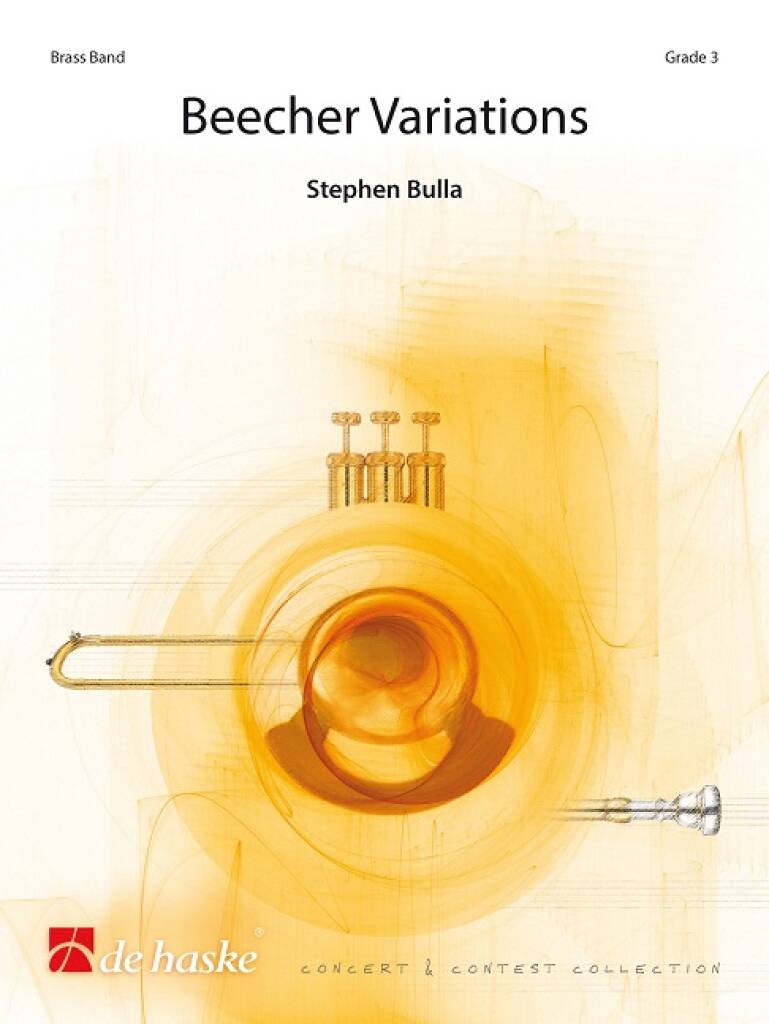
Beecher Variations - Stephen Bulla
In this beautiful composition, melodic fragments of the hymn tune Beecher are morphed into a series of variations, showing the melody in various moods from expressive, then quiet and soft, to bright and triumphant in the end. Written as a testpiece in the 4th division for the Dutch Brass Band Championships in 2015, the music features challenging solo parts for cornet, soprano cornet, flugelhorn and euphonium. A great work for the concert stage!
Estimated dispatch 5-14 working days
-
 £76.99
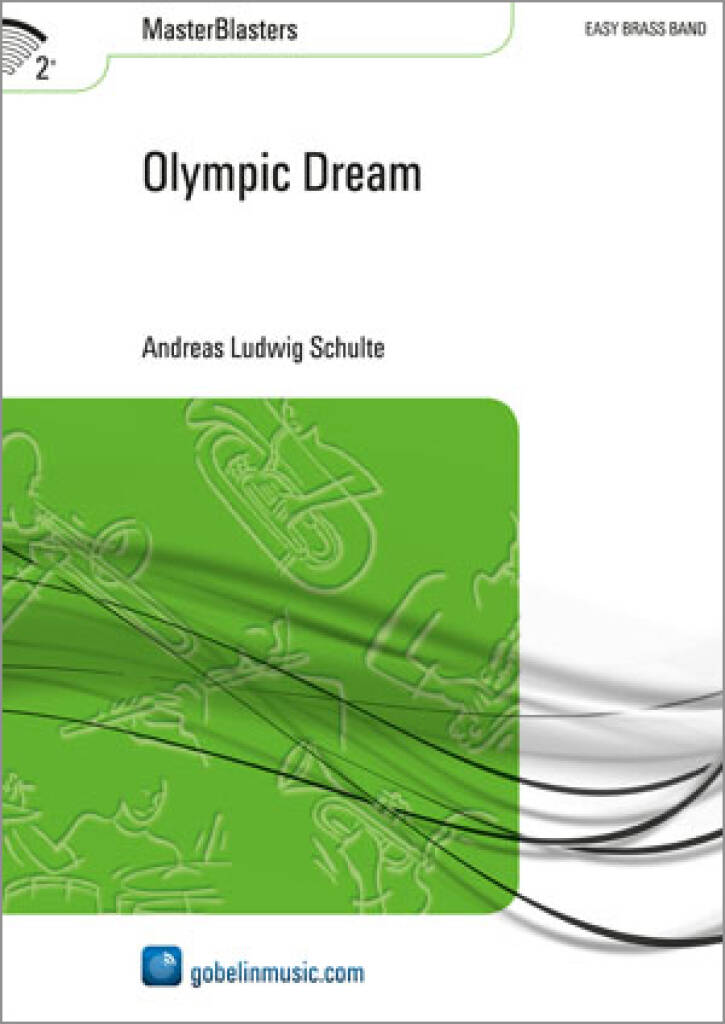
Olympic Dream - Andreas Ludwig Schulte
The world's most important sports event inspired Schulte to compose a magnificent new concert piece. In three parts he successively describes the opening ceremony (musical entry of the athletes), the hymn for the winner (an alluring ballad), and the party following the closing ceremony (rock party) during which all tensions disappear. Enter the world of the Olympic Games and enjoy!
Estimated dispatch 5-14 working days
-
 £33.08
Metamorphosis on 'Finlandia' (Brass Band - Full Score Print) Andrew Wainwright
This major work was commissioned by Five Lakes Silver Band and its Musical Director Christopher Ward in February 2024, and is featured on the band's CD Resurget Cineribus. The music is based on the hymn tune by Katharina von Schlegel, Be Still, My Soul, found in Sibelius' famous tone poem Finlandia (Op. 26). While the only source material used in Metamorphosis on 'Finlandia' is the hymn itself as opposed to any of the developmental music found in the tone poem, it does also seek to depict the strife of the Finnish people against the censorship of the Russian Empire. It is therefore both rousing and turbulent at various times. Metamorphosis on 'Finlandia' commences with a quartet playing a full statement of the hymn in its simplest form, featuring a solo flugel. This leads into a sprightly 6/8 section where a fanfare-like figure proclaims the theme. The music in this section is at times unstable and off-kilter as references to the hymn come and go, often in a very chromatic or dissonant form - a reflection of the struggles that the Finnish people went through. Despite this, there is still a sense of optimism. A somewhat reflective slower section follows, featuring another full rendition of the hymn, with a number of solo voices taking up the tune. This is followed by several cadenzas - for cornet, trombone, Eb bass, and Bb bass, which represent different voices speaking out against the oppression of the Finnish people. This leads into an energetic final movement before a resounding proclamation of the hymn in its full glory. A return to the fanfare heard earlier in the work brings the piece to a glorious conclusion. To listen to a recording of Five Lakes Silver Band performing the work please visit www.youtube.com/watch?v=GeJJF6asD2k Duration: Approx. 13.15 minutes Difficulty Level: 1st Section + This product includes a print copy of the full score. PDF parts and score available here. Sheet music available here (UK) or https://satradecentral.org (USA) Instrumentation: Soprano Cornet Eb Solo Cornet Bb Repiano Cornet Bb 2nd Cornet Bb 3rd Cornet Bb Flugel Horn Bb Solo Horn Eb 1st Horn Eb 2nd Horn Eb 1st Baritone Bb 2nd Baritone Bb 1st Trombone Bb 2nd Trombone Bb Bass Trombone Euphonium Bb Bass Eb Bass Bb Timpani Percussion 1-3
In Stock: Estimated dispatch 1-3 working days
-
£66.17
Metamorphosis on 'Finlandia' (Brass Band) Andrew Wainwright
This major work was commissioned by Five Lakes Silver Band and its Musical Director Christopher Ward in February 2024, and is featured on the band's CD Resurget Cineribus. The music is based on the hymn tune by Katharina von Schlegel, Be Still, My Soul, found in Sibelius' famous tone poem Finlandia (Op. 26). While the only source material used in Metamorphosis on 'Finlandia' is the hymn itself as opposed to any of the developmental music found in the tone poem, it does also seek to depict the strife of the Finnish people against the censorship of the Russian Empire. It is therefore both rousing and turbulent at various times. Metamorphosis on 'Finlandia' commences with a quartet playing a full statement of the hymn in its simplest form, featuring a solo flugel. This leads into a sprightly 6/8 section where a fanfare-like figure proclaims the theme. The music in this section is at times unstable and off-kilter as references to the hymn come and go, often in a very chromatic or dissonant form - a reflection of the struggles that the Finnish people went through. Despite this, there is still a sense of optimism. A somewhat reflective slower section follows, featuring another full rendition of the hymn, with a number of solo voices taking up the tune. This is followed by several cadenzas - for cornet, trombone, Eb bass, and Bb bass, which represent different voices speaking out against the oppression of the Finnish people. This leads into an energetic final movement before a resounding proclamation of the hymn in its full glory. A return to the fanfare heard earlier in the work brings the piece to a glorious conclusion. To listen to a recording of Five Lakes Silver Band performing the work please visit www.youtube.com/watch?v=GeJJF6asD2k Duration: Approx. 13.15 minutes Difficulty Level: 1st Section + PDF download includes parts and score. Sheet music available here (UK) or https://satradecentral.org (USA) Instrumentation: Soprano Cornet Eb Solo Cornet Bb Repiano Cornet Bb 2nd Cornet Bb 3rd Cornet Bb Flugel Horn Bb Solo Horn Eb 1st Horn Eb 2nd Horn Eb 1st Baritone Bb 2nd Baritone Bb 1st Trombone Bb 2nd Trombone Bb Bass Trombone Euphonium Bb Bass Eb Bass Bb Timpani Percussion 1-3
In Stock: Estimated dispatch 1-3 working days
-
£33.08
Metamorphosis on 'Finlandia' (Brass Band - Full Score PDF) Andrew Wainwright
This major work was commissioned by Five Lakes Silver Band and its Musical Director Christopher Ward in February 2024, and is featured on the band's CD Resurget Cineribus. The music is based on the hymn tune by Katharina von Schlegel, Be Still, My Soul, found in Sibelius' famous tone poem Finlandia (Op. 26). While the only source material used in Metamorphosis on 'Finlandia' is the hymn itself as opposed to any of the developmental music found in the tone poem, it does also seek to depict the strife of the Finnish people against the censorship of the Russian Empire. It is therefore both rousing and turbulent at various times. Metamorphosis on 'Finlandia' commences with a quartet playing a full statement of the hymn in its simplest form, featuring a solo flugel. This leads into a sprightly 6/8 section where a fanfare-like figure proclaims the theme. The music in this section is at times unstable and off-kilter as references to the hymn come and go, often in a very chromatic or dissonant form - a reflection of the struggles that the Finnish people went through. Despite this, there is still a sense of optimism. A somewhat reflective slower section follows, featuring another full rendition of the hymn, with a number of solo voices taking up the tune. This is followed by several cadenzas - for cornet, trombone, Eb bass, and Bb bass, which represent different voices speaking out against the oppression of the Finnish people. This leads into an energetic final movement before a resounding proclamation of the hymn in its full glory. A return to the fanfare heard earlier in the work brings the piece to a glorious conclusion. To listen to a recording of Five Lakes Silver Band performing the work please visit www.youtube.com/watch?v=GeJJF6asD2k Duration: Approx. 13.15 minutes Difficulty Level: 1st Section + This PDF download includes the full score. Parts and score available here. Sheet music available here (UK) or https://satradecentral.org (USA) Instrumentation: Soprano Cornet Eb Solo Cornet Bb Repiano Cornet Bb 2nd Cornet Bb 3rd Cornet Bb Flugel Horn Bb Solo Horn Eb 1st Horn Eb 2nd Horn Eb 1st Baritone Bb 2nd Baritone Bb 1st Trombone Bb 2nd Trombone Bb Bass Trombone Euphonium Bb Bass Eb Bass Bb Timpani Percussion 1-3
In Stock: Estimated dispatch 1-3 working days
-
 £77.00
General Series Brass Band Journal, Numbers 2238 - 2241, December 2023
2238: Fanfare and allegro on the Doxology (Steve Kellner)The Doxology, set to the tune Old Hundredth (T.B. 31), is used widely around the world by Christian denominations, including Salvationists. This concert opener is based on the short but powerful hymn of praise to the Triune God.2239: To the endless day (Kenneth Downie)This is a meditation on the hymn tune Ruth (T.B. 191), written by Samuel Smith. It is a particular favourite of Don Jenkins, whose late wife was also called Ruth. This music is dedicated to Don, a distinguished trombone soloist and former Band master of Bristol Easton Corps Band.The music is always associated with the hymn by William Walsham How, whose words begin 'Summer suns are flowing over land and sea' (S.A.S.B. 59) with the title coming from the end of the final verse.2240: Euphonium Solo - He giveth more grace (Ray Steadman-Allen)This 1996 arrangement of Blacklands (T.B. 527), the composers own hymn tune written in 1963, is being published posthumously. The hymn tune sets the words 'He giveth more grace as our burdens grow greater' (S.A.S.B. 30) with an emphasis on the generosity of God.2241: The Calvary effect (Ian Clarke)Around AC 30, on a hill often refered to as Mount Calvary, an event took place that was to change the world forever. The Calvary effect is a reflection, in musical form, on that event and what it still means to people today. If features two tunes: first, in a quiet reflective mood, we hear the highly emotive Healing Stream, associated with the words 'Jesus, keep me near the cross; There is a precious fountain' (S.A.S.B. 178). This then makes way for the chorus; 'Lord, make Cavalry real to me' (S.A.S.B. 182), which is at times indistinct and almost lost in its surroundings, reflecting the sentiments of the chorus. A return to the main tune follows, this time in a positive, passionate setting. The music finishes with a triumphant 'Hallelujah!'.
Estimated dispatch 7-14 working days
-
 £34.99
Submerged... (Cornet Concerto No.2) - Jonathan Bates
'Submerged..' is a virtuoso concerto for Cornet composed as a response to the 'lost' Derbyshire villages of Ashopton & Derwent,. both of which were drowned in the early 1940's to make way for a new reservoir to aid the ever-increasing water demand from nearby. Sheffield and it's steel industry during World War 2. The work is through-composed but is defined by 3 clear main sections, 'The . Packhorse Bridge, Derwent', 'Ashopton Chapel' and 'Operation Chastise'. Much of the melodic and harmonic material throughout the. concerto is inspired by 3 contrasting sources; an original motif of towering block chords which opens the concerto, the famous opening. fragment of Eric Ball's 'High Peak' (1969) which was composed as a tribute to the district of Derbyshire where Ashopton & Derwent lie, . and finally Claude Debussy's haunting 'La Cath drale Engloutie' or 'The Sunken Cathedral', which was composed in 1910 around the legend of. the submerged cathedral of Ys. . I. Packhorse Bridge, Derwent (1925). One of the most striking features of the former village of Derwent was it's Packhorse Bridge, which spanned the River Derwent. adjacent to the Derwent Hall - a grand, picturesque Jacobean country house. In 1925, the renowned impressionist artist Stanley. Royle painted a striking image of the two in midwinter, with the partially frozen river sat quietly underneath the snow-topped. bridge in the foreground, while the old hall sits peacefully and dark in the background. The opening setion of this concerto paints. this picture in a quite schizophrenic manner; with frosty, shrill march-like material picturing the villagers crossing the narrow icy. bridge, combined with wild and frenzied waltz music of the grand hall and it's masquerade balls laying, for now, quietly mysterious. across the river. . II. Ashopton Chapel (1939). Ashopton was much the smaller and less-populated of the 2 'lost' villages, but still bore home to a Roman Catholic Chapel which was. the focal point of the village. The chapel - along with the rest of Ashopton - was drowned in 1943, but the final service to take place there. was held in 1939, with the final hymn being 'Day's Dying in the West'. This hymn forms a haunting coda to the 2nd section, with firstly the . piano leading the melody before an audio track containing an old recording of the hymn is accompanied by the sound of flowing water and . the rumble of storms as the village hypothetically disappears from existence with the hymn tune still echoing around the valley, before . subsiding into the growing roar of the engine of a Lancaster Bomber as it soars overhead towards Derwent to practise it's 'Dam-Buster' raid. . III. Operation Chastise (1943). The Derwent Reservoir lies adjacent to Ladybower Reservoir (of which Ashopton & Derwent were flooded to make way for) in the . Derbyshire High Peak, and during the 2nd World War was used as one of the central low-atitude practise areas of the 617 Squadron - more . commonly known affectionately as the 'Dambusters'. Before the destruction of Derwent, it's 'Packhorse Bridge' was dismantled stone by stone . and re-assembled upstream at Howden Dam to the north end of Derwent Reservoir. This is where the music begins, with a reconstruction of . the opening material before taking flight into a whirlwind tour of virtuosity from the soloist. .
In Stock: Estimated dispatch 1-3 working days
-
 £33.08
Love Divine (Blaenwern) (Brass Band) William Rowlands arr. Kenneth Downie
This delightful setting for brass band by Kenneth Downie is based on the much loved hymn Love Divine, All Loves Excelling, alternatively known as Blaenwern. An optional organ part which will enhance the last verse is included. Kenneth Downie writes: 'It has been a delight to work on this wonderful Welsh hymn tune called Blaenwern, a tune which perfectly suits the majestic words by Charles Wesley, 'Love divine, all loves excelling'. This hymn is all about a big, expansive, all-embracing God, and I have tried to capture this aspect of the words. The rising interval in the introduction is an important feature in developing the notion of a 'big God', and its reappearance near the end is intended to be very significant. The hymn is full of memorable phrases which will hopefully inspire players, singers and conductors as they contemplate the text in preparation for any performance. 'Joy of Heaven, to earth come down', 'Enter every longing heart', 'Finish then thy new creation', and then the last amazing four lines: 'Changed from glory into glory, Till in Heaven we take our place, Till we cast our crowns before thee, Lost in wonder, love and praise'. The addition of the organ in the last verse, by special request of Peggy and Scott Thomas who commissioned the arrangement, should add to the majesty of the music, but of course, it is not fundamental to any performance. May this music bring honour to our amazing God!' To view a video of the Melbourne Staff Band playing the piece please visit www.youtube.com/watch?v=BUszRQh40lQ A rolling score video can be viewed here: www.youtube.com/watch?v=y4dM0fZaVug Sheet music available from www.brassband.co.uk Difficulty Level: 4th Section + Length: 4.00 minutes Instrumentation: Soprano Cornet Eb Solo Cornet Bb Repiano Cornet Bb 2nd Cornet Bb 3rd Cornet Bb Flugel Horn Bb Solo Horn Eb 1st Horn Eb 2nd Horn Eb 1st Baritone Bb 2nd Baritone Bb 1st Trombone Bb 2nd Trombone Bb Bass Trombone Euphonium Bb Bass Eb Bass Bb Timpani Percussion 1-2 Organ (optional)
In Stock: Estimated dispatch 1-3 working days
 View Music