Searching for Wind Band Music? Visit the Wind Band Music Shop
We've found 1000 matches for your search. Order by

Results

  • £37.50

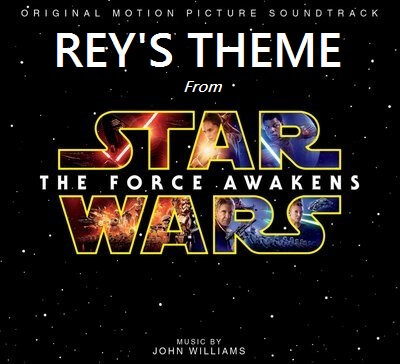
    Rey's Theme - John Williams - Gavin Somerset

    John Williams returned to the Star Wars franchise to compose music for Episode VII - The Force Awakens. Spanning a musical journey of over 40 years, his theme for the heroine of the new films, Rey, is just as powerful and emotional as any of the music composed for the saga. While describing "Rey's Theme," John Williams said the music "wasn't heroic in the sense of a hero, but instead the song was meant to convey an adventure that would resolve itself in triumph." Now available for Brass Band, this delicate, yet, powerful theme is a great addition to any concerts, bringing John Williams' latest music from Star Wars into the band room.

    In Stock: Estimated dispatch 1-3 working days

     PDF View Music

  • £29.50

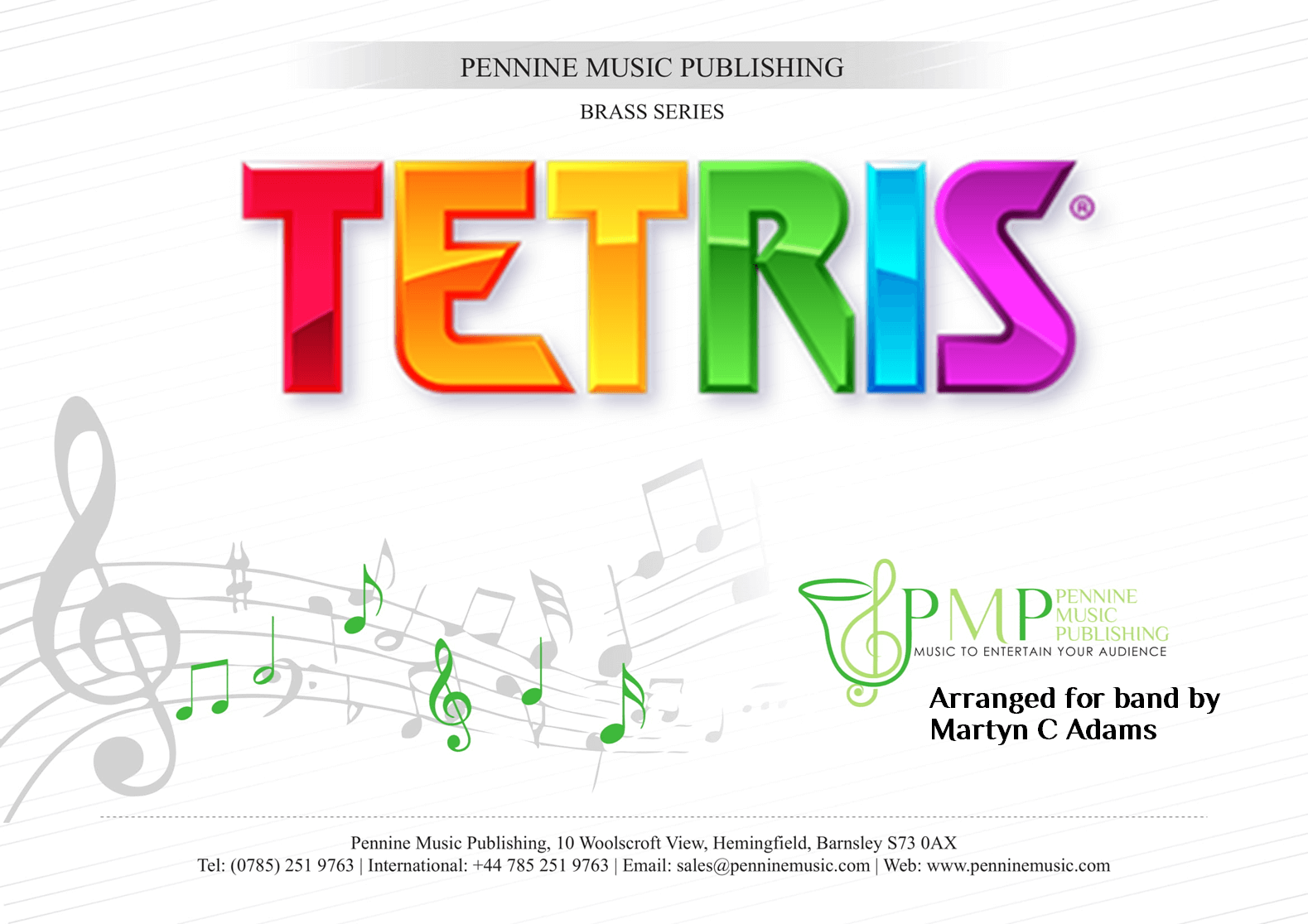
    Theme from Tetris - Traditional - Martyn C Adams

    Tetris is without doubt, one of the bestselling games worldwide since its global release in the mid-1980s. Challenging the player to organise a series of falling blocks, the theme tune based on the Russia traditional song, Korobeiniki, in its electronic format, became synonymous with the hand held game. This work has now been scored in an exciting arrangement for brass band which builds and builds to an exciting finale. The music features all sections of the band and bridges the generations, working well as a fantastic finale showstopper.

    In Stock: Estimated dispatch 1-3 working days

     PDF View Music

  • £29.50

    Rhapsody On a Theme of Paganini - Rachmaninorff - Ed Keeley

    Almost everyone will know and recognise this work simply as the Eighteenth Variation of a Theme by Paganini. Is one of the most beautiful melodies that known throughout the world & regularly features on Classic FM. Now the famous work by Rachmaninoff is available as a lyrical slow melody solo for Euphonium. Featuring intricate parts for the band and a challenging euphonium solo that needs empathetic and expressive accompaniment. Free solo part is available to download below.

    In Stock: Estimated dispatch 1-3 working days

     MP3 Listen to MP3

     PDF View Music

  • £24.50

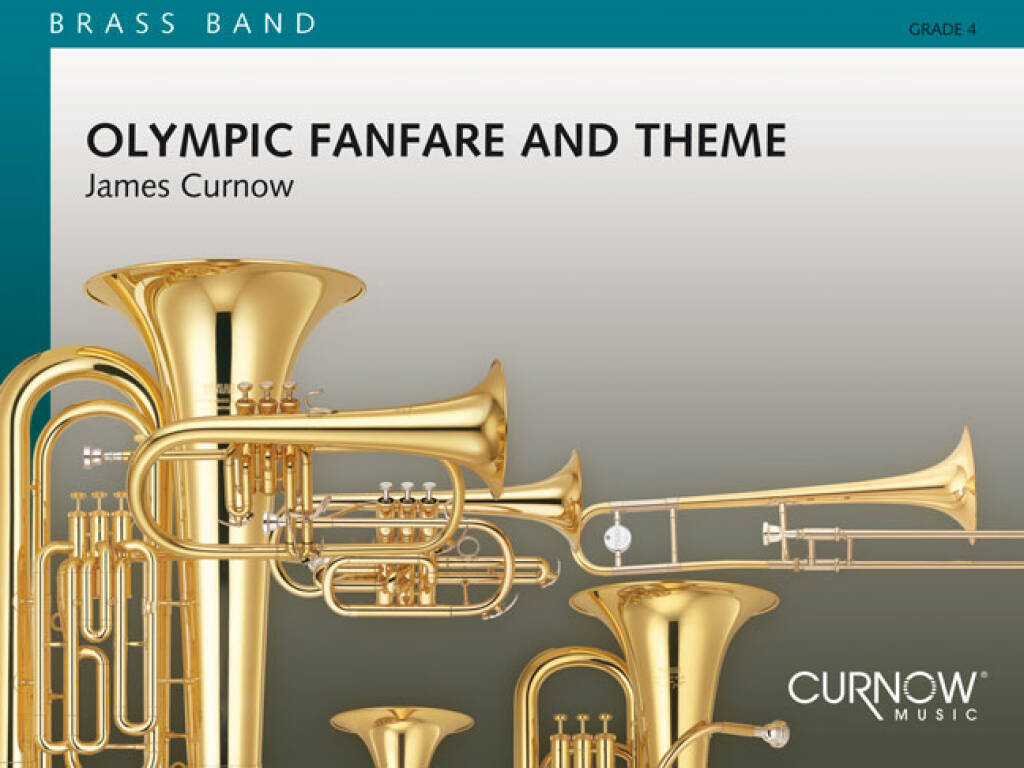
    Fanfare & Theme - Craig A Stevens

    Composed in a similar style to John Williams' Olympic works, with a fanfare from the whole cornet section to grasp your audiences' attention, before leading them on a melodic journey through the horn & baritone section. Fanfare calls continue to be heard throughout before the final close. A perfect opener to a concert or second half.

    In Stock: Estimated dispatch 1-3 working days
  • £104.99

    Theme Park Fun! - Wilco Moerman

    In Theme Park Fun! your orchestra pays a visit to an amusement park. During your visit, you will experience some spectacular rides and attractions this theme park offers. The uniqueness of Theme Park Fun! is the interplay between music and(moving) images. Animations and illustrations support the visual composition (downloadable after ordering a set, on www.gobelinmusic.com).Part 1: The Entrance & Parade [with animation]The opening of the park is a fact. A day fullof fun and pleasure awaits! You and the other visitors will be confronted with all the rides, attractions and adventures the theme park has to offer. Which ride shall we do first?! There is so much to do and experience on this day in the park! Aparade of colorful floats and park figures is passing by.Let the fun begin!Part 2: The Haunted House [with animation]The only ride in the park that is not related to fun, is the Haunted House. Here visitors will be challengedto visit a house full of ghosts, creepy figures and other ominous things. The clock strikes twelve, there is no turning back. Ghosts are whispering, yelling, screaming... Fortunately it is almost one oclock, so we can leave this creepy placequickly.Part 3: The Swinging Galleon [with illustrations]What a huge pirate ship! Each time you swing back and forth, you will feel that weird feeling in your stomach. When you are thrown completely into the top you will have afantastic view over the park, but you can not enjoy it for long. Before you know the ship swings back the other way.Part 4: The Fairy Tale Ride [with illustrations]After all those exciting and spectacular rides and attractions,it is time for a peaceful tour in The Fairy Tale Ride. Surrounded by a fairytale setting, you will discover fable figures, talking animals and colorful designs. Such a beauty and tranquility. Having had this experience, we are ready again for thebig rides in the park!Part 5: The Bumper Cars [with illustrations]Now its time to crawl behind the wheel of the Bumper Cars! Shall we all chase the conductor?! Before you know you are hit by another visitor or you will bumpagainst someone else. In this tough ride you can prove yourself as a real driver, or perhaps as a really bad one.Part 6: The Roller Coaster [with illustrations]The largest, fastest and scariest ride in the park ... we shoulddefinitely do the Roller Coaster! All together in the train, the over-the-shoulder restraints are lowering... be ready to ride. The train leaves the station and is heading for the big lift hill. It will be very scary when the train reaches the topand the train will be plunged down the first drop! Loops, corkscrews and other spectacular coaster elements will follow... Before you know it, the ride of your life is over. Shall we ride it again?!Part 7: Leaving the Park [withanimation]Unfortunately everything comes to an end. This day in the theme park is over, but we have a lot new experiences to talk about! The memories of all the funny and spectacular rides will come up when we walk through the park to theexit. Just one look over the shoulder, the amusement park figures are waving at us. Hopefully we will come back again soon!

    Estimated dispatch 5-14 working days

     PDF View Music

  • £95.00

    Variations on a Theme of Michael Tippett (Brass Band - Score and Parts) - Hindmarsh, Paul

    A Centenary Tribute by Michael Ball, Edward Gregson, Elgar Howarth, Bramwell Tovey and Philip WilbyThis unique 'pice d'occasion' arose out of a telephone conversation in 2004 with Alan Wycherley, who was the soprano cornet player of the Foden's Richardson Band at the time. He indicated that the band would like to include an original birthday tribute for Edward Gregson (60) and Elgar Howarth (70) in its concert at the 2005 RNCM Festival of Brass in Manchester. I have been Artistic Director of Manchester's Festival of Brass since it was established in 1990 as a BBC Radio 3 series, As the centenary of the birth of Sir Michael Tippett fell on 5 January 2005, I devised this collective work as a way of embracing all three anniversaries in a novel way.The idea of joint compositions is not a new one in the classical music world. In the 1860s, Verdi was joined by a number of his contemporaries in a Requiem Mass for Rossini. In this country there have been a number of orchestral examples over the past fifty years, but never before for the brass band. Although Tippett composed only one work for brass band, Festal Brass with Blues, his orchestral works and operas are full of idiomatic brass writing. The theme I chose for this celebration is one of Tippet's most memorable miniatures featuring wind and brass. In the opera Midsummer Marriage it marks the entry of the Ancients. It is also included in the orchestral Suite in D (1948), for the Birthday of Prince Charles.I invited five of the leading contemporary voices in brass band music to add their own creative perspectives to the little Tippett theme, with it's characteristic rhythms, embellishments and modality - the Lydian mode. Each contribution was designed to fit into a tonal and formal template to give the whole work a flow and continuity. In Danse des Amis, Bramwell Tovey has composed a jazzy, humorous variation. Inspiration came from Tippett's love of jazz and, more personally, from the characteristically syncopated gait of the distinguished music critic John Amis, who Tovey once observed leaving a performance of Tippett's opera King Priam before the end. Incidentally, that performance was conducted by Elgar Howarth.We hear Edward Gregson in lyrical mode. His Midsummer Song is redolent of the sound world of Tippett's opera A Midsummer Marriage and it ends with a brief reference to a favourite of Gregson's, Tippett's Concerto for Orchestra. Michael Ball provides a brief moment of light, airy activity bringing to mind perhaps Tippett's love of Shakespearian fantasy, especially The Tempest. Elgar Howarth juxtaposes a slowed down version of the processional theme with distant recollections of fanfares from King Priam. Philip Wilby has rounded the tribute off with a spectacular fugue. During its inexorable progress Wilby ingeniously introduces the two other birthday references - the three-note musical signature that Elgar Howarth includes in much of his music and the characteristic theme which begins Edward Gregson's substantial work for brass an organ The Trumpets of the Angels. An elaborated reprise of Tippett's little theme is followed by a dynamic coda.- Paul HindmarshDuration: 13.00

    Estimated dispatch 7-14 working days

     PDF View Music

  • £40.00

    Variations on a Theme of Michael Tippett (Brass Band - Score only) - Hindmarsh, Paul

    A Centenary Tribute by Michael Ball, Edward Gregson, Elgar Howarth, Bramwell Tovey and Philip WilbyThis unique 'pice d'occasion' arose out of a telephone conversation in 2004 with Alan Wycherley, who was the soprano cornet player of the Foden's Richardson Band at the time. He indicated that the band would like to include an original birthday tribute for Edward Gregson (60) and Elgar Howarth (70) in its concert at the 2005 RNCM Festival of Brass in Manchester. I have been Artistic Director of Manchester's Festival of Brass since it was established in 1990 as a BBC Radio 3 series, As the centenary of the birth of Sir Michael Tippett fell on 5 January 2005, I devised this collective work as a way of embracing all three anniversaries in a novel way.The idea of joint compositions is not a new one in the classical music world. In the 1860s, Verdi was joined by a number of his contemporaries in a Requiem Mass for Rossini. In this country there have been a number of orchestral examples over the past fifty years, but never before for the brass band. Although Tippett composed only one work for brass band, Festal Brass with Blues, his orchestral works and operas are full of idiomatic brass writing. The theme I chose for this celebration is one of Tippet's most memorable miniatures featuring wind and brass. In the opera Midsummer Marriage it marks the entry of the Ancients. It is also included in the orchestral Suite in D (1948), for the Birthday of Prince Charles.I invited five of the leading contemporary voices in brass band music to add their own creative perspectives to the little Tippett theme, with it's characteristic rhythms, embellishments and modality - the Lydian mode. Each contribution was designed to fit into a tonal and formal template to give the whole work a flow and continuity. In Danse des Amis, Bramwell Tovey has composed a jazzy, humorous variation. Inspiration came from Tippett's love of jazz and, more personally, from the characteristically syncopated gait of the distinguished music critic John Amis, who Tovey once observed leaving a performance of Tippett's opera King Priam before the end. Incidentally, that performance was conducted by Elgar Howarth.We hear Edward Gregson in lyrical mode. His Midsummer Song is redolent of the sound world of Tippett's opera A Midsummer Marriage and it ends with a brief reference to a favourite of Gregson's, Tippett's Concerto for Orchestra. Michael Ball provides a brief moment of light, airy activity bringing to mind perhaps Tippett's love of Shakespearian fantasy, especially The Tempest. Elgar Howarth juxtaposes a slowed down version of the processional theme with distant recollections of fanfares from King Priam. Philip Wilby has rounded the tribute off with a spectacular fugue. During its inexorable progress Wilby ingeniously introduces the two other birthday references - the three-note musical signature that Elgar Howarth includes in much of his music and the characteristic theme which begins Edward Gregson's substantial work for brass an organ The Trumpets of the Angels. An elaborated reprise of Tippett's little theme is followed by a dynamic coda.- Paul HindmarshDuration: 13.00

    Estimated dispatch 7-14 working days

     PDF View Music

  • £95.00

    Variations on a Theme of Michael Tippett (Brass Band - Score and Parts)

    A Centenary Tribute by Michael Ball, Edward Gregson, Elgar Howarth, Bramwell Tovey and Philip WilbyThis unique 'pice d'occasion' arose out of a telephone conversation in 2004 with Alan Wycherley, who was the soprano cornet player of the Foden's Richardson Band at the time. He indicated that the band would like to include an original birthday tribute for Edward Gregson (60) and Elgar Howarth (70) in its concert at the 2005 RNCM Festival of Brass in Manchester. I have been Artistic Director of Manchester's Festival of Brass since it was established in 1990 as a BBC Radio 3 series, As the centenary of the birth of Sir Michael Tippett fell on 5 January 2005, I devised this collective work as a way of embracing all three anniversaries in a novel way.The idea of joint compositions is not a new one in the classical music world. In the 1860s, Verdi was joined by a number of his contemporaries in a Requiem Mass for Rossini. In this country there have been a number of orchestral examples over the past fifty years, but never before for the brass band. Although Tippett composed only one work for brass band, Festal Brass with Blues, his orchestral works and operas are full of idiomatic brass writing. The theme I chose for this celebration is one of Tippet's most memorable miniatures featuring wind and brass. In the opera Midsummer Marriage it marks the entry of the Ancients. It is also included in the orchestral Suite in D (1948), for the Birthday of Prince Charles.I invited five of the leading contemporary voices in brass band music to add their own creative perspectives to the little Tippett theme, with it's characteristic rhythms, embellishments and modality - the Lydian mode. Each contribution was designed to fit into a tonal and formal template to give the whole work a flow and continuity. In Danse des Amis, Bramwell Tovey has composed a jazzy, humorous variation. Inspiration came from Tippett's love of jazz and, more personally, from the characteristically syncopated gait of the distinguished music critic John Amis, who Tovey once observed leaving a performance of Tippett's opera King Priam before the end. Incidentally, that performance was conducted by Elgar Howarth.We hear Edward Gregson in lyrical mode. His Midsummer Song is redolent of the sound world of Tippett's opera A Midsummer Marriage and it ends with a brief reference to a favourite of Gregson's, Tippett's Concerto for Orchestra. Michael Ball provides a brief moment of light, airy activity bringing to mind perhaps Tippett's love of Shakespearian fantasy, especially The Tempest. Elgar Howarth juxtaposes a slowed down version of the processional theme with distant recollections of fanfares from King Priam. Philip Wilby has rounded the tribute off with a spectacular fugue. During its inexorable progress Wilby ingeniously introduces the two other birthday references - the three-note musical signature that Elgar Howarth includes in much of his music and the characteristic theme which begins Edward Gregson's substantial work for brass an organ The Trumpets of the Angels. An elaborated reprise of Tippett's little theme is followed by a dynamic coda.- Paul HindmarshDuration: 13.00

    Estimated dispatch 7-14 working days
  • £40.00

    Variations on a Theme of Michael Tippett (Brass Band - Score only)

    A Centenary Tribute by Michael Ball, Edward Gregson, Elgar Howarth, Bramwell Tovey and Philip WilbyThis unique 'pice d'occasion' arose out of a telephone conversation in 2004 with Alan Wycherley, who was the soprano cornet player of the Foden's Richardson Band at the time. He indicated that the band would like to include an original birthday tribute for Edward Gregson (60) and Elgar Howarth (70) in its concert at the 2005 RNCM Festival of Brass in Manchester. I have been Artistic Director of Manchester's Festival of Brass since it was established in 1990 as a BBC Radio 3 series, As the centenary of the birth of Sir Michael Tippett fell on 5 January 2005, I devised this collective work as a way of embracing all three anniversaries in a novel way.The idea of joint compositions is not a new one in the classical music world. In the 1860s, Verdi was joined by a number of his contemporaries in a Requiem Mass for Rossini. In this country there have been a number of orchestral examples over the past fifty years, but never before for the brass band. Although Tippett composed only one work for brass band, Festal Brass with Blues, his orchestral works and operas are full of idiomatic brass writing. The theme I chose for this celebration is one of Tippet's most memorable miniatures featuring wind and brass. In the opera Midsummer Marriage it marks the entry of the Ancients. It is also included in the orchestral Suite in D (1948), for the Birthday of Prince Charles.I invited five of the leading contemporary voices in brass band music to add their own creative perspectives to the little Tippett theme, with it's characteristic rhythms, embellishments and modality - the Lydian mode. Each contribution was designed to fit into a tonal and formal template to give the whole work a flow and continuity. In Danse des Amis, Bramwell Tovey has composed a jazzy, humorous variation. Inspiration came from Tippett's love of jazz and, more personally, from the characteristically syncopated gait of the distinguished music critic John Amis, who Tovey once observed leaving a performance of Tippett's opera King Priam before the end. Incidentally, that performance was conducted by Elgar Howarth.We hear Edward Gregson in lyrical mode. His Midsummer Song is redolent of the sound world of Tippett's opera A Midsummer Marriage and it ends with a brief reference to a favourite of Gregson's, Tippett's Concerto for Orchestra. Michael Ball provides a brief moment of light, airy activity bringing to mind perhaps Tippett's love of Shakespearian fantasy, especially The Tempest. Elgar Howarth juxtaposes a slowed down version of the processional theme with distant recollections of fanfares from King Priam. Philip Wilby has rounded the tribute off with a spectacular fugue. During its inexorable progress Wilby ingeniously introduces the two other birthday references - the three-note musical signature that Elgar Howarth includes in much of his music and the characteristic theme which begins Edward Gregson's substantial work for brass an organ The Trumpets of the Angels. An elaborated reprise of Tippett's little theme is followed by a dynamic coda.- Paul HindmarshDuration: 13.00

    Estimated dispatch 7-14 working days
  • £27.99

    Love Theme From Cello Concerto No. 1 - Cornet Solo Joseph Knight

    This concerto was written by Joseph Knight in 1998 during his last year at the University of Huddersfield. This theme is the Love theme. The whole piece is a tone poem based around the fictional life of a Russian composer who goes through many trials at the hand of Soviet authorities and is finally released when the wall comes down. This theme is the one that depicts his wife and her sad story. The cello in the original represents the composer while the other instruments interact as the events. This arrangement is from one of the other themes and is therefore higher and suites a cornet very well.

    Estimated dispatch 5-9 working days