
Results
-
 £39.99
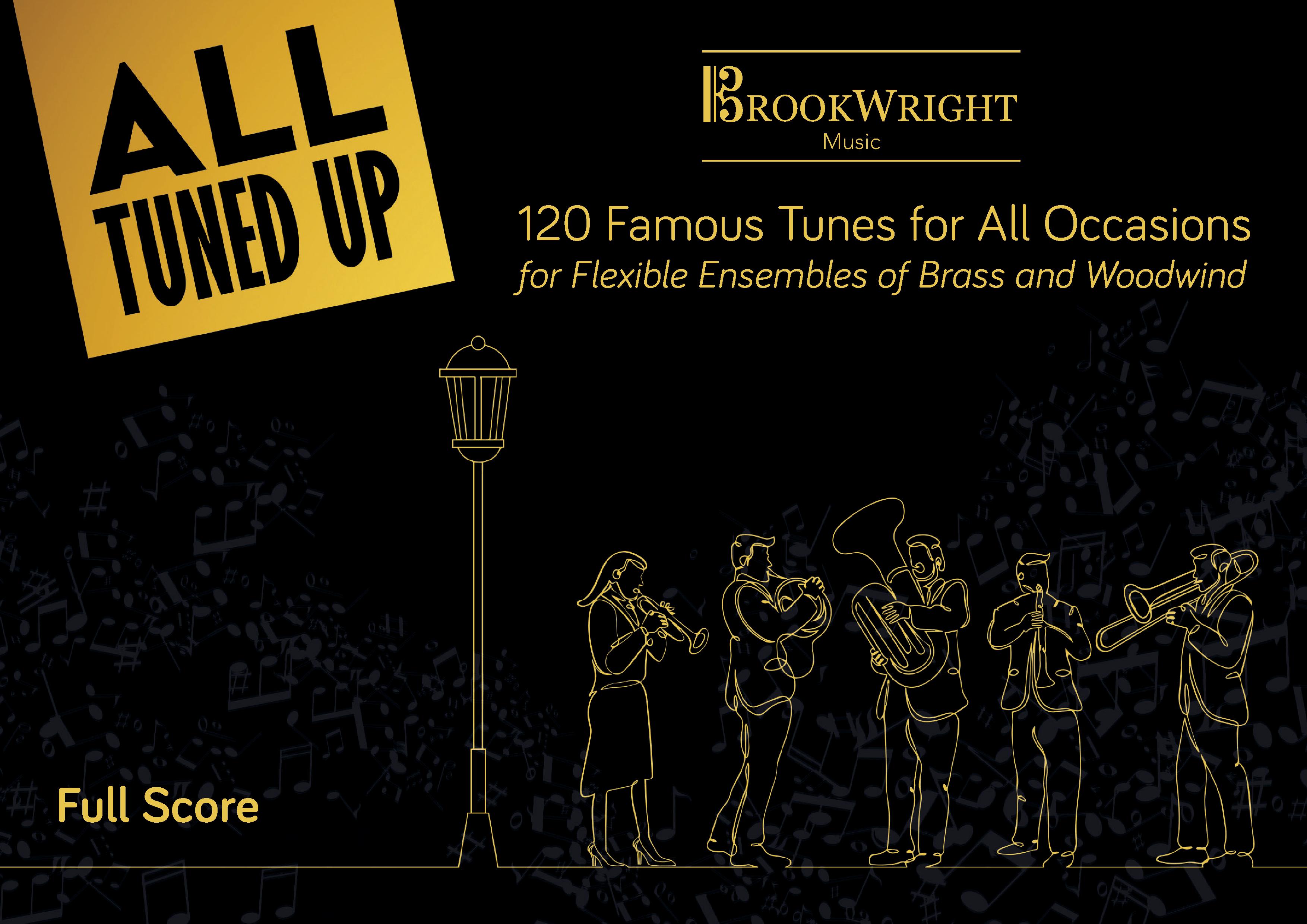
All Tuned Up - Full Score
120 Famous Tunes for All Occasions for Flexible Ensembles of Brass and WoodwindAll Tuned Up is designed to cater for ensembles for occasions throughout the year. Tunes are drawn from genres including Classical, Hymns, Folk and Patriotic amongst many others to form a comprehensive book that will cover a wide variety of events such as Weddings, Funerals, Graduation Ceremonies, Parties, Proms, Remembrance, Street Playing and Thanksgiving.Playable by as few as five players but also designed to work for full brass band or wind band, it features flexible parts in a wide variety of transpositions. These excellent arrangements have been expertly created by Andrew Wainwright, David E. Jones, Dean H. Jones and Steven Ponsford.The general harmonic format of All Tuned Up is in five parts, although additional notes have been included to thicken the harmony where more players are available. Therefore, the book will work equally well with larger groups, including full brass bands and wind bands.The following parts are available (in both A4 and Marchcard sizes):Part 1 in Bb: Cornet/Trumpet, Clarinet, Flugel Horn, Soprano SaxophonePart 1 in C: Piccolo, Flute, OboePart 1 in Eb (optional part): Soprano Cornet/Eb Trumpet, Eb ClarinetPart 2 in Bb: Cornet/Trumpet, Clarinet, Flugel HornPart 2 in Eb: Tenor Horn, Alto Saxophone, Alto ClarinetPart 2 in F: French Horn, Cor AnglaisPart 3 in Bb: Baritone TC, Trombone TC, Euphonium TC, Tenor SaxophonePart 3 in C BC: Baritone BC, Trombone BC, Euphonium BCPart 3 in Eb: Tenor Horn, Alto Saxophone, Alto ClarinetPart 3 in F: French Horn, Cor AnglaisPart 4 in Bb: Euphonium TC, Baritone TC, Tenor SaxophonePart 4 in C BC: Euphonium BC, Baritone BC, BassoonPart 5 in Bb: Bb Bass, Bass ClarinetPart 5 in C BC: Tuba, Bassoon, String BassPart 5 in Eb: Eb Bass, Baritone SaxophonePercussion (optional part)
Estimated dispatch 7-14 working days
-
 £14.99
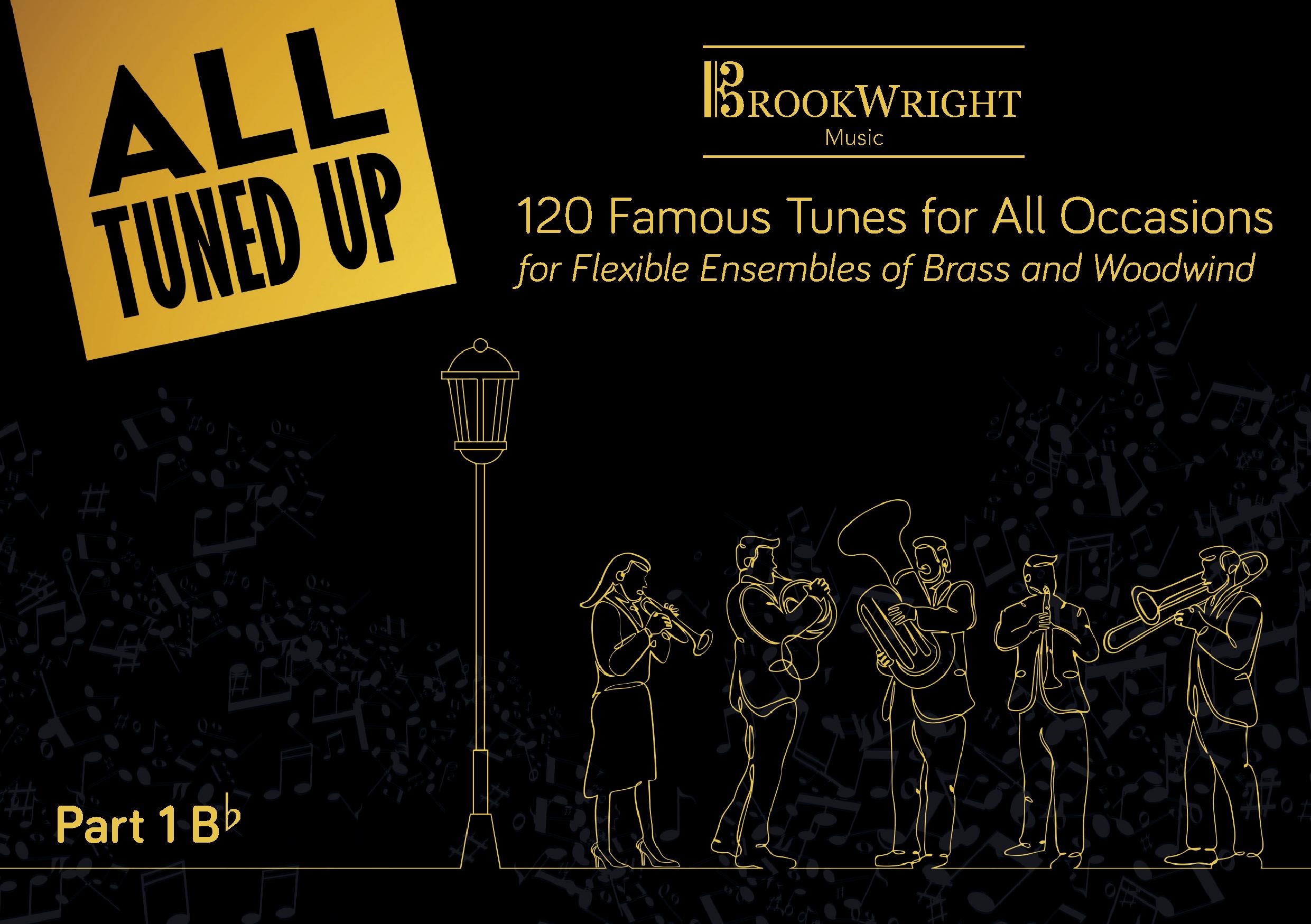
All Tuned Up - Marchcard Size Parts
120 Famous Tunes for All Occasions for Flexible Ensembles of Brass and WoodwindAll Tuned Up is designed to cater for ensembles for occasions throughout the year. Tunes are drawn from genres including Classical, Hymns, Folk and Patriotic amongst many others to form a comprehensive book that will cover a wide variety of events such as Weddings, Funerals, Graduation Ceremonies, Parties, Proms, Remembrance, Street Playing and Thanksgiving.Playable by as few as five players but also designed to work for full brass band or wind band, it features flexible parts in a wide variety of transpositions. These excellent arrangements have been expertly created by Andrew Wainwright, David E. Jones, Dean H. Jones and Steven Ponsford.The general harmonic format of All Tuned Up is in five parts, although additional notes have been included to thicken the harmony where more players are available. Therefore, the book will work equally well with larger groups, including full brass bands and wind bands.The following parts are available (in both A4 and Marchcard sizes):Part 1 in Bb: Cornet/Trumpet, Clarinet, Flugel Horn, Soprano SaxophonePart 1 in C: Piccolo, Flute, OboePart 1 in Eb (optional part): Soprano Cornet/Eb Trumpet, Eb ClarinetPart 2 in Bb: Cornet/Trumpet, Clarinet, Flugel HornPart 2 in Eb: Tenor Horn, Alto Saxophone, Alto ClarinetPart 2 in F: French Horn, Cor AnglaisPart 3 in Bb: Baritone TC, Trombone TC, Euphonium TC, Tenor SaxophonePart 3 in C BC: Baritone BC, Trombone BC, Euphonium BCPart 3 in Eb: Tenor Horn, Alto Saxophone, Alto ClarinetPart 3 in F: French Horn, Cor AnglaisPart 4 in Bb: Euphonium TC, Baritone TC, Tenor SaxophonePart 4 in C BC: Euphonium BC, Baritone BC, BassoonPart 5 in Bb: Bb Bass, Bass ClarinetPart 5 in C BC: Tuba, Bassoon, String BassPart 5 in Eb: Eb Bass, Baritone SaxophonePercussion (optional part)
Estimated dispatch 7-14 working days
-
 £34.95
Song for the Skies - Paul Lovatt-Cooper
Commissioned by tuba virtuoso Les Neish this piece is a simple yet beautiful solo for the E flat Tuba. It is a slow melody with a nice Celtic feel to it and is suitable for all tuba players who enjoy playing slow melodies. Circa 3'20". Soloist: Grade 4 ABRSM
Estimated dispatch 10-14 days
-
 £145.50
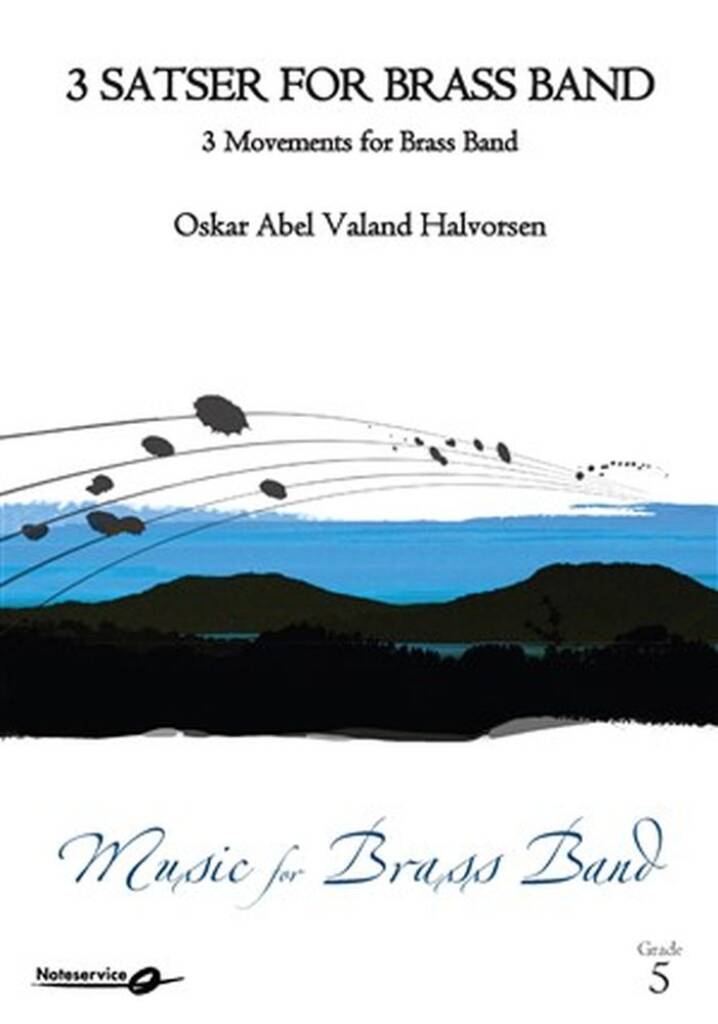
3 Movements for Brass Band - Oskar Abel Valand Halvorsen
3 Movements for Brass Band is written with the intent to explore concise, but intention-lled musical forms. Even though each movement is a clearly dened part, there are still many similarities and unifying elements throughout. One of them can be characerized as a focus on musical initiatives that perpetually intensies the interplay between them. Furthermore, nearly all chords and melodic gestures in all the movements are based on the same three-note cell (e.g. Eb-F-Ab) in constant transposing versions. This structure of threes also nds expression in the rhythmical elements (e.g. in the lightly syncopated gures in the opening of the second movement). Lastly, there is also a signal in snare drum and whip, that ends each movement.
Estimated dispatch 5-14 working days
-
 £65.00
Music for Jock Tamson (Brass Band - Score and Parts)
Scottish Dances Set 2An original suite in three movements:Nyah Fearties!InchkeithWha's Like Us?This work was one of twelve works commissioned by the Scottish Brass Band Association and Funded by Creative Scotland Targeted Fund - 2021 to aid Covid Recovery and support composers in Scotland.Jock Tamson - a Scottish name explained... The phrase more often occurs in an extended form: We're a' Jock Tamson's bairns. This is interpreted in a metaphorical sense as a statement of egalitarian sentiments equivalent to "we're all the same under the skin" or "we are all God's children". i.e. This is music for everyone!
Estimated dispatch 7-14 working days
-
 £29.95
Salvation Army Classics 5-8 for Small Ensemble
Salvation Army Classics arranged for Smaller Ensembles Series 5 - 8March - Mighty to SaveMeditation - HyfrydolHymn Tune Setting - ColneHymn Tune Arrangement - My All is on the Altar This series features pieces that have been rescored for Unity Series (five-part) scoring.PART I 1st Cornet BbPART II 2nd Cornet Bb and 1st Horn EbPART III 2nd Horn Eb and Baritone or Trombone BbPART IV Euphonium BbPART V Bass Eb and Bass BbThese transcriptions have been carried out in such a way to facilitate the addition of any original parts that may be available.Where relevant, suggestions are made for a variation in tone colour (i.e. 2nd Cornet, Flugel, Baritone, Trombone) as well asthe occasional opportunity for rest.
Estimated dispatch 7-14 working days
-
 £65.00
Music for Jock Tamson (Brass Band - Score and Parts) - Fernie, Alan
Regionals 2024 - 4th Section test pieceScottish Dances Set 2An original suite in three movements:Nyah Fearties!InchkeithWha's Like Us?This work was one of twelve works commissioned by the Scottish Brass Band Association and Funded by Creative Scotland Targeted Fund - 2021 to aid Covid Recovery and support composers in Scotland.Jock Tamson - a Scottish name explained... The phrase more often occurs in an extended form: We're a' Jock Tamson's bairns. This is interpreted in a metaphorical sense as a statement of egalitarian sentiments equivalent to "we're all the same under the skin" or "we are all God's children". i.e. This is music for everyone!
Estimated dispatch 7-14 working days
-
£32.50
Music for Jock Tamson (Brass Band - Score only) - Fernie, Alan
Regionals 2024 - 4th Section test pieceScottish Dances Set 2An original suite in three movements:Nyah Fearties!InchkeithWha's Like Us?This work was one of twelve works commissioned by the Scottish Brass Band Association and Funded by Creative Scotland Targeted Fund - 2021 to aid Covid Recovery and support composers in Scotland.Jock Tamson - a Scottish name explained... The phrase more often occurs in an extended form: We're a' Jock Tamson's bairns. This is interpreted in a metaphorical sense as a statement of egalitarian sentiments equivalent to "we're all the same under the skin" or "we are all God's children". i.e. This is music for everyone!
Estimated dispatch 7-14 working days
-
 £64.95
Music for Greenwich (Brass Band - Score and Parts) - Gregson, Edward
Music for Greenwich was commissioned in 1980 by the Greenwich Theatre, London, for a new production of Peter Buckman's play 'All Together Now'.In this play, about a down-at-heels brass band in the North of England brought to a new level of self-confidence and achievement by an incoming conductor, the whole cast performed a test piece on stage every night (i.e. Music for Greenwich), in readiness for a competition which they have entered and, of course, win. Although the play is as much a social commentary as anything to do with music-making, every member of the cast had to be able to play a brass instrument to a greater or lesser extent (a difficult challenge for the casting Director!).For obvious reasons, the music is not technically difficult. The work is structured as follows: a brief fanfare-like opening is followed by an allegro section, rhythmic and playful; a slow lyrical section is then introduced (a suitably nostalgic melody featuring solos for cornet and trombone), before a return to the fast music, a hint of the fanfare, and finally a climactic flourish to round things off. This is music to be enjoyed, as hopefully it was every night by the audience and actors alike.Duration: 5.00
Estimated dispatch 7-14 working days
-
£24.95
Music for Greenwich (Brass Band - Score only) - Gregson, Edward
Music for Greenwich was commissioned in 1980 by the Greenwich Theatre, London, for a new production of Peter Buckman's play 'All Together Now'.In this play, about a down-at-heels brass band in the North of England brought to a new level of self-confidence and achievement by an incoming conductor, the whole cast performed a test piece on stage every night (i.e. Music for Greenwich), in readiness for a competition which they have entered and, of course, win. Although the play is as much a social commentary as anything to do with music-making, every member of the cast had to be able to play a brass instrument to a greater or lesser extent (a difficult challenge for the casting Director!).For obvious reasons, the music is not technically difficult. The work is structured as follows: a brief fanfare-like opening is followed by an allegro section, rhythmic and playful; a slow lyrical section is then introduced (a suitably nostalgic melody featuring solos for cornet and trombone), before a return to the fast music, a hint of the fanfare, and finally a climactic flourish to round things off. This is music to be enjoyed, as hopefully it was every night by the audience and actors alike.Duration: 5.00
Estimated dispatch 7-14 working days
 View Music