
Results
-
£24.50
Good Christian Men Rejoice - Traditional - David Holling
Good Christian Men, Rejoice (or In Dulce Jubilo) was of course made famous by Mike Oldfield back in 1975 and is possibly one of the most played Christmas tunes there is. In this arrangement David Holling treats us to a Rock/Jazz fusion style in the opening section before settling into a calm, lush cornet solo of the Sussex Carol with jazz-inspired harmonies and orchestrations. The final section brings back the original theme in a Lovatt-Cooper style big finish with all-guns-blazing to the end! This arrangement would suit all bands from Section 3 upwards (not excluding ambitious 4th section bands too!) and works perfectly as a good opener or finisher to a Christmas concert.
In Stock: Estimated dispatch 1-3 working days
-
£29.50
Boughs of Holly - Neil Brownless
Boughs of Holly is an up-tempo Christmas solo for Cornet or Flugel based on the second bar of the carol Deck the Hall. This solo was written for Holly Winspear, 2025-2026 Principal Cornet of the Northamptonshire County Youth Brass Band, and is suitable for fourth section bands and above.
In Stock: Estimated dispatch 1-3 working days
-
 £29.50
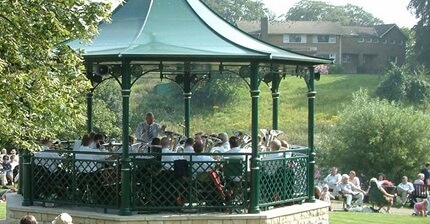
A Touch of Brass - Gavin Somerset
Starting with a scottish style dance, this piece explores the versatility of the Brass Band. From Scherzo to Swing, this piece has them all, an audience pleaser and one for all the band to stay alert in, and the conductor to add their own interpretations. The percussion section also has a busy part to play (altough the Timpani & Xylo/Glock parts can be omitted). An ideal concert item for all concerned. To download the Solo Cornet part, please CLICK HERE . To download the Solo Horn part, please CLICK HERE . To download the Solo Euphonium part, please CLICK HERE . To download the playback audio to play along to, please RIGHT CLICK HERE & Save As .
In Stock: Estimated dispatch 1-3 working days
-
 £60.99
Honneur (Brass Band - Score and Parts)
This march attempts to portray the role of Honour as a quality of character using highly energetic rhythms and strong melodic lines. The opening themes, together with those developed in the first section, perfectly reflect this significant human quality. A short bridge passage consisting of a series of sonorous chords played by the higher instruments in the band is soon taken up by the lower sections. The main theme appears in the second part of this march and is a melodic duet for Eb soprano cornet and solo cornet. 04:45
Estimated dispatch 7-14 working days
-
 £37.95
Hungerford Town (Brass Band - Score only) - Barry, Darrol
2011 Butlins 3rd SectionHungerford Town was commissioned by Tim Crouter and the Hungerford Town Band.The piece is in four movements played through without a break:The Black Prince: Opens with a short motif on which most of the following music is based. The music settles down into a mysterious mood that builds to the first transformation of the opening theme. The music is solid and rugged.The Coach Road: Hungerford was always a popular resting place for the horse drawn coaches on the way to London. The music is light and cheerful and features the soprano cornet and solo horn as postilions.St. Lawrence's Church: The previous motif from the first baritone becomes the main theme for this section that gives plenty of scope for warm and expressive playing. Music from the start of the suite is heard before it moves into a celebratory march.The Bear: The Bear Is a local inn frequented by travellers. The opening theme is heard again and brings the work to a triumphant close.Suitable for 4th Section Bands and above
Estimated dispatch 7-14 working days
-
 £74.95
Hungerford Town (Brass Band - Score and Parts) - Barry, Darrol
2011 Butlins 3rd SectionHungerford Town was commissioned by Tim Crouter and the Hungerford Town Band.The piece is in four movements played through without a break:The Black Prince: Opens with a short motif on which most of the following music is based. The music settles down into a mysterious mood that builds to the first transformation of the opening theme. The music is solid and rugged.The Coach Road: Hungerford was always a popular resting place for the horse drawn coaches on the way to London. The music is light and cheerful and features the soprano cornet and solo horn as postilions.St. Lawrence's Church: The previous motif from the first baritone becomes the main theme for this section that gives plenty of scope for warm and expressive playing. Music from the start of the suite is heard before it moves into a celebratory march.The Bear: The Bear Is a local inn frequented by travellers. The opening theme is heard again and brings the work to a triumphant close.Suitable for 4th Section Bands and above
Estimated dispatch 7-14 working days
-
£82.95
The Flowers of the Forest (Brass Band - Score and Parts) - Bennett, Richard Rodney - Hindmarsh, Paul
In a preface to the score, the composer explains that 'the folk song The Flowers of the Forest is believed to date from 1513, the time if the battle of Flodden, in the course of which the archers of the Forest (a part of Scotland) were killed almost to a man'. Bennett had already used the same tune in his Six Scottish Folksongs (1972) for soprano, tenor and piano, and it is the arrangement he made then that forms the starting-point for the brass-band piece. A slow introduction (Poco Adagio) presents the folk song theme three times in succession - on solo cornet, on solo cornets and tenor horns, and on muted ripieno cornets in close harmony - after which the work unfolds through five sections and a coda. Although played without a break, each of these five sections has its own identity, developing elements of the tune somewhat in the manner of variations, but with each arising from and evolving into the next. The first of these sections (Con moto, tranquillo) is marked by an abrupt shift of tonality, and makes much of the slow rises and falls characteristic of the tune itself. The tempo gradually increases, to arrive at a scherzando section (Vivo) which includes the first appearance of the theme in its inverted form. A waltz-like trio is followed by a brief return of the scherzando, leading directly to a second, more extended, scherzo (con brio) based on a lilting figure no longer directly related to the theme. As this fades, a single side drum introduces an element of more overtly martial tension (Alla Marcia) and Bennett says that, from this point on, he was thinking of Debussy's tribute to the memory of an unknown soldier (in the second movement of En Blanc et noir, for two pianos). Bennett's march gradually gathers momentum, eventually culminating in a short-lived elegiac climax (Maestoso) before the music returns full-circle to the subdued melancholy of the opening. The work ends with a haunting pianissimo statement of the original tune.
Estimated dispatch 7-14 working days
-
£44.95
The Flowers of the Forest (Brass Band - Score only) - Bennett, Richard Rodney - Hindmarsh, Paul
In a preface to the score, the composer explains that 'the folk song The Flowers of the Forest is believed to date from 1513, the time if the battle of Flodden, in the course of which the archers of the Forest (a part of Scotland) were killed almost to a man'. Bennett had already used the same tune in his Six Scottish Folksongs (1972) for soprano, tenor and piano, and it is the arrangement he made then that forms the starting-point for the brass-band piece. A slow introduction (Poco Adagio) presents the folk song theme three times in succession - on solo cornet, on solo cornets and tenor horns, and on muted ripieno cornets in close harmony - after which the work unfolds through five sections and a coda. Although played without a break, each of these five sections has its own identity, developing elements of the tune somewhat in the manner of variations, but with each arising from and evolving into the next. The first of these sections (Con moto, tranquillo) is marked by an abrupt shift of tonality, and makes much of the slow rises and falls characteristic of the tune itself. The tempo gradually increases, to arrive at a scherzando section (Vivo) which includes the first appearance of the theme in its inverted form. A waltz-like trio is followed by a brief return of the scherzando, leading directly to a second, more extended, scherzo (con brio) based on a lilting figure no longer directly related to the theme. As this fades, a single side drum introduces an element of more overtly martial tension (Alla Marcia) and Bennett says that, from this point on, he was thinking of Debussy's tribute to the memory of an unknown soldier (in the second movement of En Blanc et noir, for two pianos). Bennett's march gradually gathers momentum, eventually culminating in a short-lived elegiac climax (Maestoso) before the music returns full-circle to the subdued melancholy of the opening. The work ends with a haunting pianissimo statement of the original tune.
Estimated dispatch 7-14 working days
-
 £154.60
Prelude Festivo - John Brakstad
Prelude Festivo is intended to be performed both in concerts and in competitions and includes solo passages for most instrument groups. Duration 7,5 minutes. Form: Fast slow fast. The piece is built on two themes: Theme 1 (Allegro con spirito) is first presented as a cornet solo after a fanfare-like opening. Theme 2 is hinted at in the opening bars, but is presented fully in the slow (Andante) section (bar 141). This theme is developed and also appears as melodic and rhytmic fragments throughout the composition. In the concluding section (bar 196) both themes are played in conjunction before the piece concludes with the fanfare theme from the opening bars. Parts thatare marked piu mosso ed leggiero should be played in a cheerful light staccato style in contrast to Andante cantabile.
Estimated dispatch 5-14 working days
-
 £60.99
Entry of the Celts - Bertrand Moren
Entry of the Celts is a delightful light concert opener. As its title implies, this work features Celtic-inspired music. All the instruments in the band are given the opportunity to display their most beautiful sound colours: from the bass section to the cornets, via the tenor horns, euphoniums/baritones and trombones. Each section plays a solo passage, accompanied by percussion instruments. The solo for soprano cornet leads to a sparkling and impressive finale. A wonderful Celtic work that will enchant and delight your audiences.
Estimated dispatch 5-14 working days
 View Music
 Listen to MP3