
Results
-
 £30.00
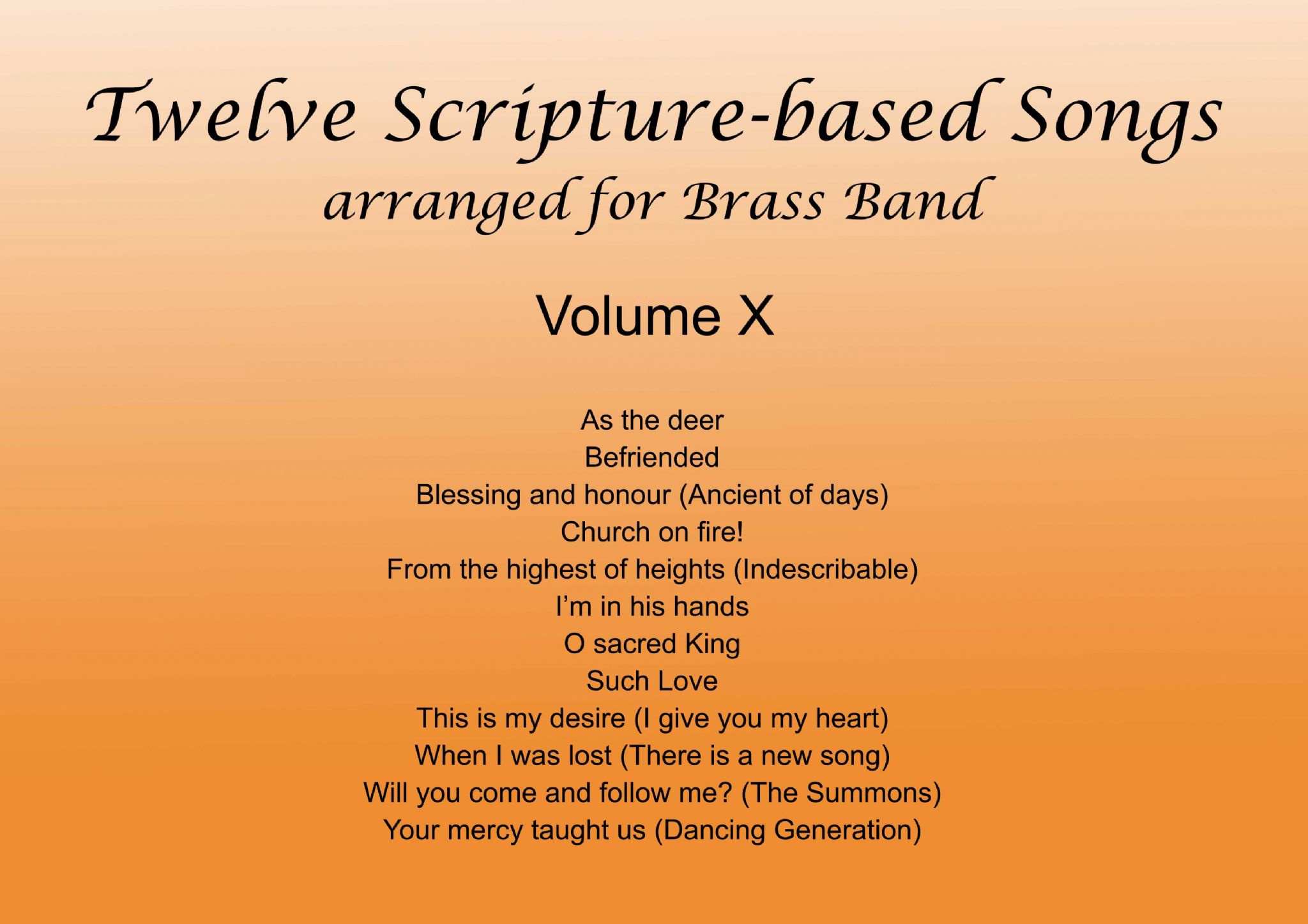
Twelve Scripture-Based Songs Volume X
Twelve scripture-Based Songs arranged for Brass Band (Volume X) are packaged and marketed in complete sets which include a full score and a set of master parts. It is intended that these parts be used as 'masters', for the purpose of photocopying a quantity of parts to accommodate the precise instrumentation needs of the band for which this has been purchased.As the deerBefriendedBlessing and honour (Ancient of days)Church on fire!From the highest of heights (Indescribable)I'm in his handsO sacred KingSuch LoveThis is my desire (I give you my heart)When I was lost (There is a new song)Will you come and follow me? (The Summons)Your mercy taught us (Dancing Generation)
Estimated dispatch 7-14 working days
-
 £49.99
Global Variations (Brass Band - Score and Parts)
Global Variations takes us around the world in just over eight minutes! The chimes of Big Ben herald the start of a whistle-stop global journey, calling in turn at France, Spain, South Africa, Egypt, Russia, India, China, Australia, South America, and the USA. Suitable for 1st Section Bands and above. Duration: 9.00
Estimated dispatch 7-14 working days
-
 £20.00
Infinity (Brass Band - Study Score)
In the post-modern age in which we live, 'absolutes' are difficult for many to comprehend. Yet infinity, which means absolute, total, all-embracing, having no limits or boundaries in time, space, extent, or magnitude, has always been central to the Christian's concept of God.Through the ages, as human understanding has grown, particularly at a remarkable rate from the latter part of the twentienth century, Christianity has been continually challenged to interpret traditional beliefs in the light of new discoveries, but always within the reality of the infinite Being. In addition, scripture tells us that 'humanity was made in God's image'. Humankind is part of God's creation and as such, responsible for its upkeep. Such a commission has never been more relevant than in this present age. Psalm 8 creates a great picture of the majesty, eternal, infinte quality of God and yet reveals the desire of God to share in spirit with humankind. It recognises humankind as being, not a tool of the infinite, but as a creative contributing part of the ongoing movement and activity of the infinite. The music is deliberately melodic in context, creating a sense of unity with the infinite, in tandem with the varying expressions of individuality. It is not based on the Psalm but reflects some of the sentiments lying therein. The 'hymn-like' theme expresses the nature of the Divine using the Old Testament image of the infinite God coming to finite humankind, not in the 'wind', the 'earthquake', the 'fire', but in the 'still small voice' of quietness (1 Kings 19: 11-13). The ensuing musical development, in different styles and patterns, expresses this continual link between infinite and finite. Thus the conclusion, rather than being a symbol of might, power and magnificence, reflects the same sentiment as the opening.
Estimated dispatch 7-14 working days
-
 £55.00
Purcell Variations (Brass Band - Score and Parts)
Purcell Variations, composed in 1995, the year of the tercentenary of the death of the great English composer, was a watershed work in that it was Downie's first extended composition to be published independently of The Salvation Army and intended for wider use.For his theme, Downie has chosen what has come down to us as the hymn tune Westminster Abbey, which is in fact an adaptation made in 1842 by Ernest Hawkins, who was a Canon of Westminster Abbey where Purcell himself had been organist. Purcell's original is actually the closing section of an anthem, O God, Thou art my God, where it provides the final paean of praise, sung to repeated 'Hallelujahs'. Purcell's tune, particularly the opening triadic gesture, is used as a source of thematic and harmonic material - a quarry for ideas if you like: "I was obsessed with the intervals of thirds in Purcell's tune, rather like Brahms in his Third Symphony", the composer says.There are five variations, preceded by an extended introduction and theme. In the first variation, Purcell's lilting dance pulse has been transformed into a bright, playful sequence, in which each phrase of the melody is given its own transformation. In the second, Purcell's opening gambit is extended into a graceful, flowing waltz, featuring solo and first horn at the top of the register. The composer offers a range of metronome speeds in this movement, in which he is emulating the wistful elegance of Erik Satie's famous Gymnopedie. We enter the world of big band jazz in variation three, where Purcell's tune strides along with added syncopation and bluesy major/minor thirds to the fore. After the breathless energy and blazing brass of the big band, Downie moves into his 'home territory' for a beautifully worked lyrical variation. There is an enhanced urgency about the final variation, which opens with an extended reprise of the work's introduction. Purcell's second and third phrases provide the preparation for the exuberant return, in customary triumph of Purcell's 'Hallelujah'.
Estimated dispatch 7-14 working days
-
 £99.95
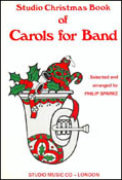
Carols for Band (Brass Band - Score and Parts)
Designed to be playable by any combination from quartet to full brass band, wind band or orchestra, the arrangements in this book with provide a practical solution to all your carolling needs. Parts are divided into Soprano, Alto, Tenor and Bass so that any suitable instrumentation will sound well, providing an equal balance of players per voice is maintained. The carols are printed in alphabetical order so they are easy to find, and comprehensively indexed under both first line and name of tune.Score, Timpani and Percussion parts are available separately.Instrumentation is as follows: Brass BandWind BandStringsSopranoEb Soprano CornetSolo Bb CornetBb Repiano & Flugel1st Flute & Piccolo2nd FluteOboe1st Bb Clarinet1st Bb Trumpet/Cornet1st ViolinAlto2nd & 3rd Bb CornetSolo Eb Horn1st Bb Trombone2nd & 3rd Bb ClarinetsEb Alto Saxophone2nd Bb Trumpet/Cornet1st F Horn2nd ViolinTenor1st & 2nd Eb Horns1st & 2nd Bb Baritones2nd Bb Trombone1st Bb EuphoniumEb Alto ClarinetBb Tenor Saxophone2nd F Horn1st & 2nd TrombonesViolaBassBass Trombone2nd Bb EuphoniumEb BassBb BassBassoonBb Bass ClarinetEb Baritone SaxophoneBass TromboneEuphoniumTubaCello/BassTitles included:Angels from the Realms of GloryAs with Gladness Men of OldAway in a MangerBrightest and BestChristians AwakeCoventry CarolDeck the HallsDing Dong, Merrily on HighFirst NowellGod Rest ye Merry, GentlemenGood King WenceslasHark the Glad SoundHark, the Herald Angels SingHolly and the IvyI Saw Three ShipsIn Dulci JubiloIn the Bleak Mid-WinterInfant HolyInfant KingIt Came Upon a Midnight ClearJingle BellsLo, He Comes with Clouds DescendingLove Came Down at ChristmasO Come, All ye FaithfulO Come, O Come, EmmanuelO Little Town of BethlehemOf the Father's Love BegottenOnce in Royal David's CitySans Day CarolSee Amid the Winter's SnowSilent NightSussex CarolThou Didst Leave Thy ThroneUnto Us is Born a SonWe Wish You a Merry ChristmasWhile Shepherds WatchedThe Brass Band Set consists of 25 Parts:1 x Eb Soprano Cornet4 x Solo Bb Cornet2 x Bb Repiano & Flugel4 x 2nd & 3rd Bb Cornet1 x Solo Eb Horn2 x 1st & 2nd Eb Horn2 x 1st & 2nd Bb Baritone1 x 1st Bb Trombone1 x 2nd Bb Trombone1 x Bass Trombone1 x 1st Bb Euphonium1 x 2nd Bb Euphonium2 x Eb Bass2 x Bb Bass
Estimated dispatch 7-14 working days
-
 £34.95
Aristotles Air (Brass Band - Score and Parts)
The Ancient Greeks believed that there were four elements that everything was made up of: earth, water, air and fire. This theory was suggested around 450 BC, and was later supported and added to by Aristotle. The idea that these four elements - earth, water, air and fire - made up all matter was the cornerstone of philosophy, science, and medicine for two thousand years.Air was considered a pure element, but in fact the air that's all around us is made up of a variety of gasses. Of course, in music, air has a different meaning; a beautiful song-like melody or tune and Aristotle's Air is just that.The work was commissioned by and written for The Cory Band as part of their winning 2015 Brass in Concert programme The Four Elements of the Universe, being premiered at the contest at The Sage, Gateshead, on 15th November 2015. The work was awarded the Cyril Beere Memorial Trophy for the Best New Composition or Arrangement.
Estimated dispatch 7-14 working days
-
£34.95
The Fire and the Phoenix (Trombone Solo)
Trombone Solo with Brass BandThe Fire & the Phoenix (2015) was commissioned by Brett Baker in early 2015 as the opening track to his solo CD 'Myths & Legends'. Whilst structurally a single-movement work, it is presented so that it can link directly into the next work on the CD, adding to a continuous theme comprising a number of pieces from a number of composers.Opening with huge strident chords in the full band, the representation of the phoenix is instantly reflected; bold, powerful and a bird of great intensity. This makes way for a more mystical section marked 'distant' which reflect the beauty of the Phoenix and it's mythical nature where the trombone soars up into its higher register with a sweeping melody.Soon after, the music takes a sharp turn, becoming dramatic and instantly moving away from the mystical mood created previously. Here, we imagine the Phoenix catching fire, burning intensely with huge flames as it gradually turns into ash. We reach a tonic pedal point in the music, over which chord progressions subtly weave in and out of the texture. Here, we imagine the Phoenix rising from the ashes, with the dynamics gradually increasing to reflect this, slowly taking shape as it is born again.A return to earlier material follows, this time manipulated to reflect the Phoenix in its new form - the same bird; the same animal; but at the same time different. A beautiful chorale-like passage is heard before the music transports us back into a magical land, where delicate rhythmic ideas are juxtaposed against bolder lower chords; both ideas together transporting the listener forward into the next piece.
Estimated dispatch 7-14 working days
-
 £37.50
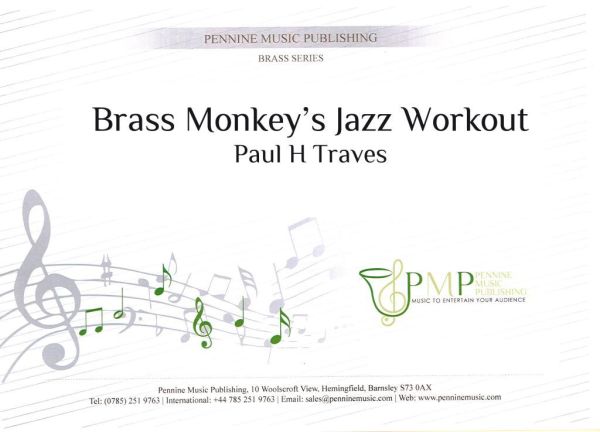
Brass Monkey's Jazz Workout
This huge release brings together a selection of music composed by Paul H Traves that introduces your learners to the different style of Jazz that is available. Naturally, the rhythmic work required to play such styles means that this publication will push your learners on and will challenge them at a new level. Syncopation and swing are at the heart of the music in this collection and it is the perfect way to get your learners playing in new styles not always covered by training band music. This title offers excellent value for money with seven titles included. This publication features:SNAKES & LADDERS - (teaching dynamics and expressive playing)CHROMATICS - (As the title suggest, ensuring every valve us used!)ROCKIN' GERONIMO - (featuring triplets and accidentals)TRUMPET DRIFT - (introducing crotchet triplets & syncopation)J.B.'s 12 BAR BLUES - (a well-known style that feature sharp key signatures)J.B.'s CALYPSO (unison playing and tight rhythmic playing required)ZIG-ZAG (getting players into a lazy swing style)
Estimated dispatch 7-14 working days
-
 £44.95
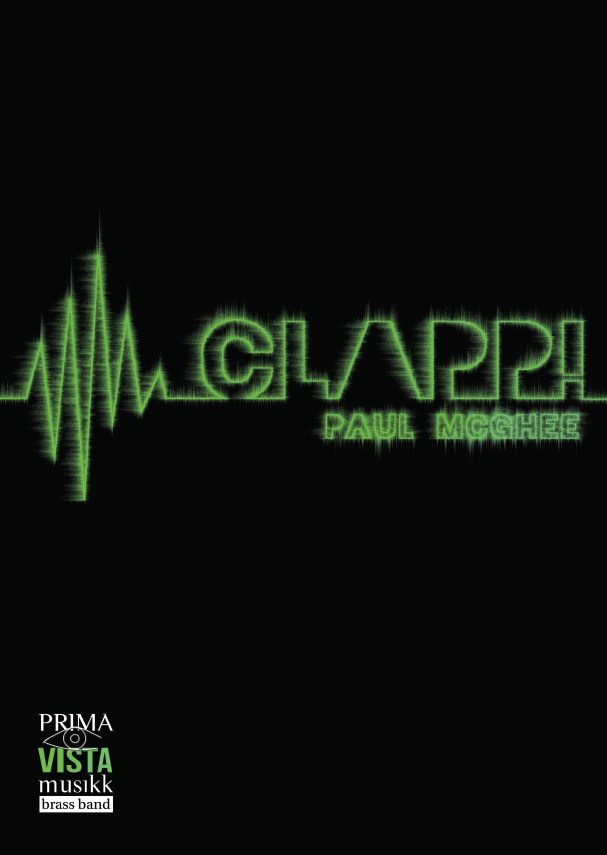
Clapp!!! (Brass Band - Score and Parts)
'Clapp!!!!' was originally written in 2006 whilst studying at the Royal Welsh College of Music and Drama and was written for two players at one piano. The music uses rhythmic phasing with each rhythm assigned it's own tone cluster - as each shift in rhythm occurs the harmonic structure is altered too. Melodic passages are created through the shifts in rhythm and harmony, but these only occur within the given rhythmic parameters. The music can very much be viewed as a study in momentum, with its unrelenting pulse driving us through the music.The Brass Band version of 'Clapp!!!!' was written for Manger Musikklag and Torstein Aagaard-Nilsen, receiving its premiere at the 2010 BrassWind Festival in Bergen, Norway. The Whitburn Band featured Clapp!!!! at their 2012 Brass in Concert programme and the piece was featured by the Grimethorpe Colliery Brass Band on their 'Grimethorpe Entertain' CD.
Estimated dispatch 7-14 working days
-
£14.95
Clapp!!! (Score Only)
'Clapp!!!!' was originally written in 2006 whilst studying at the Royal Welsh College of Music and Drama and was written for two players at one piano. The music uses rhythmic phasing with each rhythm assigned it's own tone cluster - as each shift in rhythm occurs the harmonic structure is altered too. Melodic passages are created through the shifts in rhythm and harmony, but these only occur within the given rhythmic parameters. The music can very much be viewed as a study in momentum, with its unrelenting pulse driving us through the music.The Brass Band version of 'Clapp!!!!' was written for Manger Musikklag and Torstein Aagaard-Nilsen, receiving its premiere at the 2010 BrassWind Festival in Bergen, Norway. The Whitburn Band featured Clapp!!!! at their 2012 Brass in Concert programme and the piece was featured by the Grimethorpe Colliery Brass Band on their 'Grimethorpe Entertain' CD.
Estimated dispatch 7-14 working days