
Results
-
 £60.99
Hymn of Faith (Brass Band - Score and Parts) - Bourgeois, Louis T - Blanken, John
The French composer Louis Bourgeois lived from c.1510 to 1560. Bourgeois was cantor in Geneva and, commissioned by John Calvin, he composed melodies for metrical (rhyming) versions of the psalms. After completing about a hundred one-part psalms, he made some four-part arrangements, which were denounced and even resulted in his imprisonment for a day. Later, Bourgeois published a number of psalm collections, and judging from his book Le droict chemin de musique he was also an excellent educator. The melodies Bourgeois composed, are (contrary to Gregorian chants) particularly suitable for community singing. This applies to his hymn tune Saint Michael, which is why this melody has been used for various texts, written for many occasions. John Blanken made this arrangement for a wedding ceremony: an occasion in which faith and trust play a large - if not the largest - role. Hence the title Hymn of Faith. The arrangement contains four verses of the hymn. After a majestic opening the hymn follows twice, the second verse being embellished in the tenor register. After a short interlude verse three follows, played by a quartet. The majestic opening is then repeated as a modulation into the fourth verse, which concludes the work in a brilliant tutti.
Estimated dispatch 7-14 working days
-
 £43.99
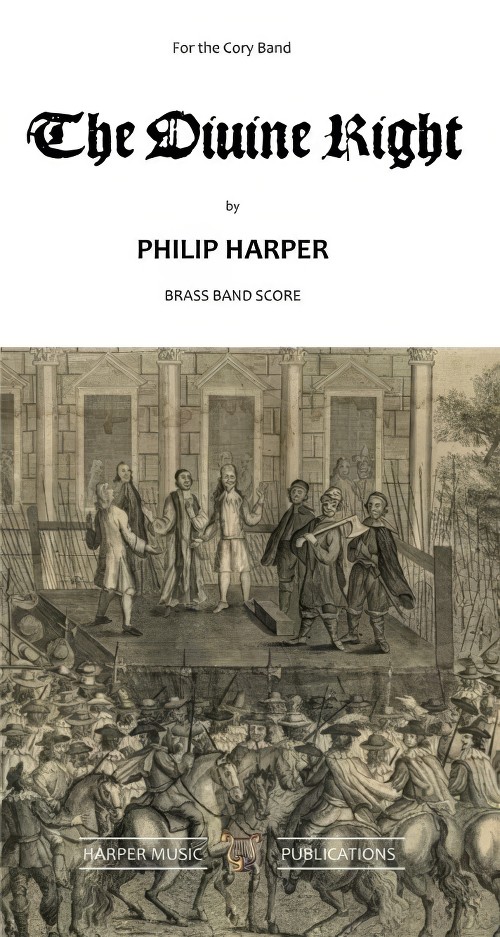
The Divine Right (Brass Band - Score only) - Harper, Philip
At the time of composing this piece, the Arab Spring was sweeping through the Middle East. It seemed that almost every week a new country's people had risen up against the regimes and dictatorships which had prevailed for generations, leaving many nations at a defining crossroads in their history. There were so many possible ways ahead: so many hopes, yet so many uncertainties.This music is a depiction of these revolutionary times, and several musical themes are in turn presented, discussed, considered, fought over, altered, rejected or accepted.Most nations have had, or probably will have, their own Arab Spring, including the United Kingdom. Events of 17th Century Britain provide the context for this piece, particularly those following the execution of the tyrant King Charles I on 30 January 1649. The regicide was in part due to Charless steadfast belief in the Divine Right of Kings, and led to a tumultuous interregnum, where England stood at its own defining crossroads. The music begins turbulently, before King Charles appears and is led to the gallows outside Banqueting House in central London where he is brutally decapitated. From the assembled crowd rose, according to one observer,a moan as I never heard before and desire I may never hear again.The music descends to emptiness.The musical argument which follows is not strictly programmatic, but a number of musical themes are all thrown into the melting pot, representing ideas such as: religion; military force; reasoned Parliamentary debate; and the chattering, irrepressible voice of the people. Additionally, there are some quotations from the music of royalist composer Thomas Tomkins (1572-1656), who was often in tune with the feeling of the times.This defining episode in England's history was brought to a close with the Restoration of the monarchy in 1660, and as the exiled King Charles II rode back into London the diarist John Evelyn wrote:Never was so joyful a day seen in this nation. I stood in the Strand and beheld it, and blessed God.At the end of the piece the bells ring out, and the musical appearance of the King has transformed from turbulent to triumphant.Duration: 17.00
Estimated dispatch 7-14 working days
-
£104.99
The Divine Right (Brass Band - Score and Parts) - Harper, Philip
At the time of composing this piece, the Arab Spring was sweeping through the Middle East. It seemed that almost every week a new country's people had risen up against the regimes and dictatorships which had prevailed for generations, leaving many nations at a defining crossroads in their history. There were so many possible ways ahead: so many hopes, yet so many uncertainties.This music is a depiction of these revolutionary times, and several musical themes are in turn presented, discussed, considered, fought over, altered, rejected or accepted.Most nations have had, or probably will have, their own Arab Spring, including the United Kingdom. Events of 17th Century Britain provide the context for this piece, particularly those following the execution of the tyrant King Charles I on 30 January 1649. The regicide was in part due to Charless steadfast belief in the Divine Right of Kings, and led to a tumultuous interregnum, where England stood at its own defining crossroads. The music begins turbulently, before King Charles appears and is led to the gallows outside Banqueting House in central London where he is brutally decapitated. From the assembled crowd rose, according to one observer,a moan as I never heard before and desire I may never hear again.The music descends to emptiness.The musical argument which follows is not strictly programmatic, but a number of musical themes are all thrown into the melting pot, representing ideas such as: religion; military force; reasoned Parliamentary debate; and the chattering, irrepressible voice of the people. Additionally, there are some quotations from the music of royalist composer Thomas Tomkins (1572-1656), who was often in tune with the feeling of the times.This defining episode in England's history was brought to a close with the Restoration of the monarchy in 1660, and as the exiled King Charles II rode back into London the diarist John Evelyn wrote:Never was so joyful a day seen in this nation. I stood in the Strand and beheld it, and blessed God.At the end of the piece the bells ring out, and the musical appearance of the King has transformed from turbulent to triumphant.Duration: 17.00
Estimated dispatch 7-14 working days
-
 £137.70
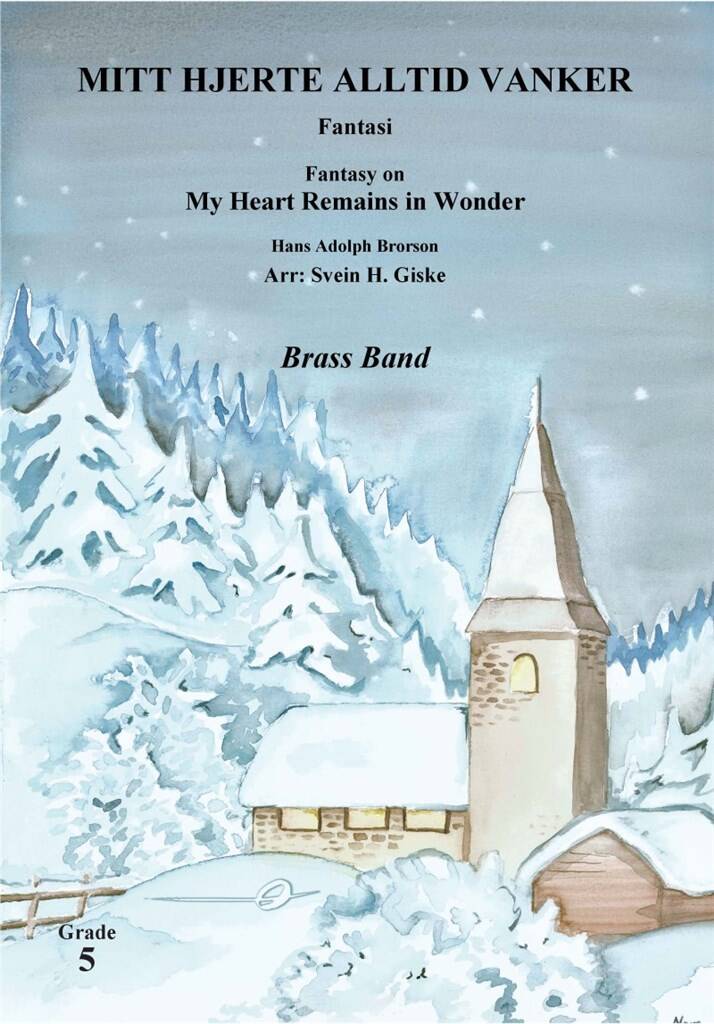
Mitt hjerte alltid vanker - Fantasi - Hans Adolph Brorson - Svein H. Giske
This arrangement was commissioned by B3 (The Bergen Woodwind Ensemble). B3 is a large woodwind ensemble located in Bergen with a mix of professional and amateur players. My Heart Remains in Wonder is a well-known Christmas hymn in Scandinavia. I wanted my version to be different to the traditional hymn tune style in which it is normally performed. One day I was outside walking and this idea came to me: an ostinato-like, mechanical skeleton of arpeggio semiquavers on which I could 'hang' the melody. However, I also wanted to do the melody line a bit different. The inspiration for this comes from folk music and the way fiddlers hardly ever lift their bow off the strings when they play. Because of this, it is important that the melody is played in a very sostenuto style in this arrangement. The harmonies lie somewhere between jazz and folk music with a little nod towards Grieg (himself heavily influenced by folk music) in the slow middle section.
Estimated dispatch 5-14 working days
-
 £154.60
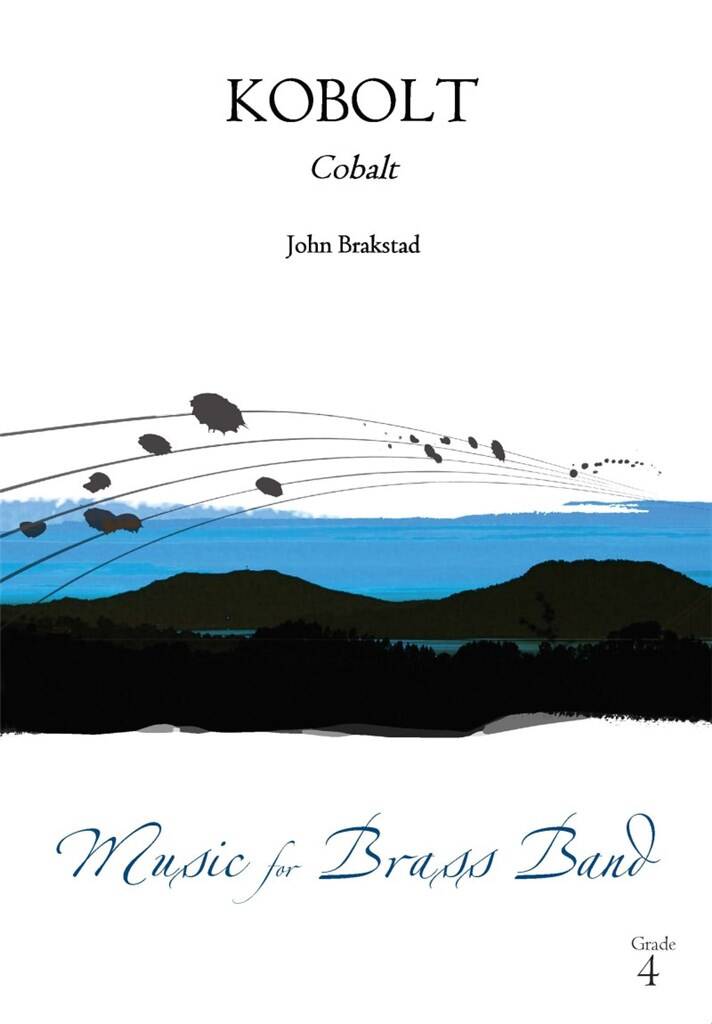
Kobolt - John Brakstad
"Cobalt" was commisioned by Modum Janitsjar as own choice piece for the Norwegian Wind Band Championships, third section in 2009. The Royal Cobalt Works of Modum were established in 1773 to extract cobalt ore from the local mines. The works were in operation until 1893. The cobalt was used in the production of cobalt blue pigment for the worlds porcelain and glass industry. To day it is a museum showing us how people at that time worked and lived. Most of the work was done by hand. There were also bad accidents with many fatalites. But in their free time there were dancing and drinking, and the entire piece ends with a dance-episode including a local tune.
Estimated dispatch 5-14 working days
-
 £105.20
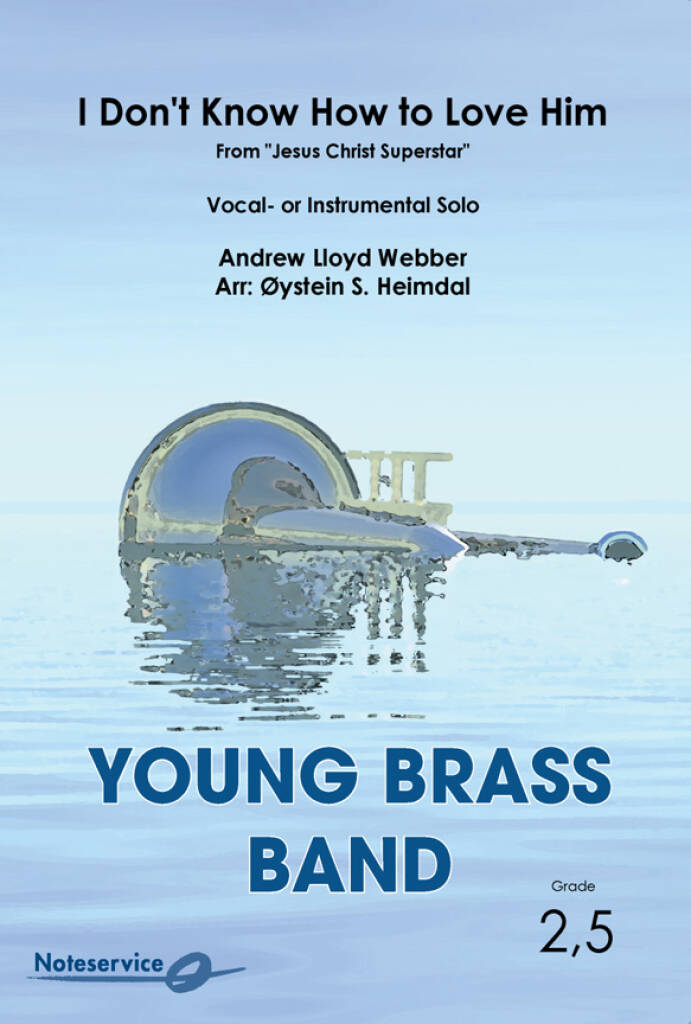
I Don't Know How to Love Him - Andrew Lloyd Webber - Øystein Sjøvaag Heimdal
This is a ballad from the rock-opera "Jesus Christ Superstar" written by Andrew Lloyd Webber (Music) and Tim Rice (Lyrics). Together with the title song, this ballad is the most popular tune from Jesus Christ Superstar. It's recorded and performedlive by many artists since the music saw the light of day in 1971.This arrangement can be performed with a vocal- or instrumental solist. In addition to the vocal solo part, there are also solo-options for the followinginstruments:Eb-Cornet Bb-Cornet Eb-Horn Flugelhorn Baritone - Euphonium - Trombone
Estimated dispatch 5-14 working days
-
 £77.00
General Series Brass Band Journal, Numbers 2238 - 2241, December 2023
2238: Fanfare and allegro on the Doxology (Steve Kellner)The Doxology, set to the tune Old Hundredth (T.B. 31), is used widely around the world by Christian denominations, including Salvationists. This concert opener is based on the short but powerful hymn of praise to the Triune God.2239: To the endless day (Kenneth Downie)This is a meditation on the hymn tune Ruth (T.B. 191), written by Samuel Smith. It is a particular favourite of Don Jenkins, whose late wife was also called Ruth. This music is dedicated to Don, a distinguished trombone soloist and former Band master of Bristol Easton Corps Band.The music is always associated with the hymn by William Walsham How, whose words begin 'Summer suns are flowing over land and sea' (S.A.S.B. 59) with the title coming from the end of the final verse.2240: Euphonium Solo - He giveth more grace (Ray Steadman-Allen)This 1996 arrangement of Blacklands (T.B. 527), the composers own hymn tune written in 1963, is being published posthumously. The hymn tune sets the words 'He giveth more grace as our burdens grow greater' (S.A.S.B. 30) with an emphasis on the generosity of God.2241: The Calvary effect (Ian Clarke)Around AC 30, on a hill often refered to as Mount Calvary, an event took place that was to change the world forever. The Calvary effect is a reflection, in musical form, on that event and what it still means to people today. If features two tunes: first, in a quiet reflective mood, we hear the highly emotive Healing Stream, associated with the words 'Jesus, keep me near the cross; There is a precious fountain' (S.A.S.B. 178). This then makes way for the chorus; 'Lord, make Cavalry real to me' (S.A.S.B. 182), which is at times indistinct and almost lost in its surroundings, reflecting the sentiments of the chorus. A return to the main tune follows, this time in a positive, passionate setting. The music finishes with a triumphant 'Hallelujah!'.
Estimated dispatch 7-14 working days
-
 £59.95
Judd: Quest
'Quest' was originally written for the Territorial Youth Band (UK) in 2012. It is a major work in three movements, Movement 1: Making a difference, Movement 2: Making time and Movement 3: Making progress. The music essentially charts the journey of the Christians life. The music commences with Ray Steadman-Allen's choral work and testimony 'So this is it! My day for living!' and has references and then a presentation to the tune 'Southport' associated with the words 'To serve the present age my calling to fufil'. The music displays the struggle of the Christian in maintaining a witness within this world. The second movement is a reflective and prayerful setting of the song 'This day' found in the Sing to the Lord journal. The imposing third movement features the tune 'Trust in God' with the associated words 'As the weary way of life we journey'. The piece has been recorded by the International Staff Band under the same title (SPS330)
Estimated dispatch 7-14 working days
-
£69.95
TRANSFORMATION (Brass Band Set) - Kenneth Downie
I believe in transformation, God can change the hearts of men, And refine the evil nature, till it glows with grace again'. So wrote John Gowans in the second verse of his great hymn, 'I believe that God the Father, can be seen in God the Son', written specifically to affirm Salvationists' beliefs. It is sung to the tune Bethany and in seeking to explore this great subject at the heart of the Christian gospel in musical terms, the composer has used this fine tune as the basis. Although it never appears in its entirety, it is seldom out of the picture and much of the work is derived from it. The other main source of material is the lovely, simple chorus, 'Some day I shall be like him, changed to heavenly beauty, when his face I see'. This chorus is especially prominent in the middle section but there are important references to it throughout. There are also brief references to Charles Wesley's hymn, 'Love Divine' and, in particular, the telling lines, 'Changed from glory into glory, till in Heaven we take our place'. The work suggests that, at times, the process of being transformed is a struggle, portrayed with many passages of fraught and demanding music. Considerable reserves of stamina and technique are required while, in contrast, the chorus, 'Some day I shall be like him' provides the warm, gentle centre of the work. The premiere of the work was given by The International Staff Band of The Salvation Army in Cadogan Hall on Friday 3rd June 2011, as part of the band's 120th anniversary celebrations.
Estimated dispatch 7-14 working days
-
 £69.95
Transformation (Brass Band - Score and Parts)
I believe in transformation, God can change the hearts of men, And refine the evil nature, till it glows with grace again'. So wrote John Gowans in the second verse of his great hymn, 'I believe that God the Father, can be seen in God the Son', written specifically to affirm Salvationists' beliefs. It is sung to the tune Bethany and in seeking to explore this great subject at the heart of the Christian gospel in musical terms, the composer has used this fine tune as the basis. Although it never appears in its entirety, it is seldom out of the picture and much of the work is derived from it. The other main source of material is the lovely, simple chorus, 'Some day I shall be like him, changed to heavenly beauty, when his face I see'. This chorus is especially prominent in the middle section but there are important references to it throughout. There are also brief references to Charles Wesley's hymn, 'Love Divine' and, in particular, the telling lines, 'Changed from glory into glory, till in Heaven we take our place'. The work suggests that, at times, the process of being transformed is a struggle, portrayed with many passages of fraught and demanding music. Considerable reserves of stamina and technique are required while, in contrast, the chorus, 'Some day I shall be like him' provides the warm, gentle centre of the work. The premiere of the work was given by The International Staff Band of The Salvation Army in Cadogan Hall on Friday 3rd June 2011, as part of the band's 120th anniversary celebrations.
Estimated dispatch 7-14 working days
 View Music