
Results
-
 £29.50
Albion Treasures - Gavin Somerset
A stunning hymn-like medley that takes you on a trip around the British Isles. Starting in Scotland with "Highland Cathedral" which continues to make appearances throughout, and then into "Amazing Grace" whilst "Danny Boy" (Londonderry Air)" flows underneath. Whilst "Danny Boy" continues to build, "Swing Low, Sweet Chariot" is heard ringing over the top as the piece builds to its emotional climax. Afterwards, a quiet calm of all the pieces skilfully woven together softly flow whilst the tune to Parry's "Dear Lord & Father Of Mankind (Repton)" leaves us with a delicate, soft finish to the journey. Suitable for any standard of Brass Band.
In Stock: Estimated dispatch 1-3 working days
-
 £37.50
Rey's Theme - John Williams - Gavin Somerset
John Williams returned to the Star Wars franchise to compose music for Episode VII - The Force Awakens. Spanning a musical journey of over 40 years, his theme for the heroine of the new films, Rey, is just as powerful and emotional as any of the music composed for the saga. While describing "Rey's Theme," John Williams said the music "wasn't heroic in the sense of a hero, but instead the song was meant to convey an adventure that would resolve itself in triumph." Now available for Brass Band, this delicate, yet, powerful theme is a great addition to any concerts, bringing John Williams' latest music from Star Wars into the band room.
In Stock: Estimated dispatch 1-3 working days
-
 £159.99
Time Machine - Thomas Doss
Time Machine is a journey through time that begins in the Stone Age. Evolution and the coming of man take place. The journey takes us into the present, in which disorientation and chaos abound. We travel further into the future. An unfamiliar, quiet and surreal landscape lies before us and we wander through it, bewildered as we become aware of the destruction of the environment. Suddenly, and for no reason, memories from our childhood are awoken. Cultures have become completely mixed into one and the evolution of man has run its course. We realise that there is no "afterwards" as before us lies the Stone Age once again... The wheel of time spins blindly on and all isrepeated.
Estimated dispatch 5-14 working days
-
 £104.99
Cambridgeshire Impressions - Rieks van der Velde
In a four-part composition Rieks van der Velde takes us to the richly varied area surrounding the university city of Cambridge. The Dutch composer was especially inspired by the atmosphere of Cambridgeshire, the county which lies north ofLondon. 1. The Journey. Although on arrival the area looks peaceful and friendly, the ruggedness of its inhabitants and landscape have an unmistakable influence on the music. In the course of the tour, which starts with an Allegromovement, we are shown the vitality, energy and freshness of the Cambridgeshire countryside. Short themes, swift and sudden motifs and rhythmical patterns supported by the drive of percussion instruments give expression to this image. Thefirst part is concluded by two Calmo movements in which the music expresses how the cathedral in the city of Ely comes into sight and is gradually approached. 2. Visit to Ely Cathedral. The famous Norman cathedral church of Ely, whichwas built in 1109, has attracted tourists from all over the world apart from being a place of worship and heritage site. A cornet solo introduces the contemplative mood of the composition at this point. The mystical atmosphere of thecathedral runs through this lyrical part like a continuous thread. 3. The Pub. The thirst caused by this intensive journey makes a visit to the local pub a definite must. These "public houses", which may be open until the earlyhours of the morning, offer all kinds of entertainment. Drinks are served liberally and the atmosphere is lively. 4. The Journey Back. Time has flown: In other words, the moment of departure has come sooner than one would havewished. In a flashback which recaptures elements of the first part of the composition we say goodbye to Cambridgeshire in a fitting manner. Two scintillating final measures bring us abruptly back to the present.
Estimated dispatch 5-14 working days
-
 £149.40
Winter Solstice - Stig Nordhagen
This work describes the shortest day og the year, but also the longest night. The solo cornet summarizes the struggle of the winter and darkness. The solo rises out of the coral in the beginning of the piece, and escapades into rhapsodic parts, until the coral again catches all players in the ensemble.Throughout the piece we hear the soloist take us on a journey from despair and darkness, through gratitude for the solstice that turns the night into day. And gives us all light and hope for a better tomorrow.
Estimated dispatch 5-14 working days
-
 £94.99
20,000 Leagues under the Sea - Philip Harper
Frenchman Jules Verne was a pioneer in science fiction during the late 19th Century, penning some classic stories such as Journey to the Centre of the Earth and Around the World in 80 Days - both of which have already been the subject of brass band test-pieces. It was therefore natural for me to choose Verne's 1869 watery magnum opus as the subject for this piece to which there are five sections, as well as an introduction and a finale.I. THE NAUTILUS. After a mysterious introduction we are introduced to The Nautilus - a fantastical submarine.II. THE CORAL KINGDOM. We visit awe-inspiring underwater coral formations.III. SQUID ATTACK. The Nautilus is attacked by a school of giant squid, or 'devilfish'.IV. CAPTAIN NEMO. Captain Nemo is a loner and an eccentric. Some say he is a madman. Soloists of the band help to uncover the character of this enigmatic but powerful figure.V. MAELSTROM. The Nautilus is dragged into the ocean's deadliest whirlpool but Captain Nemo lives to fight another day.
Estimated dispatch 5-14 working days
-
 £154.99
A Road Less Travelled By - Philip Sparke
A Road Less Travelled By was commissioned by Palangos Orkestras for the Championship Section of the 2020 European Brass Band Championships held in Palanga, Lithuania. The title alludes to a poem by American author, Robert Frost, which appeared in his 1916 collection, Mountain Intervals. In common with most of the composer's larger works, the piece is not programmatic, but purely abstract. The choice of title shares Sparke's view of how composers can often develop. There can be no 'destination' in a composer's career, but rather a continuing journey to an unknown place. Set in three movements, which play without a break, A Road Less Travelled By opens with a Moto Perpetuo firmly rooted in classical language, form and syntax. A continuous river of semiquavers, veering from melody to accompaniment and back again, adds drive, energy and motion. The second movement, Nocturne, is in the form of a free fantasia; solos for vibraphone, flugel horn and euphonium set the stage for a central cornet solo, quietly echoed by the full band. A triumphal climax is reached before the movement dissolves into a Scherzo Finale. A brief coda based on earlier material drives the piece to a close.
Estimated dispatch 5-14 working days
-
 £73.60
West of the Mississippi - Dean Jones
There's always a sense of adventure about America that makes it a really exciting topic to write about. The 3 States that sprang to mind in bringing a piece of music together were: California, Hawaii and Texas.We start out our American journey on the West Coast....California has provided much in the way of film and music for over 100 years. Combining this sense of free expression with the 'Surfing' culture, this initial section of the piece has an easy-going, fun feel in a pop idiom. Maybe wearing some shades might be quite a good look for this section!We move even further West now to the island of Hawaii where the free and easy goes onto a new level! The use of chromatics is a feature of Hawaiian melodies and has a feel a 'sliding' between notes that somehow sums up this feel of living on a tropical island! Have some fun with this section and have a Hawaiian garland to wear!Back into the USA mainland, and the fabulous state of Texas! Here we have the concept of the old fashioned rodeo and the 'Wild West'. Even today, the culture of horses, cowboys and tales of adventure are celebrated in places such as Fort Worth. The music captures some of these themes and has a fun and enjoyment...some get your Cowboy hats at the ready and enjoy the finale!
Estimated dispatch 5-14 working days
-
 £169.99
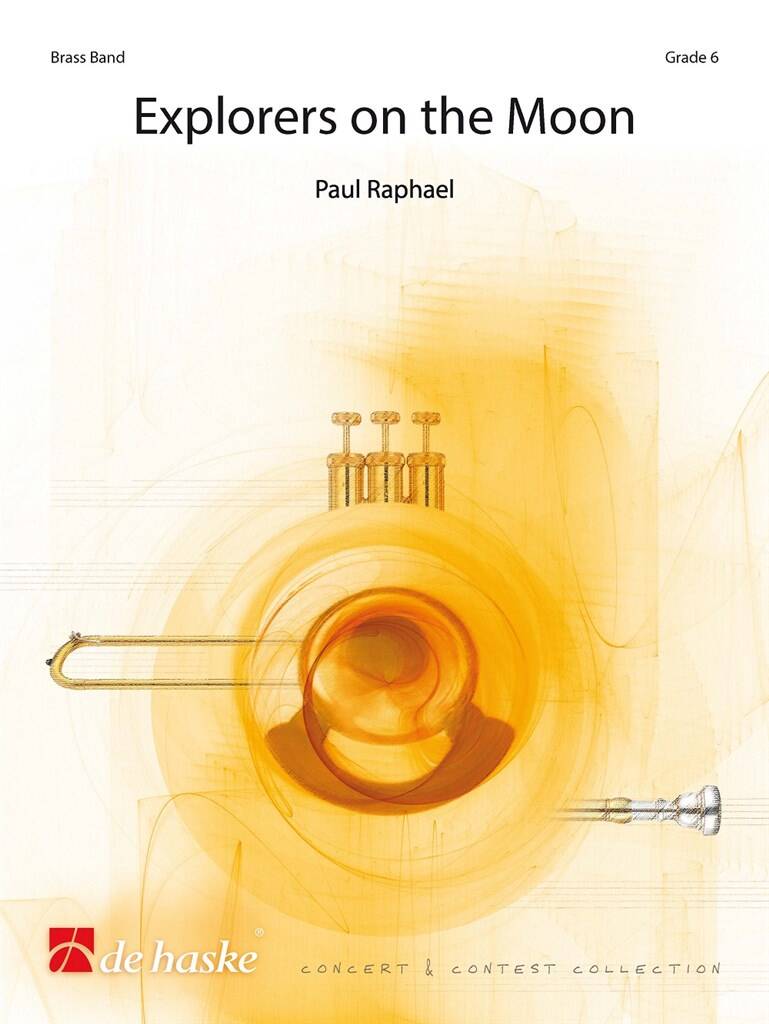
Explorers on the Moon - Paul Raphael
Composed by Paul Raphael, Explorers on the Moon, the sequel to his 2017 work Destination Moon, was composed in 2019 to commemorate the 50th anniversary of the 1969 Moon Landings. It is inspired by the Belgian author Herge and his most famous creation, Tintin. The music uses Herge's story from 1950 almost twenty years prior to the first ever moon landing - following Tintin and his fellow adventurers as they become the first humans on the Moon. This fantastic piece is split into three parts, titled 'Space', 'Nightmare Land' and 'The Journey Home' and is one of the most spectacular contest pieces in recent years.
Estimated dispatch 5-14 working days
-
 £144.99
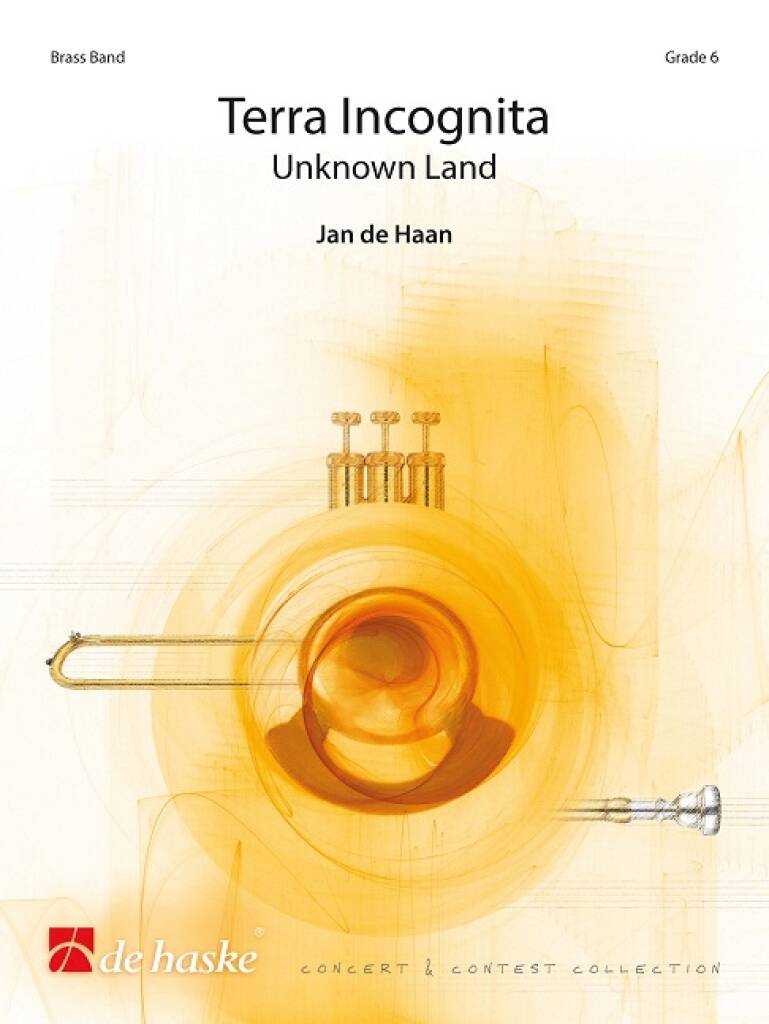
Terra Incognita - Jan de Haan
Download the Digeridoo sound file here.In five musically and thematically continuous parts, this composition transports us to foreign, fascinating places - stepping into the shoes of the explorers who set off to discover unknown lands centuries ago. The test piece for the Dutch Brass BandChampionships 2015 (Challenge Section) holds interesting solo parts for flugelhorn and trombone. An exciting musical journey!
Estimated dispatch 5-14 working days
 View Music