
Results
-
 £35.00
Ariel
DescriptionAll hail, great master! Grave sir, hail! I come To answer thy best pleasure, be 't to fly, To swim, to dive into the fire, to ride On the curled cloud. To thy strong bidding, task Ariel and all his quality. - William Shakespeare: The Tempest, Act 1, Scene 2Ariel was written for the Hammonds Band to open their programme at the 2019 Brass in Concert Championships at The Sage Concert Hall in Gateshead, where it received its premiere. The title is taken from the character in Shakespeare's play 'The Tempest'. Ariel is an immensely powerful "air spirit" or demon bound to serve Prospero, the exiled Duke of Milan, after being released by Prospero from imprisonment in a tree. In the play Ariel's magical abilities are used to help Prospero revenge himself on his enemies and reclaim his dukedom, whereupon Ariel finally regains his freedom.You can hear an audio preview and follow the score below: Performance notes:The cornets and horns are split into two "choirs" to be placed left and right of the band. It may be possible for the choirs to play their opening flourish offstage, and the optional repeated sections in the opening are to accommodate stage movement if required. Trombones form a third "choir" which should ideally stand centrally between basses and percussion, and the euphoniums and baritones should sit in front of the basses. The work requires four percussionists, although if four are not available the 2nd part may be omitted.Percussion 1: Kit - bass drum, snare, 3 x toms, hi-hat, suspended cymbal - and 3 x temple blocksPercussion 2: Tam tam and orchestral bass drum.Percussion 3: Glockenspiel and timpaniPercussion 4: Tubular bellsSoprano, solo cornets and 3rd cornets require cup mutes. Solo trombone requires a cup mute, second trombone requires a metal straight mute.
Estimated dispatch 7-14 working days
-
£250.00
Continental Divide - Stig Nordhagen
The title is "Continental Divide" and it has nothing to do with tectonic plates, but is another word for "Watershed".It is the place where the the water flows in opposite directions. For example, when you drive up a mountain, the water flows downwards, the same does it when you drive down the other side. On top there is usually a water, and it is in this water, or musical idea if you like,that it is a continental divide. What I intend is that in this piece there are some musical motifs that change character and direction. They can be in the foreground and carry the play, or they may be in the background as a countermeasure. It can also be from horizontal lines to vertical.Or rhythmical patterns that dont find their match until far into the piece.
Estimated dispatch 7-14 working days
-
£44.95
DEUS INVICTUS - GOD UNCONQUERED (Brass Band Set) - Andrew Mackereth
Deus Invictus draws its inspiration from well-known words from Romans 8: 38-39; 'For I am convinced that neither death nor life, neither angels nor demons, neither the present nor the future, nor any owers, neither height nor depth, nor anything else in all creation, can separate us from the love of God'. The music reflects the confidence and certainty of the scripture text while, as in everyday life, trials and tests come along which are reflected in a sequence of musical skirmishes. The work introduces the 19th century hymn 'St Albinus' to a wider audience and also includes references to the tunes 'St Margaret' and 'Rachie'. A setting of the Easter Hymn, 'Christ the Lord is risen today!', is heard followed by a final reprise of 'St Albinus'.
Estimated dispatch 7-14 working days
-
£29.95
PAEAN (Brass Band Set) - Dudley Bright
Commissioned by the Swiss Christian Brass Band Association in celebration of their 150th anniversary, the title 'Paean' means a shout of thanksgiving and praise. It is also the composer's personal expression of gratitude to God following major surgery. Although 'Paean' includes three fairly contemporary Christian songs, it is not intended to be played in any kind of rock or jazz style. The idiom is quite firmly rooted in brass band tradition. The opening fanfare-like section begins in celebratory mood before becoming more contemplative through the song 'Father God, I wonder'. A change of tempo heralds the statement of the thematically significant song 'Hosanna' before immediately moving to 'Faithful God'. Following a fugato the music retraces its steps to a triumphant restatement of the opening music.
Estimated dispatch 7-14 working days
-
 £30.00
Blue Bombazine - Terry Johns
The word Bombazine is derived from the obsolete French word Bombasin. Largely made in the Norwich area, Bombazine is a twilled fabric made of silk used mainly in dress making and popular in England in the reign of Elizabeth I. The image and feel of warm, smooth, opulent silk is aptly suited to a solo feature for tuba. Wing Commander Duncan Stubbs and the RAF Music Service commissioned Blue Bombazine for solo tuba and brass in 2014, for Senior Aircraftman Jonathan Gawn and the RAF Central Band. It was first performed at The Royal Northern College of Music in Manchester, on the 11th April 2015 at the British Festival of Wind Bands. The music is written in the jazz idiom with a testing solo part. It is available with brass band accompaniment or brass dectet. There is also a "recital" version available for tuba and piano.
-
 £36.30
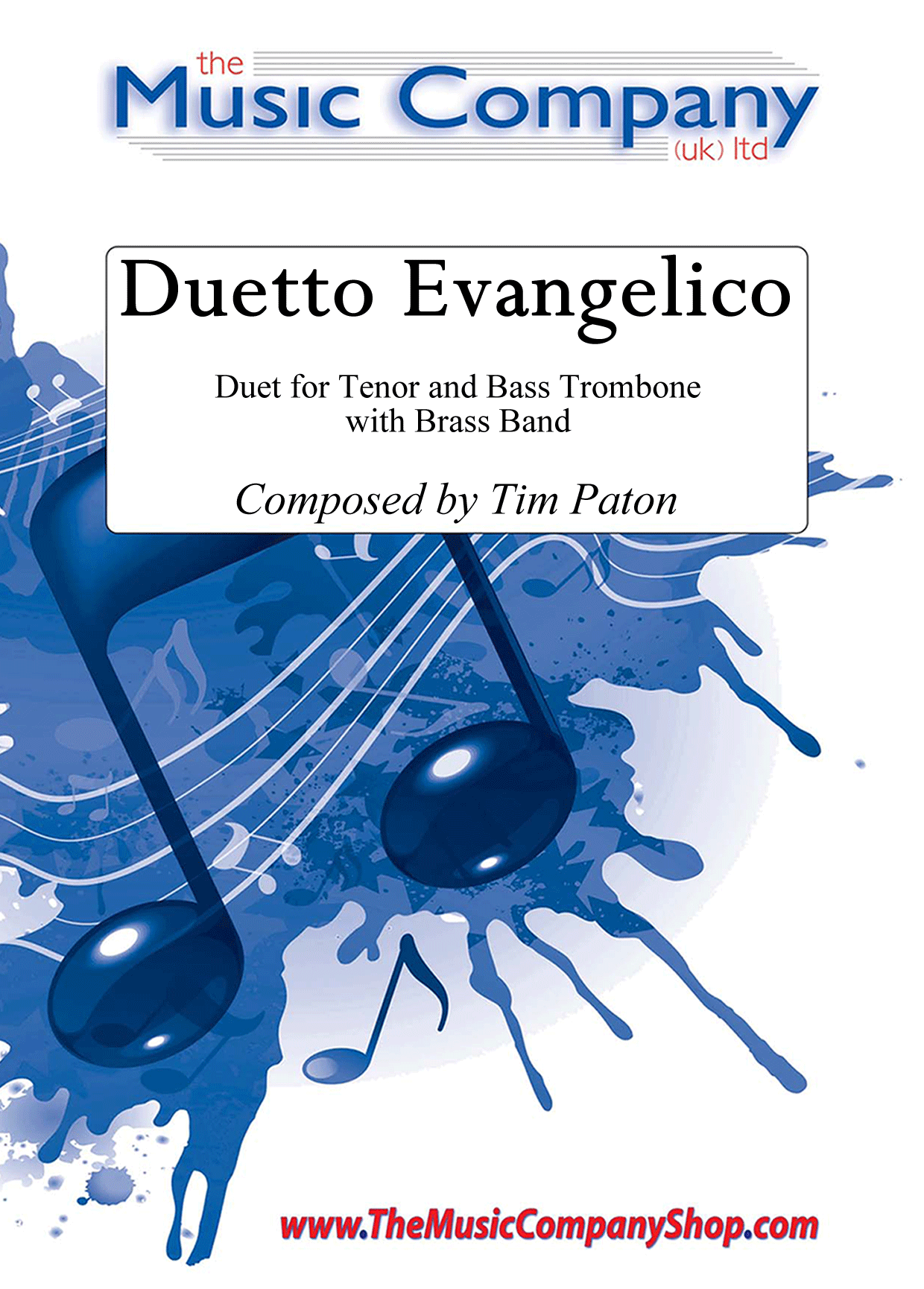
Duetto Evangelico - Tim Paton
A lively duet for tenor and bass trombone with brass band, created by Tim Paton and incorporating Sunday school favourites of This Little Light of Mine, Give Me Oil In My Lamp and ... Living Lord.Comments from the arranger, Tim Paton:Several years ago, I was asked to provide some musical entertainment for a religious festival. It included this duet, which now has a brass band accompaniment. It is musically satisfying, as well as fun for performers and audience.It uses some well known 'Sunday School' choruses, including "This little light of mine" and "Give me oil in my lamp".This is a lively duet, with plenty of typical trombone characteristics - comical obligato, smooth ballad style, and plenty of the famous glissando for which the instrument is renowned.Look and Listen (with piano accompaniment only, courtesy of Tim Paton 2011):
In Stock: Estimated dispatch 3-5 working days
-
 £30.00
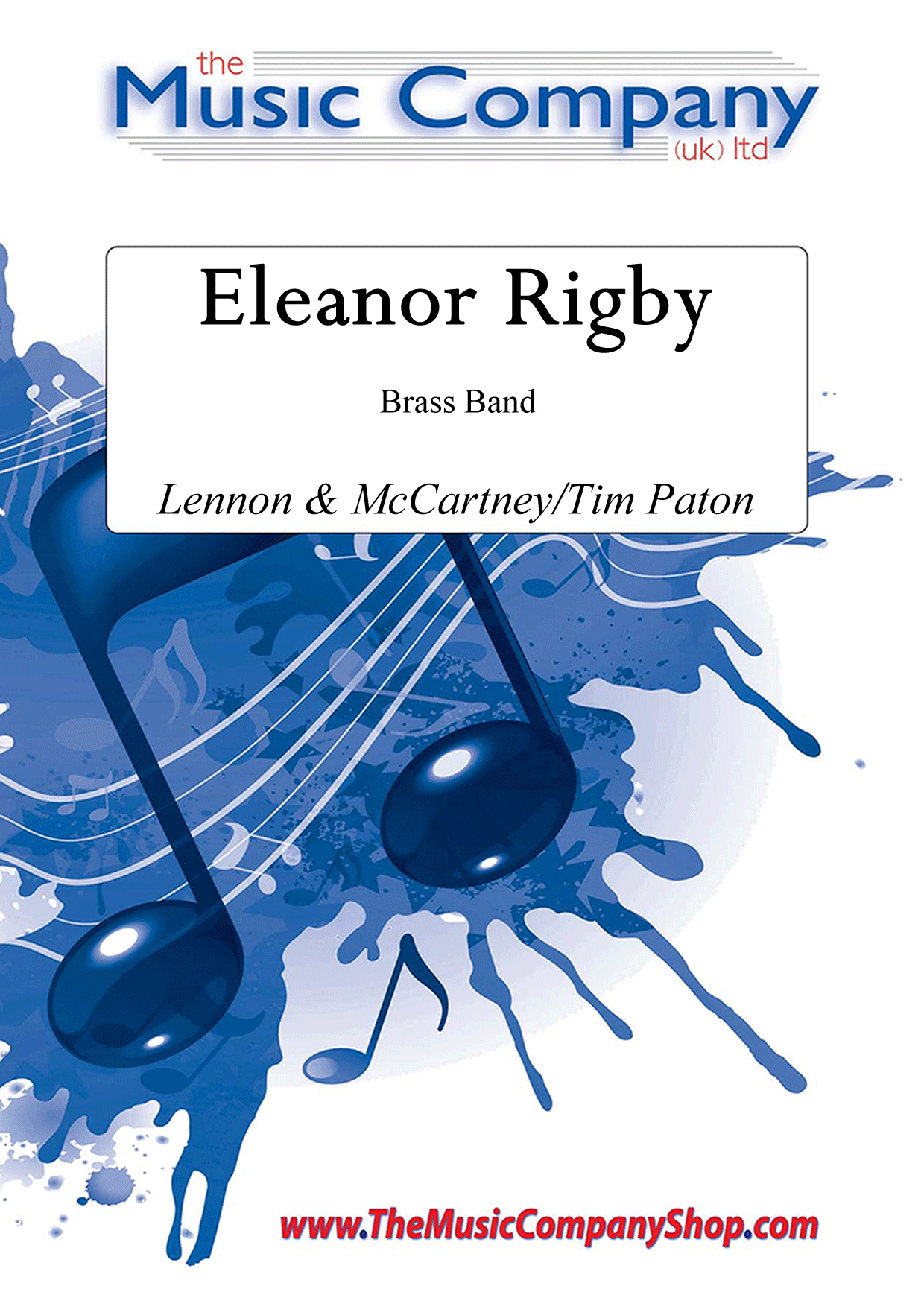
Eleanor Rigby - Lennon & McCartney
In 1966 The Beatles released a single, which included the song Eleanor Rigby. Now an all time, international favourite from the group, this evocative song, with its magical string accompaniment (provided by their producer and arranger, Sir George Martin) has been embraced by numerous artistes and genres.In this artful arrangement for brass band, Tim Paton has successfully transcribed that original sound and created a wonderful concert item.Roger Thorne commented:"I have recently purchased Tim's arrangement of this classic Beatles number and would definitely recommend it. A must for every band library. A fantastic arrangement,Thanks Tim."
In Stock: Estimated dispatch 3-5 working days
-
 £20.00
Pioneers (Ensemble) - Steve Robson
The 19th Century was a time of great pioneering spirit, where developments in industry, and transport were to begin a process, which was to transform societies around the world beyond recognition.In the vast, so-called "New World" of America these changes were exemplified as the railways spread out to reach hitherto remote and largely unexplored expanses.Steve Robson has written Pioneers as a three movement piece for brass and percussion ensemble (and also now available as a full brass band version), written in the spirit of John Philip Sousa (1854 - 1932), Stephen Foster (1826 - 1864) and Scott Joplin (1868 - 1917).The three movements have been written for the following instrumentation:2 x Bb cornet1 x flugelhorn1 x Eb Tenor Horn1 x tenor trombone1 x euphonium1 x Eb Bassdrumkit and percussionand consist of:March - The US Marine Band (1880)Spiritual - I'm Lookin' Up To HeavenRagtime - Canonball RagAlso available for brass band.
In Stock: Estimated dispatch 3-5 working days
-
 £42.00
Volcano (Score only) - Robert Simpson
One of the composer's most enduring works, Volcano was written for the National Brass Band Championships of Great Britain in 1979. The composer writes: "While it is, of course, possible to listen to this piece with the erruption of a volcano in mind, it is also possible to interpret the title in a figurative sense - that is to say, as one might refer to a 'volcanic temperament'. Alternatively, some may prefer to listen to is simply as a piece of music. I would recommend the latter." Duration: 12:00
Estimated dispatch 7-9 working days
-
 £52.00
Volcano (Parts only) - Robert SImpson
One of the composer's most enduring works, Volcano was written for the National Brass Band Championships of Great Britain in 1979. The composer writes: "While it is, of course, possible to listen to this piece with the erruption of a volcano in mind, it is also possible to interpret the title in a figurative sense - that is to say, as one might refer to a 'volcanic temperament'. Alternatively, some may prefer to listen to is simply as a piece of music. I would recommend the latter." Duration: 12:00
Estimated dispatch 7-9 working days