
Results
-
 £36.30
Neruda - Johann Baptist Georg Neruda
Johann Baptist Georg Neruda was an 18th century Czech violinist and composer. Classical trumpet players include his Concerto in Eb for Trumpet & Strings as one of their favourite solos, which is often performed on an Eb Soprano Trumpet. My son Jon, a fine trumpet and cornet player, has played it often. Soprano Cornet player Simon Morgan asked me if it could be done with a brass band. I have taken the lively 1st movement, and adapted it as a soprano cornet solo. Ideal as a concert item, part of a CD, or part of an entertainment programme."Tim, many thanks for this, a great arrangement and a great solo". Simon Morgan
In Stock: Estimated dispatch 3-5 working days
-
 £35.00
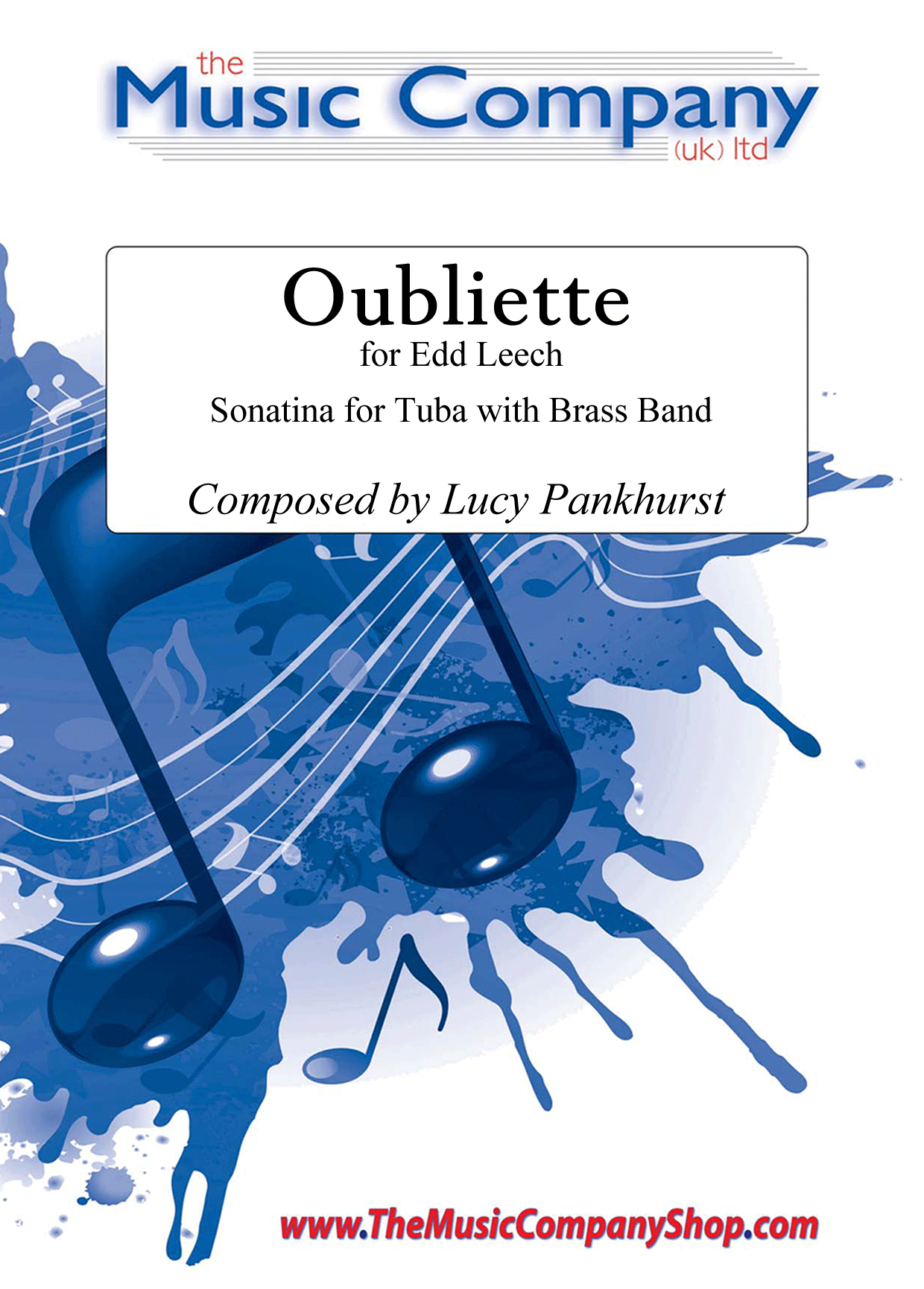
Oubliette - Lucy Pankhurst
Lucy Pankhurst has created a highly immersive solo for Tuba/Eb Bass with brass band accompaniment, aiming and succeeding in showing the lyrical and technical diversity of the tuba, demanding virtuoso brilliance and clarity in performance.Dedicated to tuba player Edd Leech, Oubliette raises the bar for tuba repertoire.Set includes score, brass band parts and solo parts for Eb Bass (TC) and Tuba (BC). Solo with piano accompaniment available separately.Programme notes from the composer, Lucy Pankhurst:From the French word oublier, meaning 'to forget', an oubliette was a form of dungeon used in the 14th century. A small, windowless room where someone is locked away to be forgotten and left to go mad.I initially chose this title for the piece as the Tuba is often forgotten as a solo instrument, when its versatility in performance should be celebrated. Oubliette showsThe work begins with desolate and sparse accompaniment with lamenting solo lines. The soloist has already been cast into the oubliette at this point and is beginning to wake from a somnolent state. Reality is blurred through the darkness of the chamber - the only entrance is a hatch in the ceiling, far out of reach.Memories are confused by countless hours of solitude - hallucinations and paranoia tainting reality. Gradually, the soloist remembers images from the past and gains confidence and strength. Long forgotten by the captors, or presumed dead in the chamber, the entrance hatch suddenly opens to allow another prisoner inside. The soloist seizes the opportunity for escape and a short battle ensues. Sword and fist fighting, perilous leaps over the entrances to more dungeons and fierce battle cries are futile, as the soloist suddenly realises they are alone in the oubliette once more and the skirmish was nothing but another dream.The piece concludes with unaccompanied soloist in the low register, sinking deeper into the shadows of the windowless prison; are they accepting their fate, or merely lying in wait for another chance of escape, if one will ever come . . .
In Stock: Estimated dispatch 3-5 working days
-
 £60.00
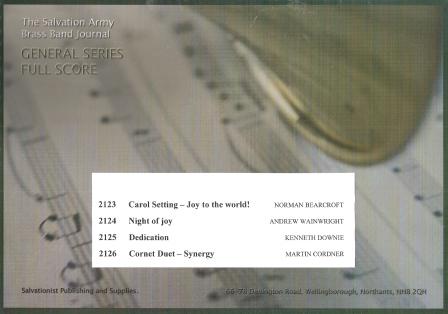
General Series Band Journal August 2013 Numbers 2123-2126
No. 2123 Carol Setting - Joy to the world! (Lieut. Colonel Norman Bearcroft)'Joy to the world' is a melody often attributed to Handel, but it is a bringing together of a couple of brief snippets of themes from his oratorio, 'Messiah'. These were put together by Lowell Mason to form the tune, 'Antioch', which we use for this carol. The carol has been arranged in majestic style by Lieut-Colonel Norman Bearcroft.No. 2124 Night of Joy (Andrew Wainwright)'Night of Joy' is based on a traditional Spanish Christmas song entitled 'Cantemos a Maria' ('Let's sing to Mary').No. 2125 Dedication (Dr Kenneth Downie)A setting of Colonel Brindley Boon's beautiful song of dedication, 'I dedicate myself to thee' (Musical Salvationist, November 1950).No. 2126 Cornet Duet - Synergy (Captain Martin Cordner)This piece celebrates the Biblical principle of believers working together in the Body of Christ and incorporates the song with words by Catherine Baird 'We're in Gods Army and we fight together with the composers own melody to Philip Paul Bliss's words 'Whosoever heareth! shout, shout the sound.
Estimated dispatch 7-14 working days
-
 £50.00
Judd: Beulah Land
Wilfred Heaton began to assemble material for 'Beulah Land' in the early 1990s following a request from the Amsterdam Staff Band for a new work. Despite reminding himself on the manuscript that he should either complete or destroy the work before his death, ultimately he did not manage either. This edition was subsequently realised in 2003 for the tour of the USA Western States by the Amsterdam Staff Band. 'Beulah Land' is Heaton's vision of the joy that awaits the Christian in Heaven and, according to his family, is reminiscent of the kind of music he often improvised at the piano. The three movements are as follows; 1. Better World; a waltz sequence on the tune 'Zealley' to which the words 'There is a better world, they say' are sung.2. Heavenly Home; an elegiac cortege using the tunes 'My home is in Heaven', 'I have a home that is fairer than day' and 'The home over there'.3. Happy Land; Beginning in waltz rhythm this soon gives way to a sequence of free variations on the song 'There is a happy land, Far, far away'.
Estimated dispatch 7-14 working days
-
 £37.95
Benvenuto Cellini (Brass Band - Score only)
Berliozs opera Benvenuto Cellini was first produced in Paris in 1838 but was withdrawn as a failure, and it was not until the production in Dresden in 1888 that it was finally acclaimed by the Germans as a triumph. Adapted from certain episodes recorded in the memoirs of Benvenuto Cellini, Tuscan sculptor and goldsmith, the story, laid in Rome during the mid-sixteenth century, is not strictly historical. The short opening Allegro, marked deciso con impeto, is conceived in the most brilliant Berlioz manner, utilising full instrumentation. In the Larghetto we meet at once the first of the opera themes " the Cardinals aria (from the last act) introduced in the bass, quasi pizzicato. A second melody leads to a resumption of the Allegro, the contrasting second subject in the tenor horns being an adaptation of Teresas aria (Act I). Towards the end the Cardinal theme is re-introduced by trombones, fortissimo against an energetic cornet and euphonium passage (senza stringendo " without hurry, says the score). After a unison passage storming skywards, there is a sudden, dramatic three-bar silent pause broken by Eb basses alone, again stating the Cardinal theme. A simple molto crescendo on the dominant, begun piano, leads to the long, resounding chord.
Estimated dispatch 7-14 working days
-
 £82.95
Benvenuto Cellini (Brass Band - Score and Parts)
Berliozs opera Benvenuto Cellini was first produced in Paris in 1838 but was withdrawn as a failure, and it was not until the production in Dresden in 1888 that it was finally acclaimed by the Germans as a triumph. Adapted from certain episodes recorded in the memoirs of Benvenuto Cellini, Tuscan sculptor and goldsmith, the story, laid in Rome during the mid-sixteenth century, is not strictly historical. The short opening Allegro, marked deciso con impeto, is conceived in the most brilliant Berlioz manner, utilising full instrumentation. In the Larghetto we meet at once the first of the opera themes " the Cardinals aria (from the last act) introduced in the bass, quasi pizzicato. A second melody leads to a resumption of the Allegro, the contrasting second subject in the tenor horns being an adaptation of Teresas aria (Act I). Towards the end the Cardinal theme is re-introduced by trombones, fortissimo against an energetic cornet and euphonium passage (senza stringendo " without hurry, says the score). After a unison passage storming skywards, there is a sudden, dramatic three-bar silent pause broken by Eb basses alone, again stating the Cardinal theme. A simple molto crescendo on the dominant, begun piano, leads to the long, resounding chord.
Estimated dispatch 7-14 working days
-
 £9.95
£9.95Second Quartet (Brass Quartet - Score and Parts)
My second Brass Quartet was written in 1968, immediately after I finished my studies at the Royal Academy of Music, and was in response to a request from my then publisher, R Smith & Co, to write some chamber music for brass band instruments. My Brass Quartet No 1 (also written in 1968) was scored for the usual combination of two cornets, horn and euphonium, but the second is scored for two horns, baritone, and tuba, giving the music a somewhat mellower sound world than the First Quartet. It is also a miniature in form in that it barely lasts six minutes. The music is in three movements: Prelude, Scherzo and Postlude. The outer movements are slow and thoughtful, while the middle Scherzo is rather astringent in character, with virtuoso demands made on the players. The Prelude begins with a duet for the two horns, answered by baritone and tuba, the material being rather rhetorical in style and although the Postlude begins in a similar fashion it also develops material from the Scherzo (slowed down of course) in the manner of a fugal exposition. The music ends with a series of quiet chords. - Edward Gregson
Estimated dispatch 7-14 working days
-
 £11.20
Christmas Processional (Brass Band Additional Parts) Trad. arr. Wainwright)
An effective opener to any Christmas concert, based on the French carol, 'Bring a torch, Jeanette, Isabella'. It tells the story of a group of children in medieval Provence, dressed up as shepherds and milkmaids, carrying torches and candles as they proceed to the stable. As they draw closer and their excitement increases, they are constantly reminded by their parents to keep the noise down so that they don't wake up the baby Jesus. The music begins quietly and builds to a majestic conclusion. "If I were still conducting bands regularly, this would certainly be on my list as a Christmas concert opener - it sets the energy and mood most effectively. The scoring is terrific." Paul Hindmarsh, British Bandsman magazine This arrangement also includes optional Organ and Hand bells parts. For a follow-the-score video of Virtuosi GUS Band performing the work, please visit: https://www.youtube.com/watch?v=2GasDfecnyY Sheet music available exclusively from World of Brass - www.worldofbrass.com Includes score and full set of parts. Difficulty Level: 2nd Section + Instrumentation: Solo Horn F 1st Horn F 2nd Horn F 1st Baritone B.C. 2nd Baritone B.C. 1st Trombone B.C. 2nd Trombone B.C. Euphonium B.C. Bass B.C. (Bass Eb Part) Bass B.C. (Bass Bb Part)
In Stock: Estimated dispatch 1-3 working days
-
 £37.35
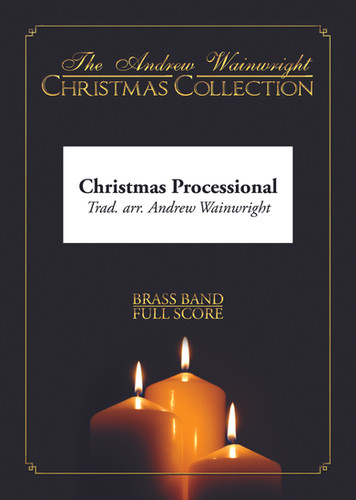
Christmas Processional - Brass Band & opt. Organ (Trad. arr. Andrew Wainwright)
An effective opener to any Christmas concert, based on the French carol, 'Bring a torch, Jeanette, Isabella'. It tells the story of a group of children in medieval Provence, dressed up as shepherds and milkmaids, carrying torches and candles as they proceed to the stable. As they draw closer and their excitement increases, they are constantly reminded by their parents to keep the noise down so that they don't wake up the baby Jesus. The music begins quietly and builds to a majestic conclusion. "If I were still conducting bands regularly, this would certainly be on my list as a Christmas concert opener - it sets the energy and mood most effectively. The scoring is terrific." Paul Hindmarsh, British Bandsman magazine This arrangement also includes optional Organ and Hand bells parts. For a follow-the-score video of Virtuosi GUS Band performing the work, please visit: https://www.youtube.com/watch?v=2GasDfecnyY Sheet music available exclusively from World of Brass - www.worldofbrass.com Includes score and full set of parts. Alternative parts for Horns in F, and Baritones, Trombones, Euphonium and Tubas in Bass Clef are available here. Difficulty Level: 2nd Section + Instrumentation: Soprano Cornet Eb Solo Cornet Bb Repiano Cornet Bb 2nd Cornet Bb 3rd Cornet Bb Flugel Horn Bb Solo Horn Eb 1st Horn Eb 2nd Horn Eb 1st Baritone Bb 2nd Baritone Bb 1st Trombone Bb 2nd Trombone Bb Bass Trombone Euphonium Bb Bass Eb Bass Bb Timpani Percussion 1-3 Organ (optional) Hand bells (optional)
In Stock: Estimated dispatch 1-3 working days
-
 £37.35
Drink to me only (Flugel Solo with Brass Band) Trad. English Melody arr. Bowen
Enhance your solo repertoire with this evocative and timeless setting for flugel horn. Originally arranged for the New York Staff Band in 1991, this piece offers a lyrical and deeply expressive showcase for the soloist. This arrangement draws from a rich heritage, blending secular and sacred traditions. The melody, famously attributed to Colonel R. Mellish (1777-1817), is inspired by the classic 17th-century poem by Ben Johnson. Within The Salvation Army tradition, this beloved tune is paired with the sacred lyrics of William Drake Pennick, "There is a holy hill of God, its heights by faith I see" (The Salvation Army Song Book, No. 627), making it a versatile choice for both concert and worship settings. This setting is celebrated for its warm, melodic lines, perfectly suited to the mellow tonal qualities of the flugel horn. For those interested in studying the interpretation of this work, the New York Staff Band featured this arrangement on their 1992 recording, Under Three Flags (Triumphonic TRCD 1050). To view a rolling score video featuring Donald Spencer (Flugel Horn Soloist) with the New York Staff Band please visit: www.youtube.com/watch?v=ZRocgjTrli4 Sheet music available from: UK - www.brassband.co.uk USA - www.solidbrassmusic.com Difficulty Level: 4th Section + Instrumentation: Flugel Horn Soloist Bb Soprano Cornet Eb Solo Cornet Bb Repiano Cornet Bb 2nd Cornet Bb 3rd Cornet Bb Solo Horn Eb 1st Horn Eb 2nd Horn Eb 1st Baritone Bb 2nd Baritone Bb 1st Trombone Bb 2nd Trombone Bb Bass Trombone Euphonium Bb Bass Eb Bass Bb Timpani Glockenspiel
In Stock: Estimated dispatch 1-3 working days