
Results
-
£72.99English Dances, Set 1, Op. 27: No. 1 - Sir Malcolm Arnold - Ray Farr
English Dances, Set I, opus 27, is a light classic composition that was written for orchestra by the British composer Malcolm Arnold in 1950. The set contains four dances that continue without pause: the individual movements are indicated by the tempo markings. The work came about at the request of Bernard de Nevers, at the time the head of publisher Alfred Lengnick & Co., who asked Arnold to write a suite of dances as an English counterpart to Dvo ak's Slavonic Dances and Bartok's Romanian Folk Dances. The premiere took place in the spring of 1951, played by the London Philharmonic Orchestra, conducted by Sir Adrian Boult. Following the success of the first set, DeNevers asked the composer to write a second one, which Arnold completed the next year (Op. 33). The Andantino from the first set has been skilfully arranged and orchestrated for brass band by Ray Farr.
Estimated dispatch 5-14 working days
-
£154.60Circius - Torstein Aagaard-Nilsen
The work is important for me because it was my first piece to be performed outside Norway. Black Dyke Band/David King performed it and did a recording of it in 1991. In the original score I quote a Swedish bishop (Olaus Mangnus) who lived in the 15th century. He travelled around Scandinavia and drew maps - very important historic material. When he came to the north of Norway (where I come from) he decribed the wind from the north as Ciricus: (something like) Worst of all winds is Circius, that revolves (?= turn upside down) heaven and earth. (Well, not a good translation Im afraid). The fast sections reflects the mighty winds from the north. In the middle section, I borrowed afolksong-like tune (by C. Elling, a Norwegian composer). The text (by Kristoffer Janson) tells about old times when the fishermen used open boats: they had to put their lives in the hands of God.
Estimated dispatch 5-14 working days
-
£60.99
Aurora Borealis - Morten J. Wallin
Aurora Borealis, more popularly known as the Northern Lights, was a source of superstition in the Middle Ages. This dazzling spectacle, which is accompanied by whispering sounds, put the fear of God into those who didn't know that this was simply one of nature's grand shows. Many heathen attributed the phenomenon to the incomprehensible ways of the gods. Today we know better. Every 11 years, the amount of particles emitted by the sun is at its highest level, as is the case this year. These particles are hurled away from the sun, beyond its magnetic field. A small percentage of these particles are able to penetrate the earth's atmosphere. Once they are here, they begin tocollide and form the beautiful patterns in the night sky which we call the Aurora Borealis.
Estimated dispatch 5-14 working days
-
£149.99A Tribute to Henk Badings - Rob Goorhuis
The motivation for composing this test piece for the Concert Division Brassband of the 2001 WMC was Rob Goorhuis's deep respect for one of the greatest Dutch composers of the 20-th century who also enlarged the wind band repertoire in a most valuable way. Goorhuis wanted to light up the "soft and kind" side of the brassband and wrote about this composition : "The basis is a theme of twelve tones wich Badings once played at an International Organ Improvisation Contest in Haarlem.My organ teacher participated in that contest and so the theme remained somehow in the back of my mind." The composer worked out a series of variations and clustered them into bundles ofthree and so the melody kept its diversity while remaining easy to recognise.
Estimated dispatch 5-14 working days
-
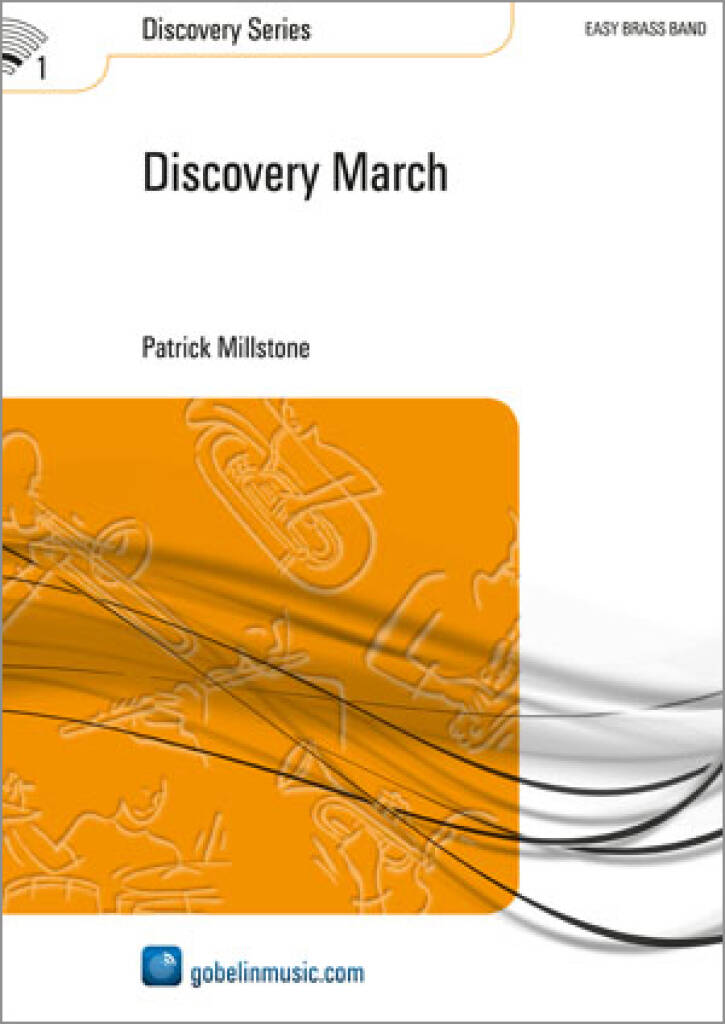
£54.99Jamaica - Timothy Travis
Jamaica is an island in the Caribbean. In 1494 it was discovered by Christopher Columbus, who used it as private property until 1509. After some skirmishes it fell under British rule and the sugar trade on the island flourished. After the abolition of slavery in 1834 it was only granted Home Rule in 1944, but it remained a member of the British Commonwealth of Nations. Whereas the export of cane sugar used to be Jamaica's main export product for many years, nowadays music has taken over this role. At first American music used to be very popular on the island. Later, however, Jamaican musicians started to experiment and thus in the end created their ownmusical style called Reggae. Well-known Reggae musicians are Bob Marley and Peter Tosh. The most important instruments used in Reggae are the bass and the drums. Together they form the base for the style: the riddim. A bass drum accent on the second and fourth beat are characteristic of a typically reggae drum beat. To this syncopic patterns are often added. The rhythm guitarist plays chords in a characteristic Reggae rhythm, not on, but between the beats.
Estimated dispatch 5-14 working days
-
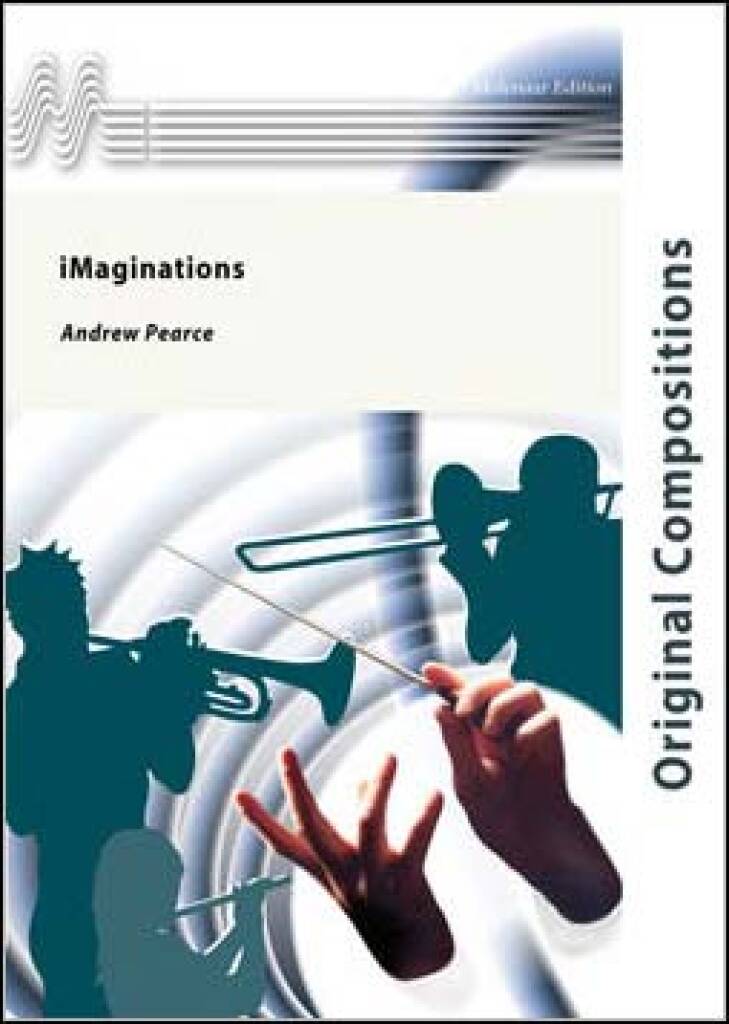
£119.99Trimbeka - Carl Wittrock
Trimbeka is a composition which owes its existence to the anniversary of music society "de Vlecke" in Gorredijk. The name Gorredijk originates from "goor" or "gor", which means : bog. Along the marshy peat ran a "dijk" (the Dutch word for dike), called the Gordijk. The name of the village resembles that of the home town of the composer himself, who comes from a town in Twente called Goor. Three streams used to run through the area around Gorredijk. the historical name Trimbeets (Trimbeka), meaning three brooks, recalls this to mind. Gorredijk was a flourishing "Vlecke", i.e. large village, which was situated on an intersection of important connecting roads.The liveliness which this entailed is one of the distinctive elements in Trimbeka. Furthermore, ominous sounds possibly refer to the dangers of the bog, while the resonance of the merriment during the annual fair can also be heard. The slow middle movement is an ode to the beautiful landscape surrounding the village.
Estimated dispatch 5-14 working days
-
£80.00St. Magnus - Kenneth Downie
Dedicated to Alastair Massey, an inspirational music teacher. Commissioned by the Scottish Brass Band Association for the 2004 European Brass Band Championships in Glasgow. This music is a set of variations on the tune known as St Magnus, which is attributed to Jeremiah Clarke. Most people will associate it with Thomas Kelly's hymn which begins: "The Head that once was crowned with thorns is crowned with glory now". The tune is very simple, consisting of just two, four-bar phrases. Neither is there much in the way of rhythmic variety, every note being a crotchet with the exception of two quavers, and the last note in each phrase. Within such a simple structure, however, lies considerable strength. THEME The listener is given the opportunity of hearing it twice, in full, at the beginning, starting with one player but soon taken up by the full ensemble. It returns in the middle of the music and is stated again near the end. This has been done quite deliberately in the hope that there will be an appreciation of what material is being developed, by the listener as well as by those with access to the score, who are able to see the visual connections. VARIATION 1 This takes the rhythm of the last part of the theme and also uses the shape of the opening as a recurring figure. The mood is whimsical and skittish, with short, teasing rhythmic figures tossed around the band, and quick interplay with percussion, at a fast tempo. An energetic flourish finishes this variation before the Andante espress. VARIATION 2 This commences with chords related to the opening of Variation 1. The cantabile on solo comets establishes a new, lyrical mood and there is scope for expressive playing in a series of short solo passages. The theme works its way unobtrusively into the texture before a reprise of the solo cornet melody and some more lyrical interchanges between Eb bass, euphonium, flugel horn and comets. The variation ends serenely with clear references to the last phrase of the theme. VARIATION 3 The first idea to dominate is clearly linked to the shape of the theme's first phrase. There is a frenetic feel to much of this variation, with considerable energy and instability created by extensive use of cross-rhythms. A thinning-out of the score marks a clear change to development of the start of the second phrase of the theme. This proves to be short-lived however, and the opening material returns leading to a restatement of the theme, "Maestoso," after which a euphonium cadenza links to Variation 4. VARIATION 4 Here we have some solos for euphonium, cornet, trombone and Eb bass set against a background of horns and baritones presenting a pensive statement of the theme's opening. VARIATION 5 This commences Allegro, with lively work for cornet and euphonium spreading to the whole band before attention focuses on the beginning of the second phrase of the theme which is initially presented in diminution, then in regular rhythm, then in inversion. An increase in tempo coupled with a decrease in volume, requires dexterity and control, with several metrical challenges thrown in for good measure. The same fragment of phrase becomes an ostinato which generates a frenzied climax, punctuated by short, dramatic silence, before the opening figure returns and the music gradually winds down. The tubular bells herald the final return of the theme, in augmentation, marking the start of the Finale. FINALE This features the running semiquavers of the previous variation sounding in counterpoint. A fast, furious coda speeds the work to a conclusion while references to the opening of the theme are still trying to break into the texture of the music. Kenneth Downie
Estimated dispatch 5-14 working days
-
£127.30
Dancing Trolls [Norwegian Dance] - Øystein Olsen Vadsten
"Dancing Trolls" is a sequel to "The Battle of the Hats", which was published in 2015. Like "The Battle of the Hats", "Dancing Trolls" is a piece of music based on Norwegian traditional dances. This time around,its the reinlender dance which takescentre stage.The music is composed by Oystein Olsen Vadsten who keeps the strong melodic and tempo, which is dear to this kind of dance. Admittedly given a make-over with a more rhythmic accompaniment and more exciting harmonization.Thismakes it a fun piece, both to Listen to and play. The reinlender dance derives from the Rhineland in Germany,and is also known as the German Polka.To the conductor:Because this is a dance form whichis dependent on the right "swing",it is of great importance to keep as close to the metronome mark as possible. A steady groove, primarily specified by the drum set, is also essential for a good result. Remember to keep a good balance between the melody carrying instruments and theaccompaniment. Good luck and have fun with this "crazy" little tune.
Estimated dispatch 5-14 working days
-
£115.60Robin Hood Suite No. 2 - Roar Minde Fagerli
Robin Hood suite 2 is five movements collected from a play written for a summer course arranged by The Norwegian Band Federation. The Composer is inspired by the story of Robin Hood; He who steals from the rich and gives to the poor.The composer describes different charters and places from the story in his music. In the first movement you will meet the merciless Sheriff of Nottingham. The second movement describes the caring Friar Tuck. In the third movement Robin Hood and Lady Marion sneaks around in the Castle. In the fourth movement Prince John's guards hunts Robin. In the fifth movement Robin Hood and his friends celebrate their victory!
Estimated dispatch 5-14 working days
-
£115.60Movie Fantasy - Hans Offerdal
Movie Fantasy is a film music fantasy in four movements.In the first movement we meet the hero of our story. He is a strong man who fights for justice. Thefollowing movement introduces us to the bad guy with his evil mind and vicious plan to destroy our hero.In the third movement they chase each other and end up in a huge fight. They knock each other out and liestill on the ground. Which one of them will survive?In the final movement our hero wakes up at the hospital the very next morning with his girl friend at hisside. He realises that he won the fight and the bad guy is set in jail. His girlfriend embraces him and thecamera moves back. End credits roll as the piece closes with a fanfare.Each movement can also be played separately.
Estimated dispatch 5-14 working days
