
Results
-
 £32.00
Confluence (Score only) - William HImes
Confluence was commissioned by the River City Brass Band for a series of concerts entitles Always a River, dedicated to the musical heritage of the American states linked by the Ohio River: Pennsylvania, Ohio, West Virginia, Kentucky, and Illinois (the state where William Himes resides). The title relates to the fact that the Ohio River is created by the confluence of two rivers - the Allegheny and the Monongahela - at Pittsburgh, the home of the River City Brass Band conducted at the time of writing by Robert Bernat.
Estimated dispatch 7-9 working days
-
 £42.00
Confluence (Parts only) - William HImes
Confluence was commissioned by the River City Brass Band for a series of concerts entitles Always a River, dedicated to the musical heritage of the American states linked by the Ohio River: Pennsylvania, Ohio, West Virginia, Kentucky, and Illinois (the state where William Himes resides). The title relates to the fact that the Ohio River is created by the confluence of two rivers - the Allegheny and the Monongahela - at Pittsburgh, the home of the River City Brass Band conducted at the time of writing by Robert Bernat.
Estimated dispatch 7-9 working days
-
 £29.88
Ding Dong Merrily on High (Brass Band) Trad. arr. Stephen Tighe
VIEW SCORE PDF This arrangement of the popular carol Ding Dong Merrily on High is the first published work by BrookWright Music of English arranger Stephen Tighe. This accessible setting receives a fresh, rhythmic treatment, aided by the use of sleigh bells and tubular bells. The tune itself first appeared as a secular dance tune known under the title Branle de l'Official in Orchesographie, a dance book written by the French cleric, composer and writer Jehan Tabourot (1519-1593). The carol was first published in 1924 in his The Cambridge Carol-Book: Being Fifty-two Songs for Christmas, Easter, and Other Seasons. Woodward took an interest in church bell ringing, which no doubt aided him in writing it. The macaronic style is characteristic of Woodward's delight in archaic poetry. Sheet music available from: UK - www.brassband.co.uk USA - www.solidbrassmusic.com Difficulty Level: 4th Section + Instrumentation: Soprano Cornet Eb Solo Cornet Bb Repiano Cornet Bb 2nd Cornet Bb 3rd Cornet Bb Flugel Horn Bb Solo Horn Eb 1st Horn Eb 2nd Horn Eb 1st Baritone Bb 2nd Baritone Bb 1st Trombone Bb 2nd Trombone Bb Bass Trombone Euphonium Bb Bass Eb Bass Bb Timpani Sleigh Bells Drum Kit Tubular Bells (or Glockenspiel)
In Stock: Estimated dispatch 1-3 working days
-
 £12.00
Of Men and Mountains (Brass Band Study Score)
Of Men and Mountains was commissioned by the Netherlands Brass Band Championships for their 10th Anniversary Contest, held in Drachten in December 1990.The title of the work and its genesis came about as a result of a train journey the composer took in July 1989 across Canada from Toronto to Vancouver. The awe-inspiring journey through the Rocky Mountains, with its high peaks and shafts of sunlight breaking through the clouds, with its canyons and ferocious rapids, made the composer understand a little more about the majesty of nature and the fragility of humanity. The eternal struggle between man and nature was personified in the building of this incredible railway, hence the title (after Blake).The work is dedicated to the memory of Eric Ball, who died shortly before the writing of the work commenced.Of Men and Mountains is in one continuous movement and lasts about 17 mins. Its form is difficult to describe because of its motivic and accumulative nature, but it is essentially a symphonic tone poem in search of a theme, which eventually comes in its final and complete state in the majestic ending after an ever-increasing paced scherzo.Duration: 17.00
Estimated dispatch 7-14 working days
-
 £24.95
Judd: Unconquered
Those familiar with the composers compositions will know that his style of march writing was quite individualistic, being characterised by a rather aggressive and syncopated first part, generally in the minor mode, contrasting with a broad legato melody at the trio. Unconquered is no exception to this pattern and it is felt that it will prove useful for both festival and processional use.
Estimated dispatch 7-14 working days
-
 £44.95
Judd: Euphony
Previously only available in manuscript form, this euphonium solo with brass band accompaniment is now available in printed format. Euphony (meaning a pleasant, sweet sound) is based on the tunes of Sidney Cox with material taken from the songs; 'He found me', 'This one thing I know', 'You can tell out the sweet story' and 'Deep and wide'. At the time of writing, the composer remarked; 'The euphonium is often associated with melodies and harmonies that lend themselves to pleasing sounds'. That is true of this solo but it also presents considerable technical challenges for the soloist in terms of range and technique.
Estimated dispatch 7-14 working days
-
 £34.95
Judd: Tucker
Originally in the Festival Series in 1933 and written by the master of solo writing, Erik Leidzen, this has become in SA circles a 'standard' for all aspiring cornetists, exploring the full range of the instrument from bottom F# to top D.
Estimated dispatch 7-14 working days
-
 £24.95
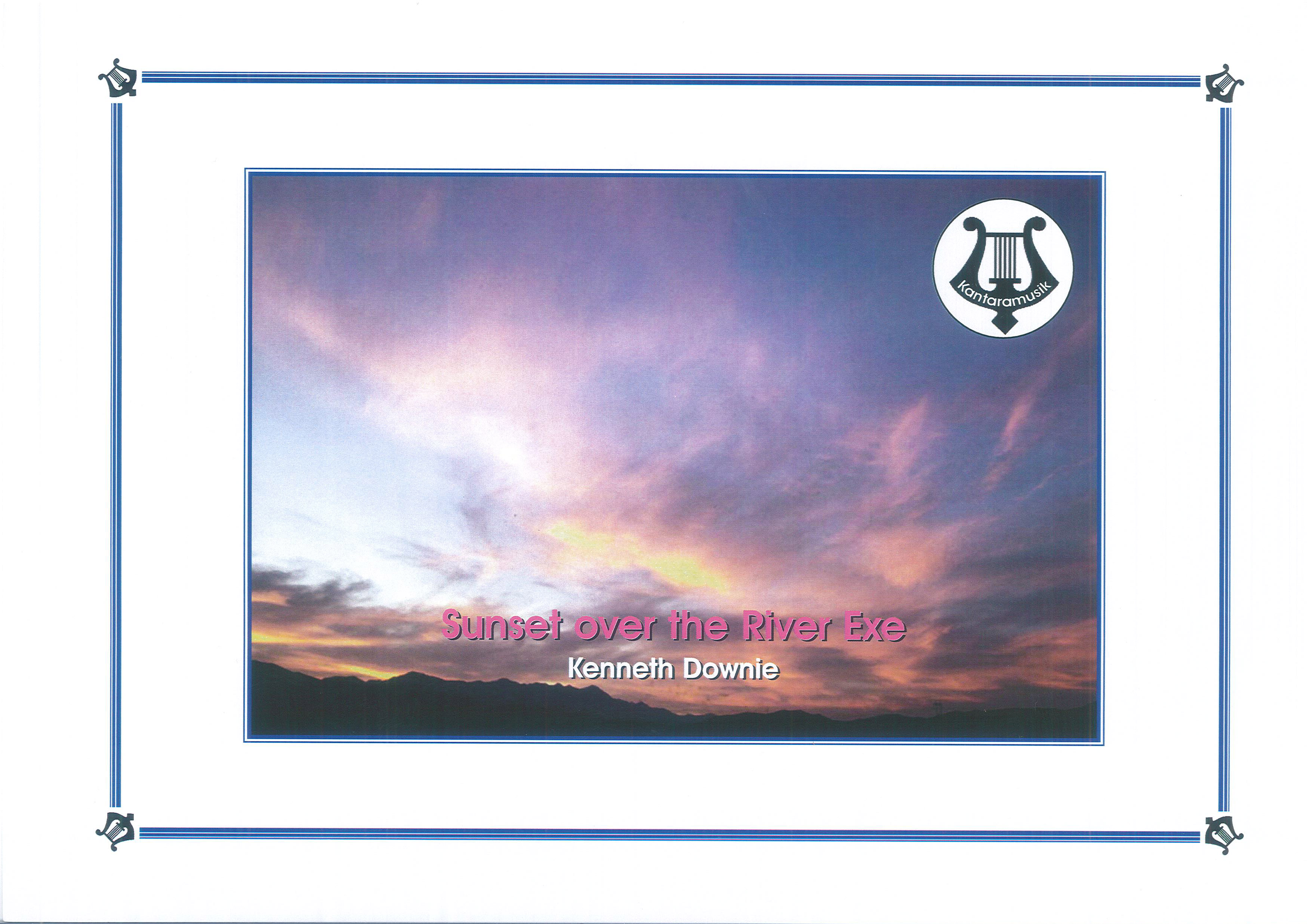
Sunset over the River Exe (Brass Band - Score and Parts)
From the little office in my garden where the composer does all his writing,there is a beautiful view looking westward, over the River Exe, in south Devon. It is a constant inspiration and makes me most grateful every time it is looked at. This little nocturne is the result of many musings and hopefully it will conjure up the atmosphere of the scene for all listeners.
Estimated dispatch 7-14 working days
-
 £104.99
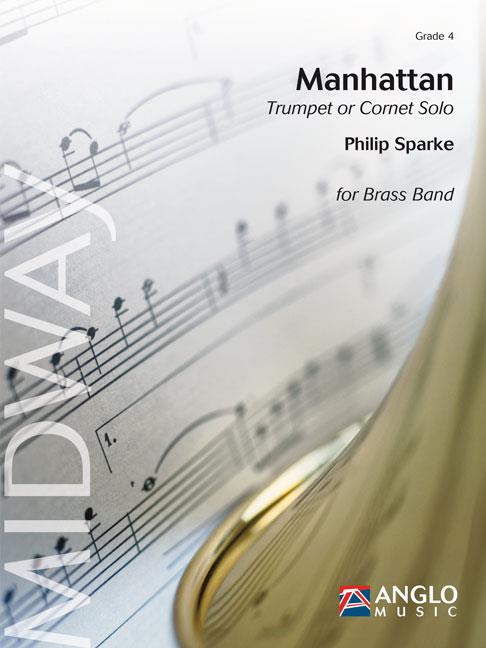
Manhattan (Cornet Solo with Brass Band - Score and Parts)
Cornet or Trumpet Solo with Brass BandManhattan was commissioned by the United States Army Band for their solo cornet player Woodrow English and first performed by them in Carnegie Hall, New York, in November 2003. The two-movement work demonstrates both the lyrical and technical abilities of this outstanding player. The 'theme' is a weekend in New York and the opening bluesy movement, Saturday Serenade, describes the city on a Saturday night. While writing Sunday Scherzo, the composer pictured an early morning jog in Central Park. This vivaciously rhythmic second movement ends with an even quicker coda bringing the work to a brilliant close. Each movement can also be played individually when a shorter solo is required.Duration: 9:30
Estimated dispatch 7-14 working days
-
 £19.99
Lullaby (Euphonium Duet with Brass Band - Score and Parts)
Lullaby is a beautiful euphonium duet with band accompaniment. The solo and contrapuntal writing, combined with a rich accompaniment from the band, offers peace and serenity. Suitable for Youth/4th Section Bands and above. Duration: 4.00
Estimated dispatch 7-14 working days
 Watch video