
Results
-
£40.00
The Battle of Athens - Harper, P
Chocks-away chaps! This is an aerial dogfight in music.1st section +Duration 3.20 minsListen to Cory BandCourtesy of World of Brass
In Stock: Estimated dispatch 1-3 working days
-
 £79.95
The Lost Village of Imber (Brass Band - Score and Parts) - Bond, Christopher
The Lost Village of Imber was commissioned by Bratton Silver Band in 2019 in celebration of 160 years of the band; 1859-2019. Structured in three movements, the complete work was premiered by Cory Band at Wiltshire Music Centre in February 2020.The village of Imber on Salisbury Plain had been inhabited for over one thousand years when it was evacuated in 1943 to make way for military training in the Second World War. At the time, with preparations for the Allied invasion of Europe underway, most villagers put up no resistance, despite being upset, with the belief that they'd return once the war had concluded. To this day, Imber and its surrounding land remain a military training ground. The villagers never returned, and just the shell of what was once a community remains.Structured in three movements, it is on this very real story that the work is based, setting out the series of events of 1943 in chronological order.The first movement, On Imber Downe, portrays a sense of jollity and cohesiveness, a community of individuals living and working together before news of the evacuation had broken. Sounds of the village are heard throughout, not least in a series of percussive effects, the anvil of the blacksmith; the cowbell of the cattle and the bells of the church.The second movement, The Church of St. Giles, begins mysteriously and this sonorous, atmospheric opening depicts Imber in its desolate state and the apprehension of residents as they learn they have to leave their homes. Amidst this is the Church, a symbol of hope for villagers who one day wish to return, portrayed with a sweeping melodic passage before the music returns to the apprehension of villagers facing eviction around their sadness at losing their rural way of life.In complete contrast, the third movement, Imemerie Aeternum, portrays the arrival of the military, complete with the sounds of the ammunition, firing and tanks, sounds which were all too familiar to those living in the surround areas. To close, the Church of St. Giles theme returns in a triumphant style, representing the idea that the church has always been, even to this day, a beacon of hope for the villagers and local community, both the centrepiece and pinnacle of a very real story.Duration: 13.30
Estimated dispatch 7-14 working days
-
 £59.99
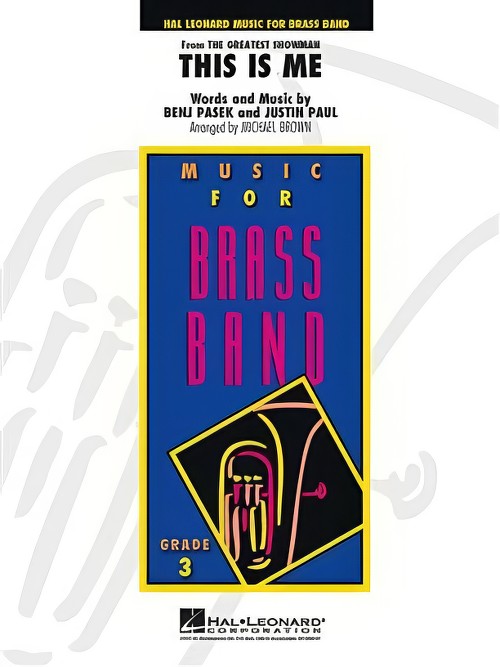
This is Me (from The Greatest Showman) (Brass Band - Score and Parts) - Pasek & Paul - Brown & Jeanbourquin
From the songwriting team who brought us Dear Evan Hansen and La La Land, the movie musical The Greatest Showman is based on the true story of P. T. Barnum, with Hugh Jackman in the title role. This arrangement of the powerful anthem from the film is a dynamic showcase for the concert stage.
Estimated dispatch 7-14 working days
-
 £50.00
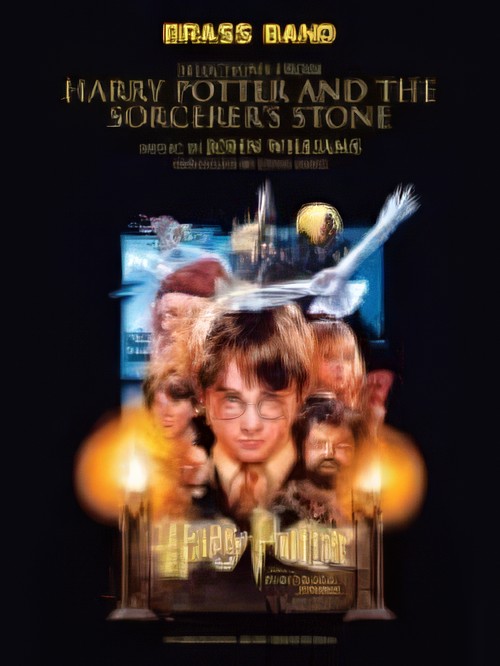
Harry Potter and the Sorcerer's Stone, Selections from (Brass Band - Score and Parts) - Williams, John - Sykes, Steve
Better known in the UK as Harry Potter and the Philosopher's Stone, this is the first of J.K. Rowling's Harry Potter novels - the seven-part tale of Harry Potter's training as a wizard and his coming of age. This arrangement by Steve Sykes includes some of the best-known themes from the film score.Suitable for Advanced Youth/3rd Section Bands and aboveDuration: 8.00
Estimated dispatch 7-14 working days
-
£24.95
Now Is The Hour (Cornet Solo with Brass Band - Score and Parts) - Steadman-Allen, Ray
This romantic Maori song of farewell was arranged as a cornet solo for David Daws. Within The Salvation Army, the words 'Search me, O God, and know my heart today' are now associated with this beautiful tune.
Estimated dispatch 7-14 working days
-
£12.50
Now Is The Hour (Cornet Solo with Brass Band - Score only) - Steadman-Allen, Ray
This romantic Maori song of farewell was arranged as a cornet solo for David Daws. Within The Salvation Army, the words 'Search me, O God, and know my heart today' are now associated with this beautiful tune.
Estimated dispatch 7-14 working days
-
 £24.95
When the Saints Go Marching In (Brass Band Set) - Siebert, Edrich
This is the first piece ever published by Studio Music. Expertly arranged by Edrich Siebert, this work has stood the test of time. A great standard for any library.
Estimated dispatch 7-14 working days
-
£29.95
This Is My Story (Cornet or Trumpet Solo with Brass Band - Score and Parts) - Lundkvist, Krister
A 'Latin' style solo for cornet or trumpet based on the hymn tune 'Blessed Assurance'.
Estimated dispatch 7-14 working days
-
£14.95
This Is My Story (Cornet Or Trumpet Solo with Brass Band - Score only) - Lundkvist, Krister
A 'Latin' style solo for cornet or trumpet based on the hymn tune 'Blessed Assurance'.
Estimated dispatch 7-14 working days
-
 £15.00
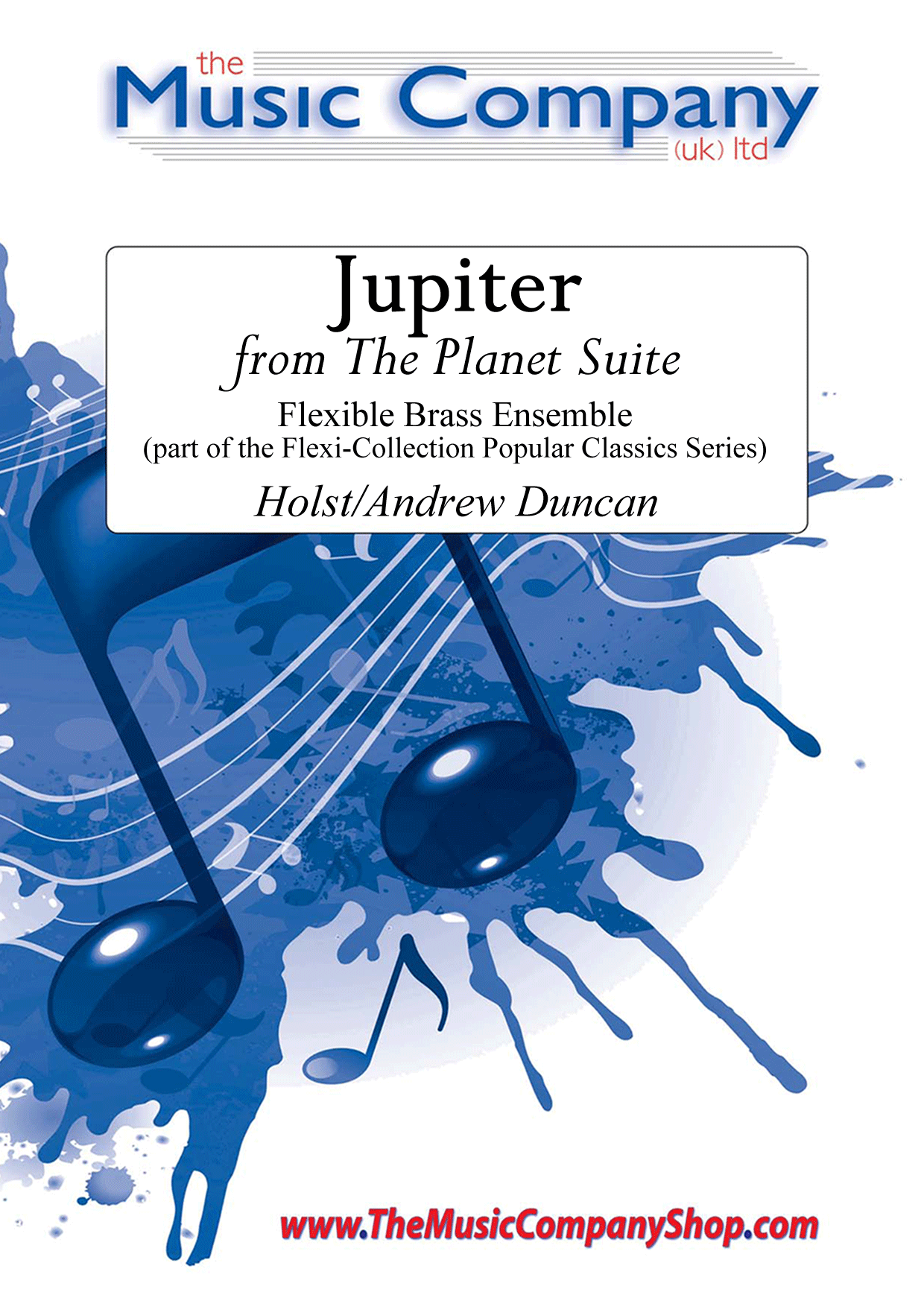
Jupiter from the Planet Suite - Holst
Programme notes:The hauntingly beautiful theme from Jupiter, from The Planets Suite has a rare qualityexpressing both optimism and dignity which makes it a popular choice for many formalpublic events such as opening and award ceremonies.The tune is originally found in the Jupiter movement from the large-scale work fororchestra called 'The Planets Suite'. Written by the English composer Gustav Holt ThePlanets Suite is thought to be his finest work.The theme has a steady 3/4 rhythm which provides a contrast in terms of tempo andmeter to the rest of the movement, and has been made popular as a patriotic song called'I vow to Thee My Country'.Performance notes:This arrangement makes use of a gradual increase in dynamics, beginning p and ending ff.With this gradual increase in dynamics is a gradual increase in the scoring starting offwith only the lower instruments playing p and ending up with everyone playing ff.The percussion part is very minimal in this arrangement (only 2 notes for the suspendedcymbal) and is an optional part.Just before the final chord there is a cut off marked in the parts. This may be a newconcept for some inexperienced players so it should be fully explained by the conductor.The Flexi-Collection ApproachFlexible scoring tailored to your needs - A perfect solution for expanding the repertoire of training and junior brass bands. The Flexi-Collection currently offers two series - Popular Classics and World Tour. Based on four-part harmony, these collections provide groups with the advantage of complete flexibility when they may not be balanced. If players or instruments are missing, the show can still go on!The Flexi-Collection - Popular Classics Series, encapsulates all that is great about the wonderful range of musical styles produced by Holst, Elgar, Handel, Verdi, Tchaikovsky, Grieg, Bizet and Parry.The thoughtful scoring and arranging by Andrew Duncan now means that groups of all abilities have access to a truly flexible set of music for their needs. With world parts, rudimentary theory, terminology translations and large format typesetting, The Flexi-Collection ticks all the boxes when it comes to bringing interesting music to the training and junior band/brass group environment.Available individually or as part of the money-saving Flexi-Collection Popular ClassicsAlbum.Scored for Brass Band and supplied with additional Easy Bb, Easy Eb and world parts - The Flexi-Collection offers flexibility in every sense of the word.
In Stock: Estimated dispatch 3-5 working days
 View Music