
Results
-
 £119.99
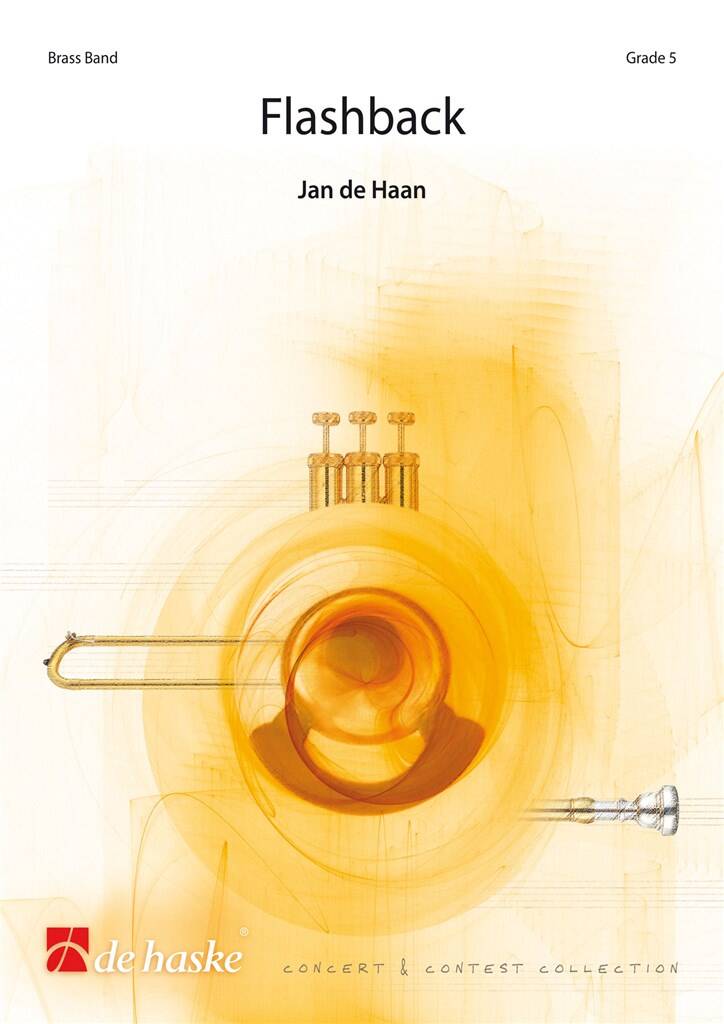
Flashback - Jan de Haan
A flashback is an interesting psychological phenomenon: a seemingly random trigger can bring back long-forgotten memories from the subconscious mind. The composer underwent a similar experience before writing this piece. He was asked to write a piece for The National Youth Fanfare Band in the Netherlands, one which he heard perform many years ago. All of a sudden he remembered Deep Harmony, a piece frequently programmed back then. He used his own flashback-experience as an inspiration to weave an old English hymn into his new composition, much like a musical flashback. The right idea at the right moment, as this piece will prove!
Estimated dispatch 5-14 working days
-
 £69.99
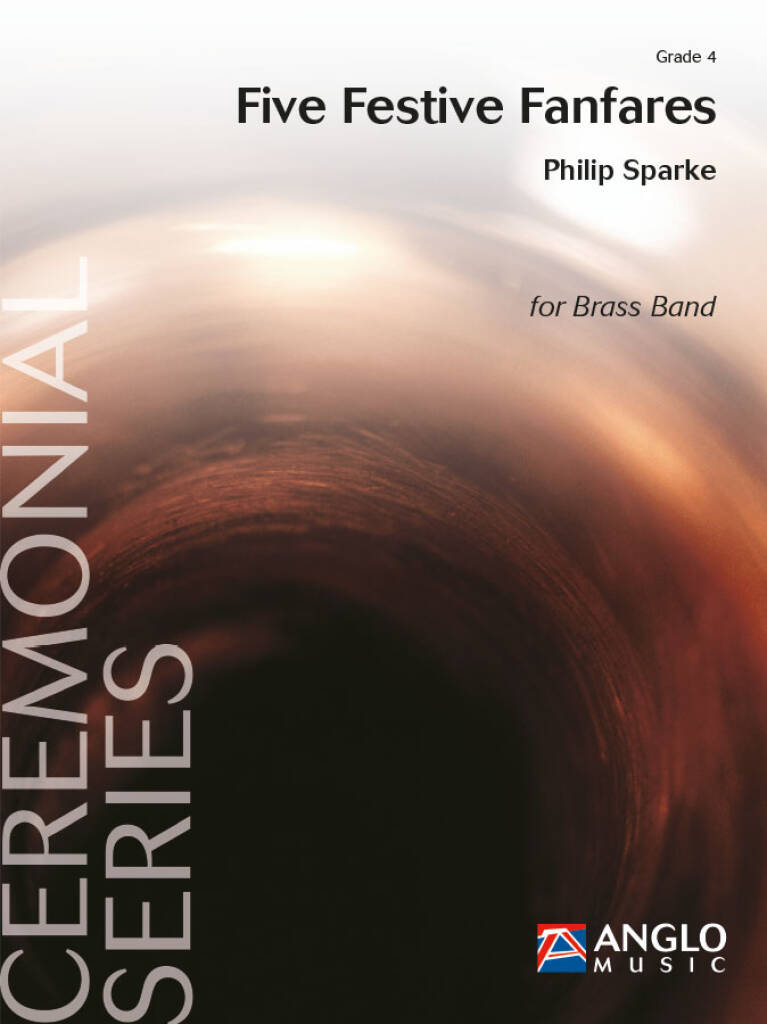
Five Festive Fanfares - Philip Sparke
This collection will provide fanfares for any occasion: concert opener, presentation ceremony or celebrations of all kinds. The variety of styles and durations (from ten seconds to two minutes) will ensure you will always find the right fanfare for the right moment.
Estimated dispatch 5-14 working days
-
 £76.99
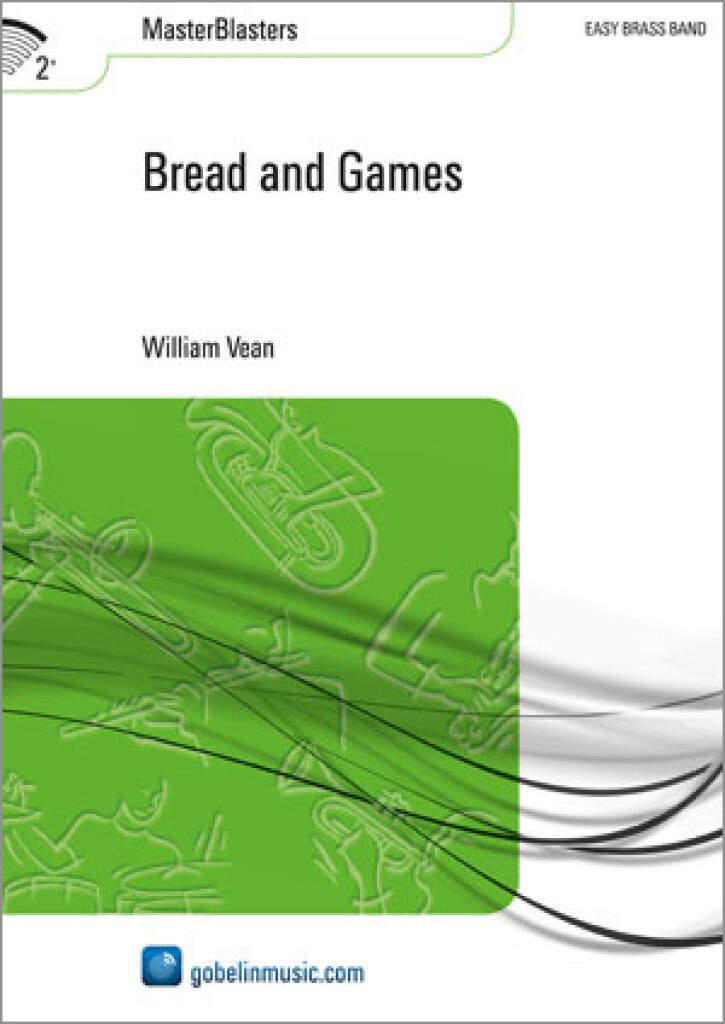
Bread and Games - William Vean
'Panem et Circenses', Bread and Games were essential for keeping the citizens of ancient Rome in check. While the bread was meant for the poorest among the Romans, the Games were Popular Pastime Number One for everybody.There were different kinds of games, such as chariot races (especially popular with female spectators), or wild-beast fights, where lions, tigers, bulls or bears were set on one another or even on human beings. Most popular, however, were the Gladiator fights. In 'Bread and Games' William Vean depicts one of the many fights in the antique Colosseum. 1. Entrance of the Gladiators: By powerful bugle-calls the attention of the peoplewas asked for, after which the Gladiators entered the Arena at the sound of heroic marching-music.2.Swordfight: We can hear that the fights were not mere child's play in this part.On the contrary, they were a matter of life and death and were fought accordingly.3.Mercy of the Emperor: Sometimes a wounded gladiator could be fortunate, depending on the mercy of the audience. Waving one's handkerchief meant mercy, a turned-down thumb meant no pardon. The Emperor had the right to take the final decision, but he usually complied with the wish of the majority of the public. 4.Lap of Honour: Gladiators were mainly selected among slaves, convicted criminals, or prisoners of war. Consequently, winning was very important, as it would mean fame, honour and sometimes even wealth. A lap of honour, therefore, was the winner's due reward.
Estimated dispatch 5-14 working days
-
 £56.90
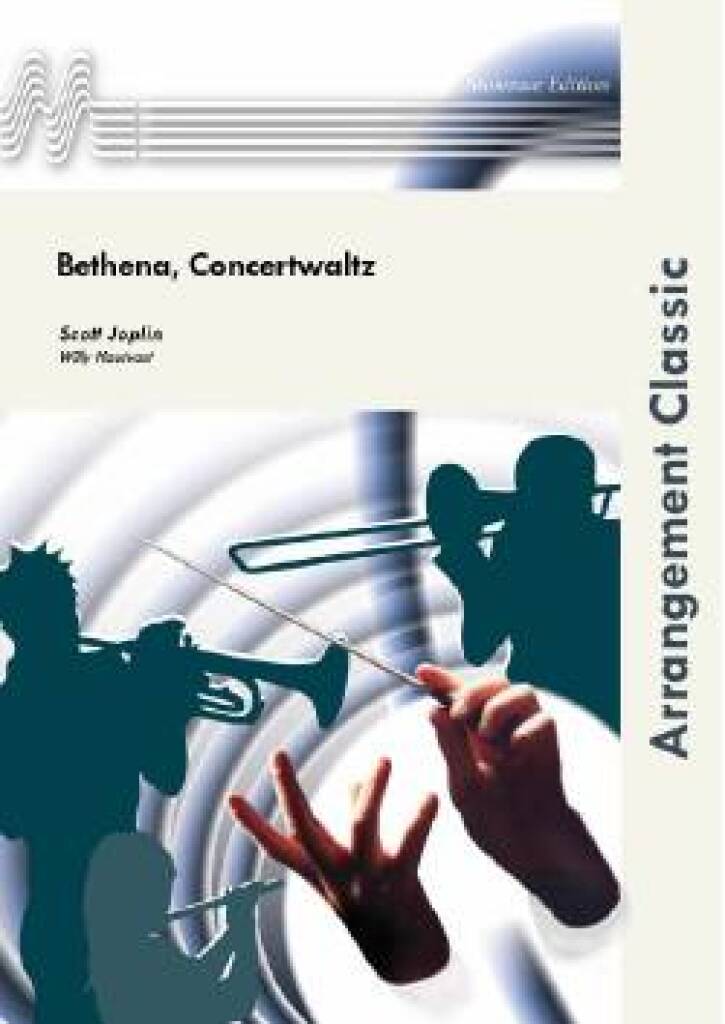
Bethena, Concertwaltz - Scott Joplin - Willy Hautvast
Bethena is the result of a fictive collaboration between Scott Joplin and Willy Hautvast. The piece was originally written for the piano, so the melody is to be found in the right hand part whereas the accompaniment is to be found in the left hand part. A
Estimated dispatch 5-14 working days
-
£127.30
Dancing Trolls [Norwegian Dance] - Øystein Olsen Vadsten
"Dancing Trolls" is a sequel to "The Battle of the Hats", which was published in 2015. Like "The Battle of the Hats", "Dancing Trolls" is a piece of music based on Norwegian traditional dances. This time around,its the reinlender dance which takescentre stage.The music is composed by Oystein Olsen Vadsten who keeps the strong melodic and tempo, which is dear to this kind of dance. Admittedly given a make-over with a more rhythmic accompaniment and more exciting harmonization.Thismakes it a fun piece, both to Listen to and play. The reinlender dance derives from the Rhineland in Germany,and is also known as the German Polka.To the conductor:Because this is a dance form whichis dependent on the right "swing",it is of great importance to keep as close to the metronome mark as possible. A steady groove, primarily specified by the drum set, is also essential for a good result. Remember to keep a good balance between the melody carrying instruments and theaccompaniment. Good luck and have fun with this "crazy" little tune.
Estimated dispatch 5-14 working days
-
 £59.99
Sleepers Wake - Johann Sebastian Bach - Philip Sparke
This enchanting melody is from the fourth movement of Bach's Cantata 140 which was composed in 1731 using the parable of the wise and foolish virgins as the text. The work is beautiful in its simplicity with only three melodic lines, demonstrating Bach's counterpoint at its best. For greatest effect it is suggested that the cornets and trombones play behind the band or to the right and left of the stage.
Estimated dispatch 5-14 working days
-
 £60.99
Antonin's New World - Antonín Dvorák - Dizzy Stratford
Antonin's New World is an excellent piece of musical theatre featuring a comedy act for triangle soloist and band. The music itself does not sound comical, being based on Anton Dvorak's Symphony in E Minor (From the New World), but the right mix of seriousness and humour brings a surprising effect. With a bit of acting talent from your triangle soloist, this interpretation of the well known classical melody will be a major hit. Whether you choose Antonin's New World as a "triangle solo" novelty piece or simply as a delightful adaptation of Dvorak's immensely popular Ninth Symphony, both the band and the audience will love it!
Estimated dispatch 5-14 working days
-
 £54.99
Sour Croute - Peter Martin
Eating is a feast. But you are not yet in a party mood? Then enjoy Sour Croute because that will make you move. This German waltz will certainly put you into the right mood.
Estimated dispatch 5-14 working days
-
 £20.00
atrium phase
Descriptionatrium phase was inspired by listening to works performed at the 2013 Huddersfield Contemporary Music Festival in the atrium of the Huddersfield University Creative Arts Building. The atrium, despite being a functional area incorporating meeting areas and a cafe, has almost coincidentally evolved into a fantastic (if somewhat resonant) performance space. Performers can be positioned on three different sides and three different levels, making the atrium ideally suited to spatially separated performances of a variety of music from Gabrieli to Christian Wolff.In atrium phase the band is separated into four groups - ideally these should be positioned around the audience as follows: group A to the left of the audience, group B in front of the audience, group C to the right of the audience and group D (the four basses) behind the audience. The music "phases" between the groups in the manner of contemporary electroacoustic music, with the bass group acting as a kind of "subwoofer". Starting very slowly, the music accelerates using metrical modulations to finish at considerable speed.The music is intended to be performed without a conductor wherever possible - the three percussionists should set and control the tempo, and there are clear points of overlap for percussionists to allow synchronisation between groups.atrium phase won the inaugural Foden's Band Composition Competition in 2014 and the first performance was given on 24 January 2015 at the RNCM Festival of Brass by Foden's Band.Performance Notes:The band is separated into four groups - ideally these should be positioned around the audience as follows: group A to the left of the audience, group B in front of the audience, group C to the right of the audience and group D (the four basses) behind the audience. The music "phases" between the groups in the manner of contemporary electroacoustic music, with the bass group acting as a kind of "subwoofer". Starting very slowly, the music accelerates using metrical modulations to finish at considerable speed.Instruments in group A require cup mutes (soprano, 2 x cornets, horn, baritone, trombone, euph), group B harmon mutes (4 x cornets, baritone and trombone - the baritone should use a trombone mute) and group C require fibre straight mutes (3 x cornets, flugel, 2 x horns, euph., bass trom - NOT metal mutes if possible).Percussion instruments required are claves, wood block and 2 x temple blocks. The music is intended to be performed without a conductor wherever possible - the three percussionists should set and control the tempo, and there are clear points of overlap for percussionists to allow synchronisation between groups.Approximate duration 6'17"
Estimated dispatch 7-14 working days
-
 £79.95
Neverland - Christopher Bond
"All children, except one, grow up" wrote J.M. Barrie about Peter Pan in 1911; the first line and an expression of beautiful melancholy and fantasy, coming to represent one of the best-loved children's stories of the twentieth century. 'Peter & Wendy', as the book was first released, has subsequently been transformed into adaptations for film and stage, with subsequent books based on this iconic tale. In writing this new work for brass band, the composer has taken three of the main themes from J. M. Barrie's book, and used these themes to create new musical material, forming a work in three contrasting sections. I. Journey to Neverland The opening of the work, mysterious in its style, reflects the opening chapters of the story - a leafy London street, still in the dead of night - with the music transforming quickly as it builds in texture and momentum - a Journey to Neverland through the night sky; Second Star to the Right and straight on 'til morning. "Then Peter knew that there was not a moment to lose. 'Come,' he cried imperiously, and soared out at once into the night, followed by John and Michael and Wendy. Mr & Mrs Darling and Nana rushed into the nursery too late. The birds were flown." II. The Windows that Closed The central section of the work takes its inspiration from the sense of longing throughout the book, mainly by Peter Pan, the Darling Children & The Lost Boys. Distant memories of life before Neverland, memories of the Lost Boys' mothers, and regret at what the children have missed. Peter says "Long ago, I thought like you that my mother would always keep the window open for me; so I stayed away for moons and moons and moons, and then flew back; but the window was barred, for mother had forgotten all about me, and there was another little boy sleeping in my bed." III. Aboard the Pirate Ship The final section of the work takes its inspiration from the Pirate Ship, and Peter Pan's ultimate battle with its infamous Captain Hook. "In person, he was cadaverous and blackavized, and his hair was dressed in long curls, which at a distance looked like black candles, and gave a singularly threatening expression to his handsome countenance. His eyes were the blue of the forget-me-not, and of a profound melancholy, save when he was plunging his hook into you, at which time two red spots appeared in them and lit them up horribly."
Estimated dispatch 10-14 working days
 View Music