
Results
-
£34.95
SOUTHERN CROSS, The (Brass Band Set) - Brian Bowen
The Southern Cross is one of several excellent marches by Brian Bowen in which he carried on the more sophisticated pattern of British marches by Wilfred Heaton, Leslie Condon and Ray Steadman-Allen. It was written for the Box Hill (Australia) Corps jubilee celebrations in 1970 and formed part of the band's repertoire when it toured Great Britain in the same year. The first half of the march features part of the song, 'March on!' by Klaus Ostby, an early pioneer of Salvation Army music in Scandinavia. The contrapuntal layering of melodies in the trio, especially in the finale where 'March on!' sounds one more triumphant time, is notable, as is the shift to a slower, more stately tempo. The harmonic and rhythmic style also represents the more modern sounds of Salvation Army brass band music in the late 1960s and early 1970s. Right from the opening gestures, listeners at early performances knew that a page had turned in the evolution of the Salvation Army march.
Estimated dispatch 7-14 working days
-
£34.95
COVENANTERS, The (Brass Band Set) - Kenneth Downie
In 1638, many members of the Presbyterian Church of Scotland signed a document called the National Covenant. By doing so, they were declaring that they acknowledged only Jesus Christ as the spiritual head of their church, and not any king or queen. This had become necessary because the Stuart kings believed in the Divine Right of Monarchs and saw themselves as head of the church. In the previous year, Charles I had forcibly introduced the Book of Common Prayer, invoking the wrath of the common people who faced the threat of torture, transportation or execution if they did not use the new liturgy and worship at their local church. The net result of this was that many met illegally in the countryside or in barns and large houses. These meetings became known as 'conventides' and many took place in the south-west of the country. Anyone caught attending was at risk of execution by the muskets of the dragoons who were employed in the area for that specific purpose. This music was written to honour the bravery and loyalty of these Christians to their faith, in the face of extreme danger, in the hope that it will inspire us also to be faithful. There are overtones of military threat, secrecy and solidarity. An old pentatonic tune is used, which the composer heard as a boy being sung to the words The Lord's My Shepherd.
Estimated dispatch 7-14 working days
-
 £127.95
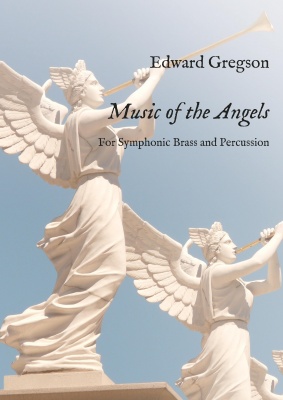
Music of the Angels (Symphonic Brass Ensemble - Score and Parts)
In 1998 Gregson was commissioned by conductor Martyn Brabbins to write a short concert opener with choir to mark his debut as Music Director of the Huddersfield Choral Society. Entitled ...and the seven trumpets... this ten minute flourish is founded on a verse from Chapter 8 of the Revelation To John (The Apocalypse), the last book in the Bible: 'and I saw the seven Angels which stood before God: and to them were given seven trumpets'. The performance employed the full power of the Huddersfield Town Hall organ and the brass section of the BBC Philharmonic, including seven trumpets and four horns placed strategically around hall.The following year, when Gregson received a commission from the Cheshire-based Foden's Brass Band (conducted at that time by Nicholas Childs) for a work to mark its centenary in 2000, he turned to the first portion of ...and the seven trumpets... as the basis for an ambitious celebratory work entitled The Trumpets of the Angels. "The opportunity to create an extended work which would break out of the brass band mould was an important milestone for me," the composer says. In 2015 he was asked by Nicholas Childs to create a new performing edition without organ for the Black Dyke Band. This received its first performance in April 2016 at the European Brass Band Festival in Lille. In 2018, Gregson revisited the music for a third time, returning the opening fanfares to orchestral brass and transforming substantial portions of the 'Black Dyke' version to create Music of the Angels, a dramatic canvas for symphonic brass and percussion.An array of bells and gongs offer an unmistakable key to the source of Gregson's inspiration. Inscribed In tribute to Olivier Messiaen, the work's principal material and its sound world, but crucially not the underlying musical processes, are influenced by Messiaen's masterpiece for wind and percussion, Et exspecto ressurectionem mortuorum (1964). Music of the Angels begins with braying of horns suggestive of the start of an ancient ritual. Six 'angel' trumpeters, set behind the ensemble, answer in sequence, with the evocative sound of tam-tams creating the Messiaen-like aura. Once the horns have reached the performing space, four of the trumpeters deliver highly contrasting fanfare cadenzas. At the climax of this episode, the individual fanfares are presented together, as if, perhaps, to reflect the Biblical writer's apocalyptic visions of hail, fire, seas of blood and the cataclysmic destruction of man and beast.This powerful vision of death and destruction gives way to a prayerful lament, re-imagining a sung Kyrie Eleison from the 'Black Dyke' edition, with flugel horn and euphonium obligati. The hushed atmosphere is broken by tenor and side drums, and trumpets five and six, which gallop away like the Horsemen of the Apocalypse. In the biblical account their steeds had 'heads like lions with fire and smoke and sulphur issuing from their mouths'.As the reverberation of a dramatic climax dies we hear the entry of the seventh trumpet, from 'on high', blazing forth with a version of the main that extends across the entire compass of the instrument - almost three octaves. Supported by a 'holy trinity' of gongs, an 'epic' final cadenza introduces new material which is further developed in a frenetic final section. This is announced by two sets of timpani, to the left and right. Braying brass (euphoniums and horns) once more adds an air of foreboding. As the music builds towards a magisterial conclusion, the Messiaen-inspired tritones of the principal motif are smoothed out into perfect 5ths and combined with the earlier material in a full-voiced chorale, over which the seventh trumpet blazes in triumph.- Programme note by Paul HindmarshScored for1 Trumpet in E flat (Trumpet 5)6 Trumpets in B flat (Trumpet 4 doubling Flugel Horn)4 Horns in F3 Tenor Trombones1 Bass TromboneEuphonium2 Tubas2 Timpani (Percussion 3 doubles Timpani 2)Percussion (3 players): 3 Tam-tams, 3 Suspended Cymbals, Bass Drum, Tenor Drum, Snare Drum, Tubular Bells.Duration: 16.00
Estimated dispatch 7-14 working days
-
 £34.95
The Southern Cross (Brass Band - Score and Parts)
The Southern Cross is one of several excellent marches by Brian Bowen in which he carried on the more sophisticated pattern of British marches by Wilfred Heaton, Leslie Condon and Ray Steadman-Allen. It was written for the Box Hill (Australia) Corps jubilee celebrations in 1970 and formed part of the band's repertoire when it toured Great Britain in the same year. The first half of the march features part of the song, 'March on!' by Klaus Ostby, an early pioneer of Salvation Army music in Scandinavia. The contrapuntal layering of melodies in the trio, especially in the finale where 'March on!' sounds one more triumphant time, is notable, as is the shift to a slower, more stately tempo. The harmonic and rhythmic style also represents the more modern sounds of Salvation Army brass band music in the late 1960s and early 1970s. Right from the opening gestures, listeners at early performances knew that a page had turned in the evolution of the Salvation Army march.
Estimated dispatch 7-14 working days
-
 £34.95
Judd: The Covenanters
In 1638, many members of the Presbyterian Church of Scotland signed a document called the National Covenant. By doing so, they were declaring that they acknowledged only Jesus Christ as the spiritual head of their church, and not any king or queen. This had become necessary because the Stuart kings believed in the Divine Right of Monarchs and saw themselves as head of the church. In the previous year, Charles I had forcibly introduced the Book of Common Prayer, invoking the wrath of the common people who faced the threat of torture, transportation or execution if they did not use the new liturgy and worship at their local church. The net result of this was that many met illegally in the countryside or in barns and large houses. These meetings became known as 'conventides' and many took place in the south-west of the country. Anyone caught attending was at risk of execution by the muskets of the dragoons who were employed in the area for that specific purpose. This music was written to honour the bravery and loyalty of these Christians to their faith, in the face of extreme danger, in the hope that it will inspire us also to be faithful. There are overtones of military threat, secrecy and solidarity. An old pentatonic tune is used, which the composer heard as a boy being sung to the words The Lord's My Shepherd.
Estimated dispatch 7-14 working days
-
 £64.95
The Dark Side Of The Moon (Score and Parts)
This piece was commissioned by Dr. Nicholas Childs and Black Dyke Band on behalf of Rotary International and received its world premire performance at St. David's Hall, Cardiff on Saturday 27th January 2007. It is dedicated to the composer's father, Harry Cooper.The music was selected by the National Contesting Council as the 3rd section test piece for the 2008 Regional Brass Band Championships of Great Britain. A Note from the Composer...Have you ever thought of a holiday destination, tourist attraction, event, place, site or period in history and thought 'I wonder what it would be like?' - somwhere you have never been and can only let your imagination run wild on. What would the place be like, and all the things surrounding it such as the mood, feelings you get experiencing it, the temperature? Who would be there and what you would see? This piece is my musical imagination of the dark side of the moon. I know from news reports, the internet and other footage that the moon is a very desolate place, very barren and rugged. So from the start the piece gives the listener a musical picture of the rugged landscape with little light and warmth.However, the one place that has had me thinking about is the side of the moon that we don't see in our night skies, the side of the moon with no sun and no light pollution from civilisation. I can only imagine the eeriness one would feel being stood in complete darkness on the moon's surface looking around.As you slowly explore the surroundings and your eyes drift up to the night sky, there is an awesome sight unfolding in front of you - countless stars and galaxies, planets and different solar systems and all right in front of you glistening from the light of the sun beaming from the other side of the moon. The Dark Side of the Moon portrays a musical picture of the whole experience as seen in my imagination taking the listener from the rugged landscape to the awesome beauty that sits endlessly in front of you.Paul Lovatt-Cooper, September 2007
Estimated dispatch 7-14 working days
-
 £31.95
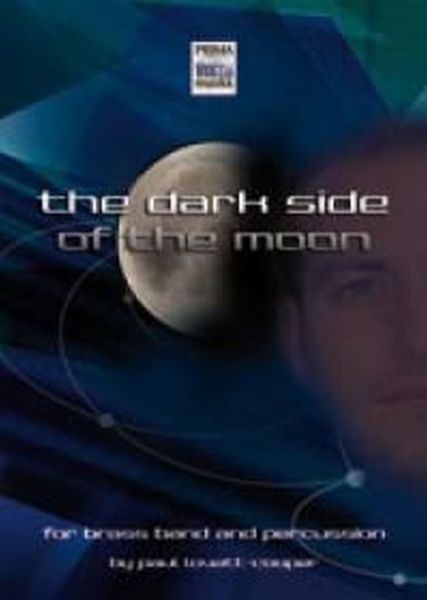
The Dark Side Of The Moon (Score Only)
This piece was commissioned by Dr. Nicholas Childs and Black Dyke Band on behalf of Rotary International and received its world premire performance at St. David's Hall, Cardiff on Saturday 27th January 2007. It is dedicated to the composer's father, Harry Cooper.The music was selected by the National Contesting Council as the 3rd section test piece for the 2008 Regional Brass Band Championships of Great Britain. A Note from the Composer...Have you ever thought of a holiday destination, tourist attraction, event, place, site or period in history and thought 'I wonder what it would be like?' - somwhere you have never been and can only let your imagination run wild on. What would the place be like, and all the things surrounding it such as the mood, feelings you get experiencing it, the temperature? Who would be there and what you would see? This piece is my musical imagination of the dark side of the moon. I know from news reports, the internet and other footage that the moon is a very desolate place, very barren and rugged. So from the start the piece gives the listener a musical picture of the rugged landscape with little light and warmth.However, the one place that has had me thinking about is the side of the moon that we don't see in our night skies, the side of the moon with no sun and no light pollution from civilisation. I can only imagine the eeriness one would feel being stood in complete darkness on the moon's surface looking around.As you slowly explore the surroundings and your eyes drift up to the night sky, there is an awesome sight unfolding in front of you - countless stars and galaxies, planets and different solar systems and all right in front of you glistening from the light of the sun beaming from the other side of the moon. The Dark Side of the Moon portrays a musical picture of the whole experience as seen in my imagination taking the listener from the rugged landscape to the awesome beauty that sits endlessly in front of you.Paul Lovatt-Cooper, September 2007
Estimated dispatch 7-14 working days
-
 £33.62
The Hewer's Prayer (Brass Band) Steve Gibson
This music was inspired by stories of those working in the dark and dangerous conditions of the coal mines, and particularly those hewers right at the coal face. Based around an original theme, the music captures a hymn-like setting of a miner's prayer for safety. Depictions of industry and difficult times follow, but resolve into a triumphant conclusion where dark imagery give way to light. The music is the composer's proud tribute to the industrial heritage of his forebears. Sheet music available from: UK - www.brassband.co.uk USA - www.solidbrassmusic.com Difficulty Level: 4th Section + Instrumentation: Soprano Cornet Eb Solo Cornet Bb Repiano Cornet Bb 2nd Cornet Bb 3rd Cornet Bb Flugel Horn Bb Solo Horn Eb 1st Horn Eb 2nd Horn Eb 1st Baritone Bb 2nd Baritone Bb 1st Trombone Bb 2nd Trombone Bb Bass Trombone Euphonium Bb Bass Eb Bass Bb Timpani Percussion Glockenspiel
In Stock: Estimated dispatch 1-3 working days
-
£29.95
PILGRIM WAY, The (Brass Band Set) - Eric Ball
Attempting to recreate the atmosphere of mediaeval pilgrims, this suite comprises three separate, yet linked movements. I. Based on John Bunyan's poem 'He Who Would Valiant Be', the music reminds us of the words 'No foes shall stay his might, though he with giants fight, he will make good his right to be a pilgrim'. II. A transcription of the composer's own setting of 'God be in my head'. III. The original themes in this movement express feelings of joy and excitement of present day pilgrims journeying on the Christian path.
Estimated dispatch 7-14 working days
-
 £29.95
Judd: The Pilgrim Way
Attempting to recreate the atmosphere of mediaeval pilgrims, this suite comprises three separate, yet linked movements. I. Based on John Bunyan's poem 'He Who Would Valiant Be', the music reminds us of the words 'No foes shall stay his might, though he with giants fight, he will make good his right to be a pilgrim'. II. A transcription of the composer's own setting of 'God be in my head'. III. The original themes in this movement express feelings of joy and excitement of present day pilgrims journeying on the Christian path.
Estimated dispatch 7-14 working days
 Watch video