
Results
-
 £104.99
Cambridgeshire Impressions - Rieks van der Velde
In a four-part composition Rieks van der Velde takes us to the richly varied area surrounding the university city of Cambridge. The Dutch composer was especially inspired by the atmosphere of Cambridgeshire, the county which lies north ofLondon. 1. The Journey. Although on arrival the area looks peaceful and friendly, the ruggedness of its inhabitants and landscape have an unmistakable influence on the music. In the course of the tour, which starts with an Allegromovement, we are shown the vitality, energy and freshness of the Cambridgeshire countryside. Short themes, swift and sudden motifs and rhythmical patterns supported by the drive of percussion instruments give expression to this image. Thefirst part is concluded by two Calmo movements in which the music expresses how the cathedral in the city of Ely comes into sight and is gradually approached. 2. Visit to Ely Cathedral. The famous Norman cathedral church of Ely, whichwas built in 1109, has attracted tourists from all over the world apart from being a place of worship and heritage site. A cornet solo introduces the contemplative mood of the composition at this point. The mystical atmosphere of thecathedral runs through this lyrical part like a continuous thread. 3. The Pub. The thirst caused by this intensive journey makes a visit to the local pub a definite must. These "public houses", which may be open until the earlyhours of the morning, offer all kinds of entertainment. Drinks are served liberally and the atmosphere is lively. 4. The Journey Back. Time has flown: In other words, the moment of departure has come sooner than one would havewished. In a flashback which recaptures elements of the first part of the composition we say goodbye to Cambridgeshire in a fitting manner. Two scintillating final measures bring us abruptly back to the present.
Estimated dispatch 5-14 working days
-
 £104.99
High Flyers - Andrew R. Mackereth
From the composer: High Flyers are regarded as people with promise and potential.They are winners. This is music for winners.The title, as well as being a play-on-words, implies the nature of the work. It is a bright, optimistic, and upbeat piece attempting to depict an exhilarating ride on flying carpet. The opening rising chords immediately suggest the gentle elevation of the carpets' ascent towards unknown heights, leading to a hint of a first theme in the horns at Fig. B. The first four notes provide the thematic material for the whole work: C F G A.A perpetual sense of movement is achieved through accented quaver chords punctuating the melodicmaterial of the first main theme. Fig. E sees the music of the opening bars fully realised, with flourishes from the euphonium and baritones representing swirling clouds, shooting stars, or passing birds in flight.The same subject is developed into a lyrical second theme with a new lush harmonic treatment, evocative of gliding over an expanse of sparse countryside.This section ends with a note of serenity but is shattered by the urgent insistence of the percussion rhythms.The third section introduces a new idea with a slightly distorted fanfare in the cornets and trombones. This figure suggests for the first time that there may be trouble ahead. In fact, there is no need to fear and the journey can continue without aggravation. This fanfare returns near the end to signal a final note of triumph.A new rhythmic variant of the cell motif emerges as the third theme now transformed by the addition of a triplet figure. The music steadily gains momentum before moving inexorably towards the climactic return of the music and tonality of the opening bars of the piece.
Estimated dispatch 5-14 working days
-
 £102.99
Sinfonietta No. 1 - Marc Jeanbourquin
Sinfonietta No.1 won first prize in the 2023 Composition Competition organized by the Swiss Brass Band Association. Various melodic themes and rhythmic motifs develop throughout the work. They combine with the numerous dynamic effects to bring a certain unity, from the beginning to the end of this competition piece. The technical and melodic difficulties allow the different soloists to show their virtuosity and musical prowess over five uninterrupted parts. After a first slow and misterioso part, there is a contrast with the following energico sequence based on an ostinato, creatings both a progression and a tension, to drive everything towards the third part mesto (sad), then lento, where some cadenzas and numerous dissonnances can be heard. The energico transition announces the fifth part, a ternary and fast con fuoco. This last part will lead the audience to a final apotheosis.
Estimated dispatch 5-14 working days
-
 £66.00
Ballet for Band - Joseph Horovitz
Composer Joseph Horovitz will celebrate his 90th birthday in May, with 2016 already seeing a welcome retrospective of some his finest works at the RNCM Brass Band Festival in Manchester in January.It included Ballet for Band, written in 1983 at the set-work for the National Final at the Royal Albert Hall, and which has since become one his most popular major test-pieces - played on numerous occasions throughout the banding world. It is a wonderfully elegant, mischievous composition - a brass band ballet, not of programmatic intent but of fertile imagination; beautifully crafted with a delicacy of touch as light on its feet as any arabesque.The composer has admitted that he had a clear vision of the characters that inhabit his score, yet has never divulged any details - leaving the bands and listeners, as he says, "...to exercise their own imaginations rather than being influenced bymine!"
Estimated dispatch 5-14 working days
-
£69.99
European Overture - Bertrand Moren
With its unique structure, European Overture brings out the vast potential of the concert band. The work opens with a magnificent fanfare followed by a lively allegro section. The lento of the middle section gracefully meanders bringing several soloists into the spotlight. Following another pulsating allegro section the work comes to a close with a final restatement of the central melody. A fantastic opener for any concert.
Estimated dispatch 5-14 working days
-
 £159.99
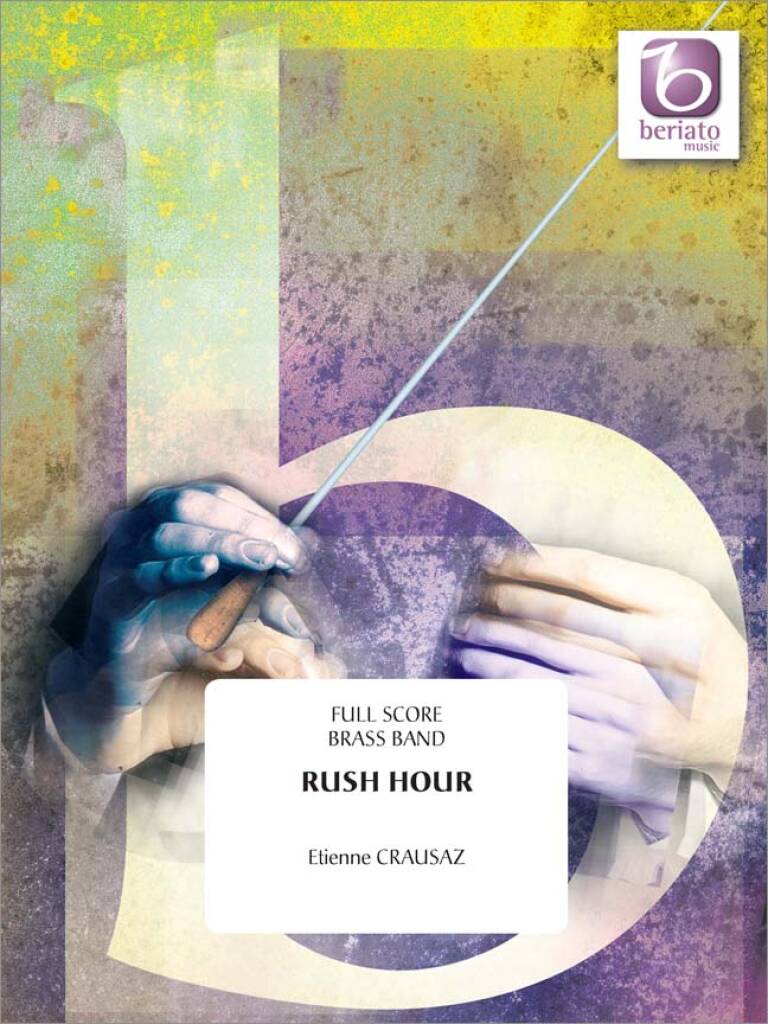
Rush Hour - Etienne Crausaz
Rush Hour was commissioned by the Swiss Brass Band Association (SBBV) on the occasion of the 38th Swiss National Brass Band Championships 2012 (Montreux SBBW) as the test piece in the Championship division.Structured in three parts without breaks, the work opens in a heavy, oppressive atmosphere, sometimes even noisy. After a short passage in a lighter mood a quick tempo takes over, the music becomes nervous and unrelenting, with constant twists and turns. The tension builds, leading to a slower movement in which various soloists are highlighted. A few humorous touches are heard in contrast to a majestic, powerful and dramatic chorale. The end of this part is brighter andmore peaceful. This atmosphere is soon replaced by a return of the thematic material heard in the first movement, developing into an oppressive moos. The piece concludes with a last ecstatic tutti, reusing the harmonies of the introduction in a kind of final flurry.Rush Hour attempts to express the range of feelings we may experience when caught in various stressful situations in the middle of the rush hour.
Estimated dispatch 5-14 working days
-
£60.99
Pasadena - Jacob de Haan
This piece takes you on a journey to the sunny Californian city of Pasadena. The piece reflects two contrasting aspects of the city,. Firstly the serene expressive side with exquisite statues, works of art and sun drenched villas and secondly the hot Latin side with the street parade which leads up to the famous American Football final in the Rose Bowl stadium.
Estimated dispatch 5-14 working days
-
 £80.00
Fanfares and Love Songs - Gavin Higgins
Fanfares and Love Songs was commissioned by the National Children's Brass Band of Great Britain for performance on 25th July 2009. Its three movements contrast the extrovert and lyrical qualities of thetraditional brass band. The fanfare with which the work opens involves the whole cornet section. The second movement is reflective in mood, beginning somewhat pensively on muted brass, and building to an emotional climax beforesubsiding back to a distant pianissimo chord. The finale is a fast dance, which with a final recapitulation of the opening fanfare drives on to a breathless close. Brass Band Grade 4: Advanced Youth and 3rdSectionDuration: 12 minutes
Estimated dispatch 5-14 working days
-
 £115.60
Portias Slottsorkester - Dag Wirèn - Svein H. Giske
Dag Wiren (1905-1986) came to fame as a composer in 1937 with Serenade for string orchestra, Op. 11, which remains his most played work to date. His opus list is mainly instrumental music; five symphonies, five string quartets, several overtures and a lot of film and theatre music.He composed the stage music for William Shakespeare's The Merchant of Venice, which was performed at Dramaten in Stockholm in 1944. The drama was performed again in 1961, somewhat revised by Wiren. From this production, Wiren compiled a concert suite that he called Romantic Suite, Op. 22.The fifth and final movement is Portia's Castle Orchestra, which is based on an Irish folk melody.This instrumentation for Brass Band is based on the arrangement for wind band by Jerker Johansson. The instrumentation was written for Askoy Brass Band's performance at Siddis Brass 2022.
Estimated dispatch 5-14 working days
-
 £115.60
Mil etter mil - Kai Eide - Øystein S. Heimdal
This song performed by Jahn Teigen represented Norway at the Eurovision final in 1978. The result was zero points, but after that, the song soon became very popular in Norway and is one of the biggest hits of his career.This arrangement may easily be a hit on your next concert and will for sure receive more than zero points from you audience. Feel free to invite the audience on a sing-along!
Estimated dispatch 5-14 working days
 View Music