
Results
-
 £33.62
King Lily of the Valley (Euphonium & Baritone Feature w/Brass Band) Espen Haukas
Based on a poem by Gustaf Froding, King Lily of the Valley is a poetic and regal musical tribute to the delicate flower that, in Froding's verse, appears as a young king surrounded by both sorrow and beauty. Originally composed by David Wikander and arranged for male choir (TTBB) by Rasmus Krigstrom, this evocative work has been masterfully reimagined for brass band by Norwegian arranger and composer Espen Wallacher Haukas and created for Bjorsvik Brass's performance at Siddis Brass 2025. The brass band version retains the choral character and emotional depth of the original, weaving lush harmonies and lyrical phrasing into a rich soundscape. A deeply expressive addition to any brass band repertoire - blending Nordic choral tradition with the grandeur and warmth of the brass band sound. Scoring: Standard brass band instrumentation.(Note: Solo Cornets are marked TACET, providing a welcome opportunity for rest in longer programmes.) To view a rolling score video of the work please visit https://www.youtube.com/watch?v=AK5YPW4t3Oo Duration: Approx. 3.30 minutes Difficulty Level: 3rd Section + This PDF download includes the full score and parts. Sheet music available at www.brassband.co.uk (UK) or https://satradecentral.org (USA) Instrumentation: 1st Baritone Bb 1st Euphonium Bb 2nd Baritone Bb 2nd Euphonium Bb Soprano Cornet Eb Repiano Cornet Bb 2nd Cornet Bb 3rd Cornet Bb Flugel Horn Bb Solo Horn Eb 1st Horn Eb 2nd Horn Eb 1st Trombone Bb 2nd Trombone Bb Bass Trombone Bass Eb Bass Bb Timpani Percussion 1-2
In Stock: Estimated dispatch 1-3 working days
-
 £33.62
Les Chasseresses from 'Sylvia' (Brass Band) Delibes arr. Rob Bushnell
Clement Philibert Leo Delibes was a French composer, best known for his ballets and operas, including works such as Lakme (with its famous "Flower Duet"), Coppelia and Sylvia (both key works in the development of modern ballet). The latter started as a play, Aminta, by the Italian poet Torquato Tasso, which Delibes set to music. It was then adapted for the Paris Opera with rehearsals starting in August 1875. The premiere took place on 14 June 1876 and was the first ballet to be shown at the newly-built Opera Garnier. Whilst the scenery and costumes were created by top artists and designers (Cheret and Lacoste), it was Delibes's music that shown thrown, being said to have saved the production, preventing the ballet from drifting into obscurity.Sylvia is said to be one of the first modern ballets, with Tchaikovsky remarking to composer Sergei Taneyev upon its ingenuity: "... the first ballet, where the music constitutes not only the main, but the only interest. What charm, what elegance, what richness of melody, rhythm, harmony." Although Swan Lake, a contemporary to Sylvia, is considered one of the best ballets there is, Tchaikovsky preferred Sylvia to his own work, saying Swan Lake was "poor stuff in comparison". Tchaikovsky said to Taneyev, "I was ashamed. If I had known this music early then, of course, I would not have written Swan Lake". The music to Sylvia, rather than setting only the mood, also sets the action and is noted for its use of leitmotifs - Delibes was an admirer of Wagner - and more dominant use of brass and wind. The most famous piece from this ballet is the Pizzicati in the third act.Act I of the ballet takes place in sacred wood, where creatures are worshipping before Eros when Sylvia arrives with her huntresses to mock the god of love. Aminta, a lowly shepherd and infatuated with Sylvia, protects the deity and Sylvia is wounded by Eros's arrow. The hunter Orion kidnaps Sylvia, whilst Eros revives Aminta. Act II takes place in Orion's Island cave, where Sylvia tries to bribe Orion with jewels and wine. Unsuccessful, she appeals to Eros for help, who arrives and takes her to the temple of Diana (where the final act takes place). Orion and Aminta fight, Sylvia and Orion cause the goddess of the hunt, Diana, to be outraged, smiting Orion and denying the love of Aminta and Sylvia. Eros shows Diana a vision, which changes her mind and the couple finally come together.This brilliant and lively fanfare that introduces the huntresses in the first act is arranged here for the UK-style brass band, with alternative parts for horns in F and bass-clef lower brass. The piece has been lowered by a tone compared to the original. A recording of the original composition can be found here https://youtu.be/6yoGrUH38PI?si=0L0bFa1qXnYNvkR3 Duration: Approx. 3.10 minutes Difficulty Level: 1st Section + This PDF download includes the full score and parts. Includes alternative parts for soloist in Eb, horns in F and lower brass in bass clef. Sheet music available at www.brassband.co.uk (UK) or https://satradecentral.org (USA) Instrumentation: Soprano Cornet Eb Solo Cornet Bb Repiano Cornet Bb 2nd Cornet Bb 3rd Cornet Bb Flugel Horn Bb Solo Horn Eb 1st Horn Eb 2nd Horn Eb 1st Baritone Bb 2nd Baritone Bb 1st Trombone Bb 2nd Trombone Bb Bass Trombone Euphonium Bb Bass Eb Bass Bb Timpani Percussion - Triangle, Cymbal & Bass Drum
In Stock: Estimated dispatch 1-3 working days
-
 £33.62
March - Helping Hands (Rob Bushnell) Brass Band
Helping Hands was written for the British Bandsman March Composition Contest, entered into category 2 (marches for 3rd/4th section bands). The piece is loosely programmatic in nature: The introductio is fanfare-like, announcing the date of the next Whit Friday Contests and the bands' anticipation of and preparation for the event. The first section is the march of the volunteers, as they descend upon the many venues, ready to run the contests. The second section (bars 35 to 52) sees the contests start. The bands strike up, march, finish and go from place to place, whilst the volunteers manage them, the audiences, and all manner of issues and problems thrown at them. The third section (bars 53 to 69) represents the bad weather which has, at times, presented itself on that particular Friday. But everyone carries on (possibly the sun comes out) and we enjoy the day. The trio uses the hymn St. Vincent by Sigismund Neukomm: St. Vincent de Paul is the patron saint of charities and volunteering, hence its use here. The piece is influenced by marches that are commonly heard during the Whit Friday March Contests, using motifs, rhythms and harmonic progressions (sparingly) throughout the piece. March-card sized parts included, with alternatives for horns in F and lower brass in bass clef. To view a rolling score video of the piece please visit www.youtube.com/watch?v=diqDoe0XpcA PDF download includes score and parts. Sheet music available from: UK - www.brassband.co.uk USA - https://satradecentral.org Difficulty Level: 3rd Section + Length: 3.50 minutes Instrumentation: Soprano Cornet Eb Solo Cornet Bb Repiano Cornet Bb 2nd Cornet Bb 3rd Cornet Bb Flugel Horn Bb Solo Horn Eb 1st Horn Eb 2nd Horn Eb 1st Baritone Bb 2nd Baritone Bb 1st Trombone Bb 2nd Trombone Bb Bass Trombone Euphonium Bb Bass Eb Bass Bb Drums
In Stock: Estimated dispatch 1-3 working days
-
 £37.35
Nicaea - Band Warm-up (Brass Band) John Bacchus Dykes arr. Steve Kellner
This warm-up is designed to help players and conductors hear and improve section, group, and full band intonation, rhythmic precision, and balance in an efficient and musically satisfying way. The tune Nicaea was selected because of its easy-to-hear triads and intervals, and the harmonisation used throughout is purposely simple and consistent, so that the players can become very familiar with potential intonation trouble spots. Likewise, discrepancies in precision and balance will easily be heard. Keys have been carefully selected to expose specific intonation problems within the sections and groups, like the overlap between Eb and Bb instruments in the horns/baritones and later in euphoniums/basses, and 5th position tuning in the trombones. The format in sections 2 through 5 is consistent, beginning with a single section of the band playing in unison, then expanding into two-part and four-part harmony. After eight bars that section is joined by another section or sections to form a common multi-section group used in brass band scoring, such as the 'mellow choir', 'low brass', 'tuba-euphonium choir', and 'bright choir'. Section 6 features the two largest groupings, the 'all but cornets' and 'high brass'. Section 7 brings the whole band together for a majestic and powerful finish. To view a rolling score video please visit https://www.youtube.com/watch?v=RR3zQhsNTuc Duration: Approx. 5.10 minutes Difficulty Level: 4th Section + Sheet music available from www.brassband.co.uk Instrumentation: Soprano Cornet Eb Solo Cornet Bb Repiano Cornet Bb 2nd Cornet Bb 3rd Cornet Bb Flugel Horn Bb Solo Horn Eb 1st Horn Eb 2nd Horn Eb 1st Baritone Bb 2nd Baritone Bb 1st Trombone Bb 2nd Trombone Bb Bass Trombone Euphonium Bb Bass Eb Bass Bb Percussion 1-2
In Stock: Estimated dispatch 1-3 working days
-
 £67.24
Pyrenean Carol Suite (Brass Band) David Taylor
This attractive suite for brass band by David Taylor features five traditional carols from the Pyrenees region of Spain, as follows: i. Nadal Tindaire (Jingling Christmas) - Occitan traditional This Occitan Christmas song tells of musical instruments used to celebrate the Nativity - 'fifes and trumpets, timpani and pipes, or you, clear little bells, along with the angels' choir.' ii. Gabriel's Message (Birjina Gaztetto Bat Zegoen) - Basque traditional The most widely-known of the chosen carols, honouring Jesus's mother Mary, this is often sung in its English version, but the melody came from the Basque country. The Basque words were adapted from the Mediaeval song Angelus ad Virginem. Here, we feature the flugel horn. This movement was originally written on its own, with organ accompaniment, for the composer's wife, Diane Scott. iii. El Noi de la Mare (The Child of the Mother) - Catalan traditional A beautiful Catalan carol celebrating the birth of Jesus, telling of the tasty gifts that the singer would bring - 'Raisins and figs and nuts and olives; Raisins and figs and honey and mato [a Catalan dessert cheese traditionally served with honey.]' Here we feature the euphonium. The tune was made famous by guitarist Andres Segovia, who used it as a favourite encore, and by John Rutter, who made a widely-used setting for choir. iv. Paure Satan (Poor Satan) - Occitan traditional This rather unusual carol tells of the pain that Satan is put to by the arrival of the infant Jesus. Its mocking and sarcastic tone is reflected here, where the tuba soloist (as Satan) is given musical trouble throughout by the other parts. At first they conflict with the soloist, then the soloist makes overtures of friendship, which are treated with suspicion followed by contempt. The soloist finally gives in to their accompaniment (or do they?). There are plenty of opportunities for little theatrical touches here, if the tuba player is so inclined! The tuba part in this movement is notably more difficult than the rest of the music, and a number of optional changes have been marked to make the part easier to play, if so desired. The player is also welcome to add suitable extra embellishments to taste if they wish, within the character of the music. v. Fum, Fum, Fum! - Catalan traditional A favourite Catalan Christmas song for centuries, this rousing melody provides a fitting way to round off the suite, with its repeated rhythmic refrain of the nonsense title phrase. It tells of the Nativity, and then it tells of the celebratory feasting and good times that the singers look forward to to honour it. Although the suite is intended to be performed whole, it is also intended for usage with a selection of movements on occasions where a shorter piece is wanted. Suggested formats include a single movement alone (2, 3, and 5 are likely most appropriate), a pair of movements (any of the first four, plus 5), and a suite of three or four movements (1 and 5, plus one or two of 2, 3, or 4 in the middle). It is suggested that a good way to design a 'pick-your-own-suite' from the movements is to think of the earlier movements as introductory to the final movement. To view a rolling score video featuring Kidlington Concert Brass please visit www.youtube.com/watch?v=QIGdul-yxxg PDF download includes score and parts. Sheet music available from: UK - www.brassband.co.uk USA - https://satradecentral.org Difficulty Level: 3rd Section + Length: 9.45 minutes Instrumentation: Soprano Cornet Eb Solo Cornet Bb Repiano Cornet Bb 2nd Cornet Bb 3rd Cornet Bb Flugel Horn Bb Solo Horn Eb 1st Horn Eb 2nd Horn Eb 1st Baritone Bb 2nd Baritone Bb 1st Trombone Bb 2nd Trombone Bb Bass Trombone Euphonium Bb Bass Eb Bass Bb Timpani Percussion 1-2
In Stock: Estimated dispatch 1-3 working days
-
 £37.35
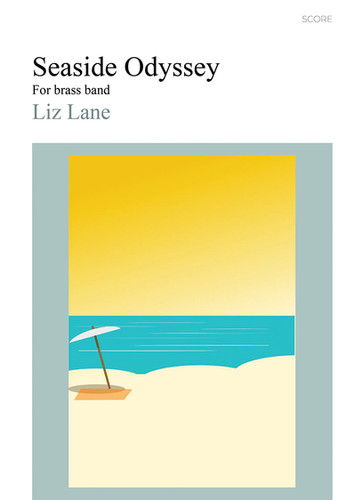
Seaside Odyssey (Brass Band) Liz Lane
Seaside Odyssey is a celebration of the British seaside! The music represents a juxtaposition between natural and manmade elements; there are two main musical themes - the reflective sea (a wordless setting of John Masefield's Sea Fever) and a more lively 'seaside' theme, heard separately in different ways and later together. From childhood memories, sand, beach and cliffs to cafes, ice creams, fish and chips, buckets and spades, boating trips, beach huts, bandstands, piers, theatres, gardens, mini golf, arcades and more, Seaside Odyssey is a journey from dawn to dusk with the sea at the heart of the music. This work was commissioned by Grimethorpe Colliery Band for its seaside tour, August 2023, where it performed at Paignton, Lyme Regis, Weymouth, Shanklin and Herne Bay. Includes optional poems and words specially curated from poets associated with the seaside towns, which can be read before a performance. Duration: approx. 5 minutes This PDF download includes parts and score. Sheet music available at www.brassband.co.uk (UK) or https://satradecentral.org (USA) Instrumentation: Eb Soprano Cornet Bb Solo Cornet Bb Repiano Cornet Bb Cornet 2 Bb Cornet 3 Bb Flugelhorn Eb Solo Tenor Horn Eb Tenor Horn 1 Eb Tenor Horn 2 Bb Baritone 1 Bb Baritone 2 Bb Trombone 1 Bb Trombone 2 Bass Trombone Bb Euphonium Eb Bass Bb Bass Percussion 1: timpani, triangle and optional 'arcade jackpot' effect (see score/part) Percussion 2: 3 suspended cymbals (2 ride, 1 crash) and hi-hat Percussion 3: snare, tom-toms and bass drum Percussion 4: glockenspiel
In Stock: Estimated dispatch 1-3 working days
-
 £33.62
You're Always There (Brass Band) Lee Fisher arr. Andrew Wainwright
One of BrookWright's most popular titles, this piece is based on an original song by Lee Fisher which was written for Britain's Got Talent star Charlie Green. Originally arranged as a tenor horn solo with brass band, it is now available here as a standalone work for band. To view a follow-the-score video please visit www.youtube.com/watch?v=suzzgdxU_xU PDF download includes score and parts. Sheet music available from: UK - www.brassband.co.uk USA - https://satradecentral.org Difficulty Level: 4th Section + Length: 3.45 minutes Instrumentation: Soprano Cornet Eb Solo Cornet Bb Repiano Cornet Bb 2nd Cornet Bb 3rd Cornet Bb Flugel Horn Bb Solo Horn Eb 1st Horn Eb 2nd Horn Eb 1st Baritone Bb 2nd Baritone Bb 1st Trombone Bb 2nd Trombone Bb Bass Trombone Euphonium Bb Bass Eb Bass Bb Timpani Percussion 1-2
In Stock: Estimated dispatch 1-3 working days
-
 £39.99
Amid the Cold Of Winter- The Rose ("Es ist ein Ros entsprungen")
ABOUT THIS PIECE: Introduce a touch of elegance to your Christmas programme with Amid the Cold of Winter - The Rose, a beautiful arrangement of the traditional carol Es ist ein Ros entsprungen (Lo, How a Rose E'er Blooming). This cherished melody dates back to the late 16th century and has been celebrated for its gentle beauty and profound sense of reverence. Its origins in German sacred music have made it a favourite across centuries, embodying the spirit of hope and renewal. This arrangement, crafted for quartet with brass band accompaniment, enhances the carol's delicate charm while providing a fresh, rhythmic and gentle take on the accompaniment and overall feel. Perfect for seasonal concerts, or gentle and reflective moments in your programme, this piece allows a quartet of soloists to shine. ENSEMBLE: Quartet (soprano cornet, repiano cornet, solo tenor horn & solo baritone) with Standard British Brass Band. For information: As only two solo cornets are required, it is suggested that remaining cornet player play additional percussion. Soprano part available in Bb to be played by Bb cornet. Solo Horn part available in Bb to be played by trombone (trombone part available in Eb to be played by tenor horn in this scenario). WHEN YOU BUY THIS PRODUCT, YOU GET: High-quality printed score and parts LEVEL: 1 LISTEN: DURATION: c. 4-minutes EXAMPLE SCORE: Click here LEVEL GUIDE: Level 1- Accessible to all Level 2 - c. UK third section and higher Level 3 - c. UK second section and higher Level 4 - c. UK first section and higher Level 5 - c. UK championship section level
Estimated dispatch 5-7 working days
-
 £50.90
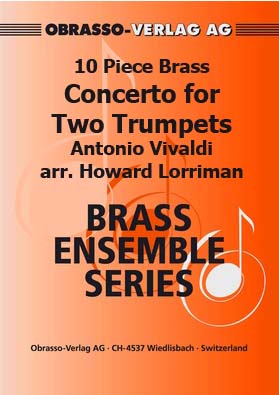
Concerto for Two Trumpets (10 Piece Brass Ensemble)
Solo parts included: Trumpets in A and Trumpets in CParts included for:Part 1: Bb Trumpet or Bb Cornet and Eb Trumpet or Eb CornetPart 2: Bb Trumpet or Bb CornetPart 3: Bb Trumpet or Bb CornetPart 4: Bb Trumpet or Bb Cornet or Flugel HornPart 5: F Horn or Eb HornPart 6: Trombone (BC) or Trombone (TC)Part 7: Trombone (BC) or Trombone (TC)Part 8: Trombone (BC) or Trombone (TC)Part 9: Bass Trombone (BC) or Bass Trombone (TC)Part 10: C Tuba or Eb Bass or Bb BassPercussion
Estimated dispatch 7-14 working days
-
 £47.60
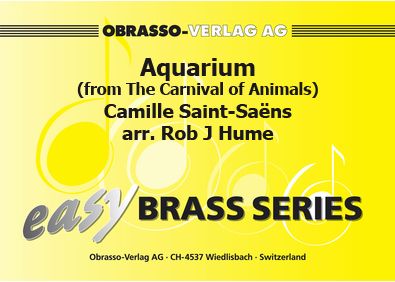
Aquarium
This series is for Brass Bands with a reduced number of playersThis series is without Repiano, 2nd Horn in Eb and 2nd TromboneParts included for:1 Eb Soprano Cornet5 Solo Bb Cornet3 2nd Bb Cornet2 3rd Bb Cornet1 Bb Flugel Horn1 Solo Eb Horn2 1st Eb Horn1 1st Bb Baritone2 2nd Bb Baritone (2nd Bb Trombone)1 1st Bb Trombone1 Bass Trombone2 Bb Euphonium2 Eb Bass2 Bb Bass1 Timpani2 Percussion/Drum SetOptional parts also included for:1 1st Trombone BC1 2nd Trombone BC1 Bass Trombone TC
Estimated dispatch 7-14 working days