
Results
-
 £29.51
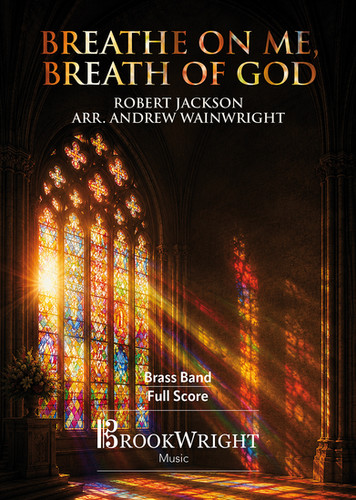
Breathe on me, breath of God (Brass Band) Robert Jackson arr. Andrew Wainwright
Andrew Wainwright's sensitive setting of Breathe on Me, Breath of God was commissioned by Sione Malekamu Manu Jr for the 2026 Tonga Secondary School Music Festival, in memory of the late Sione Malekamu Manu. The piece offers a reflective yet powerful treatment of Edwin Hatch's beloved 1878 hymn. Set across two contrasting verses, the arrangement traces a spiritual journey from quiet contemplation to triumphant exaltation. The first verse opens with delicate textures and warm, blended tone, allowing the familiar melody - traditionally set to Robert Jackson's tune Trentham - to emerge with serene simplicity. Building seamlessly through a transitional passage, the setting broadens into a majestic second verse, celebrating the transformative power and majesty of the divine spirit. Concise yet profoundly moving, this arrangement showcases both the lyrical sensitivity and majestic power inherent to the traditional brass band. To view a rolling score video of this piece please visit www.youtube.com/watch?v=Oh7WRTwhpqM Duration: approx. 2.40 minutes Difficulty Level: 4th Section + This PDF download includes the full score and parts. Sheet music available at www.brassband.co.uk (UK) or https://satradecentral.org (USA) Instrumentation: Soprano Cornet Eb Solo Cornet Bb Repiano Cornet Bb 2nd Cornet Bb 3rd Cornet Bb Flugel Horn Bb Solo Horn Eb 1st Horn Eb 2nd Horn Eb 1st Baritone Bb 2nd Baritone Bb 1st Trombone Bb 2nd Trombone Bb Bass Trombone Euphonium Bb Bass Eb Bass Bb Timpani Percussion 1-2
In Stock: Estimated dispatch 1-3 working days
-
 £33.20
Fanfare of Commemoration - Brass Band (Andrew Wainwright)
Commissioned by The Illinois Brass Band for its 25th anniversary celebrations in 2016, this spectacular fanfare by Andrew Wainwright provides a stirring opener to your band's concert. Includes score and full set of parts. Sheet music available exclusively from World of Brass - www.worldofbrass.com To view a video of Austin Brass Band performing the work please visit www.youtube.com/watch?v=g3WpXzS6I10 Difficulty Level: 1st Section + Instrumentation: Soprano Cornet Eb Solo Cornet Bb Repiano Cornet Bb 2nd Cornet Bb 3rd Cornet Bb Flugel Horn Bb Solo Horn Eb 1st Horn Eb 2nd Horn Eb 1st Baritone Bb 2nd Baritone Bb 1st Trombone Bb 2nd Trombone Bb Bass Trombone Euphonium Bb Bass Eb Bass Bb Timpani Percussion 1-3
In Stock: Estimated dispatch 1-3 working days
-
 £33.20
March - The Green Island (Brass Band) Espen Haukas
This march was written to mark the centennial jubilee of the renowed Manger Musikklag. The title for the piece comes from the many descriptions of the county Manger Musikklag originates from, on the island of Radoy. As the composer writes, 'It is a uniquely lush and beautiful landscape, which is echoed on the famously green trimmed jackets worn by the band at concerts and competitions. Radoy is not without reason called "the green island". With regards to the composition, I have not tried to reinvent the idea of a march. But rather to present my own take on its familiar style. The piece is meant to have a reassuring familiarity about it, whilst the ending will surely make the audience smile.' To view a video of Manger Musikklag performing the march please visit www.youtube.com/watch?v=KqFt7AMCwLk PDF download includes score and parts. Sheet music available from: UK - www.brassband.co.uk USA - www.solidbrassmusic.com Difficulty Level: 2nd Section + Instrumentation: Soprano Cornet Eb Solo Cornet Bb Repiano Cornet Bb 2nd Cornet Bb 3rd Cornet Bb Flugel Horn Bb Solo Horn Eb 1st Horn Eb 2nd Horn Eb 1st Baritone Bb 2nd Baritone Bb 1st Trombone Bb 2nd Trombone Bb Bass Trombone Euphonium Bb Bass Eb Bass Bb Percussion 1-2 Glockenspiel
In Stock: Estimated dispatch 1-3 working days
-
 £33.20
My Bonnie - Brass Band (Kenneth Downie)
VIEW SCORE PDF This three-minute fantasy waltz was commissioned by John Ward, conductor of Fulham Brass Band, to celebrate the first birthday of his daughter, Bonnie. The result is a work that is full of Kenneth Downie's customary imagination and musical signatures. Based on the Scottish folk song My Bonnie lies over the ocean, there is also a subtle reference to Away in a Manger to signify Bonnie's Christmas Day arrival. For a follow-the-score video based on a performance by Brass Band Willebroek, please visit: https://www.youtube.com/watch?v=SKNd_ocryZY PDF download includes score and full set of parts. Sheet music available from: UK - www.brassband.co.uk USA - www.solidbrassmusic.com Difficulty Level: 2nd Section + Instrumentation: Soprano Cornet Eb Solo Cornet Bb Repiano Cornet Bb 2nd Cornet Bb 3rd Cornet Bb Flugel Horn Bb Solo Horn Eb 1st Horn Eb 2nd Horn Eb 1st Baritone Bb 2nd Baritone Bb 1st Trombone Bb 2nd Trombone Bb Bass Trombone Euphonium Bb Bass Eb Bass Bb Timpani Glockenspiel Percussion
In Stock: Estimated dispatch 1-3 working days
-
 £33.20
Pachelbel Rock (Brass Band) Johan Pachebel arr. Steven Ponsford
Johann Pachelbel's Canon in D is a cornerstone of the Baroque period, a work widely known and frequently heard at concerts and events globally. This brass band arrangement by Steven Ponsford offers a new perspective on this classical piece. The arrangement begins with the familiar ground bass theme, followed by a series of four-bar motifs. Ponsford has developed these motifs, distributing them across the band to give interest to every section of the band. A short fugue is included in the middle of the piece, referencing a style Pachelbel contributed to. The majority of the music is accompanied by a rock beat, aiming to create a fresh and lighthearted interpretation of the original work. This will be an ideal item for both concert and entertainment contest programmes. To view a performance video of the work please visit www.youtube.com/watch?v=M-yrBCM4xzQ Duration: approx. 4.00 minutes Difficulty Level: 2nd Section + PDF download includes parts and score. Sheet music available at www.brassband.co.uk (UK) or https://satradecentral.org (USA) Instrumentation: Soprano Cornet Eb Solo Cornet Bb Repiano Cornet Bb 2nd Cornet Bb 3rd Cornet Bb Flugel Horn Bb Solo Horn Eb 1st Horn Eb 2nd Horn Eb 1st Baritone Bb 2nd Baritone Bb 1st Trombone Bb 2nd Trombone Bb Bass Trombone Euphonium Bb Bass Eb Bass Bb Bass Drum Timpani Percussion 1-3
In Stock: Estimated dispatch 1-3 working days
-
 £47.96
Perspectives from Gallipoli (Brass Band) Fendall Hill
This powerful and evocative work by Australian-New Zealand composer Fendall Hill pays tribute to the ANZAC soldiers who passed through Weymouth, Dorset during World War I. Inspired by first-hand accounts, the piece follows the emotional journey of a young soldier - from eager enlistment, through the harrowing Gallipoli campaign, to recovery and reflection in Weymouth. Structured in four movements, the music captures anticipation, fear, fierce resistance, and eventual healing, culminating in a moment of remembrance. The hymn tune Wareham -written by Dorset composer William Knapp - features prominently as a thematic thread, honouring the region's historical connection to the ANZAC legacy. A deeply moving addition to the brass band repertoire, this work is both a musical narrative and a heartfelt gesture of gratitude to the people of Dorset for their care and ongoing commemoration of the ANZACs. To view a performance of the work featuring ANZAC Brass please visit www.youtube.com/watch?v=diz9TRz7rwE Duration: approx. 8.00 minutes Difficulty Level: 1st Section + PDF download includes parts and score. Sheet music available at www.brassband.co.uk (UK) or https://satradecentral.org (USA) Instrumentation: Soprano Cornet Eb Solo Cornet Bb Repiano Cornet Bb 2nd Cornet Bb 3rd Cornet Bb Flugel Horn Bb Solo Horn Eb 1st Horn Eb 2nd Horn Eb 1st Baritone Bb 2nd Baritone Bb 1st Trombone Bb 2nd Trombone Bb Bass Trombone Euphonium Bb Bass Eb Bass Bb Timpani Percussion 1-3
In Stock: Estimated dispatch 1-3 working days
-
 £36.89
Resilience (Brass Band) Andrew Wainwright
Resilience was composed by Andrew Wainwright for the River City Brass Band Composer Competition 2022, later being awarded first prize. The work celebrates the band's short but rich history, with a particular focus on the determination it has shown, like so many bands around the world, to continue its tradition of musical excellence despite the unprecedented challenges of the pandemic that led to an extended hiatus in music making. To view a video of River City Brass performing the work please visit www.youtube.com/watch?v=6y_MEm2eEeQ PDF download includes score and parts. Sheet music available from: UK - www.brassband.co.uk USA - www.solidbrassmusic.com Difficulty Level: 1st Section + Instrumentation: Soprano Cornet Eb Solo Cornet Bb Repiano Cornet Bb 2nd Cornet Bb 3rd Cornet Bb Flugel Horn Bb Solo Horn Eb 1st Horn Eb 2nd Horn Eb 1st Baritone Bb 2nd Baritone Bb 1st Trombone Bb 2nd Trombone Bb Bass Trombone Euphonium Bb Bass Eb Bass Bb Percussion 1-3
In Stock: Estimated dispatch 1-3 working days
-
 £36.89
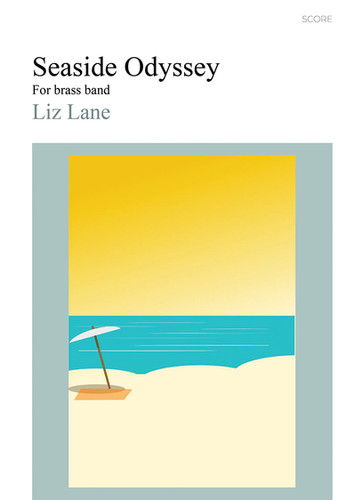
Seaside Odyssey (Brass Band) Liz Lane
Seaside Odyssey is a celebration of the British seaside! The music represents a juxtaposition between natural and manmade elements; there are two main musical themes - the reflective sea (a wordless setting of John Masefield's Sea Fever) and a more lively 'seaside' theme, heard separately in different ways and later together. From childhood memories, sand, beach and cliffs to cafes, ice creams, fish and chips, buckets and spades, boating trips, beach huts, bandstands, piers, theatres, gardens, mini golf, arcades and more, Seaside Odyssey is a journey from dawn to dusk with the sea at the heart of the music. This work was commissioned by Grimethorpe Colliery Band for its seaside tour, August 2023, where it performed at Paignton, Lyme Regis, Weymouth, Shanklin and Herne Bay. Includes optional poems and words specially curated from poets associated with the seaside towns, which can be read before a performance. Duration: approx. 5 minutes This PDF download includes parts and score. Sheet music available at www.brassband.co.uk (UK) or https://satradecentral.org (USA) Instrumentation: Eb Soprano Cornet Bb Solo Cornet Bb Repiano Cornet Bb Cornet 2 Bb Cornet 3 Bb Flugelhorn Eb Solo Tenor Horn Eb Tenor Horn 1 Eb Tenor Horn 2 Bb Baritone 1 Bb Baritone 2 Bb Trombone 1 Bb Trombone 2 Bass Trombone Bb Euphonium Eb Bass Bb Bass Percussion 1: timpani, triangle and optional 'arcade jackpot' effect (see score/part) Percussion 2: 3 suspended cymbals (2 ride, 1 crash) and hi-hat Percussion 3: snare, tom-toms and bass drum Percussion 4: glockenspiel
In Stock: Estimated dispatch 1-3 working days
-
 £33.20
Spanish Dance - Brass Band (Traditional arr. Andrew Wainwright)
Based on the traditional Spanish carol 'Riu Riu Chiu', this exciting foot-tapping item was premiered at Butlins Mineworkers Championships in 2010. Recorded on Virtuosi GUS Band's CD 'Christmas Fantasia - The Music of Andrew Wainwright', it has since proved to be a popular concert item. "Spanish Dance winds up to a whirlwind climax with a respectful nod in the direction of Morley Calvert's 'Canadian Folk Song Suite' - very clever." Paul Hindmarsh, British Bandsman magazine For a follow-the-score video of this work please visit: https://www.youtube.com/watch?v=jjskWuOH_YU Includes score and full set of parts. Sheet music available exclusively from World of Brass - www.worldofbrass.com Difficulty Level: 1st Section + Instrumentation: Soprano Cornet Eb Solo Cornet Bb Repiano Cornet Bb 2nd Cornet Bb 3rd Cornet Bb Flugel Horn Bb Solo Horn Eb 1st Horn Eb 2nd Horn Eb 1st Baritone Bb 2nd Baritone Bb 1st Trombone Bb 2nd Trombone Bb Bass Trombone Euphonium Bb Bass Eb Bass Bb Timpani Percussion 1-2
In Stock: Estimated dispatch 1-3 working days
-
 £29.51
Still, Still, Still (Horn Section Feature with Brass Band) arr. Stephen Tighe
Still, still, still is an Austrian Christmas carol and lullaby. The melody is a folk tune from the Salzburg area and the tune appeared for the first time in 1865 in a folksong collection. The words describe the peace of the infant Jesus and his mother as the baby is sung to sleep. They have changed slightly over the years, but the modern standard German version was established in the mid-19th century. This arrangement by Stephen Tighe features the flugelhorn and horn section with brass band. PDF download includes score and parts. Sheet music available from: UK - www.brassband.co.uk USA - www.solidbrassmusic.com Difficulty Level: 4th Section + Instrumentation: Soprano Cornet Eb Solo Cornet Bb Repiano Cornet Bb 2nd Cornet Bb 3rd Cornet Bb Flugel Horn Bb Solo Horn Eb 1st Horn Eb 2nd Horn Eb 1st Baritone Bb 2nd Baritone Bb 1st Trombone Bb 2nd Trombone Bb Bass Trombone Euphonium Bb Bass Eb Bass Bb Timpani Sleigh Bells Drum Kit Glockenspiel
In Stock: Estimated dispatch 1-3 working days
 Watch video