
Results
-
 £105.20
Viss eg var ein julekonge (Fra Julekongen) - Stray - Øystein Sjøvaag Heimdal
This is the theme song from the Advent-series "Julekongen" ("The Chiristmas King"), premiered at the Norwegian Broadcasting Coprporation (NRK) in 2012. The present arrangement tries to recreate a bit of the mood from the original recording and performance of the song. You may let other players perform as soloist(s). The arrangement is suitable to focus on sound quality at all grade levels. You may end the performance at bar 61.
Estimated dispatch 5-14 working days
-
 £105.20
Remember Me from Coco - Kristen Anderson-Lopez - Idar Torskangerpoll
Remember Me is a song from the 2017 animated Disney Pixar film Coco. The song apperars in several different versions throughout the movie, as a mariachi arrangement, ballad and even as a pop version. It was awarded Best Original Song at the 90th Academy Awards in 2018.
Estimated dispatch 5-14 working days
-
 £105.20
Once Upon a Dream (From The Sleeping Beauty) - Pyotr Ilyich Tchaikovsky - Haakon Esplo
The movies from Disney have always included a lot of great music. Once Upon a Dream was written in 1959 to the musical animation movie "Sleeping Beauty", a movie produced by Walt Disney. It is based on Tchaikovsky's ballet with the same name. In the movie, the theme is dedicated to Princess Aurora and Prince Philip. Mary Costa and Bill Shirley performed the beautiful song as a duet in the original version.
Estimated dispatch 5-14 working days
-
 £70.00
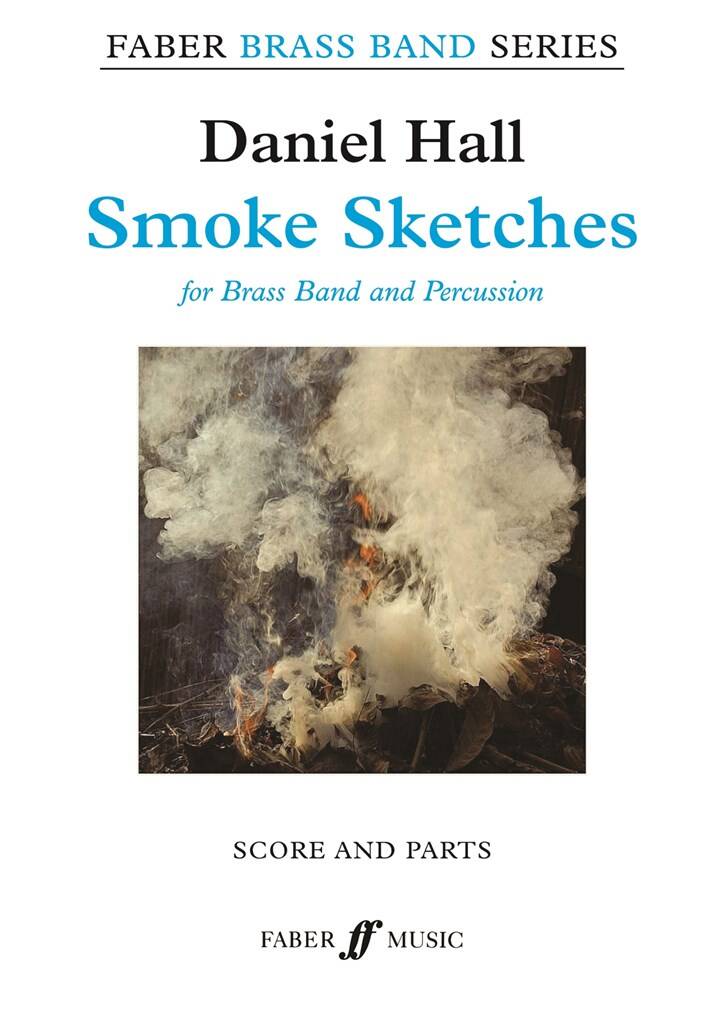
Smoke Sketches - Daniel Hall
Smoke Sketches is Daniel Hall's first original work to be published in the Faber Music Brass Band Series. Daniel is one of the most gifted of the rising generation of composers writing for brass bands. Smoke Sketches was composed at the invitation of Brass Bands England for the Intermediate Section of the 2017 National Youth Brass Band Championships of Great Britain. This colourful, jazzy suite draws inspiration from the ancient art of gazing into smoke from fire to find stories through the act of divination. Into the Blaze suggests someone briskly fire-walking, barefoot, with unexpected sparks fizzling from the ground. A Lonesome Ember capturesthe fleeting life of a small ember, beginning insignificantly and gradually evolving into a larger being before disappearing into ash, while Spark of Light bristles with life and energy. Band Grade 3/4, duration 8 minutes.
Estimated dispatch 5-14 working days
-
 £105.20
When We're Together - Kate Anderson - Haakon Esplo
Disney has done it again! This is music perfect for your band. The arrangement is written for young musicians keeping the challenges in leading part. The important musical elements of the piece are also doubled in several parts making the arrangement playable also with a limited instrumentation. The modulation towards the end differs a half tone from the original to make the arrangement playable for younger musicians.
Estimated dispatch 5-14 working days
-
 £54.99
Under The Sea - Alan Menken - Jerry Nowak
Taken from the original 1989 Disney production 'The Little Mermaid', Under The Sea will get a smile on anyone's face! It's fun to play and not too difficult, perfect for young bands!
Estimated dispatch 5-14 working days
-
 £127.30
What Now My Love - Gilbert Becaud - Ray Farr
What Now, My Love was written in 1961 by composer Gilbert Becaud and lyricist Pierre Delanoe with the original title Et Maintenant.Very many top, internationally renowned artists have recorded this song including Elvis Presley, Frank Sinatraand Shirley Bassey.Ray Farr has set the emotional song to the ostinato of Ravel's Bolero, and features several soloists from within the band.
Estimated dispatch 5-14 working days
-
 £69.99
Theme from "Star Trek(R)" - Alexander Courage - Thomas Doss
Who doesn't know the famous introduction 'To boldly go where no man has gone before' at the beginning of each Star Trek sequel? Many generations grew up with Star Trek - one of the most iconic Sci-Fi series ever written.The original theme is as iconic as the opening line. A great warm up for the next Star Trek series in 2017, arranged by Thomas Doss.
Estimated dispatch 5-14 working days
-
 £164.99
Raveling Unraveling - Philip Sparke
Winning Performance EBBC Lille 2016 Raveling, Unraveling In Search of 'La Valse' was written for the Cory Band as their own-choice test piece for the 2016 European Brass Band Championships in Lille. The piece found its genesis in Sparke's The Unknown Journey (2014) for concert band, and the use of Ravel's La Valse as a structural undercurrent to the original piece is an act of reverence. Sparke's aim was to produce a work that is organic rather than episodic in nature. The composer's view is that little in music does this better than La Valse and for this reason he uses various sections of this masterpiece, both manipulated and quoted verbatim (including much of itsstunningclosing passages) to provide the overall geography of his new work. As the music progresses, more of the Ravel appears, surfacing completely as the piece reaches its climax - a gesture of homage to the French master.
Estimated dispatch 5-14 working days
-
 £85.80
Star Wars Episode VII: The Force Awakens - John Williams - Idar Torskangerpoll
The iconic soundtrack composed by John Williams continues with "The Force Awakens", the seventh Star Wars movie. This arrangement for Young Band tries to capture the rich timbre of the original orchestral music. It is very important to be aware ofthe balance in the band when performing this music. The horns should stand out dynamically when they plays the melody. Also make shure that the rhythmic are played as clear as possible, especially in the bass tubas and other low instruments. You maychoose whether to play the upper or lower octave in the cornet parts.
Estimated dispatch 5-14 working days
 View Music