
Results
-
 £54.95
Fire in the Blood (Brass Band - Score and Parts)
Fire in the Blood was commissioned by Dr Stephen Cobb for the 120th anniversary of the International Staff Band of the Salvation Army. The piece was composed for the celebration concert where the ISB were joined by several other staff bands from around the world to perform independently to a sell-out capacity crowd at Britain's most famous concert hall The Royal Albert Hall. Fire in the Blood received its world premier at the 'ISB 120' concert at the Royal Albert Hall on June 4th 2011.With this piece I wanted to acknowledge music that had an impact on me through my Salvation Army upbringing. When thinking of a title for this piece I had no hesitation than to reflect and re-word the Salvation Army's motto under their famous crest 'Blood and Fire'.When composing Fire in the Blood I wanted to use three songs of worship that have been prevalent in the Salvation Army's services over a number of years. Opening with Richard Phillips' setting of Psalm 95, 'Sing for Joy', the music is vibrant and full of energy, I wanted to capture the spirit of the well known words of Scripture. The music then moves into a more reflective section that includes Howard Davies' emotive song melody 'Lord, you know that we love you' and Laurie Klein's worship song 'I love you Lord'.A re-statement of the opening Psalm setting follows and this, in turn, leads into a dramatic and powerful finale that combines two pivotal statements drawn from the slower, reflective section: I love you lord, and I lift my voice to worship you, O my soul rejoice and Lord, you know that we love you with a final flourish from Psalm 95: Come let us sing joy to the Lord!Paul Lovatt-Cooper
Estimated dispatch 7-14 working days
-
 £24.95
Fire in the Blood (Brass Band - Score only)
Fire in the Blood was commissioned by Dr Stephen Cobb for the 120th anniversary of the International Staff Band of the Salvation Army. The piece was composed for the celebration concert where the ISB were joined by several other staff bands from around the world to perform independently to a sell-out capacity crowd at Britain's most famous concert hall The Royal Albert Hall. Fire in the Blood received its world premier at the 'ISB 120' concert at the Royal Albert Hall on June 4th 2011.With this piece I wanted to acknowledge music that had an impact on me through my Salvation Army upbringing. When thinking of a title for this piece I had no hesitation than to reflect and re-word the Salvation Army's motto under their famous crest 'Blood and Fire'.When composing Fire in the Blood I wanted to use three songs of worship that have been prevalent in the Salvation Army's services over a number of years. Opening with Richard Phillips' setting of Psalm 95, 'Sing for Joy', the music is vibrant and full of energy, I wanted to capture the spirit of the well known words of Scripture. The music then moves into a more reflective section that includes Howard Davies' emotive song melody 'Lord, you know that we love you' and Laurie Klein's worship song 'I love you Lord'.A re-statement of the opening Psalm setting follows and this, in turn, leads into a dramatic and powerful finale that combines two pivotal statements drawn from the slower, reflective section: I love you lord, and I lift my voice to worship you, O my soul rejoice and Lord, you know that we love you with a final flourish from Psalm 95: Come let us sing joy to the Lord!Paul Lovatt-Cooper
Estimated dispatch 7-14 working days
-
£26.50
Haydn's No. 1 Mass in B flat - Newton, E
Includes a full band set (no score)
In Stock: Estimated dispatch 1-3 working days
-
£24.50
Andante Cantabile (from the String Quartet No. 1 in D major) - Tchaikovsky - Barry Strickle
The string quartet No.1 in D Maj was the first of three composed by Tchaikovsky. The melancholic Andante cantabile movement of the quartet has become famous, and was founded on a folk-song the composer heard whistled by a house painter. When the quartet was performed at a tribute concert to Leo Tolstoy, the author was said to have been brought to tears by this movement. Now arranged by Barry Strickle for full Brass Band, this is a perfect piece for any occasion or concert.
In Stock: Estimated dispatch 1-3 working days
-
 £29.50
I Believe In Father Christmas - Greg Lake - Gavin Somerset
Released in 1975, this well loved song was written intentionally by as a protest about the commercialisation of Christmas. The release saw it shoot to No.2 in the charts and remains Greg Lake's only hit solo release. The instrumental riff used between verses is the tune from "Troika" by Sergei Prokofiev that has aided its popularity. This piece is familiar to all audiences, perfect to get them in the mood for your Christmas concerts & get them singing along.
In Stock: Estimated dispatch 1-3 working days
-
£24.50
Brandenburg Concerto No. 2 (allegro assai) - J.S Bach - John Abbott
The "Brandenburg Concertos" were composed and dedicated to Christian Ludwig, Margrave of Brandenburg in 1721, however it seems now they were never actually played for him. This 3rd movement has been kilfully arranged as a trio for Soprano Cornet and 2 Bb Cornets (solo cornet, and repiano). This is sure to test the strongest of players, starting with the famous trumpet opening. The Baritones, Euphoniums and Basses also play a very important role in this arrangement. This certainly is a hard piece to perform for the three soloists, but its well worth the challenge.
In Stock: Estimated dispatch 1-3 working days
-
 £24.50
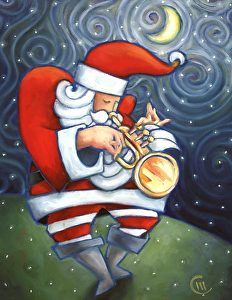
In The Blue Mid Winter - Gustav Holst - John Lee
If your band is looking for something a little more laid back to add to their Christmas programmes this year, then look no further. As the title suggests, this clever setting of Holst's In The Bleak Mid-Winter arranged as a Blues feature, allows the band a change from the traditional styles of music heard at Christmas. Featuring a Blues solo from the principal cornet, this piece is a great addition to keep your festive programmes versatile.
In Stock: Estimated dispatch 1-3 working days
-
 £24.50
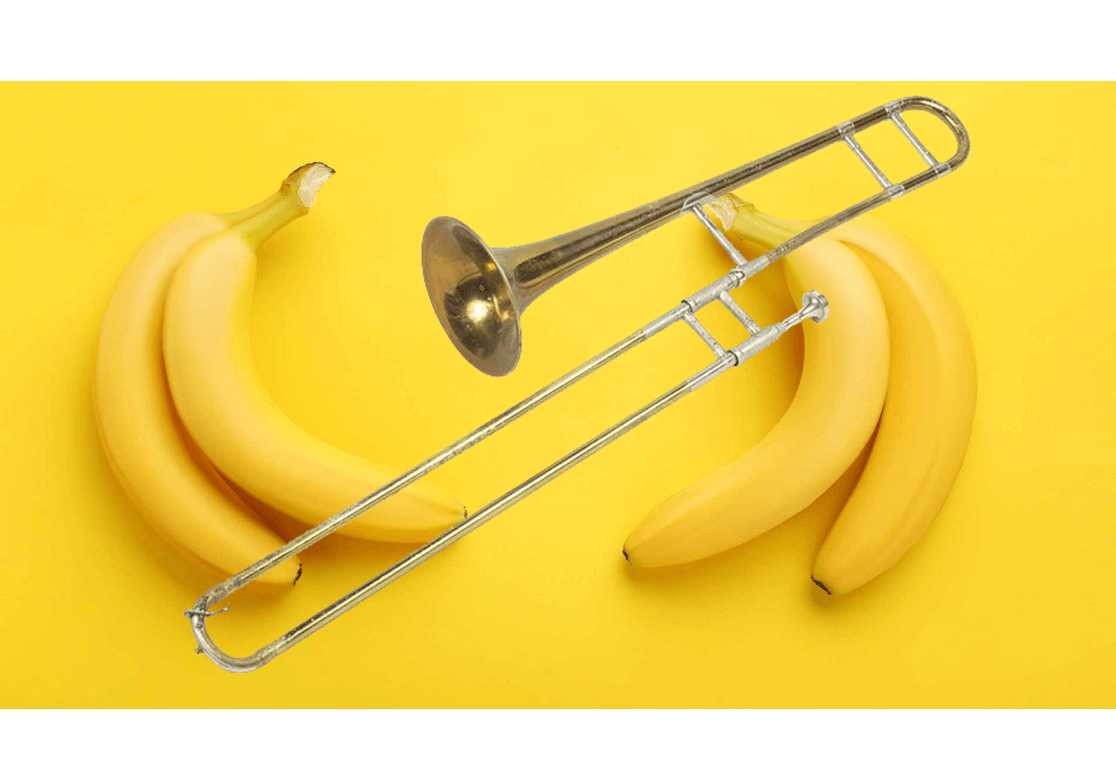
Yes, We Have No Bananas - Frank Silver & Irving Cohn - John Lee
This novelty song is known worldwide following multiple recordings by Billy Jones, Billy Murray, Arthur Hall, Irving Kaufman, and others. Benny Goodman and his Orchestra also recorded the work which has helped keep up the songs popularity since its initial release in 1923. Writer Frank Silver may have been influenced by an actual shortage of Gros Michel bananas in the early 20th century. Now arranged as a trombone solo, this arrangement has two parts; the first being accessible to most soloists with an optional continued section, which is more intricate for more advanced soloists to enjoy. A great audience pleaser and repertoire item.
In Stock: Estimated dispatch 1-3 working days
-
£24.50
Brandenburg Concerto No. 2 (allegro) - J.S Bach - John Abbott
The "Brandenburg Concertos" were composed and dedicated to Christian Ludwig, Margrave of Brandenburg in 1721, however it seems now they were never actually played for him. This 1st movement has been kilfully arranged as a trio for Soprano Cornet and 2 Bb Cornets (solo cornet, and repiano). This is sure to test the strongest of players, utilising the soprano's high register and making work of the low register on the Bb cornets. As well as keeping the band entertained with running semi-quavers (and some wonderful intervals for the basses!!!) This certainly is a hard piece to perform for the three soloists, but its well worth the challenge.
In Stock: Estimated dispatch 1-3 working days
-
 £118.99
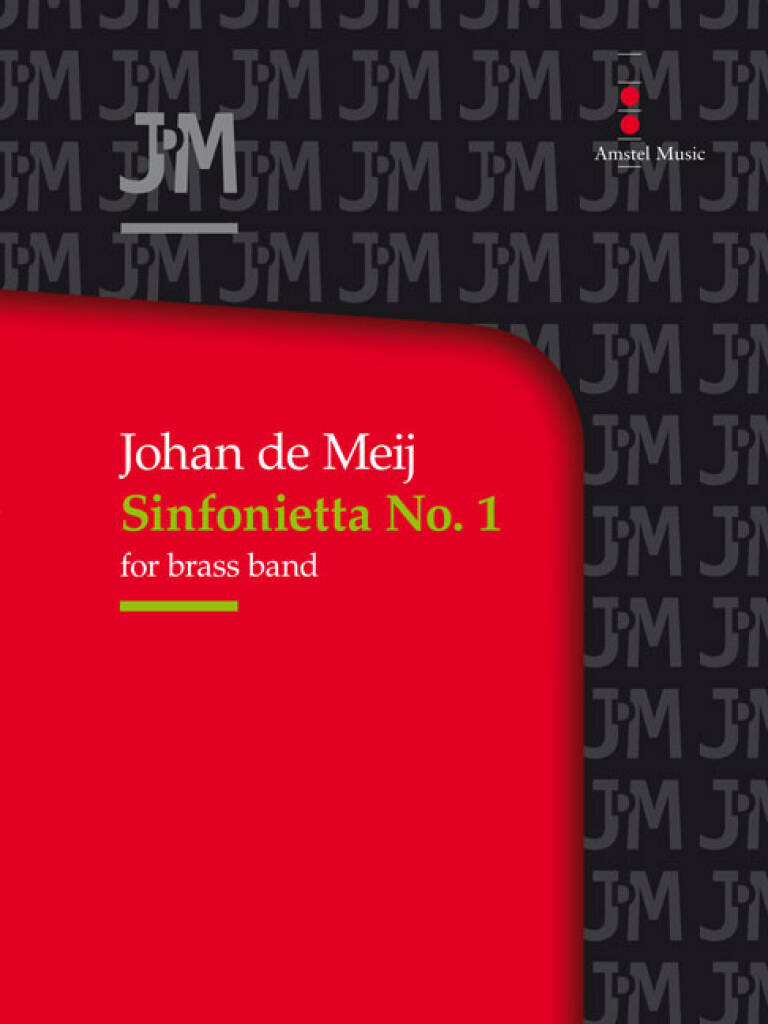
Sinfonietta no. 1 - Johan de Meij
Sinfonietta No. 1, written for brass band, was commissioned by the Dutch National Championships 2011 in Groningen. It also served as the test piece for the Swiss National Championships 2011 in Montreux, Switzerland. Unlike most of Johan de Meij's compositions, Sinfonietta No. 1 is an abstract, non-programmatic work. It consists of three movements, in which the thematic material of the opening measures - an upward fifth jump - returns in various shapes and forms throughout the piece. The slow middle section features solo passages by cello, English horn and bassoon, all starting with the same fifth jump. The final movement presents an Elgar-like march theme,interspersed with quotes from the second movement, and ending with the opening theme of movement I.
Estimated dispatch 5-14 working days
 View Music