
Results
-
 £89.99
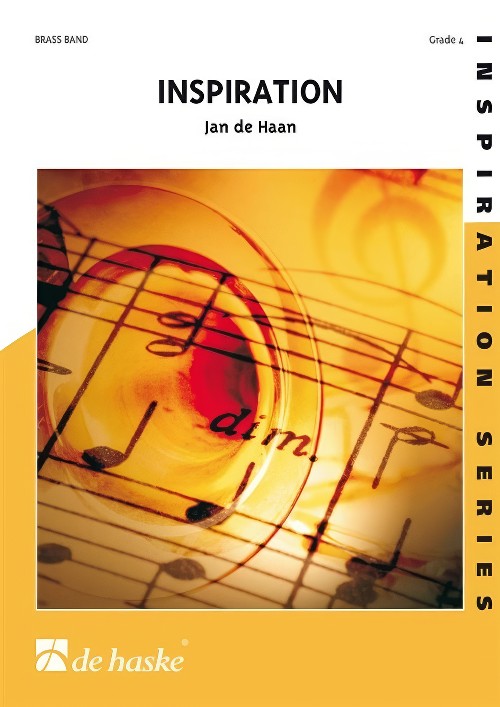
Inspiration (Brass Band - Score and Parts) - De Haan, Jan
This substantial work by Jan de Haan explores the many tonal qualities of the brass band. Following a quiet opening theme based on Phrygian tonality the band bursts into life with a massive climax. Following a jolly second theme characterised by large interval jumps peace and quiet is again restored. Both themes are developed with many poignant solo figures until we reach a resounding fortissimo climax with the solo cornet performing the first theme from the back of the auditorium. A spectacular concert work containing all the elements that bring out the best in brass band sound.Duration: 10:00
Estimated dispatch 7-14 working days
-
 £94.95
Dances and Arias (Brass Band - Score and Parts) - Gregson, Edward
This work was commissioned by Boosey & Hawkes Band Festivals (with funds provided by the Arts Council of Great Britain) for the National Brass Band Championships of Great Britain, held at the Royal Albert Hall, London, on 7th October 1984.Dances and Arias is in one continuous movement, but as the title suggests is a series of alternating fast and slow sections as follows: Dance - Aria I - Dance (scherzo) - Aria II - Dance. The opening dance is energetic and introduces a four-note motif (on trombones) which is the basis for much of the melodic material in the work. Throughout, there is a continuous process of thematic cross-reference and transformation.The first aria unfolds a long melody on solo cornet, eventually continued by all the solo cornets, and dissolving into a shimmering harmonic background (muted cornets, horns and baritones) over which is heard a brief self-quotation on solo tuba. This leads into the second dance, a frenetic scherzo, followed by the second aria, in the style of a lament (solo euphonium, followed by two flugel horns). This builds to a powerful climax which subsides, leaving the percussion to introduce the final toccata-like dance. It transforms material from the opening before a coda brings the music to a triumphant close. The large percussion section is an integral part in the work and uses a wide variety of instruments including timpani, glockenspiel, vibraphone, xylophone, tubular bells, tom-toms, snare drum, bongos and tam-tam.The work is dedicated to my brother and sister.- Edward GregsonDuration: 14.00
Estimated dispatch 7-14 working days
-
 £44.95
Dances and Arias (Brass Band - Score only) - Gregson, Edward
This work was commissioned by Boosey & Hawkes Band Festivals (with funds provided by the Arts Council of Great Britain) for the National Brass Band Championships of Great Britain, held at the Royal Albert Hall, London, on 7th October 1984.Dances and Arias is in one continuous movement, but as the title suggests is a series of alternating fast and slow sections as follows: Dance - Aria I - Dance (scherzo) - Aria II - Dance. The opening dance is energetic and introduces a four-note motif (on trombones) which is the basis for much of the melodic material in the work. Throughout, there is a continuous process of thematic cross-reference and transformation.The first aria unfolds a long melody on solo cornet, eventually continued by all the solo cornets, and dissolving into a shimmering harmonic background (muted cornets, horns and baritones) over which is heard a brief self-quotation on solo tuba. This leads into the second dance, a frenetic scherzo, followed by the second aria, in the style of a lament (solo euphonium, followed by two flugel horns). This builds to a powerful climax which subsides, leaving the percussion to introduce the final toccata-like dance. It transforms material from the opening before a coda brings the music to a triumphant close. The large percussion section is an integral part in the work and uses a wide variety of instruments including timpani, glockenspiel, vibraphone, xylophone, tubular bells, tom-toms, snare drum, bongos and tam-tam.The work is dedicated to my brother and sister.- Edward GregsonDuration: 14.00
Estimated dispatch 7-14 working days
-
 £34.95
AL SHARQ (An Arabic-Jazz Fusion) (Brass Band) - Hall, Daniel
Al Sharq (pronounced al-sha-rak) was commissioned by Tredegar Town Band as part of their programme for the 2014 Brass in Concert Championships at the Sage, Gateshead.The piece is an exciting and exotic concert work for brass band, which is heavily influenced by the genres 'Third Stream' and 'Arabic'. The composition is highly rhythmical and percussion heavy, which makes use of 'Tam-tam vibrato' - a technique which was invented by the composer especially for this composition.There are plenty of opportunities for the musicians to try something different, such as the aleatoric harmonic framework at the opening of the composition, shouting, 'hi-fiving', special choreography and even playing a didgeridoo!Al Sharq is a technically demanding piece which exploits the talents of all sections of the ensemble, especially the principal solo cornet, who starts the piece with an atmospheric cadenza. All of this makes Al Sharq a powerful and entertaining experience for both performer and listener.Grade: Advanced Duration:4:17
Estimated dispatch 7-14 working days
-
 £42.95
CHRISTMAS POST, The (Brass Band with Post Horn feature) - Koenig, Hermann - Keeley, Ed
Brass Band set including full score. The Post Horn part is provided in Ab, however a Bb trumpet part is also included in the set for greater flexiblity. In 1844, the German cornet player Hermann Koenig wrote Post Horn Gallop for Post Horn with orchestra accompaniment. Its great popularity meant that it has made its way into the brass and wind band repertoires. Ed Keeley has given it a festive twist by including motifs of Jingle Bells, Good King Wenceslas and Here We Come A-Wassailing.
Estimated dispatch 7-14 working days
-
 £44.95
CORNET CONCERTO (Ellerby) (Brass Band - Score only) - Ellerby, Martin
Brass Band extra score only. This bright, optimistic, lyrical concerto, accessible to players and audiences alike, falls into three contrasting movements. Brilliante is a tradional sonata form with two subjects, first a lively fanfare type figure followed secondly by a cantabile theme. The Arietta has legato phrases with an overall singing quality from both the soloist and the band while the final movement, Rondino, is in rondo form with constant changes of metre creating a restless journey to a dynamic conclusion. Duration: 12 mins.
Estimated dispatch 7-14 working days
-
 £44.95
Deliverance (from War of the Worlds Suite) (Soprano Cornet or Tenor Horn Solo with Brass Band - Score and Parts) - Graham, Peter
Deliverance is the fourth movement of the suite War of the Worlds which was commissioned by the Senzoku Gakuen College of Music Saxophone Orchestra and first performed by them in the Maeda Hall, Japan on June 29 2012, the composer conducting. The music is dedicated to Professor Shin-ichi Iwamoto. The transcription for brass band was first performed by the Brighouse & Rastrick Band, conductor David King, in the Bridgewater Hall Manchester on September 8 2012.The suite takes inspiration from the 1953 film script adaptation of the famous HG Wells novel and key scenes from the film are set as individual movements: Deliverance - survivors seek sanctuary in the Church of Santa Maria, still standing among the burning ruins of Los Angeles, and pray for deliverance from the invaders.Each movement of War of the Worlds is available separately allowing for a variety of "mini-suite" combinations eg: Movements 1,2 and 5 or 3,4 and 5 etc.
Estimated dispatch 7-14 working days
-
 £69.99
Fanfares and Love Songs (Brass Band - Score and Parts) - Higgins, Gavin
Fanfares and Love Songs was commissioned by the National Children's Brass Band of Great Britain for performance on 25th July 2009. Its three movements contrast the extrovert and lyrical qualities of the traditional brass band. The fanfare with which the work opens involves the whole cornet section. The second movement is reflective in mood, beginning somewhat pensively on muted brass, and building to an emotional climax before subsiding back to a distant pianissimo chord. The finale is a fast dance, which with a final recapitulation of the opening fanfare drives on to a breathless close.Suitable for Advanced Youth/3rd Section Bands and aboveDuration: 12.00
Estimated dispatch 7-14 working days
-
£14.99
Fanfares and Love Songs (Brass Band - Score only) - Higgins, Gavin
Fanfares and Love Songs was commissioned by the National Children's Brass Band of Great Britain for performance on 25th July 2009. Its three movements contrast the extrovert and lyrical qualities of the traditional brass band. The fanfare with which the work opens involves the whole cornet section. The second movement is reflective in mood, beginning somewhat pensively on muted brass, and building to an emotional climax before subsiding back to a distant pianissimo chord. The finale is a fast dance, which with a final recapitulation of the opening fanfare drives on to a breathless close.Suitable for Advanced Youth/3rd Section Bands and aboveDuration: 12.00
Estimated dispatch 7-14 working days
-
 £44.95
Follow the Flame (from The Torchbearer) (Flugel Horn or Cornet Solo with Brass Band - Score and Parts) - Graham, Peter
The Torchbearer was commissioned as the test piece for the 2009 National Brass Band Championships of Great Britain and the FABB Open Contest respectively and pays musical tribute to Eric Ball, considered by many to be the 20th century's most influential composer of brass band music. The thematic material is derived from the first phrase of the trio from Eric Ball's Salvation Army march, Torchbearers.Follow the Flame is a main theme from the larger work, now fully metamorphosised and mirroring in music a concept at the centre of Ball's broader philosophy, that of transformation.
Estimated dispatch 7-14 working days
 View Music