
Results
-
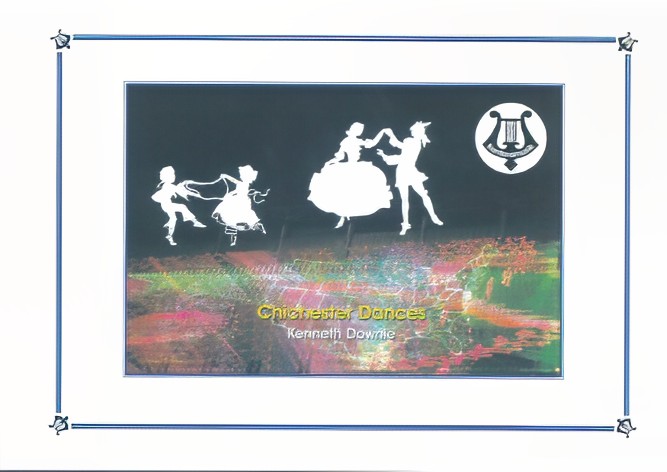 £19.95
Chichester Dances (Brass Band - Score Only) - Downie, Kenneth
This music is an entertaining suite in four movements, playable by most bands. It opens with Samba, followed by Quick Waltz, Pavane and, finally, Sailor's Dance. Each movement lasts approximately two minutes. It is ideal for concert use and each movement could be performed separately if desired.
Estimated dispatch 7-14 working days
-
 £44.95
The Polovtsian Dances (Excerpts from Prince Igor) (Brass Band - Score and Parts) - Borodin, Alexander - Norbury, Kevin
Alexander Borodin (1883 - 1887) was a Russian composer who made his living as a chemist. He was a member of the group of composers called "The Five" (or "The Mighty Handful") who were dedicated to producing a specifically Russian kind of art music. He is best known for his symphonies, his two string quartets, and his opera "Prince Igor". The opera contains "The Polovtsian Dances" which is often performed as a stand-alone concert work.
Estimated dispatch 7-14 working days
-
£22.50
The Polovtsian Dances (Excerpts From Prince Igor) (Brass Band - Score only) - Borodin, Alexander - Norbury, Kevin
Alexander Borodin (1883 - 1887) was a Russian composer who made his living as a chemist. He was a member of the group of composers called "The Five" (or "The Mighty Handful") who were dedicated to producing a specifically Russian kind of art music. He is best known for his symphonies, his two string quartets, and his opera "Prince Igor". The opera contains "The Polovtsian Dances" which is often performed as a stand-alone concert work.
Estimated dispatch 7-14 working days
-
 £59.99
Saying Goodbye (Brass Band - Score and Parts) - Sparke, Philip
Saying Goodbye is one of a series of original works in pop, rock and swing styles Philip Sparke has composed to try and give brass bands their own popular vocabulary and identity. It could be described as happy-sad in mood, a feature of much of Sparke's slower music. A perfect light addition for your concert.Duration: 4:15
Estimated dispatch 7-14 working days
-
£34.95
Celebration (Brass Band - Score and Parts) - Condon, Leslie
Composed for the 75th anniversary of the ISB in 1965, this music went on to become one of the best known concert marches in the Salvation Army repertoire.
Estimated dispatch 7-14 working days
-
£17.50
Celebration (Brass Band - Score only) - Condon, Leslie
Composed for the 75th anniversary of the ISB in 1965, this music went on to become one of the best known concert marches in the Salvation Army repertoire.
Estimated dispatch 7-14 working days
-
 £54.95
A Christmas Finale (Brass Band - Score and Parts) - Lovatt-Cooper, Paul
As the title suggests, A Christmas Finale provides an ideal close to any Christmas concert. Paul Lovatt-Cooper has taken a collection of popular works associated with Christmas and expertly crafted this wonderful piece to provide both the listener and performer with an exciting Christmas musical experience.? A note from the composer: I love the magic of Christmas. I find the whole experience exciting, from the handing out of presents to the movies shown on television. However, it is the music I love the most, from Christmas carols to Christmas number ones, it all adds to the unique atmosphere and sense of joviality associated with this wonderful time of year. A Christmas Finale captures my yuletide emotions and will hopefully provide enjoyment for you too! Merry Christmas. Duration: 7.30
Estimated dispatch 7-14 working days
-
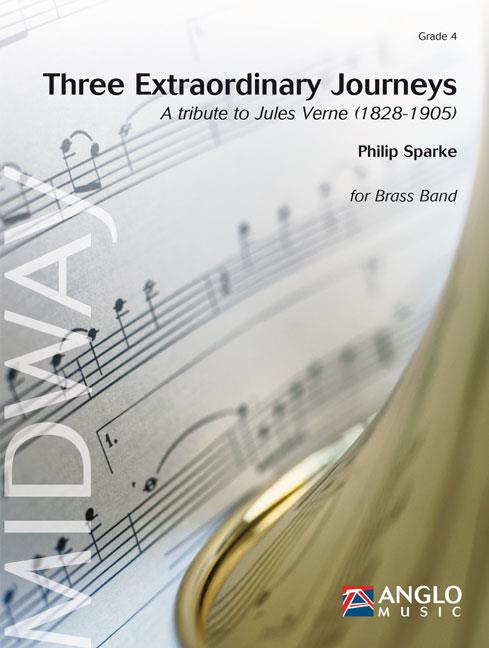 £106.99
Three Extraordinary Journeys (Brass Band - Score and Parts) - Sparke, Philip
Three Extraordinary Journeys was commissioned to mark the centenary of the death of the famous author Jules Verne. Based on three novels from his Voyages Extraordinaires series of travel stories, the music aims to capture the excitement and adventure of these famous books. A fantastic major concert or 'own choice' contest piece.Duration: 13:15
Estimated dispatch 7-14 working days
-
 £89.95
The Trumpets of the Angels (Brass Band - Score and Parts) - Gregson, Edward
The Trumpets of the Angels was commissioned by the Fodens (Courtois) Band for their centenary concert at The Bridgewater Hall in 2000. It is based on a work written for the BBC Philharmonic and Huddersfield Choral Society in 1998, the starting point of which was a quotation from the Book of Revelation:and I saw the seven angels which stood before God; and to them were given seven trumpetsThus the idea behind the work is dramatic and I have tried to achieve this by the spatial deployment of seven solo trumpets around the band, four on-stage, the others off-stage. Six of the solo trumpets eventually join the band, but Trumpet 7 remains off-stage and, indeed, has the most dramatic and extended cadenza representing the words of the seventh angel ...and time shall be no more.The Trumpets of the Angels is a large-scale work, scored for seven solo trumpets, brass band, organ and percussion (deploying 'dark' instruments such as tam-tams, bass drum and two sets of timpani). The work opens with a four-note motif announced by off-stage horns and baritones and answered by fanfare figures on solo trumpets. In turn, each of the first four solo trumpets play cadenzas and then all four join together, independently playing their own music. The organ enters dramatically with its own cadenza, leading to the entry of solo trumpets 5 and 6 with music that is more urgent and rhythmic, describing the horsemen of the Apocalypse.The music reaches another climax, more intense this time, with the horns and baritones (now on-stage) again sounding the transformed motif, before subsiding into what might be described as a lament for humanity, slow music which builds from low to high, from soft to loud, with a melody that is both simple and poignant. At the climax, Trumpet 7 enters playing the opening four-note motif, dramatically extended to almost three octaves. This cadenza (to the partial accompaniment of tam-tams) introduces new material and foreshadows the ensuing scherzo which is fast and aggressive. Despite the somewhat desolate mood of this music, it slowly moves towards an optimistic conclusion, transforming the 'humanity' music into an affirmative and triumphant statement.- Edward Gregson
Estimated dispatch 7-14 working days
-
 £44.95
The Trumpets of the Angels (Brass Band - Score only) - Gregson, Edward
The Trumpets of the Angels was commissioned by the Fodens (Courtois) Band for their centenary concert at The Bridgewater Hall in 2000. It is based on a work written for the BBC Philharmonic and Huddersfield Choral Society in 1998, the starting point of which was a quotation from the Book of Revelation:and I saw the seven angels which stood before God; and to them were given seven trumpetsThus the idea behind the work is dramatic and I have tried to achieve this by the spatial deployment of seven solo trumpets around the band, four on-stage, the others off-stage. Six of the solo trumpets eventually join the band, but Trumpet 7 remains off-stage and, indeed, has the most dramatic and extended cadenza representing the words of the seventh angel ...and time shall be no more.The Trumpets of the Angels is a large-scale work, scored for seven solo trumpets, brass band, organ and percussion (deploying 'dark' instruments such as tam-tams, bass drum and two sets of timpani). The work opens with a four-note motif announced by off-stage horns and baritones and answered by fanfare figures on solo trumpets. In turn, each of the first four solo trumpets play cadenzas and then all four join together, independently playing their own music. The organ enters dramatically with its own cadenza, leading to the entry of solo trumpets 5 and 6 with music that is more urgent and rhythmic, describing the horsemen of the Apocalypse.The music reaches another climax, more intense this time, with the horns and baritones (now on-stage) again sounding the transformed motif, before subsiding into what might be described as a lament for humanity, slow music which builds from low to high, from soft to loud, with a melody that is both simple and poignant. At the climax, Trumpet 7 enters playing the opening four-note motif, dramatically extended to almost three octaves. This cadenza (to the partial accompaniment of tam-tams) introduces new material and foreshadows the ensuing scherzo which is fast and aggressive. Despite the somewhat desolate mood of this music, it slowly moves towards an optimistic conclusion, transforming the 'humanity' music into an affirmative and triumphant statement.- Edward Gregson
Estimated dispatch 7-14 working days
 View Music