
Results
-
 £122.10
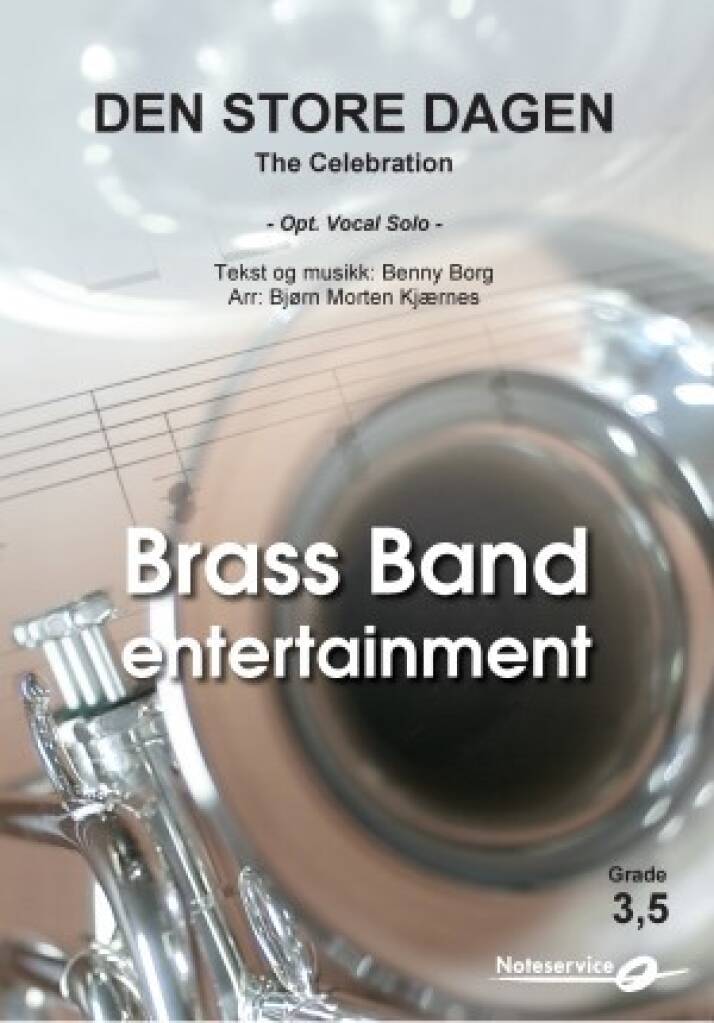
Den store dagen - Benny Borg - Bjørn Morten Kjærnes
This beautiful song contains a huge contrast between the hopeful and the disappointing. A mother has her birthday and is waiting her children to celebrate it. Each verse starts optimistically, but the short chorus is characterized by the disappointment, that everyone calls, and cannot come. This has been tried recreated musically, mostly in the last two choruses, as it dawns on her that she will not receive a visit. It's a beautiful tune, but with a serious message that it's easy to take someone for granted.One of the elements Hjorring Brass Band (DK) came up with after rehearsal, was that they really liked the change between the ballad parts with even eights and the swing parts. This also gives the piece a sense of "parlando" character, which tells a story, and is therefore important to focus. It is not quite simple, as the melody also in those parts with even eights has some triplet rhythms. Therefore, this is a topic you can work on very consciously.If you have heard the Wind Band version, you can notice that both keys and modulation are different in the Brass Band arrangement to sound better for this instrumentation.Regarding instrumentation, Flugelhorn, Solo Horn and Euphonium have important roles, in addition to Solo Cornet.It is also possible to use a vocal soloist, but then you have to soften the melody voices, especially, where small variations in the melody have been made for the wind instruments.
Estimated dispatch 5-14 working days
-
£76.99
Durkle Bandrydge Suite - Bruce Fraser
Durkle Bandrydge is the name of the composers imaginary world, but it could very well be anyones invisible dream world with a different name. In this very versatile suite by Bruce Fraser, 8 characters are featured, each with its ownpeculiarities, making Durkle Bandrydge such a colourful place. Do these characters differ that much from us? That is for you to find out! In the last part, all characters come together in a special way.Durkle Bandrydge exists at the end ofyour street. It is invisible to humans, but Durkle Bandrygators can watch us with great interest. The music will introduce you to some of the characters who live in this unusual place. The parts: Somnanbulyss, who is a giant trollguarding the entrance to Durkle Bandryde. At least, he is supposed to, but he tends to sleep most of the time. His music is therefore very slow moving and sleepy. Long Gwysteen is a tall, mysterious, and somehow sophisticated character,who walls around with a shell on his back. His music glides along rather gracefully. Squelfitch is a rather unpleasant and smelly character who lives in a bog, which is why his music sounds rather slimy and a bit like trying to walkthrough quicksand. Perfydlia is a meddling old woman, who gossips about everybody and squeals with sudden delight at the small exciting bits of tittletattle about others in the village. In the music you can hear her sudden little squealsof delight. Maryann Lovely is a beautiful young lady, graceful, gorgeous, absolutely devine, and her music is obviously just the same. Thistledoo Nicely is a lively character who spends and spends and spends with her credit card,buying the latest fashion and never worries about having to pay the bills. Her music reflects her excitement when shopping and het 'happy go lucky' approach to life. Marsyn Edginton is the Lord of the manor, the richest man in town, the'big cheese', the man with all the power and, of course, the biggest house. He is very grand and his music like he could be a king. Jimmy McScotsmyn is a red haired scotsman wearing tartan cap. He misses his home country terribly and eatslots of shortbread, oatcakes, scotch eggs, porridge and drinks an enormous amount of Scotch Wisky, which helps him to have fond memories of the kind of music he would like to dance to when he was a younger man. His favourite dance is a Jig andthis is the music he remembers. Grand March of the Durkle Bandrydgators. We hope that you have enjoyed meeting these characters from Drukle Bandrydge and would invite you to listen to all the villagers now march along in a grand parade -it is a pity that you can not see them, what is a wonderful sight. If you listen carefully, you will hear the melodies which belong to the characters as they march past. Oh what a grand spectacle!
Estimated dispatch 5-14 working days
-
 £122.10
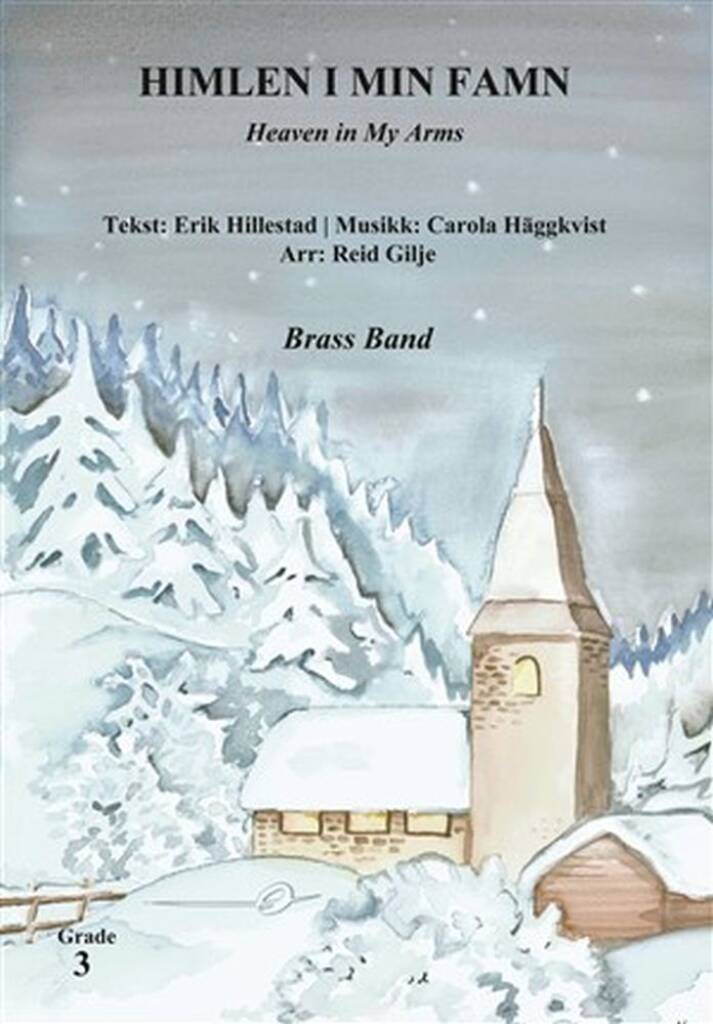
Himlen i min famn - Carola Häggkvist - Reid Gilje
"Heaven in My Arms" is a beautiful melody by Carola Haggkvist with lyrics by Erik Hillestad.This version is without vocal soloist so the melody is spread into many parts throughout the arrangement.To the conductor:Strive for good flow and phrasing. Feel free to be a bit creative with the phrasing. It invites for two-bar phrases in the melody, but perhaps 2/2/4 could also work nicely.Balance is very important. Often there is both melody and obligato/countermelody in addition to harmonic elements. Let each of them have their own layer in the balance.Staccato effects in cornets and marimba are intended as pizzicato effects and must be phrased. Not too static.The tutti section at 72 can be energetic with intense lines. Maybe a little piu mosso as well. Think big and orchestral with good resonance and timbre.- Reid Gilje -
Estimated dispatch 5-14 working days
-
 £72.99
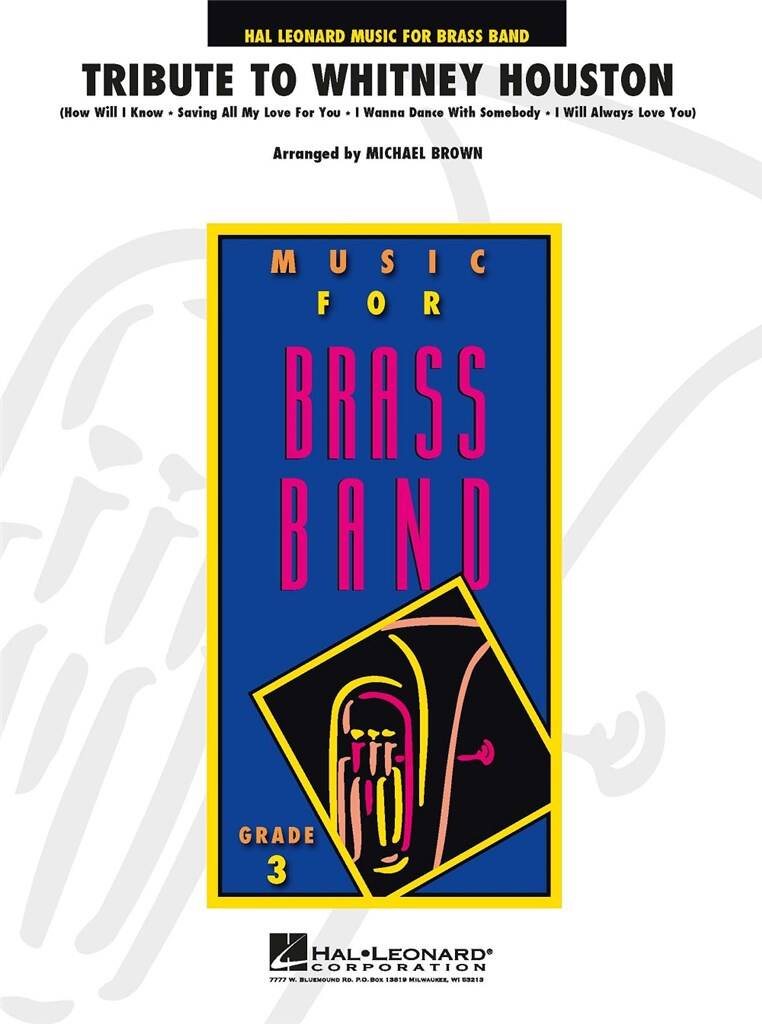
Tribute To Whitney Houston - Michael Brown
It has been ten years since the American pop singer Whitney Houston passed away, but the world has not forgotten her beautiful voice. Her timeless hits - from ballads to wonderful dance tracks - are still heard on the radio. This attractive medley includes some of her greatest successes: 'How Will I Know', 'Saving All My Love for You', 'I Wanna Dance with Somebody', and 'I Will Always Love You'.
Estimated dispatch 5-14 working days
-
 £49.99
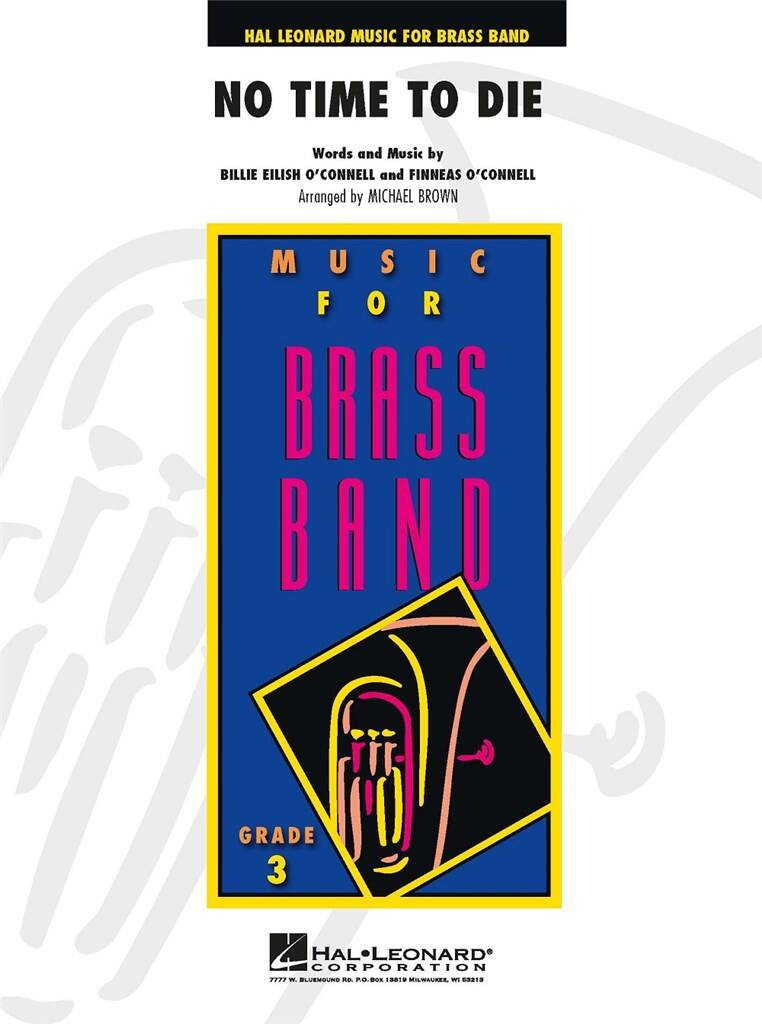
No Time to Die - Michael Brown
Delayed by the pandemic but scheduled for release in 2021, the much-anticipated James Bond film No Time to Die features a darkly beautiful and moody theme song recorded by Billie Eilish. With hints of the signature Bond harmonic flavor and stylish setting, this song is already on its way to becoming a classic, perfectly transcribed for brass band by Christopher Bond.
Estimated dispatch 5-14 working days
-
 £115.60
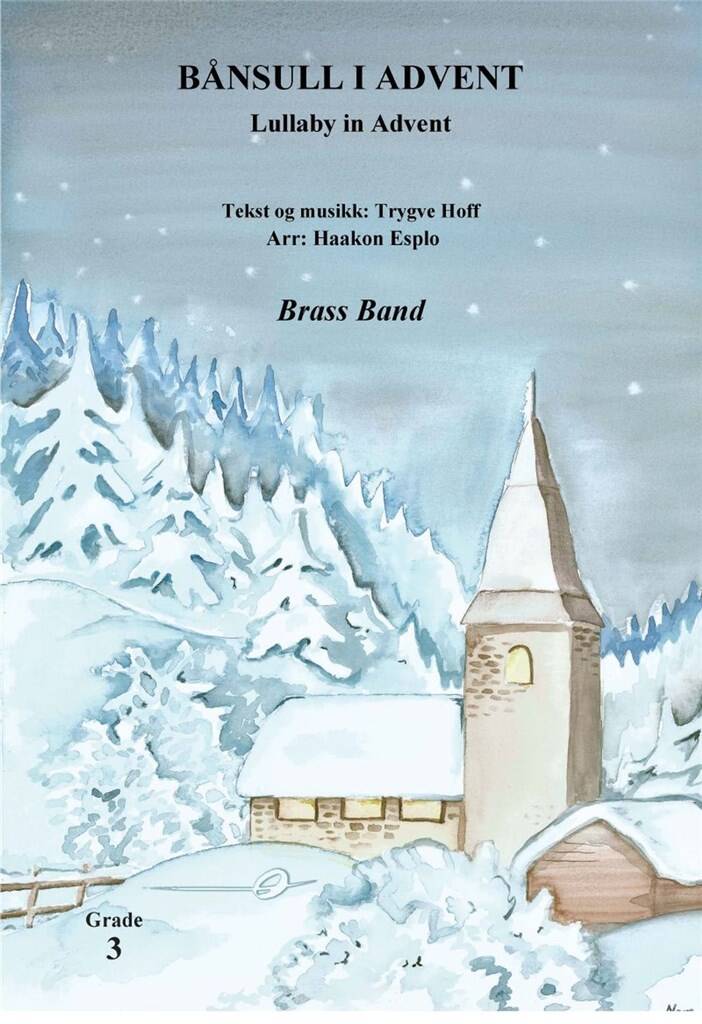
Bansull i advent - Trygve Hoff - Haakon Esplo
The composer and musician Trygve Hoff was born and raised at Rognan in Nordland and gained a lot of inspiration for his texts from the North Norwegian culture. He is a composer and copywriter of many of our most popular songs. "Ei hand a holde i" and "Har en drom" with music by Svein Gundersen and especially his own "North Norwegian Christmas Psalm" are famous songs in Norway. "Lullaby in advent" may not be among his most famous songs, but it's a beautiful and thoughtful melody that will fit well with any Christmas concert. Hoff himself varied with musical styles on this song. This arrangement is written as a jazz-version with swing feel.
Estimated dispatch 5-14 working days
-
 £59.99
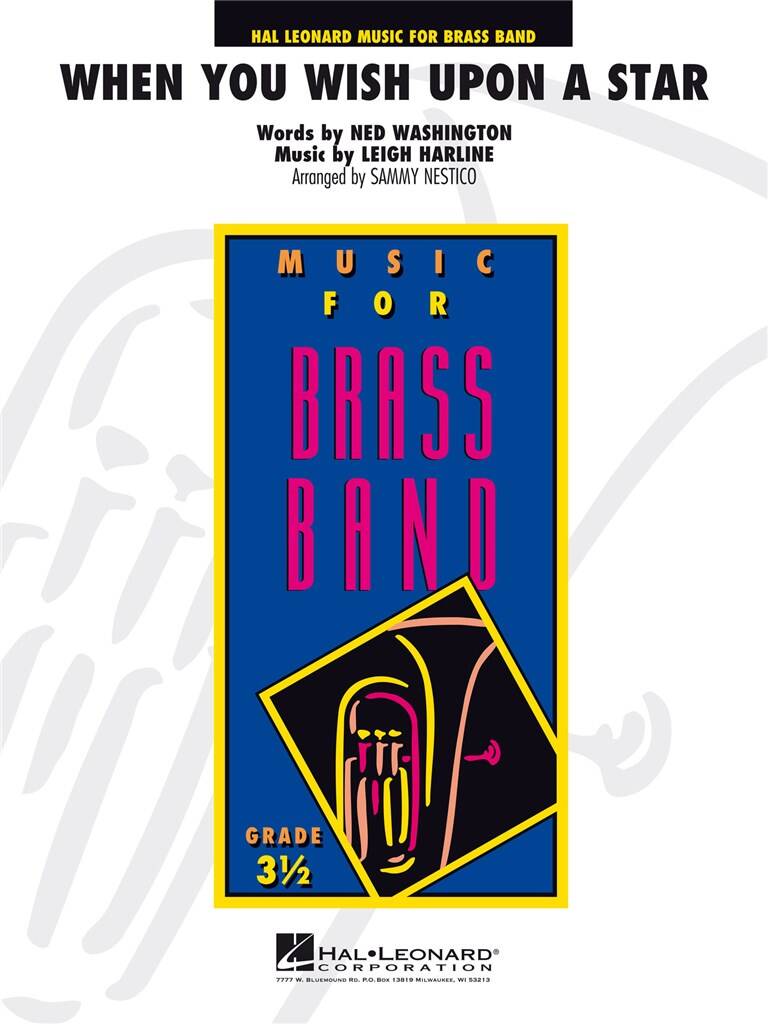
When you wish upon a Star - Sammy Nestico
Out of all Disney productions, 'Pinocchio' may be the most famous. The beautiful song When you wish upon a Star is not only popular from the animation film itself, but also as a separate song. It has been covered by many big artists throughout the years. It is perfect for brass band. Will your nose grow whilst playing?
Estimated dispatch 5-14 working days
-
£60.99
The Last Song - Ben Haemhouts
The Last Song is a beautiful and sad choral that begins very slowly and calmly. Gradually the instrumentation increases leading to a big climax. After this Grandioso ma con moto the instrumentation gets smaller and the piece comes to an end with the initial theme, but this time even slower than in the opening.
Estimated dispatch 5-14 working days
-
 £84.99
Christmas Brass - Richard Peaslee
Christmas Brass is a fantasy on six carols, originally commissioned by Mark Freeh for the Manhattan Brass Choir. Duration: 16:30The well-known tune, O Come, O Come Emmanuel, a hymn originally based on a plainsong melody, is here set in 5/4 meter. Modal harmonies are combined with big band style as the piece gains momentum, greatly accentuating the mood of the words, "Rejoice! Rejoice! Emmanuel." The opening 5/4 statement of the theme returns, and the piece ends quietly.In Beautiful Savior (also known by the title Fairest Lord Jesus), a hushed beginning featuring horns, euphoniums, and a muted trumpet, leads through a key change to a satisfying, chorale-likeclosing passage.In Away in a Manger, Peaslee sets two tunes, Cradle Song and Away in a Manger. Following a straightforward presentation of each melody, Peaslee plays them against one another. The music swells to a full climax followed by a hushed ending.Peaslee employs a gentle hand in It Came Upon a Midnight Clear, using flugelhorn solos and duets in a jazz-waltz style.In Silent Night, the traditional carol gets an untraditional harmonization, propelled forward by give-and-take between the two groups of brass instruments in the brass choir: trumpets and trombones versus horns, euphoniums, and tuba.Hark! The Herald Angels Sing begins with a humorous blast of discordant harmonies as multiple carols are sounded at the same time. An up-tempo 4/4 announcement of the melody in the trombone is followed by a metrical modulation in 6/8-3/4 time. An additional metrical modulation bring the music back into 4/4, but at a slower tempo and in a pronounced jazz style. Tempo I returns, and the set of six pieces closes with a big ending.Instrumentation: 4 Trumpets, 2 Horns in F, 4 Trombones, 2 Euphoniums, Tuba, Guitar, Bass, Percussion
Estimated dispatch 5-14 working days
-
 £147.10
Rainforest Concerto - Saskia Apon
Rainforest Concerto has been commissioned by the Brass Band Rijnmond. This double concerto for two trombones and wind band consists of three parts with the cadenza in the slow niddle movement. Saskia Apon was inspired by the threat of the destruction of the rainforest. In the first part, Creation, we hear an accelerated reproduction of the birth of this impressive natural phenomenon. We hear the first birds, we see the growth of the mangrove trees and we witness the struggle for light and the force necessary to keep the realized equilibrium in a perpetual balance.The second part, Ode, is a tribute to the wonder and splendour of the rainforest. By means of subtle and extremely delicate sonorities we hear how nature adds an inestimable value to the rainforest. However it is also extremely fragile and this engenders a certain melancholy due to the awareness of man's impotence to respect this beautiful nature.In the last part, Contra Demolition, we hear the threatening decline, but also the revolt against this possible ruin. It is a heartfelt cry to leave nuture in peace and to work hard for the preservation of the beauty and the value of the rainforest.
Estimated dispatch 5-14 working days
 View Music