
Results
-
 £75.90
WOMAN IN LOVE (Brass Band) - Gibb & Gibb - Broadbent, Derek
Medium
Estimated dispatch 7-14 working days
-
 £183.20
Folklore - Kjetil Djønne
"Folklore" is a work for brass band and percussion loosely based on the story of the Norwegian woman accused of witchcraft, Anne Pedersdotter. She was sentenced to be burned at the stake in Bergen in the spring of 1590 and has since been frequently highlighted as Norway's most famous and talked-about witch.The work begins with the movement "Lyderhorn," depicting the mountain outside Bergen where witches gathered to plan magical actions against the city. Here, we hear the quietness of nature and the wind blowing through the trees before a new theme appears, which will come to life in the next movement. In the distance, the witches have started their ceremony.In the next movement, "Walpurgis Night," the witches perform their rituals to afflict the city with fire, disease, and natural disasters. The ceremony becomes more and more chaotic, violent, and compelling until the darkness of the night envelops us, concluding the section.The third movement describes the women's inner struggle against the harassment they faced when the people of Bergen suspected them of being witches. Rumors often turned into formal accusations from the legal system, and many were sentenced to death after undergoing trial. "From life to death through the fire."The fourth and final movement, "The Pyre," depicts the actual death sentence. You can hear the pyre being ignited and the flames growing and intensifying. It all culminates in a chorale as a memorial to the lives that were taken.
Estimated dispatch 5-14 working days
-
 £104.99
Crossing Worlds - Thierry Deleruyelle
Crossing Worlds is a cornet concerto commissioned by the Swiss cornet player Kathleen Gaspoz who made history when after 200 years she became the first woman to hold the post of principal cornet in both the famous Brighouse & Rastrick Band and the Grimethorpe Colliery Band. Crossing Worlds is written in three separate movements ('Getaway', 'Skylights' & 'Welcome Parade') and follows the journey of a musician. Through their travels, the artist discovers a variety of countries, cultures and landscapes.
Estimated dispatch 5-14 working days
-
 £107.80
Farvel til en slavisk kvinne - Vasily Ivanovich Agapkin - Reid Gilje
Vasili Agapkin was trained as a trumpet player and a cavalryman. Farewell to a Slavoc Woman was composed in 1912 and is dedicated to all Slavic women. The march has had many different texts throughout the years, becoming very popular during the First World War. The composer is known for this march only. Today, the march has a kind of a National March status in his native Russia.
Estimated dispatch 5-14 working days
-
 £174.99
Tales & Legends - Etienne Crausaz
This three-movement work by the Swiss composer Etienne Crausaz reflects three true stories and fascinating legends from the Middle Ages. The first movement tells the dramatic story of the 'witch' Catherine 'Catillon' Repond (1662 1731). She was the last woman ever to be executed for sorcery. In the second movement, the famous court jester Girard Chalamala occupies centre stage. This jester, the last one at the castle of Count Greyerz, could make everyone laugh. The third movement tells the story of Count Michael. He went down in history as a spendthrift bon-vivant. His burden of debt became so high that he did a moonlight flit and never came back!
Estimated dispatch 5-14 working days
-
£94.99
The Devil's Bridge - Bertrand Moren
The "Teufelsbrucke" (devil's bridge) is a very old bridge connecting the Goschenen and Andermatt valleys in the canton of Uri, central Switzerland. Legend has it that in the 13th century the people of Uri made a pact with the devil to build a bridge across the canyon. When the people only delivered a goat in payment of the soul demanded by the devil he was angry and decided to knock down the bridge. An old woman painted the sign of a cross on the rock the devil was intending to destroy the bridge with and the devil, unable to lift it, disappeared forever. The rock remains to this day at the northern entry of the Gotthard tunnel.
Estimated dispatch 5-14 working days
-
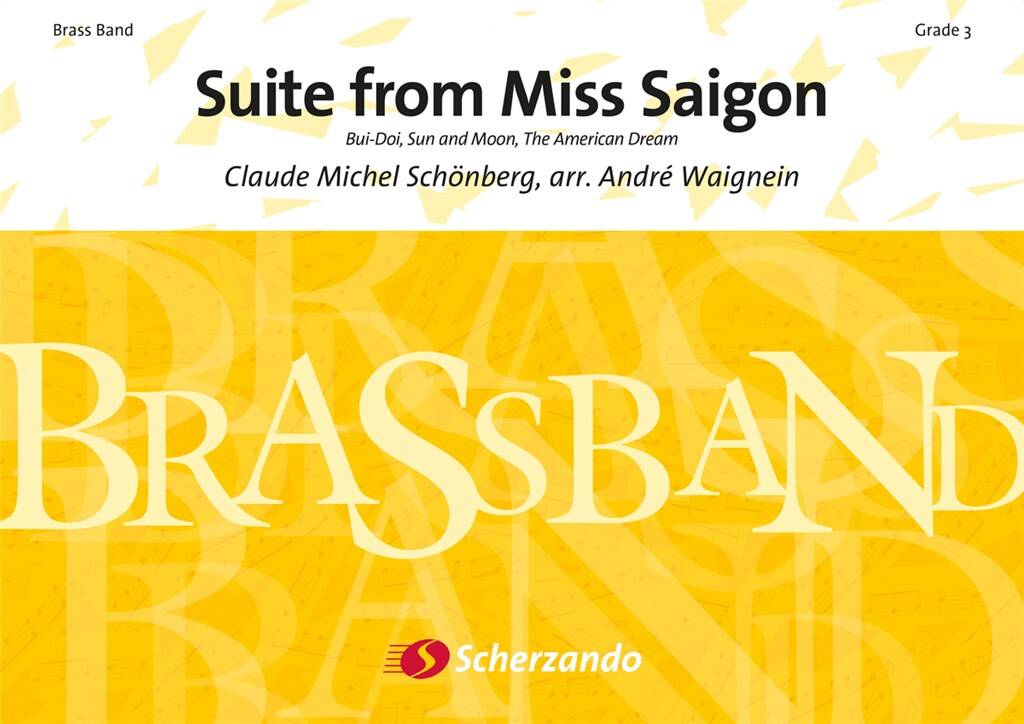 £76.99
Suite from Miss Saigon - Claude-Michel Schönberg - André Waignein
The musical Miss Saigon was a massive hit in London, Broadway and throughout the world. Based on Puccini's opera, Madame Butterfly, this epic production centers on the romance between a strong-willed Vietnamese woman and an American soldier during the Vietnam War. The story tells of two young lovers torn apart by war yet still held together by a burning passion. This medley features three of the best songs from the musical and mixes desperate love with optimism and joy. Relive the hit show with this catchy medley.
Estimated dispatch 5-14 working days
-
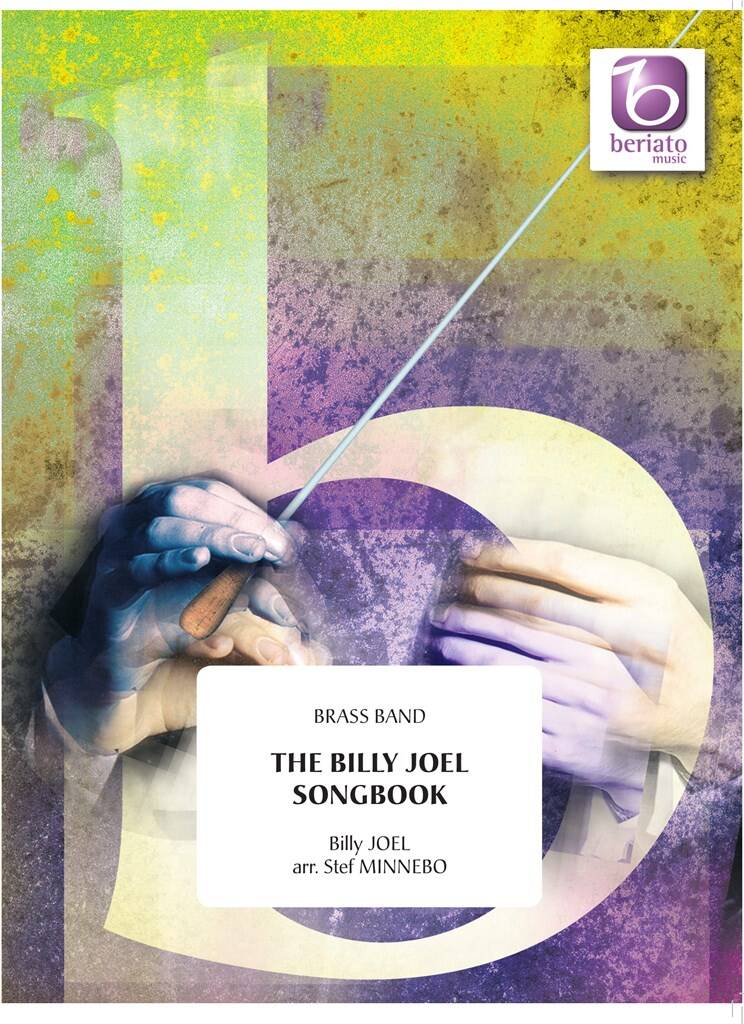 £72.99
The Billy Joel Songbook - Billy Joel - Stef Minnebo
Billy Joel (1949) was determined to become a pop star after he had experienced a performance of The Beatles who were extremely popular when he was young. He played in several bands before his breakthrough and then the hits just kept coming. This medley includes "Piano Man", "She's Always a Woman", "Just the Way You Are", "Honesty", "The Longest Time" and "Tell Here About It".
Estimated dispatch 5-14 working days
-
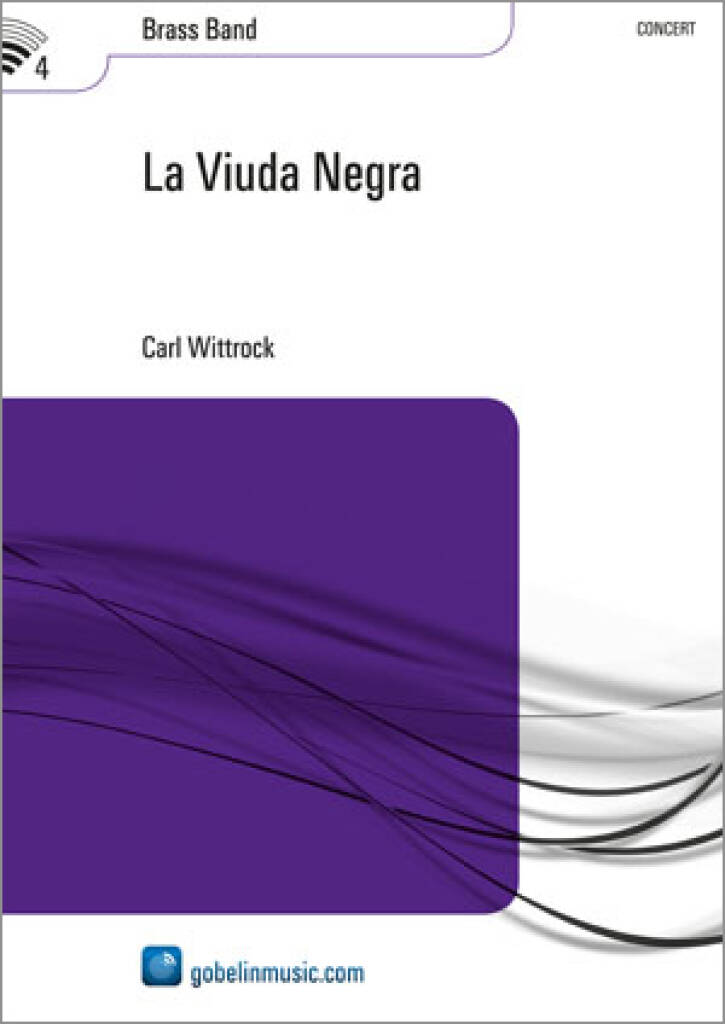 £137.99
La Viuda Negra - Carl Wittrock
Carl Wittrock composed La Viuda Negra (The Black Widow) for the Dutch Brass Band Championships (2010). A Spanish tinged composition filled with drama and emotion. La Viuda Negra is a Spanish widow, dressed in black clothes. Her face is marked by traces of sorrow, but her speaking eyes and sanguineous appearance attracts the attention of everyone. Many man's heart should beat faster! What is the story of this mysterious woman? The black widow (Latrodectus Mactan) is also the nickname of a spider. This spider is well known for the distinctive black and red coloring of the female of the species and for the fact that she will occasionally eat her mateafter reproduction.
Estimated dispatch 5-14 working days
-
£76.99
Durkle Bandrydge Suite - Bruce Fraser
Durkle Bandrydge is the name of the composers imaginary world, but it could very well be anyones invisible dream world with a different name. In this very versatile suite by Bruce Fraser, 8 characters are featured, each with its ownpeculiarities, making Durkle Bandrydge such a colourful place. Do these characters differ that much from us? That is for you to find out! In the last part, all characters come together in a special way.Durkle Bandrydge exists at the end ofyour street. It is invisible to humans, but Durkle Bandrygators can watch us with great interest. The music will introduce you to some of the characters who live in this unusual place. The parts: Somnanbulyss, who is a giant trollguarding the entrance to Durkle Bandryde. At least, he is supposed to, but he tends to sleep most of the time. His music is therefore very slow moving and sleepy. Long Gwysteen is a tall, mysterious, and somehow sophisticated character,who walls around with a shell on his back. His music glides along rather gracefully. Squelfitch is a rather unpleasant and smelly character who lives in a bog, which is why his music sounds rather slimy and a bit like trying to walkthrough quicksand. Perfydlia is a meddling old woman, who gossips about everybody and squeals with sudden delight at the small exciting bits of tittletattle about others in the village. In the music you can hear her sudden little squealsof delight. Maryann Lovely is a beautiful young lady, graceful, gorgeous, absolutely devine, and her music is obviously just the same. Thistledoo Nicely is a lively character who spends and spends and spends with her credit card,buying the latest fashion and never worries about having to pay the bills. Her music reflects her excitement when shopping and het 'happy go lucky' approach to life. Marsyn Edginton is the Lord of the manor, the richest man in town, the'big cheese', the man with all the power and, of course, the biggest house. He is very grand and his music like he could be a king. Jimmy McScotsmyn is a red haired scotsman wearing tartan cap. He misses his home country terribly and eatslots of shortbread, oatcakes, scotch eggs, porridge and drinks an enormous amount of Scotch Wisky, which helps him to have fond memories of the kind of music he would like to dance to when he was a younger man. His favourite dance is a Jig andthis is the music he remembers. Grand March of the Durkle Bandrydgators. We hope that you have enjoyed meeting these characters from Drukle Bandrydge and would invite you to listen to all the villagers now march along in a grand parade -it is a pity that you can not see them, what is a wonderful sight. If you listen carefully, you will hear the melodies which belong to the characters as they march past. Oh what a grand spectacle!
Estimated dispatch 5-14 working days
 View Music
 Listen to MP3