
Results
-
 £54.99
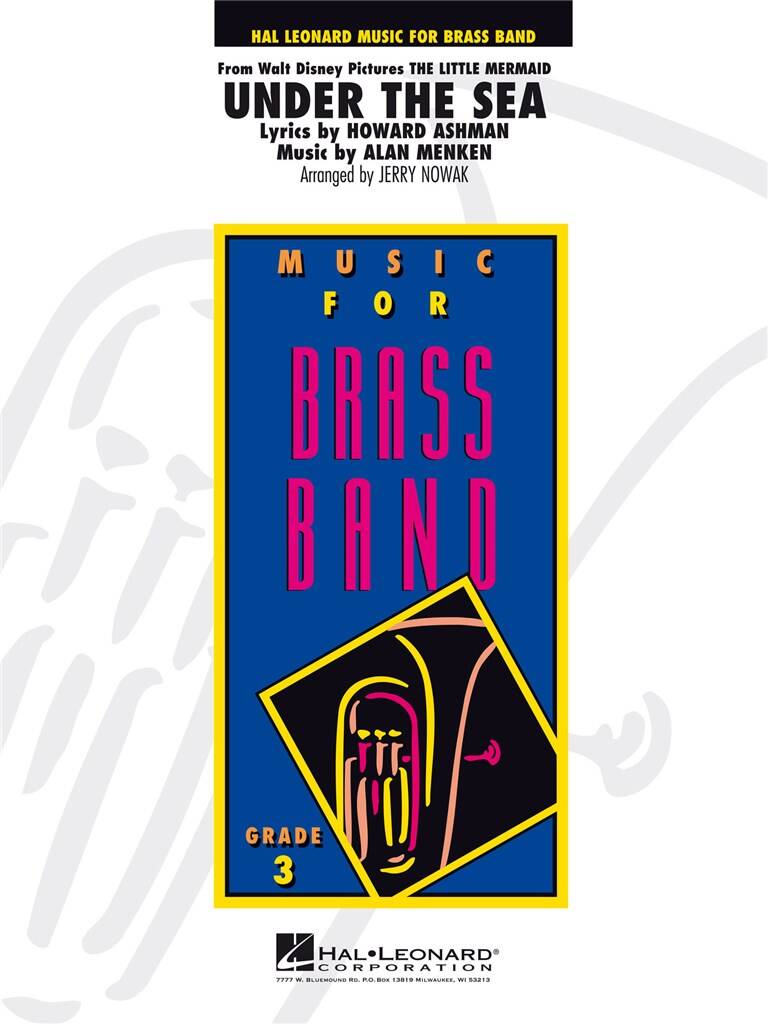
Under The Sea - Alan Menken - Jerry Nowak
Taken from the original 1989 Disney production 'The Little Mermaid', Under The Sea will get a smile on anyone's face! It's fun to play and not too difficult, perfect for young bands!
Estimated dispatch 5-14 working days
-
 £94.99
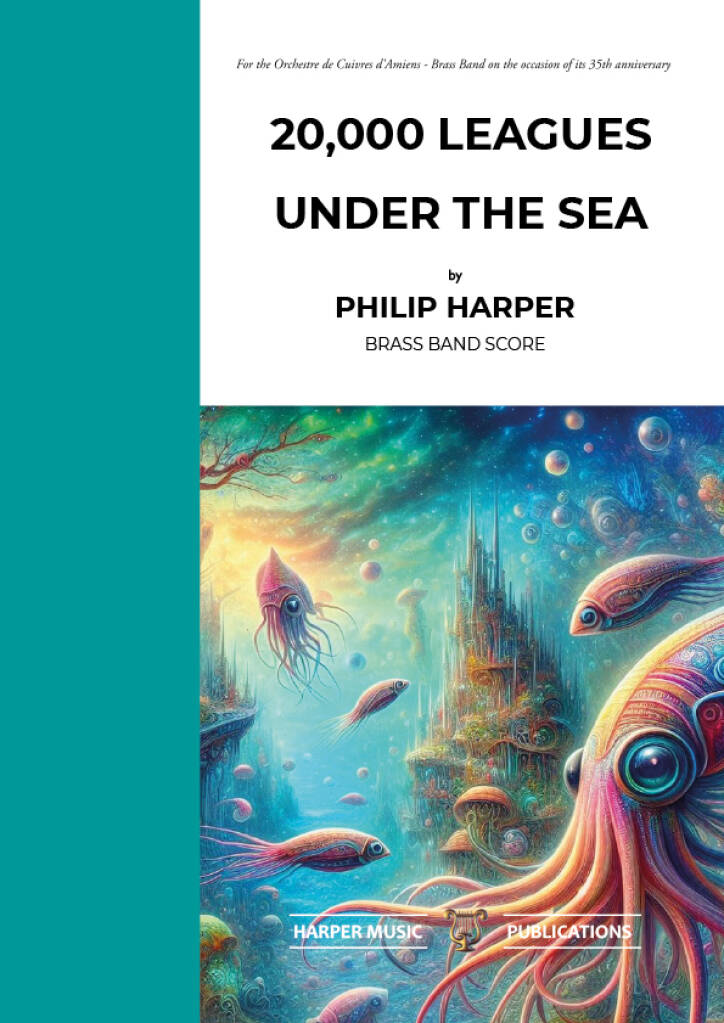
20,000 Leagues under the Sea - Philip Harper
Frenchman Jules Verne was a pioneer in science fiction during the late 19th Century, penning some classic stories such as Journey to the Centre of the Earth and Around the World in 80 Days - both of which have already been the subject of brass band test-pieces. It was therefore natural for me to choose Verne's 1869 watery magnum opus as the subject for this piece to which there are five sections, as well as an introduction and a finale.I. THE NAUTILUS. After a mysterious introduction we are introduced to The Nautilus - a fantastical submarine.II. THE CORAL KINGDOM. We visit awe-inspiring underwater coral formations.III. SQUID ATTACK. The Nautilus is attacked by a school of giant squid, or 'devilfish'.IV. CAPTAIN NEMO. Captain Nemo is a loner and an eccentric. Some say he is a madman. Soloists of the band help to uncover the character of this enigmatic but powerful figure.V. MAELSTROM. The Nautilus is dragged into the ocean's deadliest whirlpool but Captain Nemo lives to fight another day.
Estimated dispatch 5-14 working days
-
 £53.50
Under the Sea (Brass Band - Score and Parts) - Ashman & Menken - Jeanbourquin & Nowak
Taken from the original 1989 Disney production 'The Little Mermaid', Under The Sea will get a smile on anyone's face! It's fun to play and not too difficult, perfect for young bands! Duration: 2.15
Estimated dispatch 7-14 working days
-
 £94.99
20,000 Leagues Under the Sea (Brass Band - Score and Parts)
Frenchman Jules Verne was a pioneer in science fiction during the late 19th Century, penning some classic stories such as Journey to the Centre of the Earth and Around the World in 80 Days - both of which have already been the subject of brass band test-pieces. It was therefore natural for me to choose Verne's 1869 watery magnum opus as the subject for this piece to which there are five sections, as well as an introduction and a finale.THE NAUTILUS. After a mysterious introduction we are introduced to The Nautilus - a fantastical submarine.THE CORAL KINGDOM. We visit awe-inspiring underwater coral formations.SQUID ATTACK. The Nautilus is attacked by a school of giant squid, or 'devilfish'.CAPTAIN NEMO. Captain Nemo is a loner and an eccentric. Some say he is a madman. Soloists of the band help to uncover the character of this enigmatic but powerful figure.MAELSTROM. The Nautilus is dragged into the ocean's deadliest whirlpool but Captain Nemo lives to fight another day.Duration: 12.30
Estimated dispatch 7-14 working days
-
£43.99
20,000 Leagues Under the Sea (Brass Band - Score only)
Frenchman Jules Verne was a pioneer in science fiction during the late 19th Century, penning some classic stories such as Journey to the Centre of the Earth and Around the World in 80 Days - both of which have already been the subject of brass band test-pieces. It was therefore natural for me to choose Verne's 1869 watery magnum opus as the subject for this piece to which there are five sections, as well as an introduction and a finale.THE NAUTILUS. After a mysterious introduction we are introduced to The Nautilus - a fantastical submarine.THE CORAL KINGDOM. We visit awe-inspiring underwater coral formations.SQUID ATTACK. The Nautilus is attacked by a school of giant squid, or 'devilfish'.CAPTAIN NEMO. Captain Nemo is a loner and an eccentric. Some say he is a madman. Soloists of the band help to uncover the character of this enigmatic but powerful figure.MAELSTROM. The Nautilus is dragged into the ocean's deadliest whirlpool but Captain Nemo lives to fight another day.Duration: 12.30
Estimated dispatch 7-14 working days
-
 £61.99
The Little Mermaid (Under The Sea) - Alan Menken & Howard Ashman - Frank Bernaerts
Estimated dispatch 10-14 working days
-
 £94.99
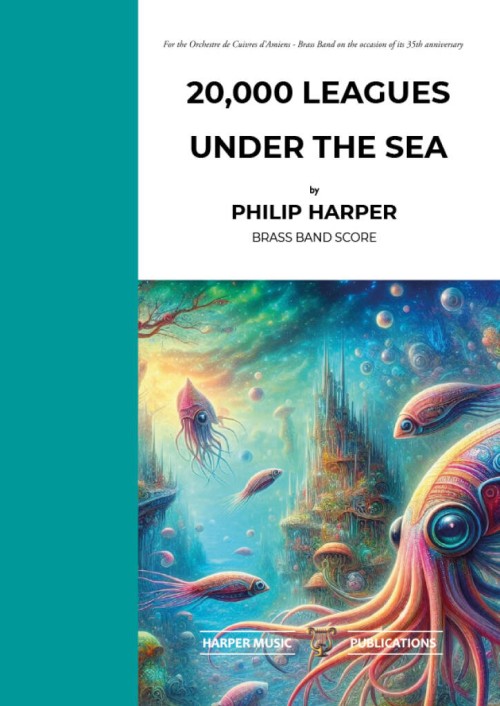
20,000 Leagues Under the Sea (Brass Band - Score and Parts) - Harper, Philip
Frenchman Jules Verne was a pioneer in science fiction during the late 19th Century, penning some classic stories such as Journey to the Centre of the Earth and Around the World in 80 Days - both of which have already been the subject of brass band test-pieces. It was therefore natural for me to choose Verne's 1869 watery magnum opus as the subject for this piece to which there are five sections, as well as an introduction and a finale.THE NAUTILUS. After a mysterious introduction we are introduced to The Nautilus - a fantastical submarine.THE CORAL KINGDOM. We visit awe-inspiring underwater coral formations.SQUID ATTACK. The Nautilus is attacked by a school of giant squid, or 'devilfish'.CAPTAIN NEMO. Captain Nemo is a loner and an eccentric. Some say he is a madman. Soloists of the band help to uncover the character of this enigmatic but powerful figure.MAELSTROM. The Nautilus is dragged into the ocean's deadliest whirlpool but Captain Nemo lives to fight another day.Duration: 12.30
Estimated dispatch 7-14 working days
-
£43.99
20,000 Leagues Under the Sea (Brass Band - Score only) - Harper, Philip
Frenchman Jules Verne was a pioneer in science fiction during the late 19th Century, penning some classic stories such as Journey to the Centre of the Earth and Around the World in 80 Days - both of which have already been the subject of brass band test-pieces. It was therefore natural for me to choose Verne's 1869 watery magnum opus as the subject for this piece to which there are five sections, as well as an introduction and a finale.THE NAUTILUS. After a mysterious introduction we are introduced to The Nautilus - a fantastical submarine.THE CORAL KINGDOM. We visit awe-inspiring underwater coral formations.SQUID ATTACK. The Nautilus is attacked by a school of giant squid, or 'devilfish'.CAPTAIN NEMO. Captain Nemo is a loner and an eccentric. Some say he is a madman. Soloists of the band help to uncover the character of this enigmatic but powerful figure.MAELSTROM. The Nautilus is dragged into the ocean's deadliest whirlpool but Captain Nemo lives to fight another day.Duration: 12.30
Estimated dispatch 7-14 working days
-
 £74.99
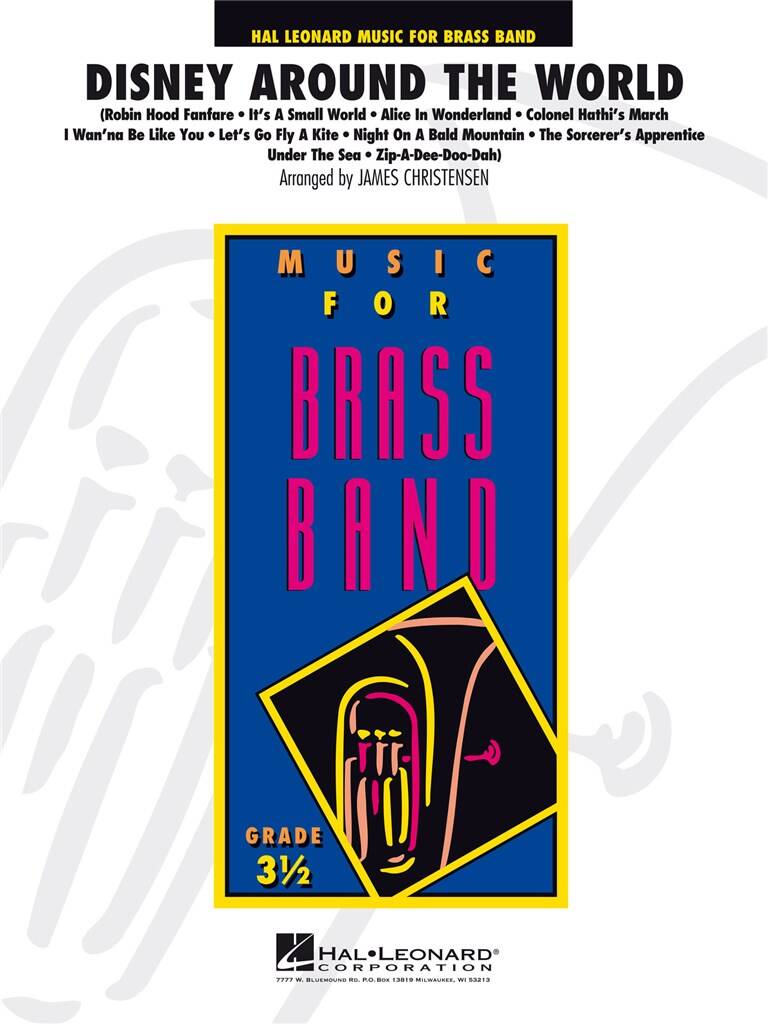
Disney Around the World - James Christensen
If you're a Disney fan, this is your moment! This medley for brass band by James Christensen contains many of the great hits from the rich Disney repertoire: Alice in Wonderland, Colonel Hathi's March, I Wanna Be Like You (Jungle Book), It's A Small World, Let's Go Fly A Kate (Mary Poppins), Night on Bald Mountain, Robin Hood, The Sorcerer's Apprentice, Under the Sea and Zip-A-Dee-Doo-Dah.
Estimated dispatch 5-14 working days
-
 £34.95
Descent, The - Christopher Bond
The Descent takes its inspiration from Victorian author Jules Verne; specifically, his work Twenty Thousand Leagues Under the Sea. In Twenty Thousand Leagues Under the Sea, Professor Arronax finds himself a prisoner of the mysterious Captain Nemo, on a remarkable submarine called the Nautilus. Nemo is one of Verne's most memorable characters. He's a man who has turned his back on the world, and his name - Nemo - means 'No Man.' He has vowed never to set foot on dry land ever again. Verne gives his hero's brilliance and benevolence a dark underside - the man's obsessive hate for Empires and Imperialism. Captain Nemo is a genius, an engineer, an artist, an athlete, sometimes a pacifist, sometimes a righter of wrongs, sometimes an out and out villain, and he invented the Nautilus. The Descent is based on the idea of a descent to the depths of the ocean in the Nautilus with Captain Nemo, with the cornet soloist expressing both the anguish and reflective sides of the character. On one hand, a troubled and agitated figure, juxtaposed with the reflective memories of his homeland, children, mother and father. The work was written for and commissioned by Flowers Band as part of their programme of music at Brass in Concert 2019.
Estimated dispatch 10-14 working days
 View Music