
Results
-
 £24.95
Sunset over the River Exe (Brass Band - Score and Parts)
From the little office in my garden where the composer does all his writing,there is a beautiful view looking westward, over the River Exe, in south Devon. It is a constant inspiration and makes me most grateful every time it is looked at. This little nocturne is the result of many musings and hopefully it will conjure up the atmosphere of the scene for all listeners.
Estimated dispatch 7-14 working days
-
 £5.99
£5.99Scripture-based Songs Compilation Folio Books
No. of TuneTitleRefernece1Above all powersSpring Harvest Song Book 2003, 12All for theeThe Musical Salvationist, January 19763All Heaven declaresMagnify, 24All the world is waitingThe Musical Salvationist, April 19875As we are gatheredThe Source, 296Be bold, be strongThe Source,387Be still for the presence of the LordMagnify, 78Beauty for brokennessThe Source,379Blessd be the name of the LordThe Source,5310Breathe 11By his handSing to the Lord, Vol.1, Part 112Come, now is the time to worshipThe Source, 66213Come on and celebrate!The Source, 7514Come, thou Fount of every blessing (Nettleton)Salvation Army Song Book, 31315ContentmentHappiness & Harmony, 1416Crown him with many crowns (Diademata)Salvation Army Song Book, 15617Cwm RhonddaSalvation Army Song Book, 57818Do something beautifulSing to the Lord Children's Voices Series, Vol.1219Faithful GodThe Source, 8820Father, we love youHappiness & Harmony, 1621Give thanks with a grateful heartThe Source, 1822Glorious things of thee are spoken (Abbot's Leigh)Salvation Army Song Book, 15723God in youSing to the Lord, Vol.9, Part 224Great is the darkness (Come, Lord Jesus)Magnify, 1425He is ableSing to the Lord Children's Voices Series, Vol.1526He is the Lord (Show your power)Magnify, 1927Healing ChristSing to the Lord, Vol.6, Part 328Here am I, my LordThe Musical Salvationist, July 199129His ProvisionThe Musical Salvationist, July 198530Holy, holy, holy is the LordSongs of Fellowship, 18231HosannaThe Source, 18232How deep the Father's love for usThe Source, 185; Songs of Fellowship II, 78033I am a new creationThe Source, 19134I dare to be differentSing to the Lord, Vol.1, Part 135I love you, LordMagnify, 2436I will run to you (Your eye is on the sparrow)The Source, 109337In Christ aloneThe Source, 131138In his presenceSing to the Lord, Vol.9, Part 339In his time 40In Jesus' nameSing to the Lord, Vol.13, Part 141In this quiet momentSing to the Lord, Vol.13, Part 342It is to youMagnify, 3043Jesus is Lord!The Source, 28444Jesus, name above all namesHappiness & Harmony, 3245Joyful, Joyful (Europe)Salvation Army Song Book, 1046King of Kings, MajestyThe Source, 30947Knowing You (All I once held dear)Magnify, 348Light of the world (Here I am to worship)Sing to the Lord Children's Voices Series, Vol.1049Lord, I lift your name on highMagnify, 3850Lord, you know that we love youThe Musical Salvationist, April 198351Love Divine (Blaenwern)Salvation Army Song Book, 43852MajestyHappiness & Harmony, 4553My Lord and Christ!Sing to the Lord, Vol.2, Part 254My Lord, what love is thisThe Source, 37055My Saviour's love (I stand amazed)Salvation Army Song Book, 17956Nothing but thy bloodSing to the Lord Children's Voices Series, Vol.1357O God of burning, cleansing flame (Send the fire)Salvation Army Song Book, 20358O happy daySalvation Army Song Book, 36559Oh to see the dawn (The power of the cross)Spring Harvest Song Book 2005, 6760Only by graceMagnify, 4861Power of your love (Lord, I come to you)Magnify, 3762Praise, my soulSalvation Army Song Book, 1763Praise to the Lord (Lobe den Herren)Salvation Army Song Book, 1964Regent SquareSalvation Army Song Book, 14765Rejoice!The Source, 43866Shout to the Lord (My Jesus, my Saviour)Magnify, 4367Sing and make musicHappiness & Harmony, 5568Spirit of the living GodSongs of Fellowship, 511; The Source, 46369Storm the forts of darknessSalvation Army Song Book, 69670Teach me to danceThe Source, 46971The light has comeHappiness & Harmony, 6372The Potter's hand (Beautiful Lord, wonderful Saviour)The Source, 64073The servant King (From Heaven you came)The Source, 11474The splendour of the KingSpring Harvest Song Book 2005, 9775There is a redeemerMagnify, 5976To be in your presence (My Desire)Magnify, 6177To God be the gloryThe Musical Salvationist, April 198878Wake up, O sleeperSing to the Lord, Vol.6, Part 279We are marchingThe Source, 53980We have come into this placeHappiness & Harmony, 7381We want to see Jesus lifted highThe Source, 55982When the music fades (The heart of worship)Magnify, 7083Who is on the Lord's side? (Rachie)Salvation Army Song Book, 707
Estimated dispatch 7-14 working days
-
 £29.95
Scripture-based Songs Compilation Full Score
No. of TuneTitleRefernece1Above all powersSpring Harvest Song Book 2003, 12All for theeThe Musical Salvationist, January 19763All Heaven declaresMagnify, 24All the world is waitingThe Musical Salvationist, April 19875As we are gatheredThe Source, 296Be bold, be strongThe Source,387Be still for the presence of the LordMagnify, 78Beauty for brokennessThe Source,379Blessd be the name of the LordThe Source,5310Breathe 11By his handSing to the Lord, Vol.1, Part 112Come, now is the time to worshipThe Source, 66213Come on and celebrate!The Source, 7514Come, thou Fount of every blessing (Nettleton)Salvation Army Song Book, 31315ContentmentHappiness & Harmony, 1416Crown him with many crowns (Diademata)Salvation Army Song Book, 15617Cwm RhonddaSalvation Army Song Book, 57818Do something beautifulSing to the Lord Children's Voices Series, Vol.1219Faithful GodThe Source, 8820Father, we love youHappiness & Harmony, 1621Give thanks with a grateful heartThe Source, 1822Glorious things of thee are spoken (Abbot's Leigh)Salvation Army Song Book, 15723God in youSing to the Lord, Vol.9, Part 224Great is the darkness (Come, Lord Jesus)Magnify, 1425He is ableSing to the Lord Children's Voices Series, Vol.1526He is the Lord (Show your power)Magnify, 1927Healing ChristSing to the Lord, Vol.6, Part 328Here am I, my LordThe Musical Salvationist, July 199129His ProvisionThe Musical Salvationist, July 198530Holy, holy, holy is the LordSongs of Fellowship, 18231HosannaThe Source, 18232How deep the Father's love for usThe Source, 185; Songs of Fellowship II, 78033I am a new creationThe Source, 19134I dare to be differentSing to the Lord, Vol.1, Part 135I love you, LordMagnify, 2436I will run to you (Your eye is on the sparrow)The Source, 109337In Christ aloneThe Source, 131138In his presenceSing to the Lord, Vol.9, Part 339In his time 40In Jesus' nameSing to the Lord, Vol.13, Part 141In this quiet momentSing to the Lord, Vol.13, Part 342It is to youMagnify, 3043Jesus is Lord!The Source, 28444Jesus, name above all namesHappiness & Harmony, 3245Joyful, Joyful (Europe)Salvation Army Song Book, 1046King of Kings, MajestyThe Source, 30947Knowing You (All I once held dear)Magnify, 348Light of the world (Here I am to worship)Sing to the Lord Children's Voices Series, Vol.1049Lord, I lift your name on highMagnify, 3850Lord, you know that we love youThe Musical Salvationist, April 198351Love Divine (Blaenwern)Salvation Army Song Book, 43852MajestyHappiness & Harmony, 4553My Lord and Christ!Sing to the Lord, Vol.2, Part 254My Lord, what love is thisThe Source, 37055My Saviour's love (I stand amazed)Salvation Army Song Book, 17956Nothing but thy bloodSing to the Lord Children's Voices Series, Vol.1357O God of burning, cleansing flame (Send the fire)Salvation Army Song Book, 20358O happy daySalvation Army Song Book, 36559Oh to see the dawn (The power of the cross)Spring Harvest Song Book 2005, 6760Only by graceMagnify, 4861Power of your love (Lord, I come to you)Magnify, 3762Praise, my soulSalvation Army Song Book, 1763Praise to the Lord (Lobe den Herren)Salvation Army Song Book, 1964Regent SquareSalvation Army Song Book, 14765Rejoice!The Source, 43866Shout to the Lord (My Jesus, my Saviour)Magnify, 4367Sing and make musicHappiness & Harmony, 5568Spirit of the living GodSongs of Fellowship, 511; The Source, 46369Storm the forts of darknessSalvation Army Song Book, 69670Teach me to danceThe Source, 46971The light has comeHappiness & Harmony, 6372The Potter's hand (Beautiful Lord, wonderful Saviour)The Source, 64073The servant King (From Heaven you came)The Source, 11474The splendour of the KingSpring Harvest Song Book 2005, 9775There is a redeemerMagnify, 5976To be in your presence (My Desire)Magnify, 6177To God be the gloryThe Musical Salvationist, April 198878Wake up, O sleeperSing to the Lord, Vol.6, Part 279We are marchingThe Source, 53980We have come into this placeHappiness & Harmony, 7381We want to see Jesus lifted highThe Source, 55982When the music fades (The heart of worship)Magnify, 7083Who is on the Lord's side? (Rachie)Salvation Army Song Book, 707
Estimated dispatch 7-14 working days
-
 £20.00
Infinity (Brass Band - Study Score)
In the post-modern age in which we live, 'absolutes' are difficult for many to comprehend. Yet infinity, which means absolute, total, all-embracing, having no limits or boundaries in time, space, extent, or magnitude, has always been central to the Christian's concept of God.Through the ages, as human understanding has grown, particularly at a remarkable rate from the latter part of the twentienth century, Christianity has been continually challenged to interpret traditional beliefs in the light of new discoveries, but always within the reality of the infinite Being. In addition, scripture tells us that 'humanity was made in God's image'. Humankind is part of God's creation and as such, responsible for its upkeep. Such a commission has never been more relevant than in this present age. Psalm 8 creates a great picture of the majesty, eternal, infinte quality of God and yet reveals the desire of God to share in spirit with humankind. It recognises humankind as being, not a tool of the infinite, but as a creative contributing part of the ongoing movement and activity of the infinite. The music is deliberately melodic in context, creating a sense of unity with the infinite, in tandem with the varying expressions of individuality. It is not based on the Psalm but reflects some of the sentiments lying therein. The 'hymn-like' theme expresses the nature of the Divine using the Old Testament image of the infinite God coming to finite humankind, not in the 'wind', the 'earthquake', the 'fire', but in the 'still small voice' of quietness (1 Kings 19: 11-13). The ensuing musical development, in different styles and patterns, expresses this continual link between infinite and finite. Thus the conclusion, rather than being a symbol of might, power and magnificence, reflects the same sentiment as the opening.
Estimated dispatch 7-14 working days
-
 £49.99
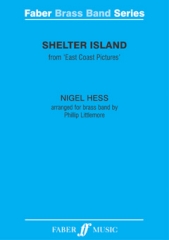
Shelter Island (From East Coast Pictures) (Brass Band - Score and Parts)
Shelter Island is the first movement of East Coast Pictures. It is a depiction of the Shelter Island itself, a few hours drive east of New York. In the summer it becomes a crowded tourist trap; but in the winter it is gloriously deserted and bravely faces the onslaught of the turbulent Atlantic, shrouded in sea mists and driving rain. This picture is a fond memory of a winter weekend on Shelter Island. Suitable for Premier Youth/2nd Section Bands and above. Duration: 6.00
Estimated dispatch 7-14 working days
-
 £89.95
Revelation (Score and Parts)
Symphony for Double Brass on a theme of Purcell 1995 marked the tercentenary of Purcell's death, and my new score Revelation has been written as a tribute to his music and the ornate and confident spirit of his age. There are five major sections: 1 Prologue 2 Variations on a ground bass I 3 Fugue 4 Variations on a ground bass II 5 Epilogue and Resurrection The score uses many features of the Baroque Concerto Grosso, and arranges players in two equal groups from which soloists emerge to play in a variety ofvirtuoso ensembles. It quotes freely from Purcell's own piece Three Parts on a Ground in which he has composed a brilliant sequence of variations over a repeating six-note bass figure. This original motif can be heard most clearly beneath the duet for Cornet 5 and Soprano at the beginning of the 2nd section. There is, of course, a religious dimension to Revelation as the title suggests, and the score is prefaced by lines by the 17th century poet John Donne. His Holy Sonnet paraphrases the Book of Revelation in which the dead are raised at the sounds of the last trumpet. Donne's trumpets are themselves placed stereophonically ". . . At the round Earth's imagined corners" and it is this feature that today's players represent as they move around the performing area. Their final apocalyptic fanfares can be heard at the close of the score, as Purcell's music re-enters in a lasting tribute to England's first composer of genius. Philip Wilby September 1995 At the round Earth imagined corners, blow your trumpets, angels, and arise, arise from death, you numberless infinities Of souls, and to your scattered bodies go. All whom the flood did, and fire shall o 'erthrow All whom war, dearth, age, agues, tyrannies, Despair, law, chance hath slain, and you whose eyes Shall Behold God, and never taste death woe. John Donne after Revelation Ch. 11 v.15
Estimated dispatch 7-14 working days
-
 £44.95
Revelation (Score Only)
Symphony for Double Brass on a theme of Purcell 1995 marked the tercentenary of Purcell's death, and my new score Revelation has been written as a tribute to his music and the ornate and confident spirit of his age. There are five major sections: 1 Prologue 2 Variations on a ground bass I 3 Fugue 4 Variations on a ground bass II 5 Epilogue and Resurrection The score uses many features of the Baroque Concerto Grosso, and arranges players in two equal groups from which soloists emerge to play in a variety ofvirtuoso ensembles. It quotes freely from Purcell's own piece Three Parts on a Ground in which he has composed a brilliant sequence of variations over a repeating six-note bass figure. This original motif can be heard most clearly beneath the duet for Cornet 5 and Soprano at the beginning of the 2nd section. There is, of course, a religious dimension to Revelation as the title suggests, and the score is prefaced by lines by the 17th century poet John Donne. His Holy Sonnet paraphrases the Book of Revelation in which the dead are raised at the sounds of the last trumpet. Donne's trumpets are themselves placed stereophonically ". . . At the round Earth's imagined corners" and it is this feature that today's players represent as they move around the performing area. Their final apocalyptic fanfares can be heard at the close of the score, as Purcell's music re-enters in a lasting tribute to England's first composer of genius. Philip Wilby September 1995 At the round Earth imagined corners, blow your trumpets, angels, and arise, arise from death, you numberless infinities Of souls, and to your scattered bodies go. All whom the flood did, and fire shall o 'erthrow All whom war, dearth, age, agues, tyrannies, Despair, law, chance hath slain, and you whose eyes Shall Behold God, and never taste death woe. John Donne after Revelation Ch. 11 v.15
Estimated dispatch 7-14 working days
-
 £29.88
March from 'The Love for Three Oranges (Brass Band) Prokofiev arr. Wilkinson
This thrilling brass band arrangement of the March from 'The Love for Three Oranges' by Prokofiev has been skillfully arranged by Keith M. Wilkinson. This setting captures the essence of the original orchestral work, while showcasing the power and brilliance of the brass band. In 1918, Sergei Prokofiev undertook his first visit to the United States. A number of concerts of his works were held in Chicago, which were received very favourably. As a result, the director of the Chicago Opera Association, Cleofonte Campanini, commissioned Prokofiev to write an opera. It just so happened that, during his trip, he had written a draft of a libretto, based on the Italian play by Gozzi, L'amore delle tre melarance, adding some additional surrealism to the text. Given Prokofiev's poor English, and Americans unlikely to accept an opera in Russian, French was his final choice. The result, L'amour des trois oranges (or The Love for Three Oranges), which premiered at the Auditorium Theatre in Chicago on 30 December 1921, conducted by Prokofiev himself. The March from this opera is probably the most familiar part and has been used by CBS in the radio-drama series The FBI in Peace and War. It was also used in films such as The Brink's Job and Prokofiev quoted it in the second act of his ballet Cinderella. To view a rolling score video of the work please visit www.youtube.com/watch?v=I136sf8hxlU Duration: Approx. 2.10 minutes Difficulty Level: 3rd Section + PDF download includes parts and score. Sheet music available from www.brassband.co.uk Instrumentation: Soprano Cornet Eb Solo Cornet Bb Repiano Cornet Bb 2nd Cornet Bb 3rd Cornet Bb Flugel Horn Bb Solo Horn Eb 1st Horn Eb 2nd Horn Eb 1st Baritone Bb 2nd Baritone Bb 1st Trombone Bb 2nd Trombone Bb Bass Trombone Euphonium Bb Bass Eb Bass BbTimpani Percussion 1-2
In Stock: Estimated dispatch 1-3 working days
-
 £49.95
Bestowal of a Century - Christopher Bond
Bestowal of a Century (2014) was commissioned by Lowenna Taylor, and funded through her Harry Mortimer Trust award which she was presented with at the 2013 British Open Championship following the completion of her studies at the Royal Welsh College of Music in Cardiff. The 15-minute work received its world premiere at the Cornwall Youth Brass Band Christmas concert in 2014 with solosit, Lowenna, working alongside the band under the baton of Les Neish. The 'Bestowal' refers to the presentation of the Royal Trophy by the then Prince of Wales to the famous West of England Bandsman's Festival in Bugle in 1913. Over the years it has been won by some of the greatest names in brass banding, including Black Dyke and Munn & Feltons - although more recently it has become a wonderful open festival that includes sections for local bands as well as visitors from all over the banding globe. 2014 marked the one-hundredth anniversary of the presentation of the trophy, which is the only brass band trophy to have the official seal of royal patronage. The work, in three distinct sections, opens in a mysterious way, building progressively with interjections from the horn. The composer notes its as though one can imagine different part of the trophy being put together, piece by piece, until the trophy is complete and a climax is reached. Following this, a playful theme is presented which is developed throughout the first section and interacting between soloist and band. The second movement, in complete contrast, is a lyrical melody; heart-wrenching throughout, and sits well both as part of the concerto and also as a stand-alone solo item. The third movement is light-hearted and virtuosic, demonstrating the technical capabilities of the instrument with fast and virtuosic playing, and a cadenza towards the end of the work.
Estimated dispatch 10-14 working days
-
 £79.95
Corineus - Christopher Bond
Corineus, in medieval British legend, was a prodigious warrior, a fighter of giants, and the eponymous founder of Cornwall. The first of the legendary rulers of Cornwall, he is described as a character of strength and power. It is on the medieval ruler that this new work, Corineus, is based, presented in three contrasting sections. The work opens with heraldic fanfares and a sense of jubilance before presenting musical material which changes and develops organically, portraying the journey taken by Corineus, Brutus, and the Trojans from modern-day mainland Europe to Britain. The central section of the work is slower, creating a feeling of longing. Brutus' son, Locrinus, had agreed to marry Corineus' daughter, Gwendolen, but instead fell in love with a German princess. In writing this part of the work, the composer portrays the longing of Gwendolen for her husband, knowing he is in love with somebody else. After Corineus died, Locrinus divorced Gwendolen, who responded by raising an army in Cornwall and making war against her ex-husband. Locrinus was killed in battle, and legend suggests that Gwendolen threw Locrinus' lover into the River Severn. This dramatic battle provides the inspiration for the final part of the work. In writing this work, the composer hopes to flare the imagination of young brass players around the country, in an engaging new take on a firm fixture in British folklore.
Estimated dispatch 10-14 working days