Searching for Wind Band Music? Visit the Wind Band Music Shop
We've found 562 matches for your search. Order by

Results

  • £34.95

    SLOW RIDE IN A STATIC MACHINE, A (Brass Band) - Lawrence, Phil

    A Slow Ride in a Static Machine was inspired some time ago when my (late) Father came to visit me "down in London" as he put it. It was based not on one of his circular mishaps, but on several! He was always directed carefully, but refused to carry a map in the car! At one time when I lived in North London I would meet him outside the capital, and he would then follow be back to my place, but after I moved to East London I made him bite the navigational bullet and transverse the 'M25 Orbital'. His main problem seemed to be getting off this mesmerising circular cark park. He would often phone (in a weary tone) from the Dartford Tunnel (which is 5 junctions past the one he needed to get off at), asking me to, "bring him in" so to speak. I would always refuse. And then, he would do the opposite (especially when travelling at night), he would phone me up from near Cambridge (he'd gone the wrong way up the M11 away from London by 45 miles), and would ask where he was!The title is obviously a play on John Adams' composition, A Short Ride In A Fast Machine. This quirky tone poem starts as a wind-up by using those unwanted intervals of augmented 4th's and minor 9th's & 7th's in the main tune, before hearing the road works, the juggernauts multi horns, fender-benders, ambulance and police sirens! This then all works to a back beat on kit. The wind-up start gets to an almost Go-Go 1960's Disco middle section (the nostalgic hay-days of the open road), where our wind-up tune falls into place and we all relax as we can now drive at 42.1 mph! We DC, and then get into a right car mess in the Coda!Phil Lawrence.Duration:4:00

    Estimated dispatch 7-14 working days
  • £95.00

    Variations on a Theme of Michael Tippett (Brass Band - Score and Parts) - Hindmarsh, Paul

    A Centenary Tribute by Michael Ball, Edward Gregson, Elgar Howarth, Bramwell Tovey and Philip WilbyThis unique 'pice d'occasion' arose out of a telephone conversation in 2004 with Alan Wycherley, who was the soprano cornet player of the Foden's Richardson Band at the time. He indicated that the band would like to include an original birthday tribute for Edward Gregson (60) and Elgar Howarth (70) in its concert at the 2005 RNCM Festival of Brass in Manchester. I have been Artistic Director of Manchester's Festival of Brass since it was established in 1990 as a BBC Radio 3 series, As the centenary of the birth of Sir Michael Tippett fell on 5 January 2005, I devised this collective work as a way of embracing all three anniversaries in a novel way.The idea of joint compositions is not a new one in the classical music world. In the 1860s, Verdi was joined by a number of his contemporaries in a Requiem Mass for Rossini. In this country there have been a number of orchestral examples over the past fifty years, but never before for the brass band. Although Tippett composed only one work for brass band, Festal Brass with Blues, his orchestral works and operas are full of idiomatic brass writing. The theme I chose for this celebration is one of Tippet's most memorable miniatures featuring wind and brass. In the opera Midsummer Marriage it marks the entry of the Ancients. It is also included in the orchestral Suite in D (1948), for the Birthday of Prince Charles.I invited five of the leading contemporary voices in brass band music to add their own creative perspectives to the little Tippett theme, with it's characteristic rhythms, embellishments and modality - the Lydian mode. Each contribution was designed to fit into a tonal and formal template to give the whole work a flow and continuity. In Danse des Amis, Bramwell Tovey has composed a jazzy, humorous variation. Inspiration came from Tippett's love of jazz and, more personally, from the characteristically syncopated gait of the distinguished music critic John Amis, who Tovey once observed leaving a performance of Tippett's opera King Priam before the end. Incidentally, that performance was conducted by Elgar Howarth.We hear Edward Gregson in lyrical mode. His Midsummer Song is redolent of the sound world of Tippett's opera A Midsummer Marriage and it ends with a brief reference to a favourite of Gregson's, Tippett's Concerto for Orchestra. Michael Ball provides a brief moment of light, airy activity bringing to mind perhaps Tippett's love of Shakespearian fantasy, especially The Tempest. Elgar Howarth juxtaposes a slowed down version of the processional theme with distant recollections of fanfares from King Priam. Philip Wilby has rounded the tribute off with a spectacular fugue. During its inexorable progress Wilby ingeniously introduces the two other birthday references - the three-note musical signature that Elgar Howarth includes in much of his music and the characteristic theme which begins Edward Gregson's substantial work for brass an organ The Trumpets of the Angels. An elaborated reprise of Tippett's little theme is followed by a dynamic coda.- Paul HindmarshDuration: 13.00

    Estimated dispatch 7-14 working days

     PDF View Music

  • £40.00

    Variations on a Theme of Michael Tippett (Brass Band - Score only) - Hindmarsh, Paul

    A Centenary Tribute by Michael Ball, Edward Gregson, Elgar Howarth, Bramwell Tovey and Philip WilbyThis unique 'pice d'occasion' arose out of a telephone conversation in 2004 with Alan Wycherley, who was the soprano cornet player of the Foden's Richardson Band at the time. He indicated that the band would like to include an original birthday tribute for Edward Gregson (60) and Elgar Howarth (70) in its concert at the 2005 RNCM Festival of Brass in Manchester. I have been Artistic Director of Manchester's Festival of Brass since it was established in 1990 as a BBC Radio 3 series, As the centenary of the birth of Sir Michael Tippett fell on 5 January 2005, I devised this collective work as a way of embracing all three anniversaries in a novel way.The idea of joint compositions is not a new one in the classical music world. In the 1860s, Verdi was joined by a number of his contemporaries in a Requiem Mass for Rossini. In this country there have been a number of orchestral examples over the past fifty years, but never before for the brass band. Although Tippett composed only one work for brass band, Festal Brass with Blues, his orchestral works and operas are full of idiomatic brass writing. The theme I chose for this celebration is one of Tippet's most memorable miniatures featuring wind and brass. In the opera Midsummer Marriage it marks the entry of the Ancients. It is also included in the orchestral Suite in D (1948), for the Birthday of Prince Charles.I invited five of the leading contemporary voices in brass band music to add their own creative perspectives to the little Tippett theme, with it's characteristic rhythms, embellishments and modality - the Lydian mode. Each contribution was designed to fit into a tonal and formal template to give the whole work a flow and continuity. In Danse des Amis, Bramwell Tovey has composed a jazzy, humorous variation. Inspiration came from Tippett's love of jazz and, more personally, from the characteristically syncopated gait of the distinguished music critic John Amis, who Tovey once observed leaving a performance of Tippett's opera King Priam before the end. Incidentally, that performance was conducted by Elgar Howarth.We hear Edward Gregson in lyrical mode. His Midsummer Song is redolent of the sound world of Tippett's opera A Midsummer Marriage and it ends with a brief reference to a favourite of Gregson's, Tippett's Concerto for Orchestra. Michael Ball provides a brief moment of light, airy activity bringing to mind perhaps Tippett's love of Shakespearian fantasy, especially The Tempest. Elgar Howarth juxtaposes a slowed down version of the processional theme with distant recollections of fanfares from King Priam. Philip Wilby has rounded the tribute off with a spectacular fugue. During its inexorable progress Wilby ingeniously introduces the two other birthday references - the three-note musical signature that Elgar Howarth includes in much of his music and the characteristic theme which begins Edward Gregson's substantial work for brass an organ The Trumpets of the Angels. An elaborated reprise of Tippett's little theme is followed by a dynamic coda.- Paul HindmarshDuration: 13.00

    Estimated dispatch 7-14 working days

     PDF View Music

  • £67.00

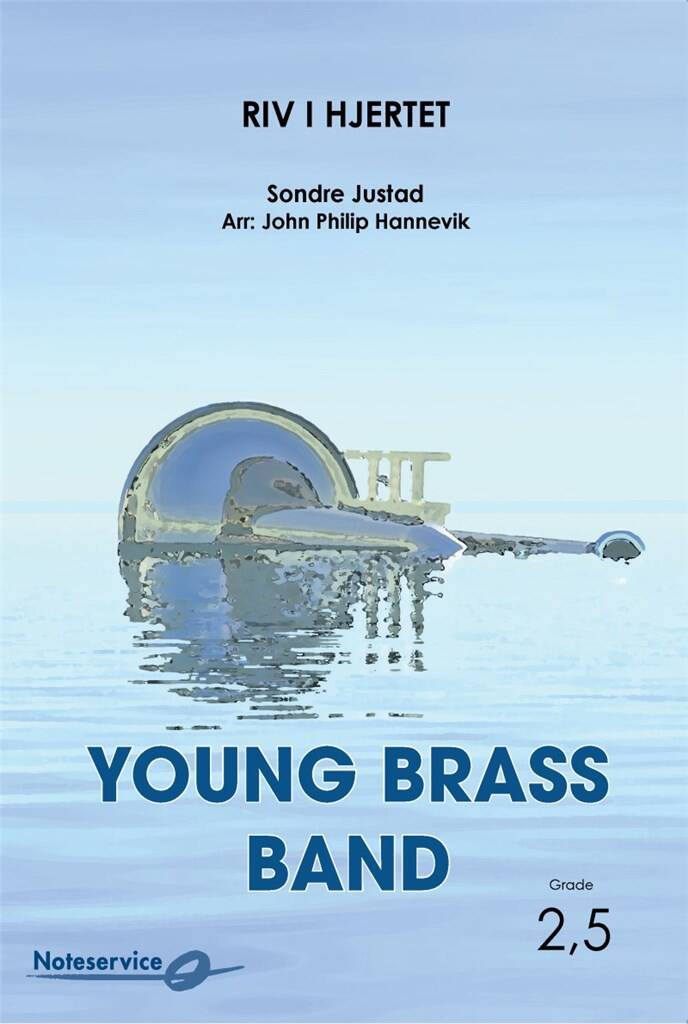
    Riv i hjertet - Sondre Justad - John Philip Hannevik

    The singer/ songwriter Sondre Justad was born in Lofoten in the north of Norway in 1990. His first album Riv i hjertet was released in 2015, and it became a huge success. He got very fine reviews in some of the largest norwegian newspapers, and the title-song was played frequently on the national radio-stations.The song title could loosely be translated as pulling at my heartstrings, and the song has a deep and dark meaning, with the opening lyrics sounding:If I knew - that I would be dying soon, would I be happy with the way I am living my life

    Estimated dispatch 7-14 working days
  • £95.00

    A Wartime Sketchbook (Brass Band - Score and Parts) - Walton, William - Hindmarsh, Paul

    Early in 1941 William Walton, 39, received his call-up papers. He was by then one of the most eminent of British composers and was exempted from military service on condition that he provided music for films deemed to be of 'national importance'. Scoring Lawrence Olivier's Shakespeare epic Henry V in 1943 was the most substantial of these wartime projects. His role in patriotic films from 1941 and 42 like The Foreman went to France, Next of Kin, Went the day Well and The First of the Few was to provide appropriate title music and some underscoring at key moments. Walton extracted the most substantial portions of the latter as the popular Spitfire Prelude and Fugue for orchestra. The remaining music remained unpublished until 1990, when Christopher Palmer assembled the highlights into A Wartime Sketchbook. I was intrigued to hear these examples of Walton's wartime music and having discovered that they would fit naturally and idiomatically onto the brass band, I arranged six of the numbers into a suite for Besses o' th' Barn Band, which I was conducting at the time.In 1995 the brass band suite was recorded by the famous Black Dyke Mills Band as part of an all Walton album which I produced for the ASV label (ASV CD WHL 2093). This award- winning CD also included Walton's First Shoot, in the edition by Elgar Howarth, my transcription of movements from Music for Children and two substantial brass versions by Edward Watson of the suite from Henry V (with narrator) and the March and Siegfried Music from The Battle of Britain music.Prologue: This is the stirring title music from Went the day Well, a screen play by Graham Greene about a German airborne invasion of an English village. The main theme leads toBicycle Chase: Characteristic musical high-jinks for J.B.Priestley's The Foreman went to France.Refugees: From the same film, this is a poignant accompaniment to the long march of refugees. As Ernest Irving, the film's musical director, put it, "this really makes your feet sore and your knees sag."Young Siegfrieds: This lively movement comes from the music that Walton composed for The Battle of Britain in 1968, with the assistance of Malcolm Arnold, but which the film's producer rejected. It portrays first the Berliners, cheerfully ignoring the black-out and then, in the trio, the Young Siegfrieds of the Luftwaffe, courtesy of a parody of Siegfried's horn call from Wagner's opera.Romance: A soldier and a Dutch refugee snatch a few tender moments together in Next of Kin.Epilogue: At the end of The Foreman went to France, the French look forward with hope and optimism to eventual liberation.- Paul HindmarshDuration: 14.00

    Estimated dispatch 7-14 working days

     PDF View Music

  • £40.00

    A Wartime Sketchbook (Brass Band - Score only) - Walton, William - Hindmarsh, Paul

    Early in 1941 William Walton, 39, received his call-up papers. He was by then one of the most eminent of British composers and was exempted from military service on condition that he provided music for films deemed to be of 'national importance'. Scoring Lawrence Olivier's Shakespeare epic Henry V in 1943 was the most substantial of these wartime projects. His role in patriotic films from 1941 and 42 like The Foreman went to France, Next of Kin, Went the day Well and The First of the Few was to provide appropriate title music and some underscoring at key moments. Walton extracted the most substantial portions of the latter as the popular Spitfire Prelude and Fugue for orchestra. The remaining music remained unpublished until 1990, when Christopher Palmer assembled the highlights into A Wartime Sketchbook. I was intrigued to hear these examples of Walton's wartime music and having discovered that they would fit naturally and idiomatically onto the brass band, I arranged six of the numbers into a suite for Besses o' th' Barn Band, which I was conducting at the time.In 1995 the brass band suite was recorded by the famous Black Dyke Mills Band as part of an all Walton album which I produced for the ASV label (ASV CD WHL 2093). This award- winning CD also included Walton's First Shoot, in the edition by Elgar Howarth, my transcription of movements from Music for Children and two substantial brass versions by Edward Watson of the suite from Henry V (with narrator) and the March and Siegfried Music from The Battle of Britain music.Prologue: This is the stirring title music from Went the day Well, a screen play by Graham Greene about a German airborne invasion of an English village. The main theme leads toBicycle Chase: Characteristic musical high-jinks for J.B.Priestley's The Foreman went to France.Refugees: From the same film, this is a poignant accompaniment to the long march of refugees. As Ernest Irving, the film's musical director, put it, "this really makes your feet sore and your knees sag."Young Siegfrieds: This lively movement comes from the music that Walton composed for The Battle of Britain in 1968, with the assistance of Malcolm Arnold, but which the film's producer rejected. It portrays first the Berliners, cheerfully ignoring the black-out and then, in the trio, the Young Siegfrieds of the Luftwaffe, courtesy of a parody of Siegfried's horn call from Wagner's opera.Romance: A soldier and a Dutch refugee snatch a few tender moments together in Next of Kin.Epilogue: At the end of The Foreman went to France, the French look forward with hope and optimism to eventual liberation.- Paul HindmarshDuration: 14.00

    Estimated dispatch 7-14 working days

     PDF View Music

  • £72.00

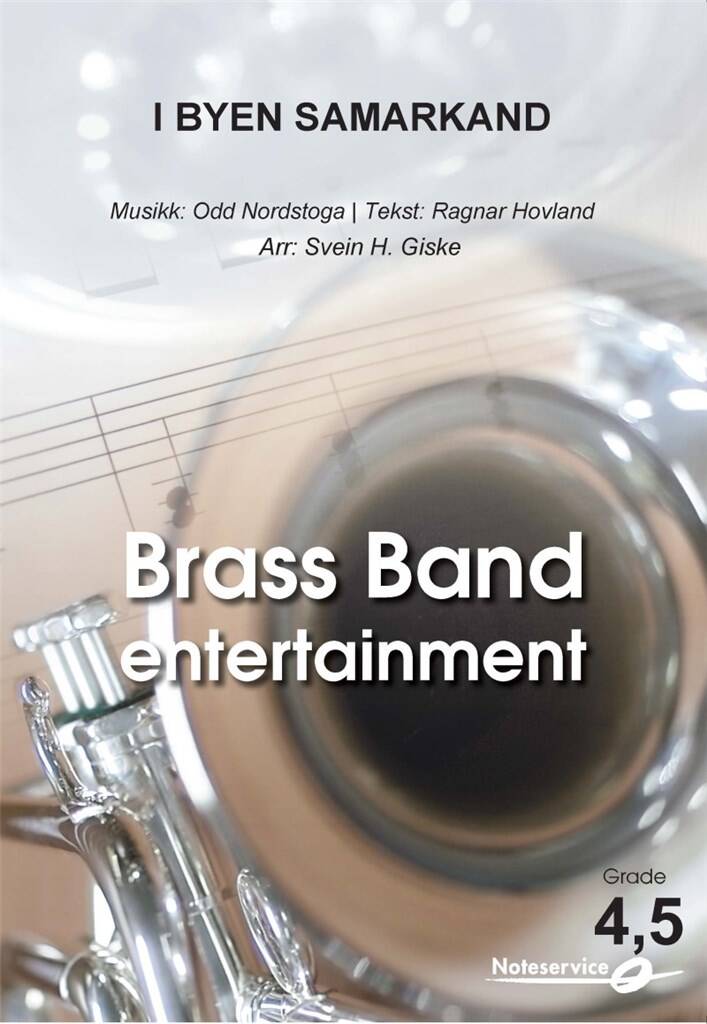
    I Byen Samarkand - Nordstoga-Hovland - Svein H. Giske

    Odd Nordstoga is an award winning Norwegian artist who has been active since the 1990's, working in the popular-/folk music genre. I have listened to a lot of Odd Nordstogas music, in particular the Heim te mor-album. When preparing for Askoy Brass Band's participation at Siddis Brass in 2008, I came across I byen Samarkand, another of Nordstogas tunes. This was from the Pilegrim album. I thought it had an exciting mix of expressions and included it in the band's repertoire for the Siddis Brass competiton.Pilegrim was initially a commision by the Bergen International Festival back in 2005, based on lyrics by author Ragnar Hovland and Odd Nordstoga's music. - Svein H. Giske -

    Estimated dispatch 7-14 working days
  • £30.00

    A Rachmaninoff Prelude - Rachmaninoff

    An arrangement by Tim Paton of this Rachmaninoff favourite for brass band.Comments from Tim:I first heard the Rachmaninoff Prelude in G minor when my brother, (Dr) Rod Paton, used to play it on the piano. The martial sound of the opening theme caught my imagination, and I knew then that this piece would sound magnificent if played by a brass band - if you like the music of Rachmaninoff, then you will love this piece! That spectacular sound that we all know, with busy, melodic bass lines, and a middle section in his well known 'romantic' style - I could already hear the euphonium playing those rippling arpeggios. In response to the enthusiasm for this magnificent piece, I have lightheartedly commented that maybe he wrote it for brass band, but there wasn't one available, so he did it for piano instead!Look and Listen (Score-reading digital sound sample):

    In Stock: Estimated dispatch 3-5 working days
  • £24.95

    I WONDER AS I WANDER (Brass Band Set) - Andrew Blyth

    I wonder as I wander' was originally collected from North Carolina by the leading folksong collector, John Jacob Niles. It is said that he paid a young travelling evangelist, Annie Morgan, 25 cents an hour to sing the song until he had memorised it! Often referred to as a traditional Appalachian carol, it is unclear exactly how old the melody is.

    Estimated dispatch 7-14 working days
  • £24.95

    I Wonder As I Wander (Brass Band - Score and Parts) - Blyth, Andrew

    I wonder as I wander' was originally collected from North Carolina by the leading folksong collector, John Jacob Niles. It is said that he paid a young travelling evangelist, Annie Morgan, 25 cents an hour to sing the song until he had memorised it! Often referred to as a traditional Appalachian carol, it is unclear exactly how old the melody is.

    Estimated dispatch 7-14 working days