
Results
-
 £29.95
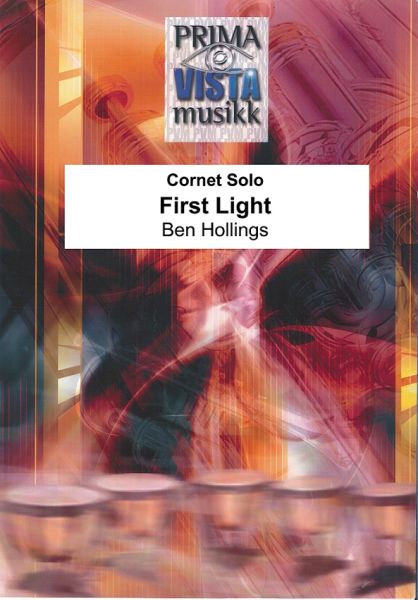
First Light (Cornet Solo with Brass Band - Score and Parts)
First Light was written for Kirsty Abbotts and Carlton Main Frickley Colliery Band. A slow lilting melody is presented in the cornet solo and passed between the band and the soloist to create images of the tranquil night before the piece reaches a climactic moment which is meant to represent the beams of light emerging as the sun rises. The theme is then presented in a tutti forte section before arriving at a tranquil finish. First Light is featured on the Kirsty Abbotts and Carlton Main Frickley Colliery Bands CD, A Search for Peace.
Estimated dispatch 7-14 working days
-
 £27.50
Rise of the Phoenix Score Only)
As the title suggests, the phoenix was a fabulous mythical bird, who every morning at dawn, sang a song so enchanting that even the sun God, Apollo, would stop and listen. The bird would live for a hundred years, and at the end of its life, would build a pyre, set it on fire and be consumed by the flames. After three days, the phoenix would be reborn from the ashes, to sing once more.This work was commissioned by Clifton and Lightcliffe Band and reflects the difficulties and rebirth of the band to make music once more.Suitable for second section bands and above.
Estimated dispatch 7-14 working days
-
 £29.95
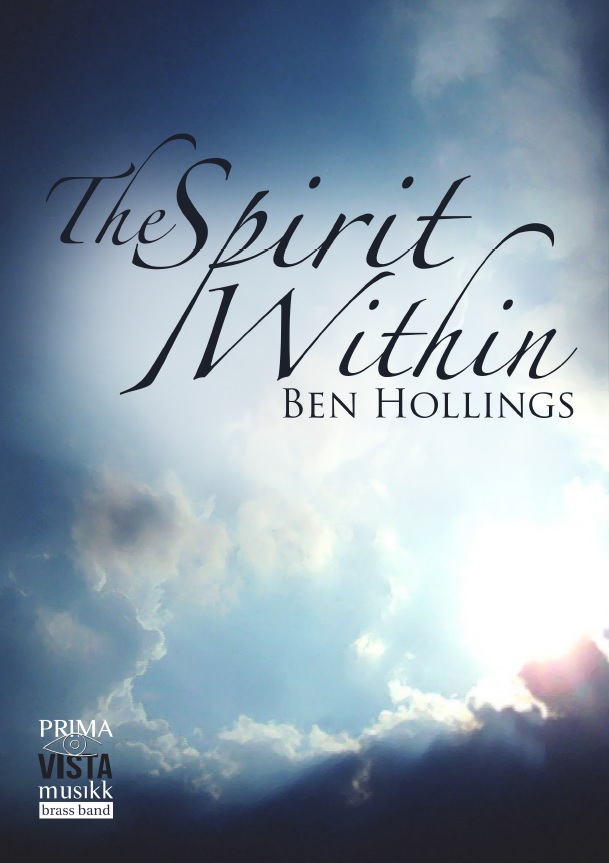
The Spirit Within (Brass Band - Score and Parts)
The Spirit Within is meant to represent the human spirit and the capabilities of human emotion, which is portrayed by the harmony in the piece. The harmonic language is the focal point that plays on the relationship between major and minor chords, including lots of extended harmony and suspensions that encompass the main melody.The piece has the ability to show off the quality sound from a brass band whilst providing a thought provoking piece for the audience to enjoy.The Spirit Within is featured on the Grimethorpe Colliery Band CD, Grimthorpe Entertain.
Estimated dispatch 7-14 working days
-
 £25.00
The Garland Waltz (Tchaikovsky arr. Dan Price)
The Garland Waltz comes from 'The Sleeping Beauty', the second of three ballets by Pyotr Tchaikovsky. Sleeping Beauty's theme is simplistic and focuses on the conflicting forces of good and evil through the characters the Lilac Fairy (good) and Carabosse (evil). The ballet's premiere in 1890 received more favourable accolades than 'Swan Lake' but Tchaikovsky never witnessed the work's true success outside of Russia as he died in 1893. By 1903, 'The Sleeping Beauty' was the second most popular ballet in the repertoire of the Imperial Ballet, having been performed 200 times in only 10 years. The waltz and other music from the ballet has been used extensively in film and television, most notably in Disney's animated version of 'Sleeping Beauty' and the recently released 'Maleficent'. Here, Dan Price faithfully transcribes Tchaikovsky's original score for Brass Band. Duration : 00:04:45 Grade : 3.5 / 4
Estimated dispatch 5-7 working days
-
 £33.62
Adoration (Cornet Solo with Brass Band) Florence Price trs. Andrew Wainwright
Florence Price was an American classical composer, pianist, organist and music teacher. She is noted as the first African-American woman to be recognised as a symphonic composer, and the first to have a composition played by a major orchestra. Price composed over 300 works: four symphonies, four concertos, as well as choral works, art songs, chamber music and music for solo instruments. In 2009, a substantial collection of her works and papers that had been previously considered lost was found in her abandoned summer home. Amongst these was this delightful work, Adoration, which had been composed in the 1950s for organ. According to IMSLP.org, the piece "failed to meet notice or renewal requirements to secure statutory copyright with no 'restoration' under the GATT amendments" and therefore is in the public domain. A version for violin and piano by Elaine Fine has become popular. This setting for cornet soloist with brass band has been arranged by Andrew Wainwright. It is also available as a Bb solo with piano here. To view a video of Andrew Roe performing the work, please visit: www.youtube.com/watch?v=_7UYlz8Fzxo Difficulty Level: 4th Section + Length: 3.15 minutes Sheet music available from: UK - www.brassband.co.uk USA - https://satradecentral.org Instrumentation: Cornet Soloist Bb Soprano Cornet Eb Solo Cornet Bb Repiano Cornet Bb 2nd Cornet Bb 3rd Cornet Bb Flugel Horn Bb Solo Horn Eb 1st Horn Eb 2nd Horn Eb 1st Baritone Bb 2nd Baritone Bb 1st Trombone Bb 2nd Trombone Bb Bass Trombone Euphonium Bb Bass Eb Bass Bb (Percussion Tacet)
In Stock: Estimated dispatch 1-3 working days
-
 £37.35
And can it be? - Brass Band (Dan Forrest arr. Andrew Wainwright)
This hugely popular choral anthem by Dan Forrest has here been expertly arranged for brass band by Andrew Wainwright. A quiet contemplative opening builds gradually to a confident stating of the truth of the gospel, ending with a pensive reiteration of the question and the assurance of the amazing love. This arrangement was originally commissioned by Norridge Citadel Band in 2019. To view the New York Staff Band performing the piece, please visit: https://www.youtube.com/watch?v=UY7YA_akFb0 Includes score and full set of parts. Sheet music available exclusively from World of Brass - www.worldofbrass.com Difficulty Level: 4th Section + Instrumentation: Soprano Cornet Eb Solo Cornet Bb 1st Cornet Bb 2nd Cornet Bb Flugel Horn Bb Solo Horn Eb 1st Horn Eb 2nd Horn Eb 1st Baritone Bb 2nd Baritone Bb 1st Trombone Bb 2nd Trombone Bb Bass Trombone Euphonium Bb Bass Eb Bass Bb Timpani Percussion 1-2
In Stock: Estimated dispatch 1-3 working days
-
 £33.62
Call of the Victor (Brass Band) Marcus Venables
VIEW SCORE PDF The music within this piece by Canadian composer Marcus Venables portrays the image of a victorious and triumphant call - the battle's won and the victor proclaims supreme authority. As with any ruling authority and power, the growing opposition rise to conquer. After the opening fanfare and a call of victory, the music portrays the lavishness of victory with this driving sense of impending conflict. Once again, the victor must go to war and battle the threats. The music continues to express the sorrow and the loss that comes with being the victor. With sacrifice and pain, the victor now grows in passion and motivation to once again conquer the enemies. With a final swift battle, the victor calls out to claim supremacy once again. PDF download includes score and full set of parts. Sheet music available from: UK - www.brassband.co.uk USA - www.solidbrassmusic.com Difficulty Level: Second Section + Instrumentation: Soprano Cornet Eb Solo Cornet Bb Repiano Cornet Bb 2nd Cornet Bb 3rd Cornet Bb Flugel Horn Bb Solo Horn Eb 1st Horn Eb 2nd Horn Eb 1st Baritone Bb 2nd Baritone Bb 1st Trombone Bb 2nd Trombone Bb Bass Trombone Euphonium Bb Bass Eb Bass Bb Timpani Percussion 1-3
In Stock: Estimated dispatch 1-3 working days
-
 £33.62
Classical Concert! (Brass Band) Various arr. Alex Scaife McGee
Classical Concert! by Alex Scaife McGee is a high-energy concert medley that celebrates the enduring appeal of the classical canon while paying tribute to the legendary Harold Walters, whose Instant Concert and Hootenanny set the standard for this exciting style of programming. Drawing on some of the most recognisable themes in classical music, this arrangement weaves familiar melodies into a fast-paced, audience-pleasing showcase. The journey begins with the unmistakable excitement of Rossini's William Tell Overture, flowing seamlessly into Bizet's Carmen Overture. The intensity builds with Grieg's In the Hall of the Mountain King before lifting into the brightness of Vivaldi's Spring. Momentum continues through a thrilling sequence featuring Beethoven's Ode to Joy from Symphony No. 9, the dramatic fate theme from Tchaikovsky's Symphony No. 5, and the majestic power of Saint-Saens's Organ Symphony. A triumphant statement from Handel's Hallelujah Chorus sets the stage for rapid-fire appearances by Mozart's Horn Concerto No. 3 and Tchaikovsky's Swan Lake. The medley concludes with two crowd-favorite finales: Rossini's The Barber of Seville and the rousing, cannon-ready excitement of Tchaikovsky's 1812 Overture. Ideal for concerts, entertainment contests, and audience outreach, Classical Concert! delivers non-stop excitement, instant recognition, and a joyful celebration of classical music at its most entertaining. To view a rolling score video please visit www.youtube.com/watch?v=gIqvoA1Rh40 Duration: Approx. 4.00 minutes Difficulty Level: 2nd Section + This PDF download includes the full score and parts. Sheet music available at www.brassband.co.uk (UK) or https://satradecentral.org (USA) Instrumentation: Soprano Cornet Eb Solo Cornet Bb Repiano Cornet Bb 2nd Cornet Bb 3rd Cornet Bb Flugel Horn Bb Solo Horn Eb 1st Horn Eb 2nd Horn Eb 1st Baritone Bb 2nd Baritone Bb 1st Trombone Bb 2nd Trombone Bb Bass Trombone Euphonium Bb Bass Eb Bass Bb Timpani Drum Kit Percussion
In Stock: Estimated dispatch 1-3 working days
-
 £29.88
Elizabeth Remembered (Brass Band) Debbie Wiseman arr. Wainwright & Greet
Released as a charity single in aid of The Queen's Commonwealth Trust, this sublime work was composed by Debbie Wiseman OBE and performed by the BBC Concert Orchestra in tribute to Queen Elizabeth II after her death in September 2022. This tender and contemplative piece was played many times during the BBC's live coverage of the ceremonies across ten days of national mourning; and the full three-minute piece was played at the end of the Queen's State funeral, following Kirsty Young's emotional final words, and accompanied by a poignant and beautiful montage of images from the events of the day. The piece is now available for brass bands through this arrangement by Andrew Wainwright and Glenn Greet, with permission kindly granted by Debbie Wiseman. To view a rolling score video please visit www.youtube.com/watch?v=vK9AfH4FGnc PDF download includes score and parts. Sheet music available from: UK - www.brassband.co.uk USA - www.solidbrassmusic.com Difficulty Level: 4th Section + Instrumentation: Soprano Cornet Eb Solo Cornet Bb Repiano Cornet Bb 2nd Cornet Bb 3rd Cornet Bb Flugel Horn Bb Solo Horn Eb 1st Horn Eb 2nd Horn Eb 1st Baritone Bb 2nd Baritone Bb 1st Trombone Bb 2nd Trombone Bb Bass Trombone Euphonium Bb Bass Eb Bass Bb Timpani Suspended Cymbal Vibraphone (or Glockenspiel)
In Stock: Estimated dispatch 1-3 working days
-
 £33.62
Fading Signals (Brass Band) Lucy Green
Fading Signals, by Lucy Green, was the winner of the 2025 UniBrass Composition Competition. The work is a contemplative exploration of the subtle nuances of communication, memory, and the passing of time. It reflects on the experience of crossing paths with others and forming connections that may gradually grow distant over time. This piece invites listeners to reflect on how signals - both audible and emotional - can shift, evolve, and sometimes fade. To view a video of Flowers Band performing the work please visit https://www.youtube.com/watch?v=hb4GcPtirDg Duration: approx. 4.00 minutes Difficulty Level: 2nd Section + PDF download includes parts and score. Sheet music available at www.brassband.co.uk (UK) or https://satradecentral.org (USA) Instrumentation: Soprano Cornet Eb Solo Cornet Bb Repiano Cornet Bb 2nd Cornet Bb 3rd Cornet Bb Flugel Horn Bb Solo Horn Eb 1st Horn Eb 2nd Horn Eb 1st Baritone Bb 2nd Baritone Bb 1st Trombone Bb 2nd Trombone Bb Bass Trombone Euphonium Bb Bass Eb Bass Bb Bass Drum Tam-tam Tubular Bells
In Stock: Estimated dispatch 1-3 working days
 Watch video