
Results
-
 £76.99
Tango for Joe - Philip Sparke
Gemini Concerto was commissioned by and written for Ryukoku University (Japan), Andre Henry and Shoichiro Hokazono. Set in three movements, the concerto aims to explore the close relationship, as solo instruments, between the cornet and euphonium, exploiting the many common factors between the two as well as the subtly different characteristics they possess in terms of both lyrical and rhythmic playing. The first movement is a bustling toccata and the second movement is lyrical and improvisatory in nature. A fantastic piece and a great addition to the repertoire!
Estimated dispatch 5-14 working days
-
 £159.99
Omaggio - Philip Sparke
Omaggio was commissioned by Steven Mead in celebration of his 60th birthday and in memory of his father, Rex. He gave the premiere of the brass band version in Rome in March 2022, accompanied by the Italian Brass Band conducted by Filippo Cangiamilla. The concert band premiere took place on 6th July that year as part of the 2022 Spanish International Tuba Euphonium Conference, accompanied by the Banda municipal de musica de Malaga. The concerto is set in 3 continuous movements, which are united by a recurring syncopated interval of a fifth. The first movement, FANTASIA, opens with this motive accompanying an extended monologue for the soloist. This is followed by a lengthy bridge passage by the band (piano), which is eventually joined by the soloist, who guides the music back to the opening soliloquy, leading to an energetic central section. This develops until the opening material again returns to introduce the second movement, BALLAD, which revolves around an expressive melody for the soloist, interspersed by accompanied cadenzas. The third movement, THE KING TRIUMPHANT, pays homage to Steven's late father, Rex, and its title alludes both to Rex's name ('Rex' being Latin for 'king') as well as his love of Eric Ball's Salvationist masterpiece, The Kingdom Triumphant. The finale is an energetic tour-de-force featuring an acrobatic 6/8 melody, which is interrupted twice by the magnificent hymn tune, Helmsley, which Ball uses so effectively in The Kingdom Triumphant. A galloping coda brings the work to a close.
Estimated dispatch 5-14 working days
-
 £137.99
A Gabrieli Fantasy - Bert Appermont
In this five-movement work, Bert Appermont explores the possibilities that three choruses within a brass band have to offer. For this, he used the Canzon a 12 in echo by Giovanni Gabrieli, which he also used in 2018 for a double chorus trombone octet of the same name. There's a lot to be enjoyed in this fantasy, with its range of motifs, melodic cells and chords plus counterpoint techniques like the canon and imitations. An atmospheric piece of music that presents variation in sound and in stage arrangement as well!
Estimated dispatch 5-14 working days
-
 £44.00
Fairfield Fanfare (expanded version) - Roxanna Panufnik
Fairfield Fanfare (expanded version) by Roxanna Panufnik is a 4-minute work for youth and mixed choirs, brass band and orchestra. Originally commissioned to celebrate the 50th anniversary of the Fairfield Halls, Croydon in 2012, the opening chords are based on all the alphabetic note names from FA-ir-F(#)-i-E-l-D, heralding a flourishing section of hustle and bustle that is the city of Croydon today.This expanded version includes brass band and choirs, with a setting of the text from Psalm 127. The expanded version was commissioned by the London Mozart Players, who premiered the piece on 30 June 2016 at Fairfield Halls, Croydon.This edition is the full score in C (EP 72880). It is available for sale as part of the Peters Contemporary Library. The performance material can be hired as well as a transposed full score, if preferred.
Estimated dispatch 5-14 working days
-
 £115.60
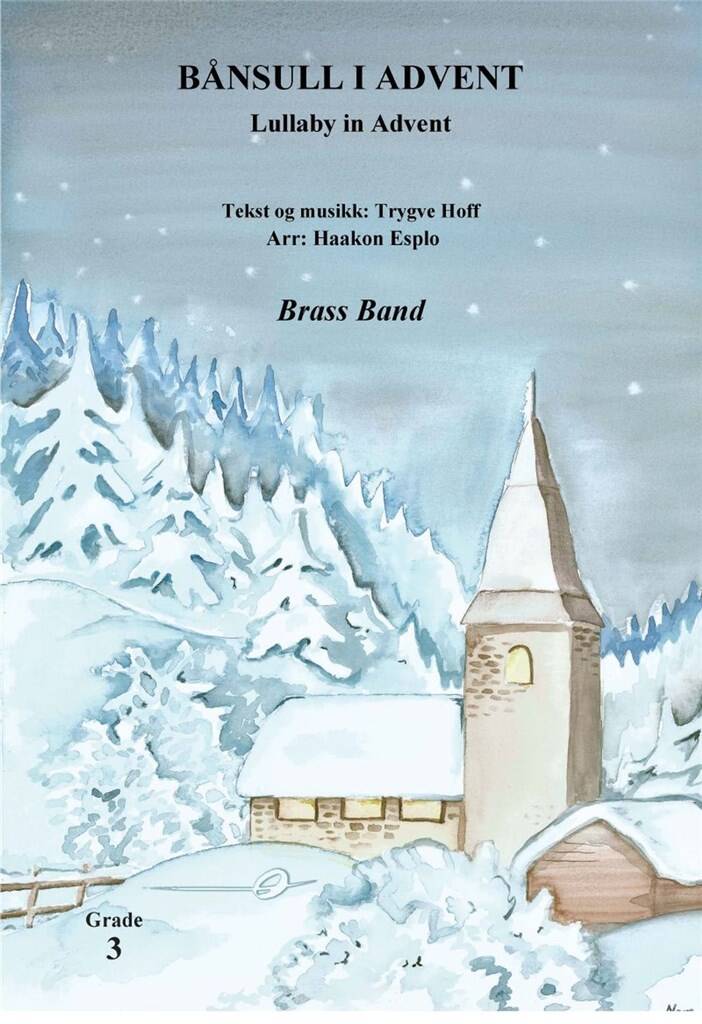
Bansull i advent - Trygve Hoff - Haakon Esplo
The composer and musician Trygve Hoff was born and raised at Rognan in Nordland and gained a lot of inspiration for his texts from the North Norwegian culture. He is a composer and copywriter of many of our most popular songs. "Ei hand a holde i" and "Har en drom" with music by Svein Gundersen and especially his own "North Norwegian Christmas Psalm" are famous songs in Norway. "Lullaby in advent" may not be among his most famous songs, but it's a beautiful and thoughtful melody that will fit well with any Christmas concert. Hoff himself varied with musical styles on this song. This arrangement is written as a jazz-version with swing feel.
Estimated dispatch 5-14 working days
-
 £105.20
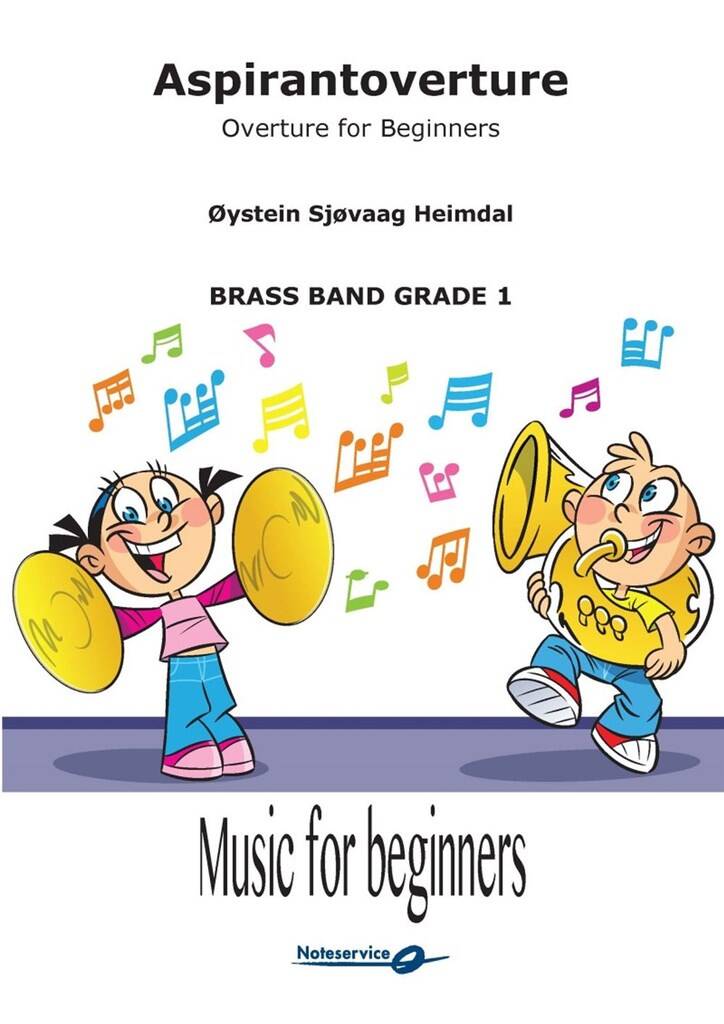
Aspirantoverture - Øystein Sjøvaag Heimdal
This original piece is intended to performed by the youngest musicians. The structure of the overture is traditional A-B-A with a slow section in the middle flanked by two Modearo sections. As the title suggest, the piece is well suited as a concert opener but also for contest use. All parts challenges the young players in many ways, both the wind- and percussionists. Please be aware of the contrasts in dynamics throughout the piece.
Estimated dispatch 5-14 working days
-
 £154.60
Circius - Torstein Aagaard-Nilsen
The work is important for me because it was my first piece to be performed outside Norway. Black Dyke Band/David King performed it and did a recording of it in 1991. In the original score I quote a Swedish bishop (Olaus Mangnus) who lived in the 15th century. He travelled around Scandinavia and drew maps - very important historic material. When he came to the north of Norway (where I come from) he decribed the wind from the north as Ciricus: (something like) Worst of all winds is Circius, that revolves (?= turn upside down) heaven and earth. (Well, not a good translation Im afraid). The fast sections reflects the mighty winds from the north. In the middle section, I borrowed afolksong-like tune (by C. Elling, a Norwegian composer). The text (by Kristoffer Janson) tells about old times when the fishermen used open boats: they had to put their lives in the hands of God.
Estimated dispatch 5-14 working days
-
 £54.99
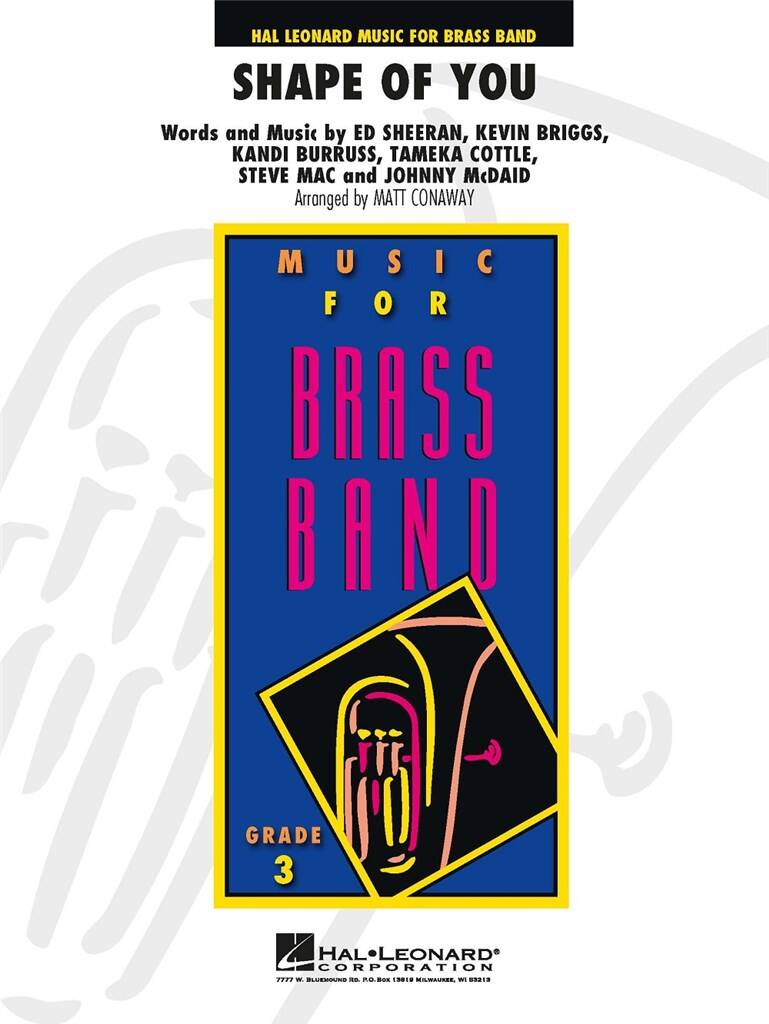
Shape of You - Matt Conaway
Recorded by Ed Sheeran, this popular hit features a rhythmic pulse and catchy melodies. This energetic version for concert band makes effective use of the percussion section as well as terrific scoring for the entire ensemble.
Estimated dispatch 5-14 working days
-
 £105.20
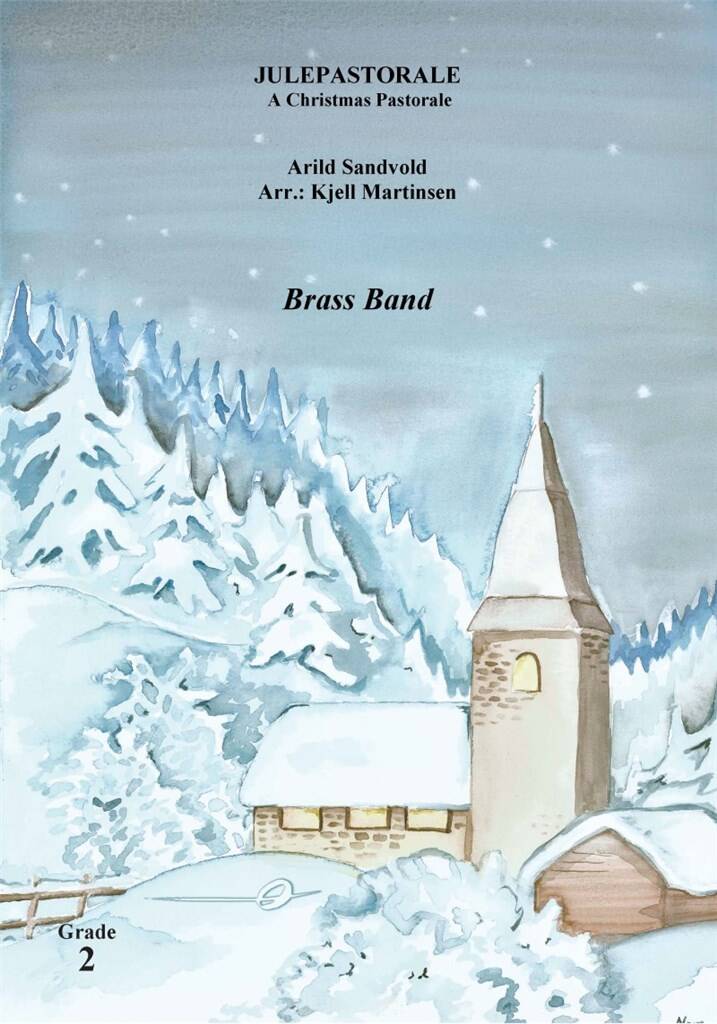
Julepastorale - Arild Sandvold - Kjell Olav Martinsen
Arild Sandvold (1895 - 1984) began his studies at the Music Conservatory in Kristiania (Oslo) in 1906, in piano and organ as well as music theory. After his debut as organist and pianist, he had his debut as orchestral conductor in 1924. At the same time he also had two periods of studies in Leipzig. In addition to studies in piano and organ, he received tutoring in composition. He was a teacher at the Oslo Music Conservatory and organist and a cathedral cantor in Oslo for more than 50 years. Sandvold brought both Baroque and Romantic organ works to a wider audience. He wrote a number of works for organ, in addition to music for choir and orchestra. The polyfony of the lateBaroque and the harmony of the Romantic period serve as the basis of his musical style. "A Christmas Pastorale" arranged with thoughts about the brass bands possibility for sound and colour, and should be a nice piece to do on concerts in the Christmas time.
Estimated dispatch 5-14 working days
-
 £127.30
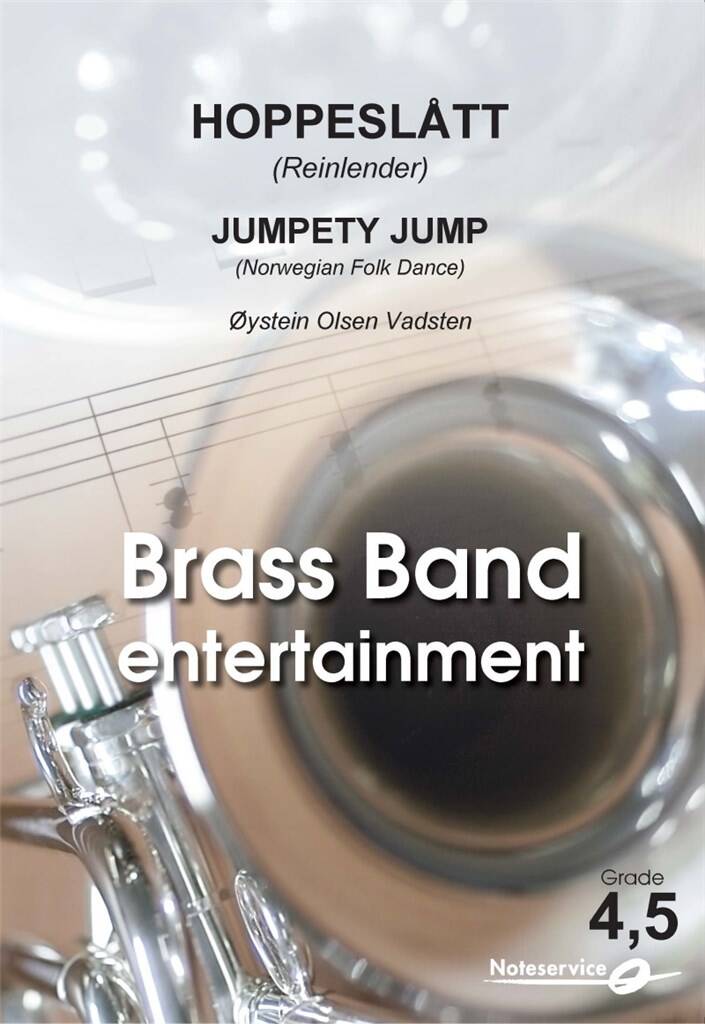
Hoppeslatt - Øystein Olsen Vadsten
This is an original piece of music composed by Oystein Olsen Vadsten, inspired by old Norwegian folk dances. "Jumpety Jump" actually started out as a "reinlender" (Norwegian Folk Dance) which origins from Rhinland. The reinlender is well disguised in this arrangement by adding the shuffle- and swing style to it. The piece is first of all meant as a "happy go lucky" tune, but is full of rhythmical and technical challenges. Its put up as a jazz-tune, first presenting the melody, then "improvisasations" by the different instrument groups, before going back to the first theme. The title "Jumpety Jump" refers to the kind of jumping feeling the shuffle groove gives.
Estimated dispatch 5-14 working days
 View Music