
Results
-
 £105.20
Daylight Funk - Haakon Esplo
Daylight Funk is a light, funky and catchy piece of music that will fit well for concerts with your young band throughout the year. With some challenges in leading parts and simple lower parts, this is a great piece to work with rhythmic figures, articulations and precision. Please feel free to add some choreography to the concert.
Estimated dispatch 5-14 working days
-
 £115.60
Tuba Tornado - Hans Offerdal
This piece explores the life span of a tornado and which instrument is better suited for that than just the tuba? The piece has three movements: I - Impatient Storm Cell II - Cumulus Clouds III - Multiple Vortex Tornado This piece presents challenges in dynamics and articulation, as well as in the interplay with the soloist. The piece is based on a scale of seven pitches (as 'Tornado' has seven letters) and is notated as a concert Eb major scale with three accidentals. Only these seven notes are played throughout the piece. Playing time appx. 10 minutes.
Estimated dispatch 5-14 working days
-
 £118.99
Lions of Legends - Thierry Deleruyelle
This work was commissioned by Eurofestival. Ever since antiquity, mankind has been fascinated by the lion: symbolising courage, strength and temperance. Many have made use of the lion to represent themselves in symbols and emblems. In five movements the composer describes both the history of the lion throughout centuries, as well as the characteristics. A challenging idea to turn into music! The final movement 'King of Kings' is extremely spectacular. A great choice for thematic concerts or as a main piece in your concert or contest.
Estimated dispatch 5-14 working days
-
 £72.70
Bjorns marsj - Øystein Sjøvaag Heimdal
This march is well suited for small and larger marching bands. You may perform it both on stage and on parade. The march is a honour to all parents of the Norwegian school bands and especially dedicated to Bjorn Aarvold and the other passionate parents of Tjome skolemusikk. Level of difficulty is 2.
Estimated dispatch 5-14 working days
-
 £105.00
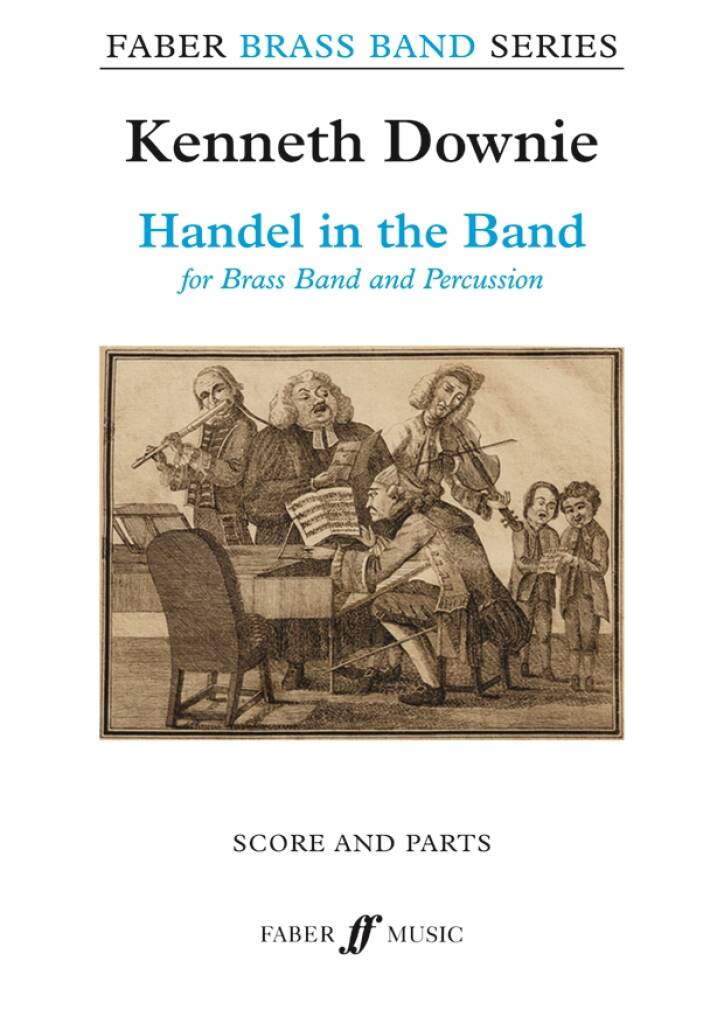
Handel in the Band - Kenneth Downie
Handel in the Band is a virtuoso set of symphonic variations on one of Handel's best known keyboard dances, the Sarabande from his Suite in D minor, HWV 437, based on the Spanish traditional dance La Folia. Kenneth Downie's work was commissioned by Brass Band Treize Etoiles, for performance at the 2013 Swiss National Brass Band Championships, where it was conducted by James Gourlay. The title is a reference to Percy Grainger's popular Handel in the Strand, and is indicative of the witty and theatrical nature of the music, which is more playful than conventional competition pieces and as such offers different challenges to brass bands as well as beingthoroughly entertaining for audiences. Kenneth Downie is one of the most respected and experienced brass band composers. His music has been widely performed and published throughout the brass band world since the 1960s.
Estimated dispatch 5-14 working days
-
 £127.30
Stealing Apples - Fats Waller - Reid Gilje
Stealing Apples is an old swing-tune written by Fats Waller. Performances by Benny Goodman and his big band made the song very popular. In this arrangement for brass band, the mallet percussion is very essential. Mallet Percussion presents the melody from letter A and is also featured as soli-instruments from letter L to P. These parts can alternatively be played as vibraphone solo. Please be aware of the balance at letter A. Horn and Trombones must play piano but well articulated. Letter D must sound sparkling and fresh with articulated and powerful trombones and cornets (using straight-mute). Make shue that the 8th-notes are not played too dotted two bars before letterG. Almost even 8th-notes accentuated on the start of the slur is a good tip. Watch the balance at letter H. This part have to sound homogeniously. The soloistic Soprano Cornet at letter Q must be played in the style of Benny Goodan. The accompaniment must not be too powerful from letter R to S. Best of luck with the performance!
Estimated dispatch 5-14 working days
-
 £84.99
Festivus Americas - Stephen Bulla
Dedicated to the North American Brass Band Association, this is music that is full of energy and dynamic extremes. In form it draws from the overture style, although the themes are self-existing and the piece is programmatic. Working well asa festival opener, it sets a mood of excitement. Following the rhythmic fanfares of the opening, the first theme is presented in the cornets followed by a return to the same rhythmic material. A second theme appears in the horn section and isdeveloped, changing into a darker and sinister form of the same motif. Eventually a Maestoso section is reached, full of sustained block chords in the cornets and trombones, as the rest of the band counters with cascading lines that weavestraight through the brighter instruments.
Estimated dispatch 5-14 working days
-
 £101.30
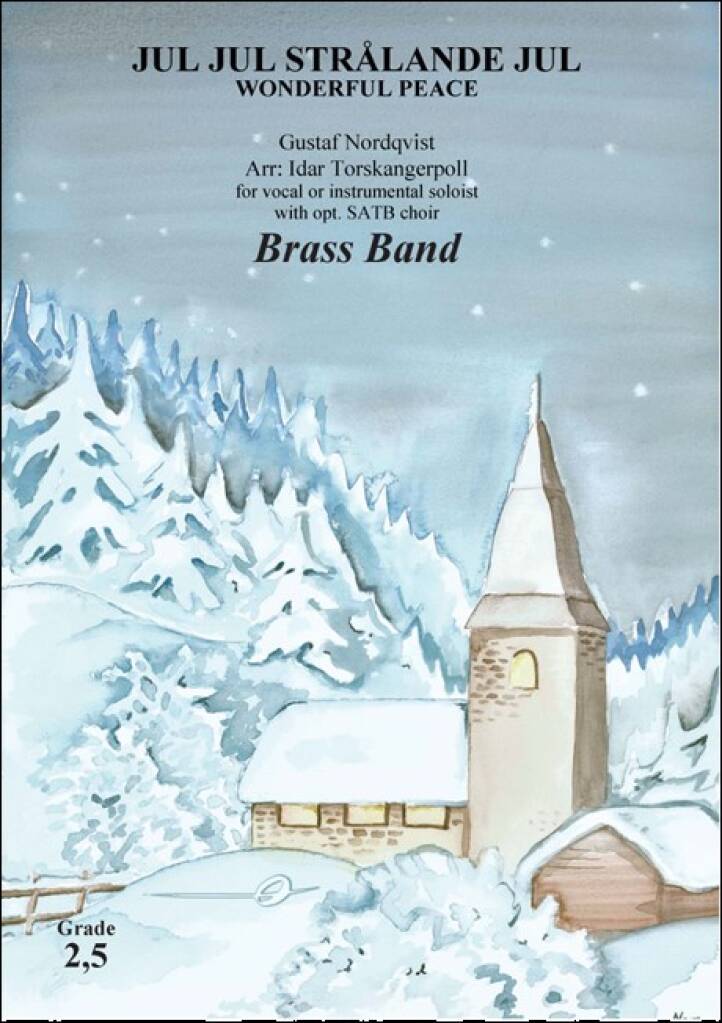
Wonderful Peace - Gustaf Nordquist - Idar Torskangerpoll
This song is one of the most used and loved Christmas songs in Sweden during the 20th century. The lyrics describe Christmas as white and snowy, and describe the blessings of Christmas as well as the hope that Christmas will bring peace onearth.To the conductorThis arrangement has soloist parts for several instruments or a vocalist. It can be used by band and choir (swedish lyrics).
Estimated dispatch 5-14 working days
-
 £64.99
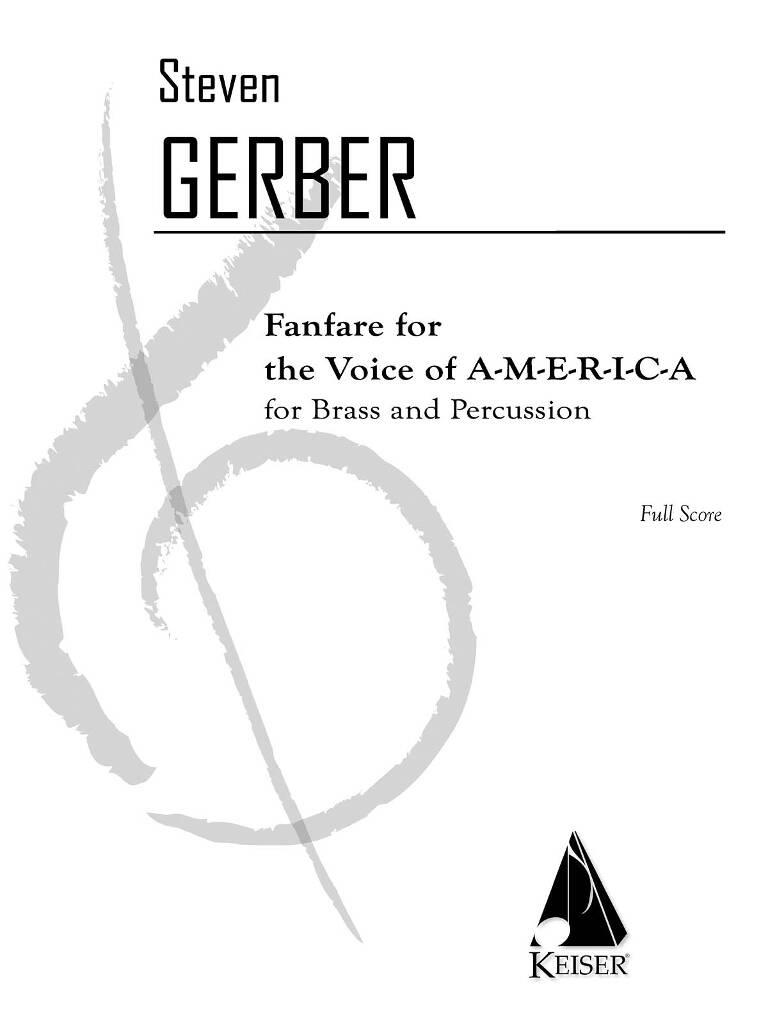
Fanfare for the Voice of A-M-E-R-I-C-A - Steven R. Gerber
Premiered and commissioned by Voice of America' on September 11, 2003, paying tribute to the national spirit of grim determination and unity, as well as of tragedy and ominousness following 9/11.
Estimated dispatch 5-14 working days
-
£59.99
All Cried Out - Peter Kleine Schaars
At the beginning of the 1980s Alison Moyet was discovered by Vince Clarke, who - in search of greater independence - had left the successful band Depeche Mode. The soulful singing style of Moyet and the electronic, innovative pop that Clarke made melded well together in the group Yazoo with hits such as Only You and Don't Go. However, after a number of years Moyet went her own way and forged a solo career, during which she demonstrated a somewhat more traditional sound. She recorded several covers (such as The First Time I Ever Saw Your Face and That Ole Devil Called Love) but she also wrote fine songs herself, such as Love Resurrection and, of course, the expressive song AllCried Out. This arrangement by Peter Kleine Schaars does justice to the atmosphere of the original song.
Estimated dispatch 5-14 working days
 View Music