
Results
-
 £77.00
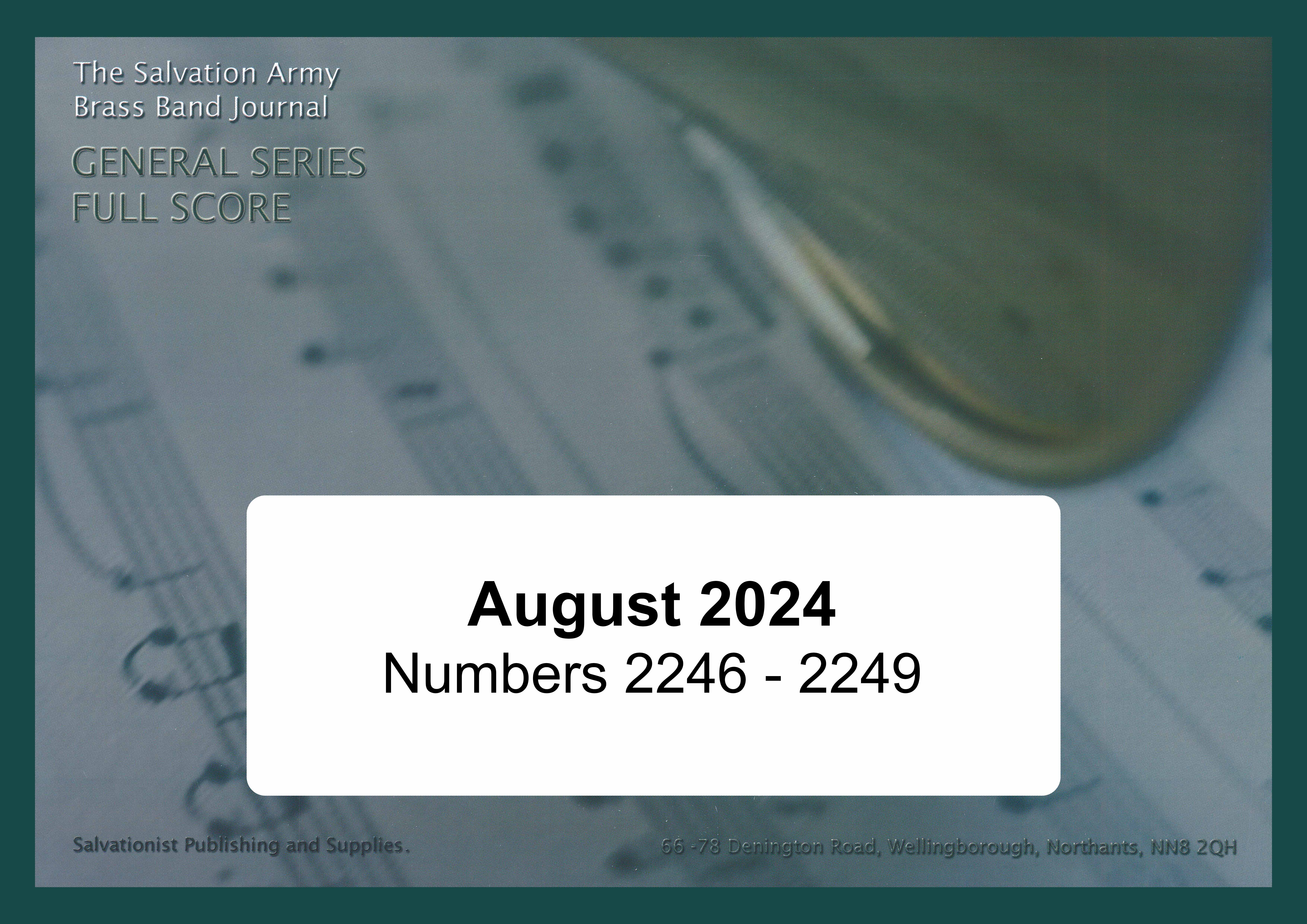
General Series Brass Band Journal, Numbers 2246 - 2249, August 2024
2246: Christmas Prelude - David's City (Noel Jones)In 2 Samuel 5, we read of David's anointing as King of Israel at the age of thirty, a reign that lasted for forty years. Bethlehem was known as 'David's city' because he was born there and worked as a shepherd on the nearby hills. Verses 1, 2 and 5 of Once in Royal David's City (C.C. 68) are featured in this Christmas Prelude. There are also brief references to the carols O come, all ye faithful and O little town of Bethlehem between verses.2247: Cornet and Euphonium Duet - This Kingdom (Stephen Bulla)Geoff Bullock's song, This Kingdom, has been made well known by the American gospel singer Ron Kenoly. Stephen Bulla wrote this duet for a Brass Spectacular concert held in Basel, Switzerland, in May 2019.2248: Wonder (Stephen Gibson)When we stop to consider the mystery of God's love for each one of us, its enormity can only cause us to wonder. The opening bars of this music create an atmosphere, using a rolling accompaniment underneath sustained, music and chromatic Cornets, setting the style for the entire piece. Occasional references to Albert E. Webber's chorus Can you wonder? are heard throughout.2249: O to love thee! (Michael Davis)This piece takes its title from the first verse of Francis Bottome's words, Precious Jesus, O to love thee! The introduction establishes the baroque form of a prelude which leads into the tune Glory to the lamb (T.B. 327). Following a brief interlude, the melody is passed through several sections of the band, with delicate countermelodies in the Flugel and Horns. The majestic ending eventually comes to rest on the final tonic chord.
Estimated dispatch 7-14 working days
-
 £55.00
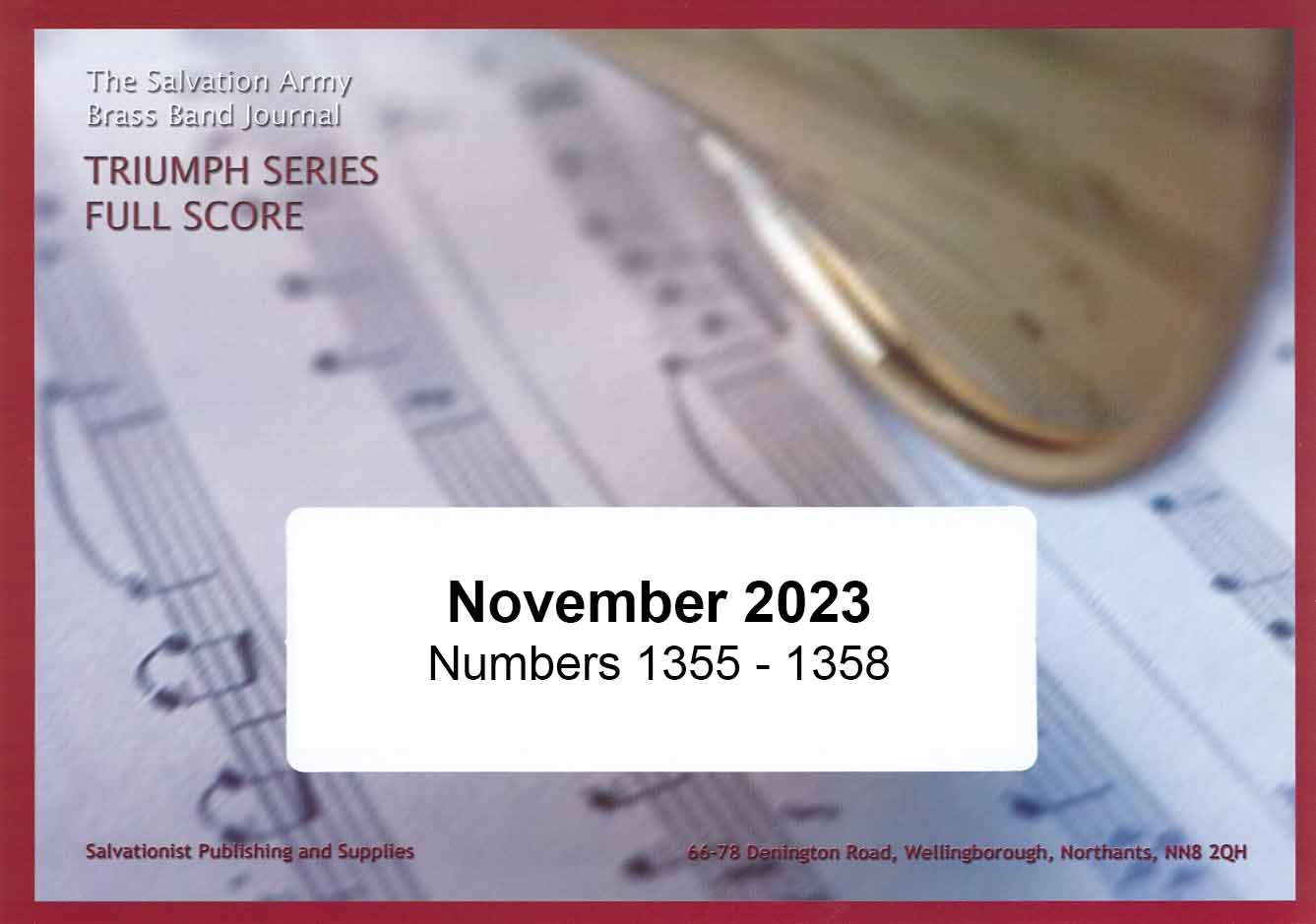
Triumph Series Brass Band Journal, Numbers 1355 - 1358, November 2023
1355: March Medley - Pardoned Forever (Keith Manners)This collection of Easter-themed melodies should be played with enthusiasm and vigour. Featuring the songs He lives (S.A.S.B. 229), Chris is alive! Let Christians sing (S.A.S.B. 217) and No more! No more! He remembers sins no more (S.A.S.B. 460), the positive message of Easter Sunday is reflected in this bright march style.1356: Selection - I love the sweetest name (Noel Jones)This devotional selection includes three songs that feature the name of Jesus and derives its title from the following lines of those songs; 'How sweet the name of Jesus sounds' (S.A.S.B. 78), 'O, how I love the Saviour's name! The sweetest name on earth' (S.A.S.B. 94) and 'Sweetest name on mortal tongue' (S.A.S.B. 93).1357: Renewal (Harold Burgmayer)Will J. Brand penned the song Renewal (S.A.S.B. 634), with music by Bramwell Coles, for 'Day of Renewal' meetings conducted by General Albert Orsborn in October 1949. It was published in that form in The Musical Salvationist in 1951. Over time these meaningful words of consecration became wedded to an alternative tune, a lovely melody by Oscar Ahnfelt known as Trust in God (T.B. 903). This setting for band is based on a male-voice arrangement, conceived for a time of renewed consecration, sung by massed bands at the Canadian Staff Band's 50th Anniversary Festival in 2019.1358: Groove Hosanna! (Munashe Chikwezvero)This is a funk setting of three well-known melodies associated with Jesus' triumphal entry into Jerusalem. Today, such celebratory processions, and indeed most large gatherings, usually feature rich forms of music-making. Music provides atmosphere and generates excitement, and it is hoped that a funk inspired arrangement of these songs will inspire listeners to 'move to the groove'. The first two songs, Children of Jerusalem (S.A.S.B. 356) and Give me joy in my heart, keep me praising (S.A.S.B. 362) encourage us to sing 'Loud hosannas to our King!'. The words of the third song, When his salvation bringing, remind us that he "smiled to hear their song".
Estimated dispatch 7-14 working days
-
 £38.95
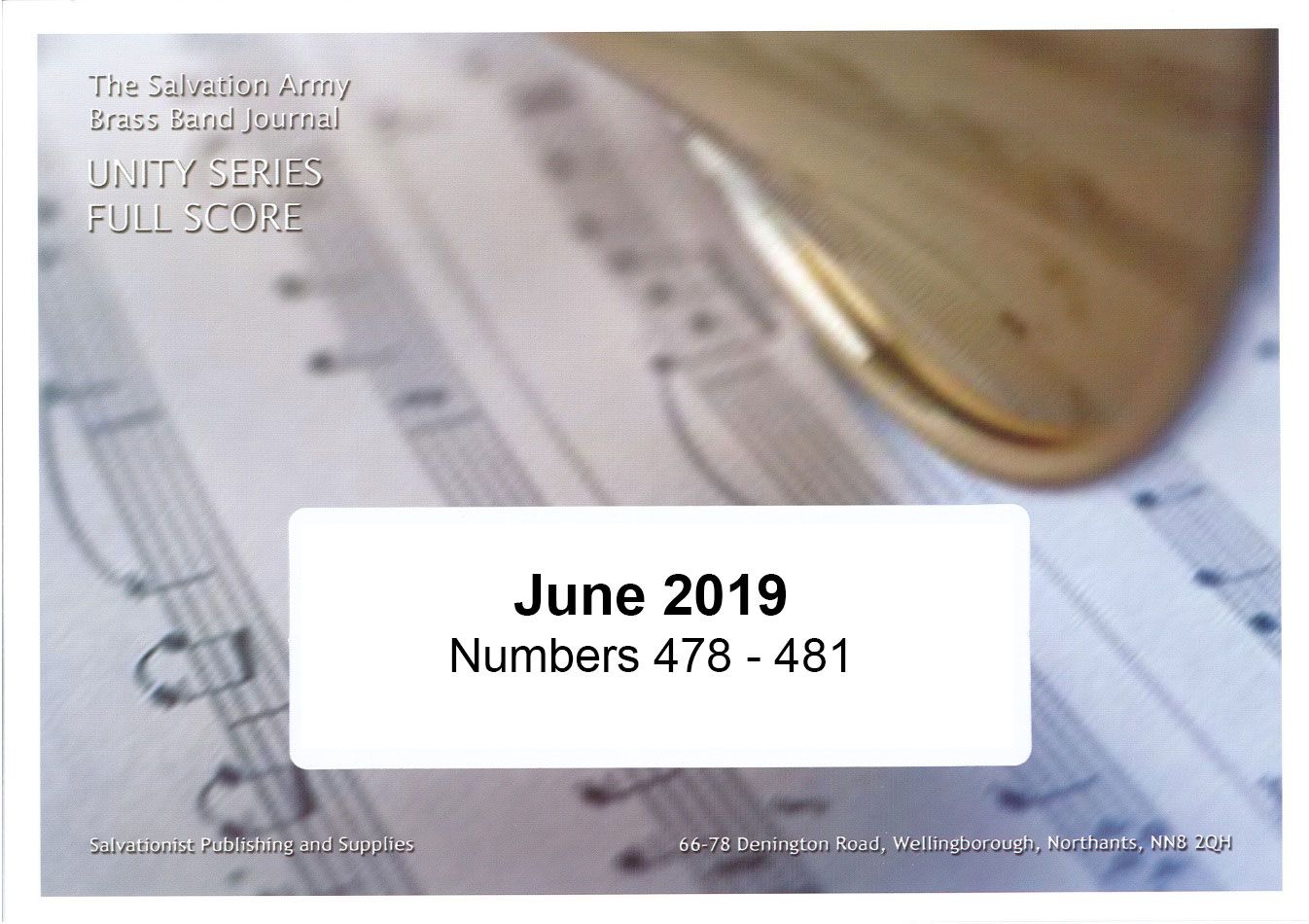
Unity Series Band Journal - Numbers 478 - 481, June 2019
478: March - Seize the day (Andrew Mair)This march features the tunes God's love is wonderful (T.B. 130) and Everybody should know, and makes reference to Rescue the perishing (T.B. 808) and the chorus Able to save (T.B. 538)479: Jingle bells jazz! (Richard Phillips)The familiar strains of Jingle Bells (C.C. 121) have featured in Salvation Army music countless times over the years (perhaps more than any other non-religious song), whether as the main theme, countermelody, or as a derived frament or motif. This is an attractive laid-back jazz setting of the tune.480: Poor, wayfarin' stranger (Thomas Mack)This arrangement of the Spiritual depicts a poor wayfarin' stranger's journey through life using a minor key and a slow walking style.481: Selection - No crib for a bed (Charles Craig)This simple setting reminds us that, amidst the joy and exuberance that often accompanies the Christmas season, Jesus' birth was a very humble event.
Estimated dispatch 7-14 working days
-
 £70.00
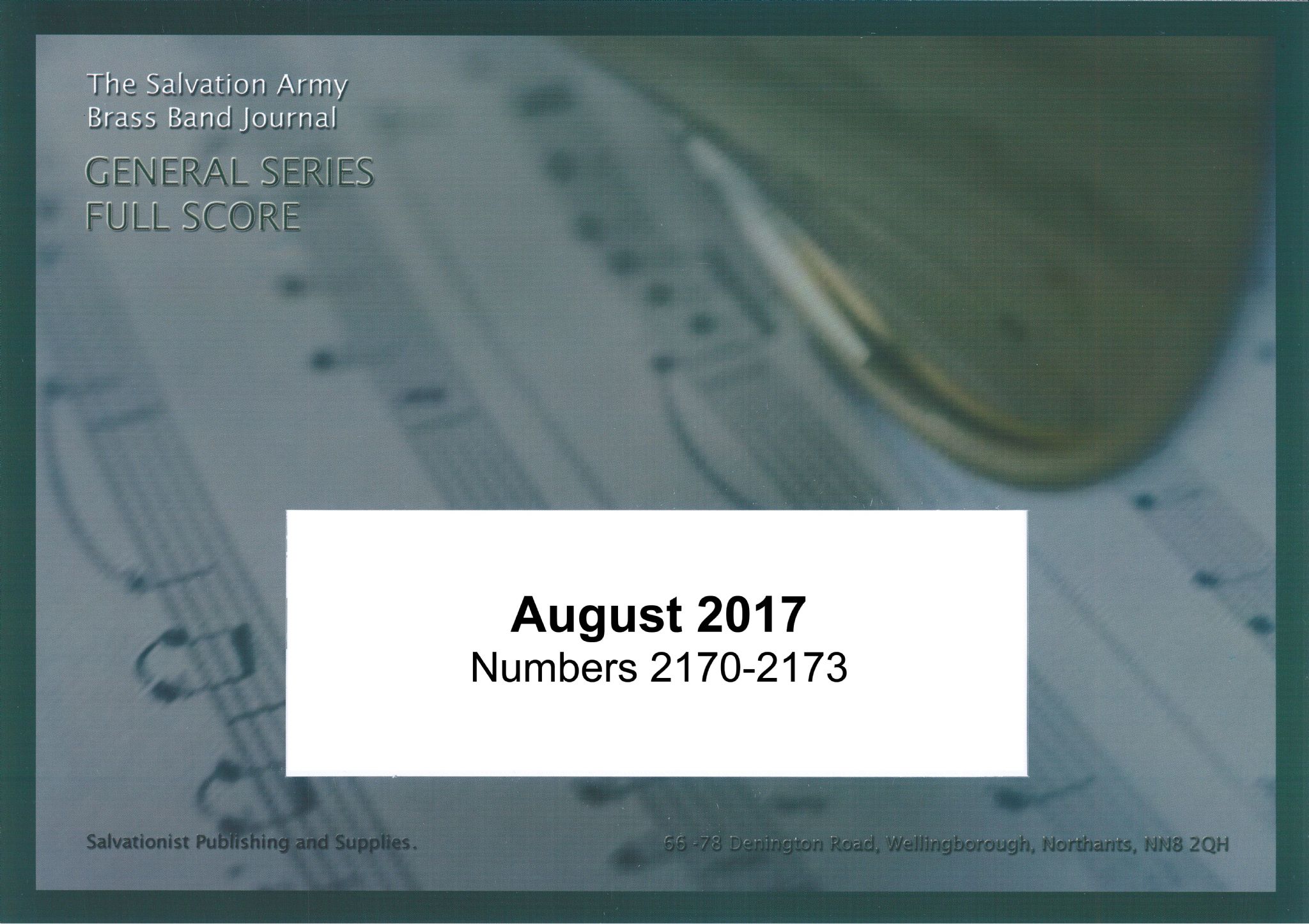
General Series Band Journal August 2017 Numbers 2170-2173
Praise to the Lord! (Andreas Holmund)A joyful and exuberant setting of the tune 'Lobe den Herren' which will be popular amongst many groups looking for an exciting programme item.Carol of the bells (Warren Brookes)The 'Carol of the bells' is an extremely popular and much used carol. This setting will bring a useful addition to the Christmas repertoire and is arranged by a Salvationist from Australia.Breathe on me (Paul Drury)This work is based on the 'Sing to the Lord' setting by Mark Porter which has proved popular amongst many vocal groups. It is hoped that this developed setting will enhance its popularity.March Cedarlights (Norman Bearcroft)Lt. Colonel Norman Bearcroft provides a march with all his hallmarks of energy and rhythmic and melodic interest. The march was written as a tribute to the International College for Officers and features the tunes 'Joy, joy, joy there is joy in The Salvation Army', 'They shall come from the East' and 'The World for God' reflecting the internationalism of the College.
Estimated dispatch 7-14 working days
-
 £50.00
Triumph Series Band Journal March 2017 Numbers 1283-1286
March - Proud to serve (Ray Steadman-Allen)One of the last works written by Lt. Colonel Ray Steadman-Allen and dedicated to the Chatham Corps, this march was featured by the International Staff Band at the composers tribute evening at the Adrian Boult Hall in Birmingham in 2015. The tunes featured are 'By the pathway of duty' and 'Marching Along'.Song Setting - His Grace! (Noel Jones)Noel Jones has for many years provided music of an attractive and accessible nature. This beautiful setting of the Herbert Booth song 'The Penitent's plea', along with touches of Major Howard Davies' song 'The wonders of his grace' will be a powerful addition to any bands repertoire.Song Arrangement - Blood of the Lamb (Ian Feltwell)Here is a bright setting of the old tune 'Are you washed?' which will provide many with a popular item for festival use.March - Makeover (Andreas Holmund)A bright and attractive work by Swedish Salvationist composer Andreas Holmund brings a traditional march with excellent harmonic and melodic interest.
Estimated dispatch 7-14 working days
-
 £70.00
General Series Band Journal April 2016 Numbers 2154-2157
No. 2154 Cornet Solo - The victory cry! (Andrew Blyth)This solo features the popular song by Stuart Townend and Keith Getty entitled 'Power of the Cross', along with an original song by the composer, 'The Cross of hope'. It was originally written at the request of Staff Bandsman Gerry Todd and the Melbourne Staff Band.No.2155 Mission Force (Stephen Bulla)This is programmatic music, portraying the determination and forward vision of the modern church's mission. It includes two well-known hymns, 'Trentham' (T.B.159) and 'Slane' (T.B.831), using their words as metaphors that describe this quest into a spiritual future.No.2156 Prelude on 'Lavenham' (Geoffrey Nobes)An arrangement of a hymn, written by the composer with words by Reverend Nick Fawcett. The three statements of the melody correspond to three verses of the hymn and seek to reflect their meaning.No. 2157 On we march (Kevin Larsson)This piece was written for the Pasadena Tabernacle Band for their 120th anniversary. It includes a number of tunes closely connected with the Corps including 'Everything's coming up roses' from Gypsy, a song closely associated with the Rose Parade, and 'Hooray for Hollywood' as the Corps was previously called Hollywood Tabernacle. Continuing on the Rose Parade theme, 'On we march' (T.B.788) and the well-known hymn tune, 'Rachie' (T.B.190), are also featured.
Estimated dispatch 7-14 working days
-
 £59.95
Judd: My Strength My Tower - Contest Version
This music consists of a theme followed by five extensive variations. The theme is the composer's own tune set to the words, 'Thee will I love, my strength, my tower', a hymn by Johann Scheffler translated by John Wesley. A strong modal flavour is characteristic of the theme. Variation 1 This is a light and graceful variation with a good deal of imitative writing. It leads, without a break, into the next variation. Variation 2 Fire and ferocity are asked for in the course of this variation. Variation 3 This variation demonstrates the original approach of the composer. Solo lines for cornet and euphonium are included with their arabesques and arpeggii. Variation 4 Taking the form of a passacaglia, the 'ground' is given out at once by the basses. Fragments of the 'ground', plain or decorated, are combined and used in a number of ways, revealing the composer's mastery of counterpoint. Variation 5 The briskly moving and scintillating final variation abounds in sudden variations of dynamic. The tempo remains constant until an increase is called for in the coda. This 'contest' version has been prepared by Brian Bowen who was asked to re-work the percussion part and introduce a repiano cornet part (Salvation Army band publications do not, in general, have a part for repiano cornet).
Estimated dispatch 7-14 working days
-
 £34.95
Judd: The Covenanters
In 1638, many members of the Presbyterian Church of Scotland signed a document called the National Covenant. By doing so, they were declaring that they acknowledged only Jesus Christ as the spiritual head of their church, and not any king or queen. This had become necessary because the Stuart kings believed in the Divine Right of Monarchs and saw themselves as head of the church. In the previous year, Charles I had forcibly introduced the Book of Common Prayer, invoking the wrath of the common people who faced the threat of torture, transportation or execution if they did not use the new liturgy and worship at their local church. The net result of this was that many met illegally in the countryside or in barns and large houses. These meetings became known as 'conventides' and many took place in the south-west of the country. Anyone caught attending was at risk of execution by the muskets of the dragoons who were employed in the area for that specific purpose. This music was written to honour the bravery and loyalty of these Christians to their faith, in the face of extreme danger, in the hope that it will inspire us also to be faithful. There are overtones of military threat, secrecy and solidarity. An old pentatonic tune is used, which the composer heard as a boy being sung to the words The Lord's My Shepherd.
Estimated dispatch 7-14 working days
-
 £31.95
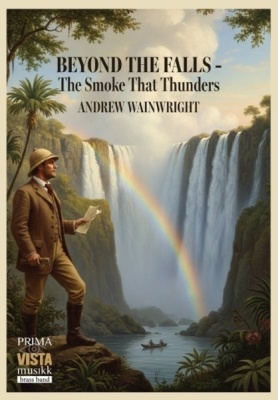
Beyond the Falls - The Smoke That Thunders (Brass Band - Score only)
David Livingstone was a renowned Scottish missionary and explorer whose legendary expeditions from 1841 until his death in 1873 took him deep into the interior of central and southern Africa. While his initial aim was to spread Christianity and commerce, his legacy became defined by his relentless spirit of discovery.This work captures the harrowing and ultimately triumphant journey that led to his discovery of Victoria Falls. Originally composed for the GUS Band's performance at the 2012 Brass in Concert Championships, the work was expanded in 2026 for the Black Dyke Band's recording, Gothique Fantasy - The Music of Andrew Wainwright.The music opens with an air of trepidation, reflecting the weight of the mission ahead. This tension soon gives way to a more optimistic section featuring the Scottish folk song A Man's a Man for a' That. Livingstone reportedly hummed this Rabbie Burns tune to bolster his spirits while travelling. The score then depicts the immense hardships of the expedition (letters F to L), illustrating skirmishes with suspicious local tribes, wild animal attacks, and bouts of African fever.Following these trials, a more reflective, emotive movement (Letters L to R) explores Livingstone's internal struggle and his doubts about continuing. This emotional core is built upon the hymn Lord, Send Me Anywhere, a melody composed by Livingstone himself. Emerging from this prayer with renewed purpose, the final section (Letter R to the end) follows his path along the Zambezi River. The music builds to a triumphant climax, capturing his elation at seeing the magnificent Victoria Falls - known locally as 'Mosi-oa-Tunya' (The Smoke that Thunders).Duration: 13.30
Estimated dispatch 7-14 working days
-
£21.95
Beyond the Falls - The Smoke That Thunders (Brass Band - Study Score)
David Livingstone was a renowned Scottish missionary and explorer whose legendary expeditions from 1841 until his death in 1873 took him deep into the interior of central and southern Africa. While his initial aim was to spread Christianity and commerce, his legacy became defined by his relentless spirit of discovery.This work captures the harrowing and ultimately triumphant journey that led to his discovery of Victoria Falls. Originally composed for the GUS Band's performance at the 2012 Brass in Concert Championships, the work was expanded in 2026 for the Black Dyke Band's recording, Gothique Fantasy - The Music of Andrew Wainwright.The music opens with an air of trepidation, reflecting the weight of the mission ahead. This tension soon gives way to a more optimistic section featuring the Scottish folk song A Man's a Man for a' That. Livingstone reportedly hummed this Rabbie Burns tune to bolster his spirits while travelling. The score then depicts the immense hardships of the expedition (letters F to L), illustrating skirmishes with suspicious local tribes, wild animal attacks, and bouts of African fever.Following these trials, a more reflective, emotive movement (Letters L to R) explores Livingstone's internal struggle and his doubts about continuing. This emotional core is built upon the hymn Lord, Send Me Anywhere, a melody composed by Livingstone himself. Emerging from this prayer with renewed purpose, the final section (Letter R to the end) follows his path along the Zambezi River. The music builds to a triumphant climax, capturing his elation at seeing the magnificent Victoria Falls - known locally as 'Mosi-oa-Tunya' (The Smoke that Thunders).Duration: 13.30
Estimated dispatch 7-14 working days