
Results
-
 £115.60
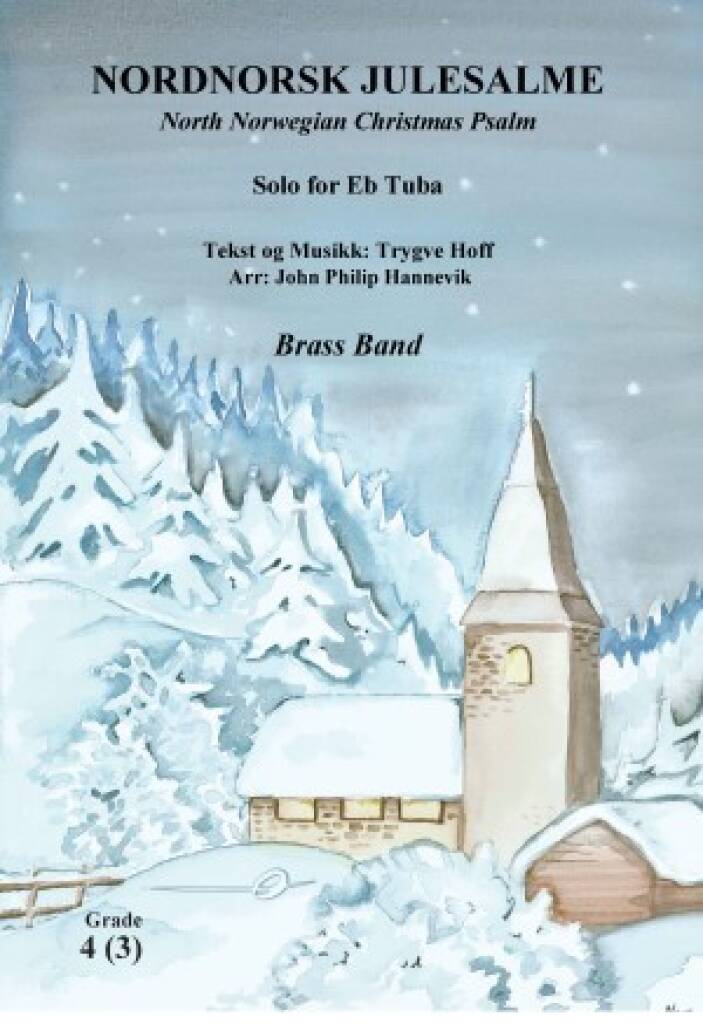
Nordnorsk julesalme - Trygve Hoff - John Philip Hannevik
The singer- songwriter Trygve Hoff (1938-1987) was born in the small village Rognan in the region Nordland in the north of Norway. Many of his lyrics point towards this part of the country, and he became an important figure for North-Norwegian culture.His North Norwegian Christmas Psalm has become one of the most loved and recorded newer Christmas songs in Norway. The lyrics definitely deals with about the folkish down-to-earth religion that this part of the country is known for.Offering the solo part to the tuba has it's challenges, but the instrumentation should make this a welcome and usable addition to the solo repertoire for that instrument.- John Philip Hannevik -
Estimated dispatch 5-14 working days
-
 £115.60
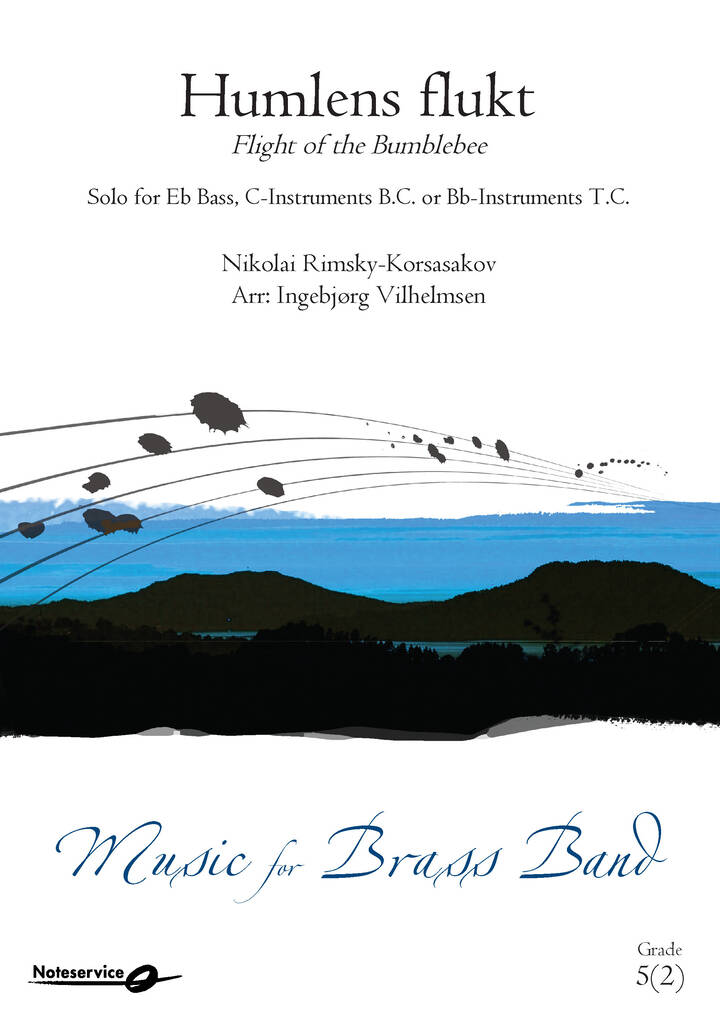
Humlens flukt - Nikolai Rimaky-Korsakov - Ingebjørg Vilhelmsen
This arrangement of Rimsky-Korsakov's famous piece "Flight of the Bumblebee" was originally written for tuba soloist (!) And concert band, commissioned by Lilleaker skoles musikkorps.The target group for this arrangement are bands who want to show off a virtuoso instrumental soloist, without having to spend a lot of time on the accompaniment parts. Unlike other arrangements of this piece, virtually all of the technical challenges lie in the soloist's part.
Estimated dispatch 5-14 working days
-
£91.40
Ticket To Ride - John Lennon - Bill Geldard
The Beatles' Ticket To Ride arranged for Brass Quintet by Alan Fernie.This piece is arranged for two Trumpets, Horn in Eb, Trombone & Tuba.
Estimated dispatch 5-14 working days
-
 £35.00
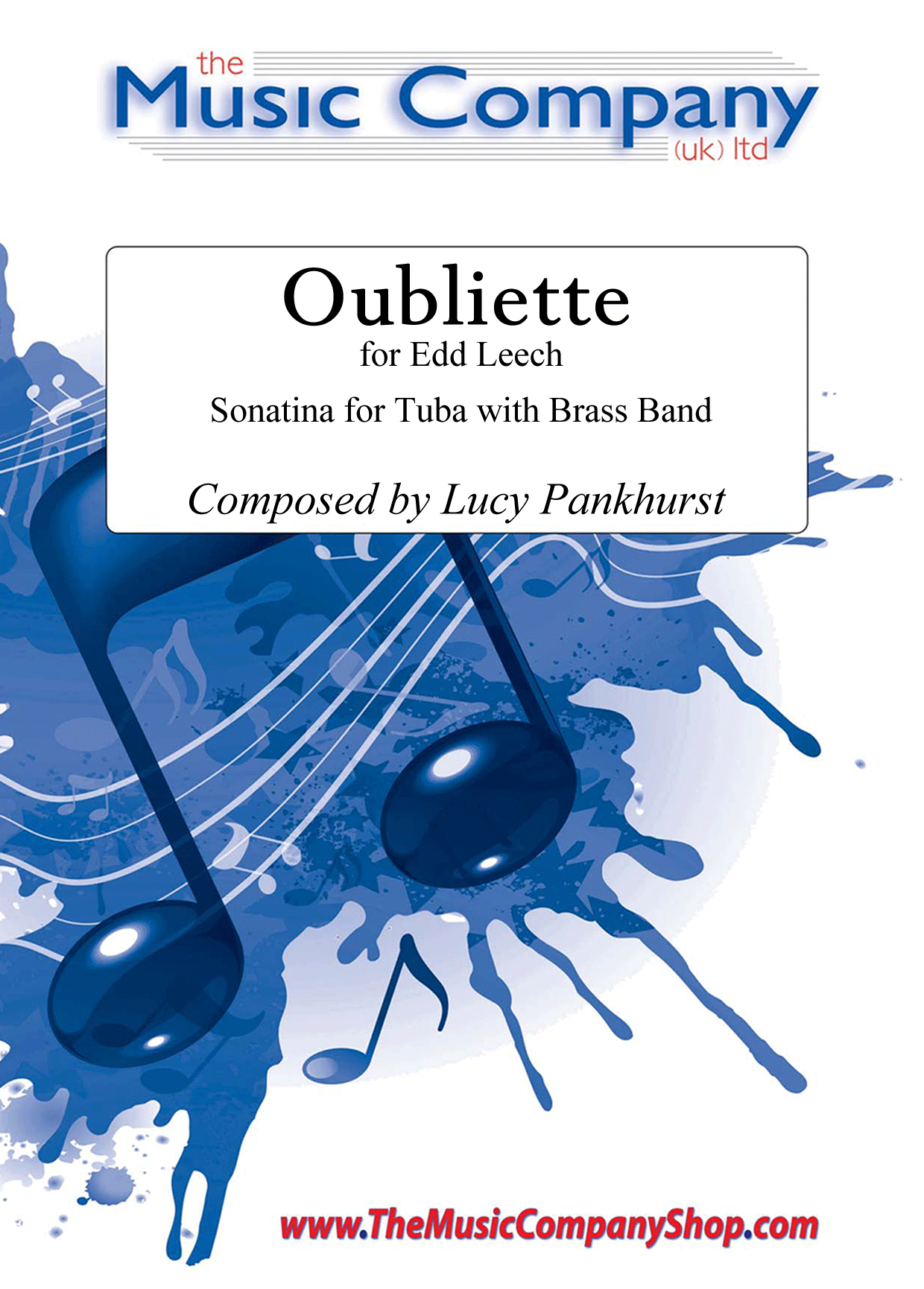
Oubliette - Lucy Pankhurst
Lucy Pankhurst has created a highly immersive solo for Tuba/Eb Bass with brass band accompaniment, aiming and succeeding in showing the lyrical and technical diversity of the tuba, demanding virtuoso brilliance and clarity in performance.Dedicated to tuba player Edd Leech, Oubliette raises the bar for tuba repertoire.Set includes score, brass band parts and solo parts for Eb Bass (TC) and Tuba (BC). Solo with piano accompaniment available separately.Programme notes from the composer, Lucy Pankhurst:From the French word oublier, meaning 'to forget', an oubliette was a form of dungeon used in the 14th century. A small, windowless room where someone is locked away to be forgotten and left to go mad.I initially chose this title for the piece as the Tuba is often forgotten as a solo instrument, when its versatility in performance should be celebrated. Oubliette showsThe work begins with desolate and sparse accompaniment with lamenting solo lines. The soloist has already been cast into the oubliette at this point and is beginning to wake from a somnolent state. Reality is blurred through the darkness of the chamber - the only entrance is a hatch in the ceiling, far out of reach.Memories are confused by countless hours of solitude - hallucinations and paranoia tainting reality. Gradually, the soloist remembers images from the past and gains confidence and strength. Long forgotten by the captors, or presumed dead in the chamber, the entrance hatch suddenly opens to allow another prisoner inside. The soloist seizes the opportunity for escape and a short battle ensues. Sword and fist fighting, perilous leaps over the entrances to more dungeons and fierce battle cries are futile, as the soloist suddenly realises they are alone in the oubliette once more and the skirmish was nothing but another dream.The piece concludes with unaccompanied soloist in the low register, sinking deeper into the shadows of the windowless prison; are they accepting their fate, or merely lying in wait for another chance of escape, if one will ever come . . .
In Stock: Estimated dispatch 3-5 working days
-
£40.00
Tubilation
A fantastic tuba feature with brass band backing. Driving semiquaver rhythms push this piece forwards whilst remaining away from the centre of attention which is undoubtedly the big old tuba! Full of semiquavers and scales rushing up to the top of the range of the instrument, there can be no doubt that the tuba is the star of the show. The solo part is carefully thought through with enough rests to make it approachable, while the syncopatino in the other parts give the music an energy that is maintained to the very final flourish, instigated by a demisemiquaver scale run on the tuba! Intermediate and above ensemble parts, but the solo tuba part needs a fairly skilled and confident player to get the most out of this piece.
-
£70.00
Episodes and Echoes - Peter Meechan
Episodes and Echoes is a concerto in three movements for tuba. The title of the work relates directly to the way the composer approached writing the piece.aAlthough the work is scored with piano and wind band accompaniments, Episodes and Echoes was originally written for tuba and brass band. I had several problems to overcome - the brass band contains 4 tubas, and 2 euphoniums, all of which could obscure the solo line, so I decided to write for the soloist in a manner that meant they were either playing alone, in episodes, or repeating/echoing phrases.aIn addition to this, the composer combined the characteristics of the tuba with other instruments: in the second movement the tuba is similar to a singer performing an aria and a recitative, and third movement a bass guitar.Episodes and Echoes was commissioned by, and dedicated to, Les Neish who premiered the work in 2005, accompanied by the Beaumaris Brass Band, conducted by Gwyn Evans.
Estimated dispatch 12-14 working days
-
 £34.95
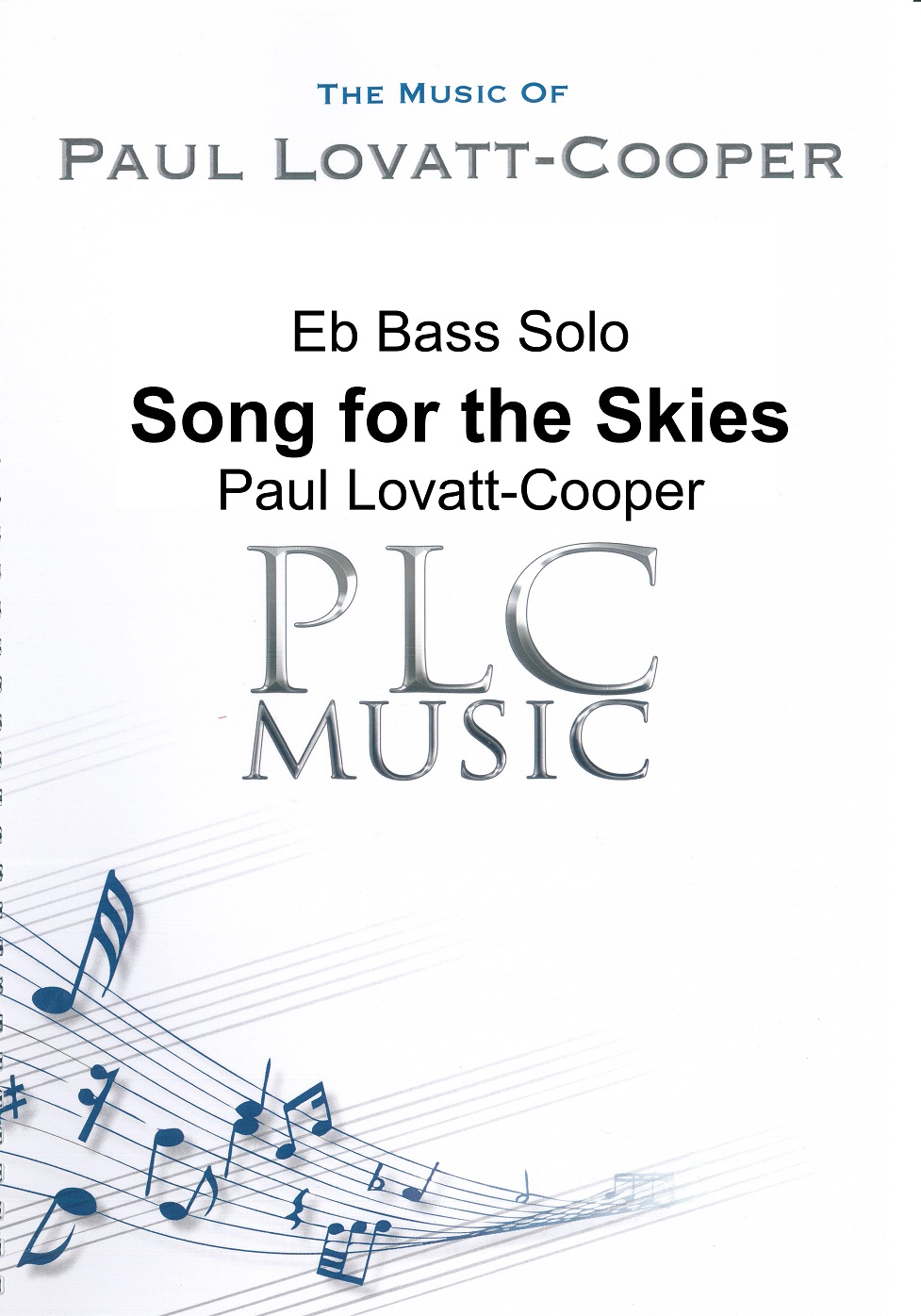
Song for the Skies (Eb Bass Solo with Brass Band - Score and Parts)
Song for the Skies was commissioned by Tuba virtuoso Les Neish and was given its world premier on the December 9th 2010 with the James Madison University Brass Band in Harrisonburg, Virginia, USA.Les asked me to compose a slow melody that highlights the wonderful sonorous sound of the Tuba. I am a big fan of Les and of the instrument and knowing the capabilities of Les as a soloist I wanted to experiment with the range and colour of the instrument in this solo.After a warm introduction from the ensemble the soloist enters almost timeless over the muted cornets. The melody when it is first heard has a somewhat haunting Celtic feel to it. It is intentionally marked as con rubato so that the soloist can really put their own musical stamp on the music. As the haunting melody repeats again this time in a change of key the accompaniment takes more of a role within the piece of music performing counter melodies within this second section.The middle of the piece introduces a new secondary melodic device that serves as an introduction to the original melody played in all its glory by the ensemble. This dies away to leave the second half of the melody in the euphoniums and baritones as the soloist plays a soaring counter melody in the highest register of the instrument.The piece starts to return home with a recapitulation of the introduction followed by the second part of the original melody by the soloist. After a momentary reflective solo from the soloist the introduction is used for a final time before the tuba guides us home to conclude.For the soloist, there are a number of occasions where the opportunity to play in the upper register of the instrument arises. However, I have also given the opportunity for the soloist to play various passages down the octave so it suits the performers playing style and range.Song for the Skies is very simple yet beautiful and I feel it suits the playing of the Eb Tuba perfectly. I hope you enjoy performing it.Paul Lovatt-Cooper
Estimated dispatch 7-14 working days
-
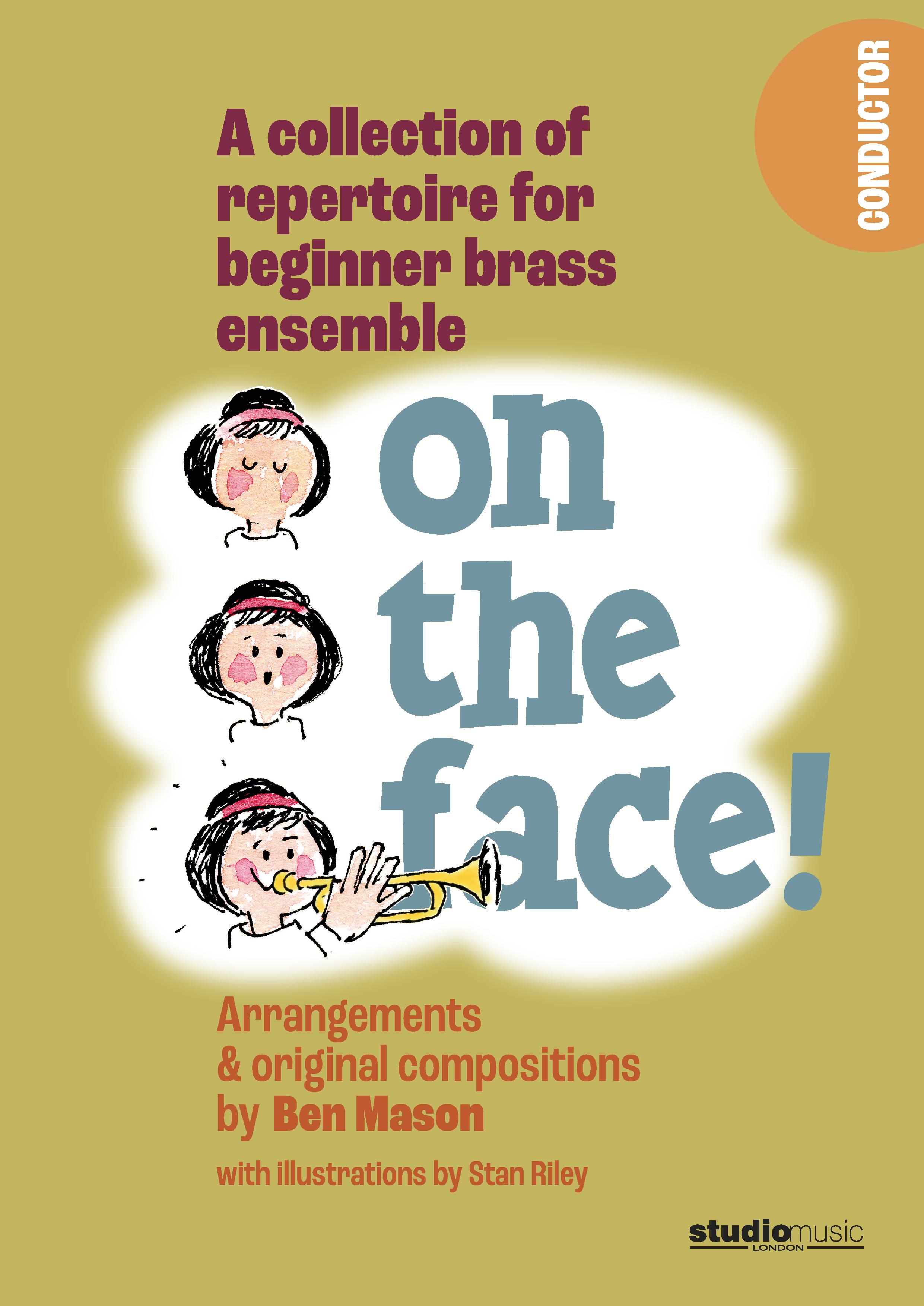 £39.95
On the Face! (Value Set)
The Value Set contains the score and one of each part:1st B flat Trumpet/Cornet2nd B flat Trumpet/CornetTrombone/Euphonium/Baritone BCTrombone/Euphonium/Baritone TCHorn in E flatHorn in FHigh Trombone/Euphonium/Baritone TC*High Trombone/Euphonium/Baritone BC*E flat Bass/Tuba TCE flat Bass/Tuba TCPercussion and occasional Aux. Percussion(* for use only when there is a Tuba in the ensemble)Additional scores and parts are available individually.On the Face is a complete repertoire (warm-ups and 23 pieces) for beginner brass ensemble. Perfect material for school assemblies and music centres, it includes folk songs, famous classical themes, and exciting new jazz and pop numbers. Each piece is score for a basic trio of two trumpets/cornets and one trombone/euphonium (TC or BC). However, optional independent parts can also be added for horn in E flat or F; high trombone or euphonium (tenor part); tuba; and drum kit. The pieces work equally well either with one player to a part, or in larger group settings. With its appealing variety of musical styles and textures, On the Face is sure to make the young brass player's first experience of group playing both rewarding and fun.
Estimated dispatch 7-14 working days
-
 £67.24
Pyrenean Carol Suite (Brass Band) David Taylor
This attractive suite for brass band by David Taylor features five traditional carols from the Pyrenees region of Spain, as follows: i. Nadal Tindaire (Jingling Christmas) - Occitan traditional This Occitan Christmas song tells of musical instruments used to celebrate the Nativity - 'fifes and trumpets, timpani and pipes, or you, clear little bells, along with the angels' choir.' ii. Gabriel's Message (Birjina Gaztetto Bat Zegoen) - Basque traditional The most widely-known of the chosen carols, honouring Jesus's mother Mary, this is often sung in its English version, but the melody came from the Basque country. The Basque words were adapted from the Mediaeval song Angelus ad Virginem. Here, we feature the flugel horn. This movement was originally written on its own, with organ accompaniment, for the composer's wife, Diane Scott. iii. El Noi de la Mare (The Child of the Mother) - Catalan traditional A beautiful Catalan carol celebrating the birth of Jesus, telling of the tasty gifts that the singer would bring - 'Raisins and figs and nuts and olives; Raisins and figs and honey and mato [a Catalan dessert cheese traditionally served with honey.]' Here we feature the euphonium. The tune was made famous by guitarist Andres Segovia, who used it as a favourite encore, and by John Rutter, who made a widely-used setting for choir. iv. Paure Satan (Poor Satan) - Occitan traditional This rather unusual carol tells of the pain that Satan is put to by the arrival of the infant Jesus. Its mocking and sarcastic tone is reflected here, where the tuba soloist (as Satan) is given musical trouble throughout by the other parts. At first they conflict with the soloist, then the soloist makes overtures of friendship, which are treated with suspicion followed by contempt. The soloist finally gives in to their accompaniment (or do they?). There are plenty of opportunities for little theatrical touches here, if the tuba player is so inclined! The tuba part in this movement is notably more difficult than the rest of the music, and a number of optional changes have been marked to make the part easier to play, if so desired. The player is also welcome to add suitable extra embellishments to taste if they wish, within the character of the music. v. Fum, Fum, Fum! - Catalan traditional A favourite Catalan Christmas song for centuries, this rousing melody provides a fitting way to round off the suite, with its repeated rhythmic refrain of the nonsense title phrase. It tells of the Nativity, and then it tells of the celebratory feasting and good times that the singers look forward to to honour it. Although the suite is intended to be performed whole, it is also intended for usage with a selection of movements on occasions where a shorter piece is wanted. Suggested formats include a single movement alone (2, 3, and 5 are likely most appropriate), a pair of movements (any of the first four, plus 5), and a suite of three or four movements (1 and 5, plus one or two of 2, 3, or 4 in the middle). It is suggested that a good way to design a 'pick-your-own-suite' from the movements is to think of the earlier movements as introductory to the final movement. To view a rolling score video featuring Kidlington Concert Brass please visit www.youtube.com/watch?v=QIGdul-yxxg PDF download includes score and parts. Sheet music available from: UK - www.brassband.co.uk USA - https://satradecentral.org Difficulty Level: 3rd Section + Length: 9.45 minutes Instrumentation: Soprano Cornet Eb Solo Cornet Bb Repiano Cornet Bb 2nd Cornet Bb 3rd Cornet Bb Flugel Horn Bb Solo Horn Eb 1st Horn Eb 2nd Horn Eb 1st Baritone Bb 2nd Baritone Bb 1st Trombone Bb 2nd Trombone Bb Bass Trombone Euphonium Bb Bass Eb Bass Bb Timpani Percussion 1-2
In Stock: Estimated dispatch 1-3 working days
-
 £25.00
Ring'd with the Azure World
DescriptionRing'd with the Azure World was commissioned by the Harmonia Brass quintet for their final recital at the University of Huddersfield in 2016.He clasps the crag with crooked hands; Close to the sun in lonely lands, Ring'd with the azure world, he stands.The wrinkled sea beneath him crawls; He watches from his mountain walls, And like a thunderbolt he falls.- The Eagle by Alfred, Lord TennysonThe music was inspired by Tennyson's poem reproduced above; it seeks simply to reflect the spirit of the poem. It opens in sparse, lonely mood as the eagle surveys the world beneath. The work quickens in three bursts using metrical modulation to disguise the actual moment of acceleration, reflecting the lazy energy stored in the circling raptor before concluding dramatically in a fall 'like a thunderbolt'. Tennyson's poem, although brief, has inspired much analysis and writing, and is notable for being written in the (then somewhat unfashionable) iambic tetrameter, indicating a foursquare emphasis reflected in the main theme of the music. This is heard first in an octatonic version and later in a purely tonal (if somewhat modal) version. The instrumentation reflects that of Harmonia Brass, a quintet composed of brass band instruments (two B flat cornets, an E flat tenor horn, tenor trombone and E flat tuba). However the music is also available for the more conventional brass quintet of two trumpets, french horn, trombone and tuba.To listen to an audio export preview and follow the music, click play on the video below!Performance Notes1st cornet/trumpet requires a cup mute, ideally with an adjustable cup (the marking "tight" denotes that the cup should be adjusted closer to the bell), and a harmon mute with the tube removed (denoted by "TR" in the score). 2nd cornet/trumpet requires a fibre straight mute and a harmon mute with the tube removed. Tenor horn require a fibre straight mute and a practice mute (any sort) - in the orchestral brass version the french horn requires a stop mute. Trombone requires a cup mute (only). Tuba requires a fibre straight mute and a practice mute (of any sort).Metronome marks should be closely observed - starting either too fast or too slow will have a disproportionate effect on the tempi later in the piece due to the metrically controlled tempo changes.
Estimated dispatch 7-14 working days
 View Music