
Results
-
£84.99
Creamy and Crispy - Marc Cunningham
This composition of Marc Cunningham has four parts, and takes place on a sunny day in a picturesque town. 1. Promenade Many people walk through the city. The band passes through the streets. People are strolling along the avenues and amorous couples are sitting on a park bench. 2. Lovey Dovey One of these couples is knee-deep in love. 3. Crispy and Creamy Here the contrasts between a crisp staccato section in two-four time signature and a smooth legato section in three-four time signature are depicted. Is Crispy the boy and Creamy the girl? 4. Farewell In the last particle the couple says goodbye. We still think back tothe walk through the city. It sounds a little less happy now. Not everyone is good at saying goodbye, sometimes a tear flows.
Estimated dispatch 5-14 working days
-
 £183.20
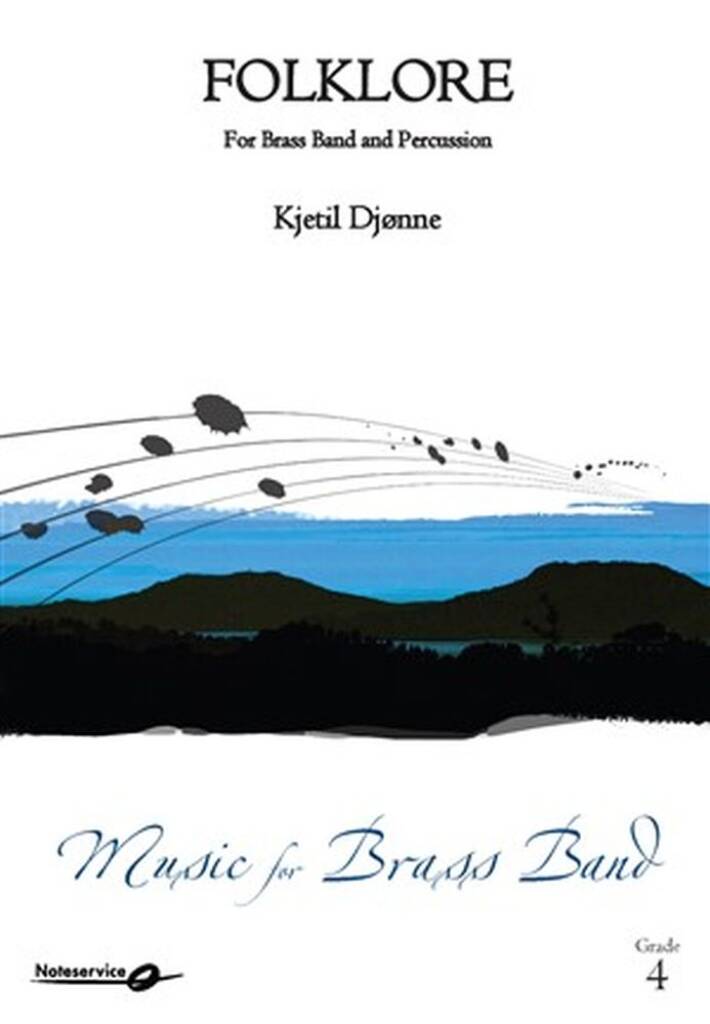
Folklore - Kjetil Djønne
"Folklore" is a work for brass band and percussion loosely based on the story of the Norwegian woman accused of witchcraft, Anne Pedersdotter. She was sentenced to be burned at the stake in Bergen in the spring of 1590 and has since been frequently highlighted as Norway's most famous and talked-about witch.The work begins with the movement "Lyderhorn," depicting the mountain outside Bergen where witches gathered to plan magical actions against the city. Here, we hear the quietness of nature and the wind blowing through the trees before a new theme appears, which will come to life in the next movement. In the distance, the witches have started their ceremony.In the next movement, "Walpurgis Night," the witches perform their rituals to afflict the city with fire, disease, and natural disasters. The ceremony becomes more and more chaotic, violent, and compelling until the darkness of the night envelops us, concluding the section.The third movement describes the women's inner struggle against the harassment they faced when the people of Bergen suspected them of being witches. Rumors often turned into formal accusations from the legal system, and many were sentenced to death after undergoing trial. "From life to death through the fire."The fourth and final movement, "The Pyre," depicts the actual death sentence. You can hear the pyre being ignited and the flames growing and intensifying. It all culminates in a chorale as a memorial to the lives that were taken.
Estimated dispatch 5-14 working days
-
 £115.60
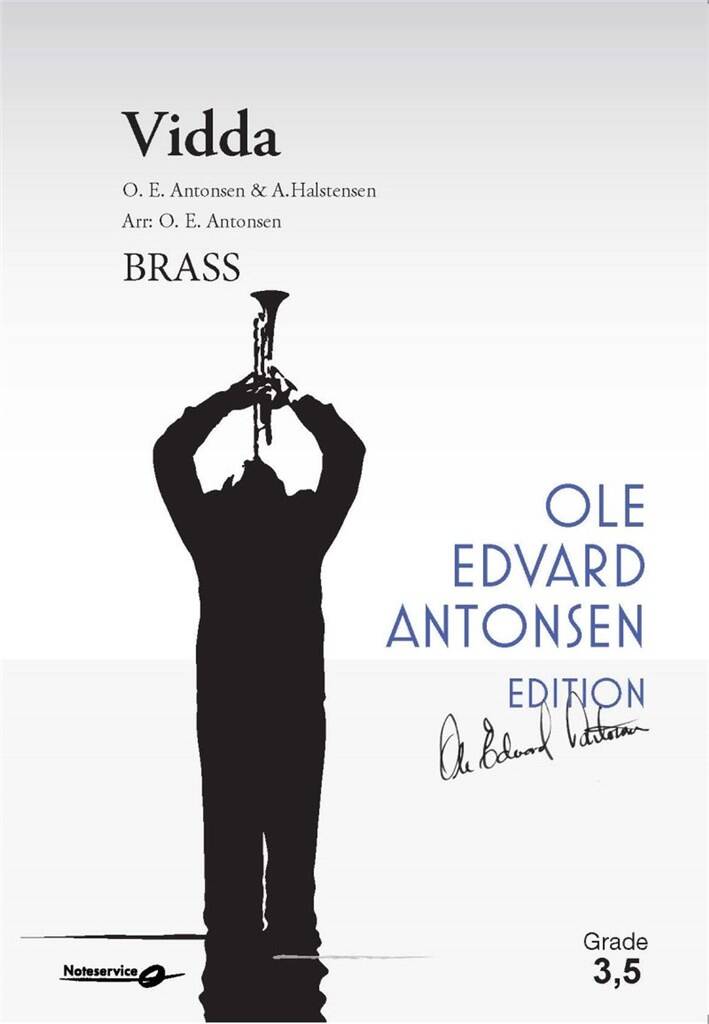
Vidda - Ole Edvard Antonsen - Ole Edvard Antonsen
I composed the song "Vidda" after I got my ultimate boy's dream fulfilled; To fly one of the Air Force's F-16 fighter jets! We flew out from Norwegian city Bodo on to the Finnmark plateau, where we flew so-called "low level" (at low altitude). It was such a great experience for me that I immediately wrote the song "Vidda" based on my experience of the trip. Here, I try to describe the meeting between the technical perfection of a machine that surpasses most of the various forces in it's escape through the magnificent scenery passing at great speed, and the pilot who is alone with both the adventure and responsibility. The drums which start the song is meant to describes theenergy in the power of the plane, while the lonely and kind of melancholy melody from the trumpet in the beginning describes the feelings of the pilot. As the song develop, we pass both the mountains and big beautiful plateaus with g-forces quivering body. Hopefully you will share some of my experiences through this song. Have a nice flight! Ole Edvard Antonsen
Estimated dispatch 5-14 working days
-
 £94.95
Of Men and Mountains - Edward Gregson
Of Men and Mountains was commissioned by the Netherlands Brass Band Championships for their tenth anniversary contest in Drachten in December 1990. In July the previous year, Edward Gregson and his wife took the Trans Canadian Railway from Toronto to Vancouver. The journey through the Rocky Mountains was the starting point for Of Men and Mountains. Gregson writes that: 'its high peaks and shafts of sunlight breaking through the clouds, its canyons and ferocious rapids made me understand a little more about the majesty of nature and the fragility of humanity. The eternal struggle between man and nature was personified in the building of this incredible railway... hence my title (after Blake).' The work is dedicated to the memory of Eric Ball, who died shortly before the writing of the work was commenced. Of Men and Mountains is in one continuous movement with a duration of approximately 17 minutes. Its form is difficult to describe because of its motivic and accumulative nature, but it is essentially a symphonic tone poem in search of a theme, which eventually comes in its final and complete state in the majestic ending after an ever-increasing paced scherzo. Of Men and Mountains has been selected as the test pieces for the 2023 National Brass Championships of Great Britain at the Albert Hall.
Estimated dispatch 5-14 working days
-
 £119.99
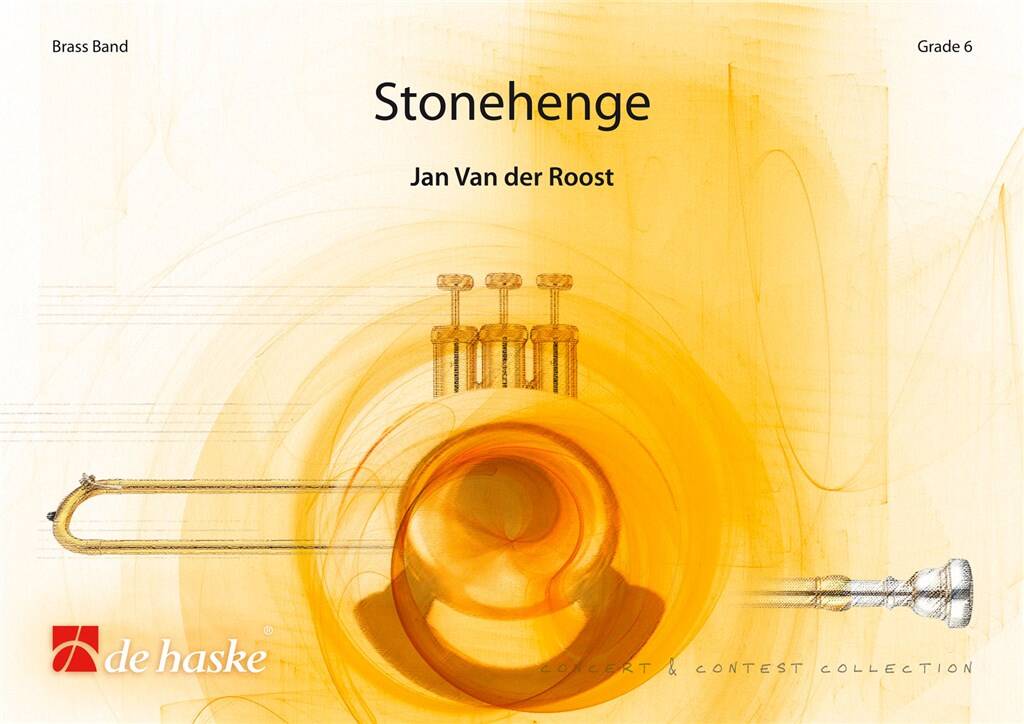
Stonehenge - Jan Van der Roost
This piece attempts to portray atmospheric pictures through music. The opening section evokes the somewhat misty and hazy early morning atmosphere surrounding the ancient monument. When the band reaches its first dynamic climax it is as if the massive boulders are audible, even touchable through the use of minor 3rd chords. The main theme - constructed on the notes CAFBG symbolises the arrangement of the central boulders in the shape of a horseshoe, which forms the focal point of this huge collection of stones. Towards the end of the work you will experience a fantastic effect when five soloists play a five part hymn whilst other members of the band create a specialatmosphere by imitating a choir of monks and druids. A fantastic major new concert work for advanced bands.
Estimated dispatch 5-14 working days
-
 £154.99
Tracing Time - Oliver Waespi
Tracing Time was commissioned by the WMC Kerkrade Foundation in cooperation with the Foundation of Friends of WMC for the 2017 World Championships in Kerkrade, the Netherlands. The musical material of this piece takes the form of a timeline on an imaginary mental map. This unbroken thread runs through the entire work, continually transformed through numerous sound colours and rhythms. At the same time, the piece takes the shape of a symphonic structure, based on three uninterrupted, linked movements. This work meets all standards of a high quality contest or concert work. It is challenging, spectacular, innovative and overwhelming.
Estimated dispatch 5-14 working days
-
 £127.30
Var sang - Svein H. Giske
Our song was commissioned by Knarvik Skolekorps for their junior band in 2020. They wanted an original piece that could challenge their young players.This became a suite in three movements with themes that run through the whole piece.In the 2. movement there is a possibility for the band to sing in Song of friendship.. Young people finding friendship through music, as I myself have done, is one of the nicest things one can experience, in my opinion.Should you choose not to sing, you can just play the notes as printed.Svein H. Giske-September 2022-
Estimated dispatch 5-14 working days
-
 £60.99
Cityscape - Jan Hadermann
Cityscape was commissioned for the 't Stad Geblazen event, which took place during the weekend of European Heritage Days in 2024.This short concert piece describes the impressions given when approaching and visiting the beautiful Belgian city of Antwerp from the north across the river Scheldt. We first pass the busy bustle of the harbour, home to the impressive Port House. Then the old city comes into view: the graceful cathedral tower, surrounded by smaller church spires and modern buildings, dominates the distinctive skyline. After setting foot ashore, we are struck by the beautiful way the medieval buildings here blend harmoniously with modern architecture. Our walk through the city continues: we visit the serene cathedral and are impressed by the picturesque facades of and around the city hall, as well as the Brabo Fountain on the Grote Markt (Large Market Square). Finally, it is time to enjoy the merriment taking place on the many squares of the lively city centre.
Estimated dispatch 5-14 working days
-
 £54.99
Circus Delight - Dagmar Kildevann
'Circus Delight' is a five-part suite which is set, how could it be otherwise, in a big circus tent. The suite starts with a part called 'Entrance'. The orchestra, positioned above the entrance of the ring asks for the attention of the audience and then the ring announcer enters. The show can begin! The elephants play a central role in the first act. These colossal grey animals are rather slow and perform their tricks in a moderate tempo. ('Elephant Blues') How different are 'The Acrobats'. At high speed they run, jump and fly through the ring, until ....... It gets very exciting. Fortunately, all's well that ends well and they take their leave of the audienceat a trot. Everyone knows, and yet it is mostly not spoken about, that when a clown has taken off his red nose and rubbed off his make-up, his face off-stage is not always a happy one. ('Tears of the Clown') The piece ends on a cheerful note with 'The Parade', in which all the artists make their entrance in the ring once again to gratefully acknowledge the audience's overwhelming applause.
Estimated dispatch 5-14 working days
-
 £119.99
Trimbeka - Carl Wittrock
Trimbeka is a composition which owes its existence to the anniversary of music society "de Vlecke" in Gorredijk. The name Gorredijk originates from "goor" or "gor", which means : bog. Along the marshy peat ran a "dijk" (the Dutch word for dike), called the Gordijk. The name of the village resembles that of the home town of the composer himself, who comes from a town in Twente called Goor. Three streams used to run through the area around Gorredijk. the historical name Trimbeets (Trimbeka), meaning three brooks, recalls this to mind. Gorredijk was a flourishing "Vlecke", i.e. large village, which was situated on an intersection of important connecting roads.The liveliness which this entailed is one of the distinctive elements in Trimbeka. Furthermore, ominous sounds possibly refer to the dangers of the bog, while the resonance of the merriment during the annual fair can also be heard. The slow middle movement is an ode to the beautiful landscape surrounding the village.
Estimated dispatch 5-14 working days
 View Music