
Results
-
 £29.95
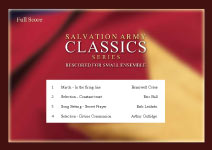
Salvation Army Classics 1-4 for Small Ensemble
Salvation Army Classics arranged for Smaller Ensembles Series 1 - 4March - In the Firing LineSelection - Constant TrustSong Setting - Secret PrayerSelection - Divine Communion This series features pieces that have been rescored for Unity Series (five-part) scoring.PART I 1st Cornet BbPART II 2nd Cornet Bb and 1st Horn EbPART III 2nd Horn Eb and Baritone or Trombone BbPART IV Euphonium BbPART V Bass Eb and Bass BbThese transcriptions have been carried out in such a way to facilitate the addition of any original parts that may be available.Where relevant, suggestions are made for a variation in tone colour (i.e. 2nd Cornet, Flugel, Baritone, Trombone) as well asthe occasional opportunity for rest.
Estimated dispatch 7-14 working days
-
 £55.00
Triumph Series Brass Band Journal, March 2022, Numbers 1335 - 1338
Includes:1335: March - Heavenly Joy by Norgan Juel Stavik1336: Joy! by Kenneth Downie1337: Whisper a Prayer in the Morning by Andrew Blyth1338: March - Crowning Glory by Noel Jones
Estimated dispatch 7-14 working days
-
 £29.95
Judd: In Quiet Pastures
All three songs contained in this selection are sprung from the ideas contained in Psalm 23. 'Trust in God', 'Shepherd, hear my prayer' and 'At peace with God' are cleverly linked into one seamless texture.
Estimated dispatch 7-14 working days
-
 £54.99
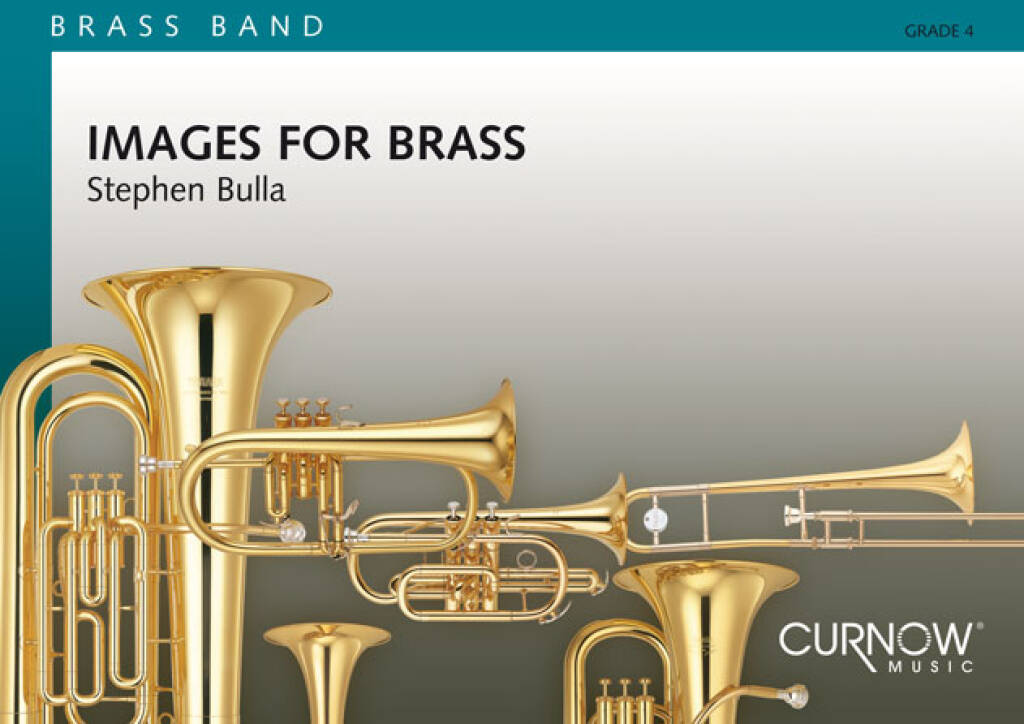
Images for Brass - Stephen Bulla
Stephen Bullas highly descriptive work was written to commemorate the 50th anniversary of the Battle of Iwo Jima, which took place between the 19th February and 26th March 1945.Casualties on both the American and Japanese sides were horrendously high before the famous image of the raising of the flag on top of Mount Suribachi signalled the end of one of the most significant and terrifying Pacific conflicts of the SecondWorld War.The work received its first performance by the brass choir of the U.S. Marine Band at the National Cathedral in Washington D.C. and is divided into four programmatic sections.The first portrays the sense of anticipation before conflict (Prologue), before the arduous journey to the scene of the battle (Approach by Sea) is followed by introspection and prayer featuring the hymn tune Melita (Chorale Prayer), andfinally, the hostile confrontation itself (Engagement).There are frequent references to the Marines Hymn and the US National Anthem, particularly in the closing bars, depicting the ultimate raising of the American flag.
Estimated dispatch 5-14 working days
-
 £65.00
Four Sketches - Simon Dobson
Simon Dobson wrote his 'Four Sketches' at the request of Peter Bossano, Head of Brass at the Royal College of Music, in recognition of the 25th anniversary of Benjamin Britten's death. The first movement, 'Fanfare',quotes directly from the opening violin melody from Britten's song cycle Les Illuminations. This melodic line is superimposed upon sonorous Lydian mode chords to project a majestic sound. The second movement, 'Prayer', is adefinite contrast, being and much more reflective and pensive in it's mood, and featuring a dream like euphonium cadenza. The third movement, 'Funeral March', builds from a soft chordal opening to a chaotic andconfusedfortississimo climax with flourishes in the cornets and pounding tri-tones across the basses, before plunging into silence for a flugel cadenza to finish. The final Finale movement is much more positive from the off, withits jaunty melodies over a Brittenesque ostinato. The block chordal passages offer a crashing climax, making for an exciting conclusion to an excellent new work for the medium. Simon Dobson's 'Four Sketches' was the winningentry in the European Brass Band Composer Competition held in Brussels in March 2002.
Estimated dispatch 5-14 working days
-
 £52.70
Casta Diva - Vincenzo Bellini - Willy Hautvast
Casta Diva is possibly the most famous aria by Bellini. This is Norma's prayer to the moon goddess, and shows Bellini's high craftsmanship with melodies. The most famous version of this aria, was sung by Maria Callas in the 1950's, and a recording of this is still available. This is possibly the first arrangement of this tune for wind band, and will no doubt make a good impression.
Estimated dispatch 5-14 working days
-
 £74.99
Bon Jovi - Rock Mix - Jon Bon Jovi - Wolfgang Wössner
Wolfgang Wssner has created yet another energetic and exciting medley for concert band, following in the footsteps of his previous successful medley, Bryan Adams - The Best of Me.This time Wssner has moulded four hits by the American rock band Bon Jovi into one sensational work. Combining Runaway, It's My Life, Livin' On a Prayer and You Give Love a Bad Name, creates an incredibly fun medley that will rock your next concert!
Estimated dispatch 5-14 working days
-
 £37.04
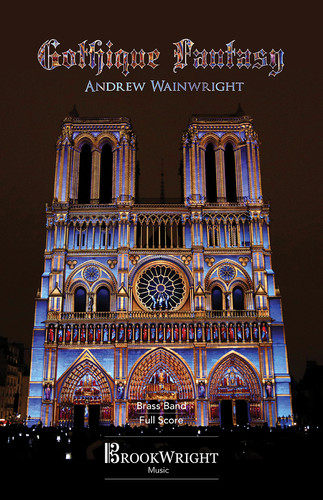
Gothique Fantasy - On a theme by Boellmann (Brass Band Score) Andrew Wainwright
This magnificent work was commissioned by The Illinois Brass Band for the 2024 North American Brass Band Championships. It is also the title track of the 2026 CD by Black Dyke Band, featuring the music of Andrew Wainwright. Please note this PDF download is for the full score. The full set can be purchased here. Based on Leon Boellmann's epic organ work Suite Gothique, the 3rd movement of which is entitled Priere a Notre-Dame (A Prayer for Notre Dame), it pays tribute to the nearly 700-year-old Notre-Dame de Paris after the fire which did so much damage to this iconic building. Notre-Dame stands out for its three pipe organs (one historic) and its immense church bells, which are referenced at various times in Gothique Fantasy. Two of the other movements from Boellmann's work also provide inspiration for the piece, firstly the Introduction - Choral, and the famous Toccata, snippets of which appear at various times in the piece. Gothique Fantasy opens with the Choral, a solo offstage cornet sounding the opening statement. A quintet, stood to the side of the stage, takes up the Choral, while the rest of the band enters on held muted notes, creating a sustained effect evoking the harmonies spreading across the vast cathedral. Colossal organ-like sounds announce themselves as the full band takes on the theme. A lively Animato follows. Here there are continued references to the Choral, while the famous Toccata motif starts to appear. A Misterioso section ensues, which leads into a poignant Prayer for Notre Dame featuring a euphonium duet, where the music reflects upon the devasting fire and centuries of history and artefacts that were lost. A lone euphonium the sounds, representing the remaining remnants of the cathedral. A chaotic and rhythmic Presto, based on the Toccata, then follows and tests the technique of the band from top to bottom, whilst moving through various time signatures, the pulse lacking any sense of stability. A return to the Choral theme leads into a further reflective section, this time featuring the secondary theme from the Toccata with a flugel and solo horn duet. Next the music arrives at an aleatory section (Senza Misura), which depicts the remnants of the fire, followed by the grand cathedral emerging out of the ashes. Various motifs from earlier in the piece are heard across the band. At this point, various parts enter at different times on the conductor's signal, before building towards a 6/8 Presto. Here the music gathers momentum as it leads to a Grandioso finale featuring the Choral in all its glory. However, to conclude the work, the final strains of the Toccata sound, bringing the work to a glorious conclusion as Notre-Dame rises again! To view a video of The Illinois Brass Band performing the work please visit www.youtube.com/watch?v=xG3JB6Ye5aU Duration: 15.00 minutes approx. Difficulty Level: Championship Section Sheet music available from www.brassband.co.uk Instrumentation: Soprano Cornet Eb Solo Cornet Bb Repiano Cornet Bb 2nd Cornet Bb 3rd Cornet Bb Flugel Horn Bb Solo Horn Eb 1st Horn Eb 2nd Horn Eb 1st Baritone Bb 2nd Baritone Bb 1st Trombone Bb 2nd Trombone Bb Bass Trombone Euphonium Bb Bass Eb Bass Bb Percussion 1-4
In Stock: Estimated dispatch 1-3 working days
-
 £74.12
Gothique Fantasy - On a theme by Boellmann (Brass Band) Andrew Wainwright
This magnificent work was commissioned by The Illinois Brass Band for the 2024 North American Brass Band Championships. It is also the title track of the 2026 CD by Black Dyke Band, featuring the music of Andrew Wainwright. Based on Leon Boellmann's epic organ work Suite Gothique, the 3rd movement of which is entitled Priere a Notre-Dame (A Prayer for Notre Dame), it pays tribute to the nearly 700-year-old Notre-Dame de Paris after the fire which did so much damage to this iconic building. Notre-Dame stands out for its three pipe organs (one historic) and its immense church bells, which are referenced at various times in Gothique Fantasy. Two of the other movements from Boellmann's work also provide inspiration for the piece, firstly the Introduction - Choral, and the famous Toccata, snippets of which appear at various times in the piece. Gothique Fantasy opens with the Choral, a solo offstage cornet sounding the opening statement. A quintet, stood to the side of the stage, takes up the Choral, while the rest of the band enters on held muted notes, creating a sustained effect evoking the harmonies spreading across the vast cathedral. Colossal organ-like sounds announce themselves as the full band takes on the theme. A lively Animato follows. Here there are continued references to the Choral, while the famous Toccata motif starts to appear. A Misterioso section ensues, which leads into a poignant Prayer for Notre Dame featuring a euphonium duet, where the music reflects upon the devasting fire and centuries of history and artefacts that were lost. A lone euphonium the sounds, representing the remaining remnants of the cathedral. A chaotic and rhythmic Presto, based on the Toccata, then follows and tests the technique of the band from top to bottom, whilst moving through various time signatures, the pulse lacking any sense of stability. A return to the Choral theme leads into a further reflective section, this time featuring the secondary theme from the Toccata with a flugel and solo horn duet. Next the music arrives at an aleatory section (Senza Misura), which depicts the remnants of the fire, followed by the grand cathedral emerging out of the ashes. Various motifs from earlier in the piece are heard across the band. At this point, various parts enter at different times on the conductor's signal, before building towards a 6/8 Presto. Here the music gathers momentum as it leads to a Grandioso finale featuring the Choral in all its glory. However, to conclude the work, the final strains of the Toccata sound, bringing the work to a glorious conclusion as Notre-Dame rises again! To view a video of The Illinois Brass Band performing the work please visit www.youtube.com/watch?v=xG3JB6Ye5aU Duration: 15.00 minutes approx. Difficulty Level: Championship Section This PDF download includes parts and score. Sheet music available from www.brassband.co.uk Instrumentation: Soprano Cornet Eb Solo Cornet Bb Repiano Cornet Bb 2nd Cornet Bb 3rd Cornet Bb Flugel Horn Bb Solo Horn Eb 1st Horn Eb 2nd Horn Eb 1st Baritone Bb 2nd Baritone Bb 1st Trombone Bb 2nd Trombone Bb Bass Trombone Euphonium Bb Bass Eb Bass Bb Percussion 1-4
In Stock: Estimated dispatch 1-3 working days
-
 £22.93
BBA March - Roy Newsome
This is a concert march with a difference!The whole of the first section is in minor mode - unusual and intended to depict the trials and tribulations which inspired the original (and now successfully completed) Africa-based projects of Brass Band Aid. The Trio then goes into the major and begins with a Prayer motif that starts with the notes B-B-A. Following a rather turbulent episode (a reminder that there is still much to do), the Prayer theme returns triumphantly, reflecting optimism for the future.Roy Newsome composed this work in support of a charitable project, known in 2005 as Brass Band Aid. The organisation called for original compositions to be included in a follow-up CD release - Into Africato help raise funds for projects in Adet, Africa, and to build awareness of theMake Poverty History campaign. African Adventure was featured on the CD with a recording by the Wingates Band.Now that the original BBA projects are complete, funds raised by the titles we publish from theBrass Band Aidseries continue to support other music-related projects on a regular basis.
In Stock: Estimated dispatch 3-5 working days
 View Music