
Results
-
 £106.99
Evolution - Philip Sparke
Evolution was commissioned by Kunstfactor for the 4th section of the Dutch National Brass Band Championships (NBK) 2011. It is dedicated to Jappie Dijkstra and the Music Information Centre (MUI), Arnhem, Holland, in acknowledgement of their outstanding work in developing brass band repertoire. The composer writes:-The idea for the piece came when I was reading an article about a branch of Chinese philosophy which is abbreviated as Wu Xing, which has no exact translation but can mean, for example, five elements, five phases or five states of change. It is central to all elements of Chinese thought, including science, philosophy, medicine and astrology, and in simpleterms tries to create various cyclic relationships between five elements in all walks of life. An example is: Earth - Metal - Water - Wood - Fire - (Earth) etc. where (in one cycle) earth bears metal, metal changes to liquid (water) when heated, water helps trees grow, wood burns to create fire, fire produces ash (earth) and the cycle continues.I was particularly interested in the cycle of emotions: Meditation - Sorrow - Fear - Anger - Joy - (Meditation) etc. and thought this cyclic principle would provide an effective emotional journey for a piece of music. So Evolution has five equal sections which loosely characterise this emotional cycle. I have tried to make the music grow organically, with minimal repetition, and each movement evolves from the musical elements at the end of the previous one, with the opening material appearing, transformed, at the end of the piece to complete the cycle.
Estimated dispatch 5-14 working days
-
 £59.99
Hava Nagila - Philip Sparke
Hava Nagila (the title means 'let us rejoice') is perhaps the best known example of a style of Jewish music called 'klezmer'. Klezmer music originated in the 'shtetl' (villages) and the ghettos of Eastern Europe, where itinerant Jewish troubadours, known as 'klezmorim', had performed at celebrations, particularly weddings, since the early Middle Ages.'Klezmer' is a Yiddish term combining the Hebrew words 'kley' (instrument) and 'zemer' (song) and the roots of the style are found in secular melodies, popular dances, Jewish 'hazanut' (cantorial music) and also the 'nigunim', the wordless melodies intoned by the 'Hasidim' (orthodox Jews).Since the 16th century, lyrics hadbeen added to klezmer music, due to the 'badkhn' (the master of ceremony at weddings), to the 'Purimshpil' (the play of Esther at Purim) and to traditions of the Yiddish theatre, but the term gradually became synonymous with instrumental music, particularly featuring the violin and clarinet. The melody of Hava Nagila was adapted from a folk dance from the Romanian district of Bucovina. The commonly used text is taken from Psalm 118 of the Hebrew bible.
Estimated dispatch 5-14 working days
-
 £69.99
Tombstone, Music from (Brass Band - Score and Parts) - Broughton, Bruce - Sparke, Philip
Released in cinemas in 1993, Tombstone is an American western written by Kevin Jarre and directed by George Cosmatos. Starring Kurt Russell and Val Kilmer, it was narrated by Robert Mitchum and is based on events relating to the Gunfight at the OK Corral, and the subsequent Wyatt Earp Vendetta, both of which took place in Tombstone, Arizona. The theme is crime, political corruption and law enforcement in the American west during the 1880s. The score was by Bruce Broughton, and this selection features music from the opening and closing credits.Duration: 5.00
Estimated dispatch 7-14 working days
-
 £87.95
Harmony Music (Brass Band - Score and Parts) - Sparke, Philip
2013 National Championships Area Qualifying Contest - Championship Section.Duration 14:30Recorded on Polyphonic QPRL089D Harmony Music
Estimated dispatch 7-14 working days
-
£44.95
Harmony Music (Brass Band - Score only) - Sparke, Philip
2013 National Championships Area Qualifying Contest - Championship SectionDuration 14:30Recorded on Polyphonic QPRL089D Harmony Music
Estimated dispatch 7-14 working days
-
 £168.50
Music of the Spheres (Brass Band - Score and Parts) - Sparke, Philip
Music of the Spheres was commissioned by the Yorkshire Building Society Band and first performed by them at the European Brass Band Championships in Glasgow, May 2004. The piece reflects the composers fascination with the origins of the universe and deep space in general. The title comes from a theory, formulated by Pythagoras, that the cosmos was ruled by the same laws he had discovered that govern the ratios of note frequencies of the musical scale. ('Harmonia' in Ancient Greek, which means scale or tuning rather than harmony - Greek music was monophonic). He also believed that these ratios corresponded to the distances of the six known planets from the sun and thatthe planets each produced a musical note which combined to weave a continuous heavenly melody (which, unfortunately, we humans cannot hear). In this work, these six notes form the basis of the sections Music of the Spheres and Harmonia. The pieces opens with a horn solo called t = 0, a name given by some scientists to the moment of the Big Bang when time and space were created, and this is followed by a depiction of the Big Bang itself, as the entire universe bursts out from a single point. A slower section follows called The Lonely Planet which is a meditation on the incredible and unlikely set of circumstances which led to the creation of the Earth as a planet that can support life, and the constant search for other civilisations elsewhere in the universe. Asteroids and Shooting Stars depicts both the benign and dangerous objects that are flying through space and which constantly threaten our planet, and the piece ends with The Unknown, leaving in question whether our continually expanding exploration of the universe will eventually lead to enlightenment or destruction.Duration: 18:00
Estimated dispatch 7-14 working days
-
£42.50
Music of the Spheres (Brass Band - Score only) - Sparke, Philip
Music of the Spheres was commissioned by the Yorkshire Building Society Band and first performed by them at the European Brass Band Championships in Glasgow, May 2004. The piece reflects the composers fascination with the origins of the universe and deep space in general. The title comes from a theory, formulated by Pythagoras, that the cosmos was ruled by the same laws he had discovered that govern the ratios of note frequencies of the musical scale. ('Harmonia' in Ancient Greek, which means scale or tuning rather than harmony - Greek music was monophonic). He also believed that these ratios corresponded to the distances of the six known planets from the sun and thatthe planets each produced a musical note which combined to weave a continuous heavenly melody (which, unfortunately, we humans cannot hear). In this work, these six notes form the basis of the sections Music of the Spheres and Harmonia. The pieces opens with a horn solo called t = 0, a name given by some scientists to the moment of the Big Bang when time and space were created, and this is followed by a depiction of the Big Bang itself, as the entire universe bursts out from a single point. A slower section follows called The Lonely Planet which is a meditation on the incredible and unlikely set of circumstances which led to the creation of the Earth as a planet that can support life, and the constant search for other civilisations elsewhere in the universe. Asteroids and Shooting Stars depicts both the benign and dangerous objects that are flying through space and which constantly threaten our planet, and the piece ends with The Unknown, leaving in question whether our continually expanding exploration of the universe will eventually lead to enlightenment or destruction.Duration: 18:00
Estimated dispatch 7-14 working days
-
 £54.99
Fantasy on Deck The Hall - Richard Saucedo
Using this familiar carol as a starting point, Richard L. Saucedo has created a high-energy fantasy perfect for the holiday season. The melody is passed from section to section amid a variety of textures and moods. None other than Philip Sparke provided a playable version for brass band. Entertaining and festive!
Estimated dispatch 5-14 working days
-
 £102.99
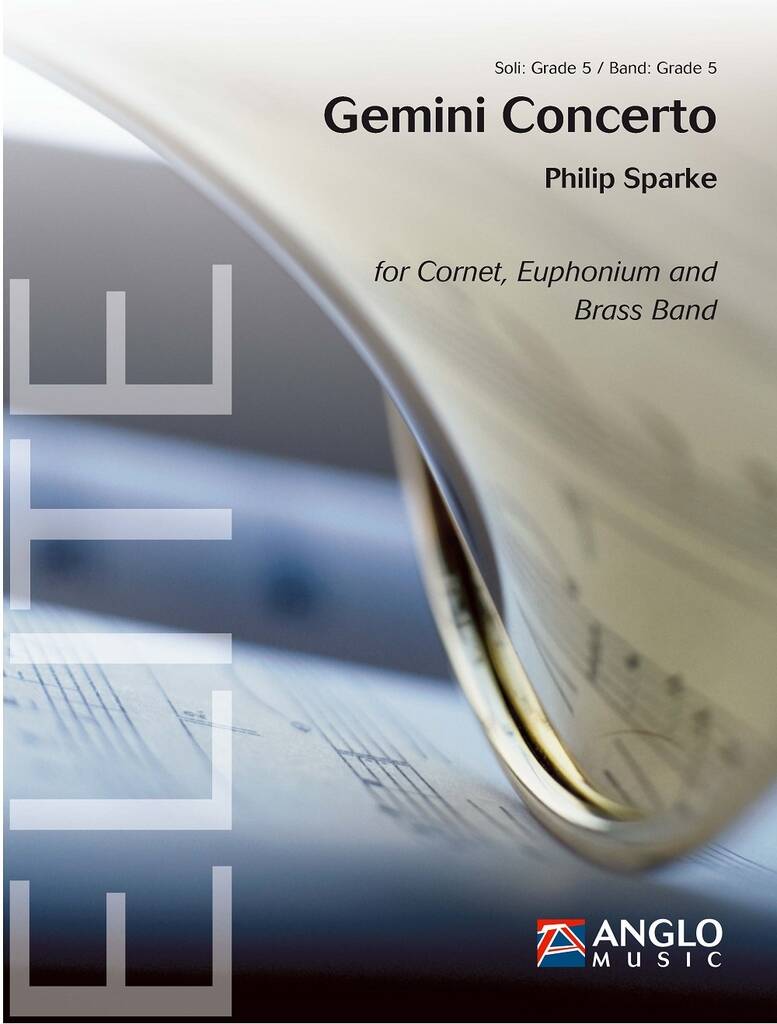
Gemini Concerto - Philip Sparke
Gemini Concerto was commissioned by and written for Ryukoku University (Japan), Andre Henry and Shoichiro Hokazono. Set in three movements, the concerto aims to explore the close relationship, as solo instruments, between the cornet and euphonium, exploiting the many common factors between the two as well as the subtly different characteristics they possess in terms of both lyrical and rhythmic playing. The first movement is a bustling toccata and the second movement is lyrical and improvisatory in nature. A fantastic piece and a great addition to the repertoire!
Estimated dispatch 5-14 working days
-
 £99.99
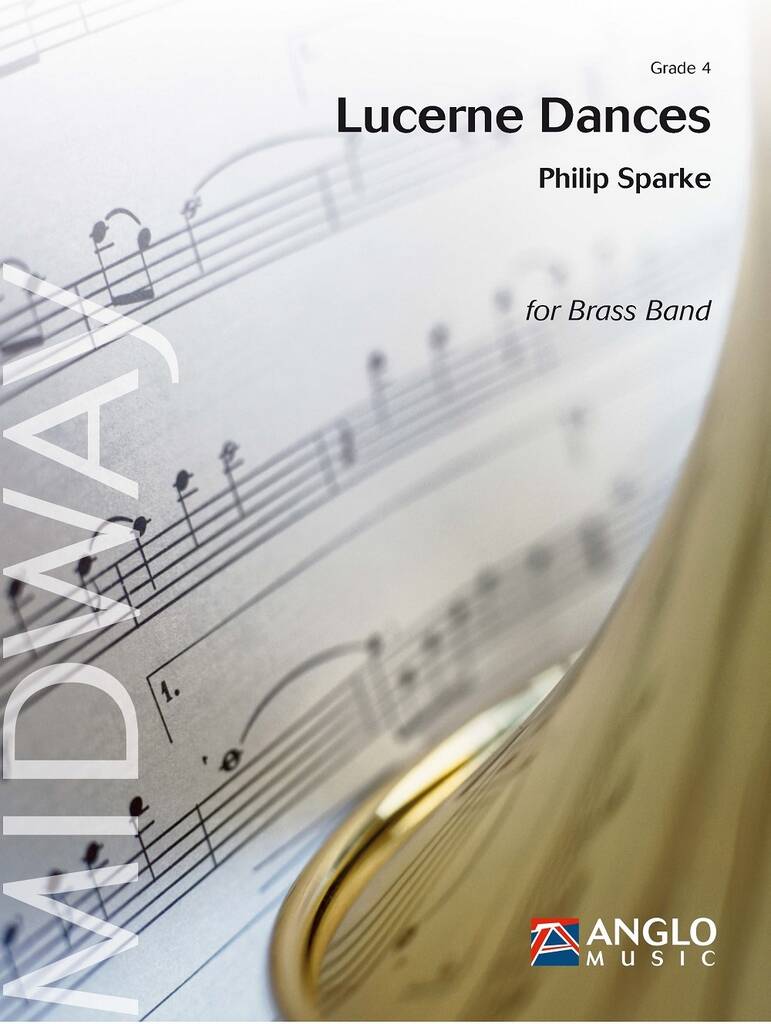
Lucerne Dances - Philip Sparke
Lucerne Dances consists of three movements, which play without a break and offer variety in abundance, with athletic figures, full chords, suave melodies, and alternating robust and mysterious themes. Several soloists are brought into the limelight, but each section, as well as the band as a whole, will have the opportunity to shine. In short: a captivating work with a festive touch that both the band and the audience will enjoy.
Estimated dispatch 5-14 working days
 View Music