
Results
-
 £60.00
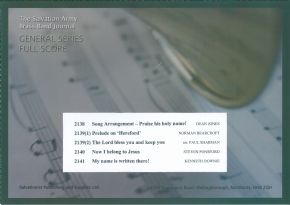
General Series Band Journal December 2014 Numbers 2138 - 2141
No. 2138 Song Arrangement - Praise his holy name! (Dean Jones)Dr Keith Hampton's song has been popular with choral groups for the best part of two decades. In this arrangement for band, Dean Jones has kept close to the original vocal version.No. 2139(1) Prelude on 'Hereford' (Norman Bearcroft)The beautiful tune of Hereford was written in 1872 by Samuel Sebastian Wesley and is often associated with the words of his grandfather, Charles Wesley; 'O thou who camest from above'.No. 2139(2) The Lord bless you and keep you (arr. Paul Sharman)Nik and Emma Pears have written this lovely setting of familiar words, which has been arranged as a benediction for band by Paul Sharman.No. 2140 Now I belong to Jesus (Steven Ponsford)This beautiful, descriptive arrangement of the well-loved song has an imaginatively extended ending, with long notes and rich harmonies, to give the impression of time stretching out into eternity.No. 2141 My name is written there! (Kenneth Downie)This setting of General Albert Orsborn's lovely song was inspired by a Corps retreat based on the theme 'The Calvary track'. The music provides a fitting commentary on the lyrics of the song.
Estimated dispatch 7-14 working days
-
 £49.99
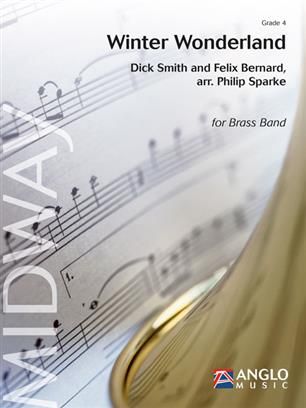
Winter Wonderland (Brass Band - Score and Parts)
This endearingly popular seasonal song has long been a Christmas favourite, even though the lyrics don't mention 'Christmas' at all. The words were by Dick Smith (1901-1935) and the music by Felix Bernard (1897-1944). The inspiration was reportedly a visit by Smith to Honesdale's (his hometown) Central Park when it was covered in snow.The first recording was made by Richard Himber's Ritz-Carlton Orchestra in 1934. The same year Guy Lombardo and his band, The Royal Canadians, took the song to number 2 in the US Billboard Chart, where it stayed for 9 weeks. It has since been recorded by over 150 artists, the most successful versions being by Perry Como and the Andrews Sisters, both released in 1946.
Estimated dispatch 7-14 working days
-
 £95.00
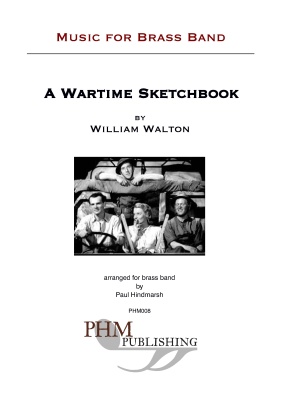
A Wartime Sketchbook (Brass Band - Score and Parts)
Early in 1941 William Walton, 39, received his call-up papers. He was by then one of the most eminent of British composers and was exempted from military service on condition that he provided music for films deemed to be of 'national importance'. Scoring Lawrence Olivier's Shakespeare epic Henry V in 1943 was the most substantial of these wartime projects. His role in patriotic films from 1941 and 42 like The Foreman went to France, Next of Kin, Went the day Well and The First of the Few was to provide appropriate title music and some underscoring at key moments. Walton extracted the most substantial portions of the latter as the popular Spitfire Prelude and Fugue for orchestra. The remaining music remained unpublished until 1990, when Christopher Palmer assembled the highlights into A Wartime Sketchbook. I was intrigued to hear these examples of Walton's wartime music and having discovered that they would fit naturally and idiomatically onto the brass band, I arranged six of the numbers into a suite for Besses o' th' Barn Band, which I was conducting at the time.In 1995 the brass band suite was recorded by the famous Black Dyke Mills Band as part of an all Walton album which I produced for the ASV label (ASV CD WHL 2093). This award- winning CD also included Walton's First Shoot, in the edition by Elgar Howarth, my transcription of movements from Music for Children and two substantial brass versions by Edward Watson of the suite from Henry V (with narrator) and the March and Siegfried Music from The Battle of Britain music.Prologue: This is the stirring title music from Went the day Well, a screen play by Graham Greene about a German airborne invasion of an English village. The main theme leads toBicycle Chase: Characteristic musical high-jinks for J.B.Priestley's The Foreman went to France.Refugees: From the same film, this is a poignant accompaniment to the long march of refugees. As Ernest Irving, the film's musical director, put it, "this really makes your feet sore and your knees sag."Young Siegfrieds: This lively movement comes from the music that Walton composed for The Battle of Britain in 1968, with the assistance of Malcolm Arnold, but which the film's producer rejected. It portrays first the Berliners, cheerfully ignoring the black-out and then, in the trio, the Young Siegfrieds of the Luftwaffe, courtesy of a parody of Siegfried's horn call from Wagner's opera.Romance: A soldier and a Dutch refugee snatch a few tender moments together in Next of Kin.Epilogue: At the end of The Foreman went to France, the French look forward with hope and optimism to eventual liberation.- Paul HindmarshDuration: 14.00
Estimated dispatch 7-14 working days
-
£40.00
A Wartime Sketchbook (Brass Band - Score only)
Early in 1941 William Walton, 39, received his call-up papers. He was by then one of the most eminent of British composers and was exempted from military service on condition that he provided music for films deemed to be of 'national importance'. Scoring Lawrence Olivier's Shakespeare epic Henry V in 1943 was the most substantial of these wartime projects. His role in patriotic films from 1941 and 42 like The Foreman went to France, Next of Kin, Went the day Well and The First of the Few was to provide appropriate title music and some underscoring at key moments. Walton extracted the most substantial portions of the latter as the popular Spitfire Prelude and Fugue for orchestra. The remaining music remained unpublished until 1990, when Christopher Palmer assembled the highlights into A Wartime Sketchbook. I was intrigued to hear these examples of Walton's wartime music and having discovered that they would fit naturally and idiomatically onto the brass band, I arranged six of the numbers into a suite for Besses o' th' Barn Band, which I was conducting at the time.In 1995 the brass band suite was recorded by the famous Black Dyke Mills Band as part of an all Walton album which I produced for the ASV label (ASV CD WHL 2093). This award- winning CD also included Walton's First Shoot, in the edition by Elgar Howarth, my transcription of movements from Music for Children and two substantial brass versions by Edward Watson of the suite from Henry V (with narrator) and the March and Siegfried Music from The Battle of Britain music.Prologue: This is the stirring title music from Went the day Well, a screen play by Graham Greene about a German airborne invasion of an English village. The main theme leads toBicycle Chase: Characteristic musical high-jinks for J.B.Priestley's The Foreman went to France.Refugees: From the same film, this is a poignant accompaniment to the long march of refugees. As Ernest Irving, the film's musical director, put it, "this really makes your feet sore and your knees sag."Young Siegfrieds: This lively movement comes from the music that Walton composed for The Battle of Britain in 1968, with the assistance of Malcolm Arnold, but which the film's producer rejected. It portrays first the Berliners, cheerfully ignoring the black-out and then, in the trio, the Young Siegfrieds of the Luftwaffe, courtesy of a parody of Siegfried's horn call from Wagner's opera.Romance: A soldier and a Dutch refugee snatch a few tender moments together in Next of Kin.Epilogue: At the end of The Foreman went to France, the French look forward with hope and optimism to eventual liberation.- Paul HindmarshDuration: 14.00
Estimated dispatch 7-14 working days
-
 £19.99
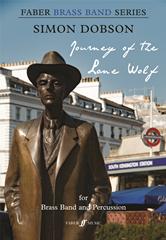
Journey of the Lone Wolf (Brass Band - Score Only)
Championship Section Test Piece for the 2016 National Finals of the British Brass Band Championship.The Lone Wolf of the title is the great Hungarian composer and folklorist Bla Bartok. Bartok's journey took him from the hills of the Balkans to the heart of the new world. His singular vision may have meant a life out in the cold, a life without warmth and love, a life without true happiness, a death mourned by a few in a strange land.The first of the three linked movements is capturing the Peasants' Song and follows the young Bartok and fellow composer Zoltan Kolday as they embark on Summertime adventures through the Hungarian countryside to collect and catalogue the astonishing variety of Gypsy and folk music heard in the Balkan hills. The arrival of WW1 plunges Bartok's beloved Hungary into chaos.Bartok was at times a cold man, aloof and lonely. The occasional moments of tenderness he showed are portrayed in Night Music. His brief but intense affairs speak of a love he could only long for. Jazz is my night music and here there are hints of what Bartok may have heard in the USA later in his life.Having been forced by the world's evils to leave his homeland of Hungary for America Bartok, the anti-fascist, felt isolated and angry. In the finale, Flight and Fight, we hear his longing for a simpler time of Gypsy folk dances as well as his maturity and depth as a composer finally exploring deeper colours and darker themes.Duration: 15.00
Estimated dispatch 7-14 working days
-
 £44.95
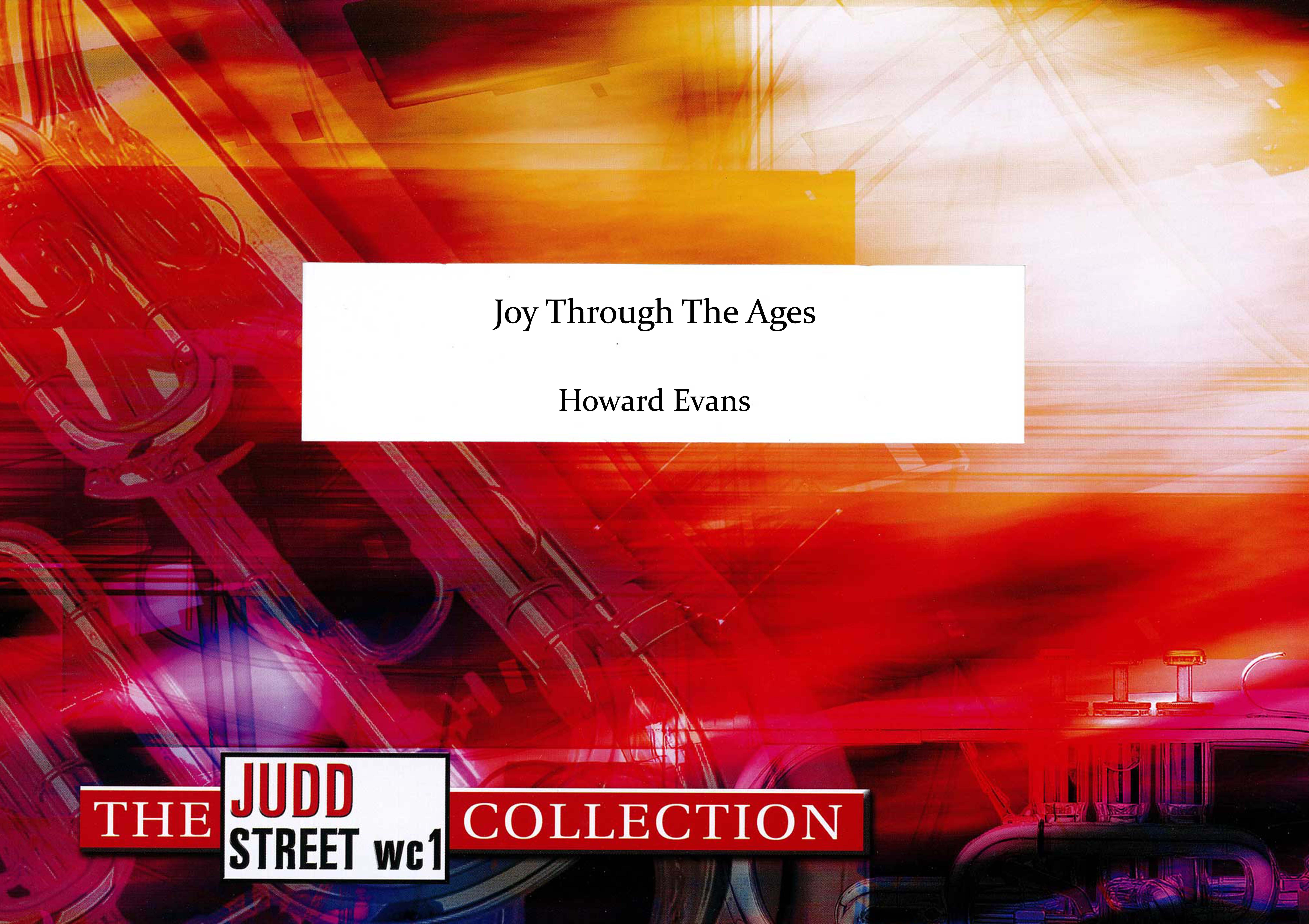
Joy Through the Ages (Brass Band - Score and Parts)
This work was written for the 125th anniversary of Boscombe Band, celebrated in November 2011, and is the title track of the band' album released in the same year. The music is celebratory in nature and is dedicated to all those who have served in the band during its 125 year history. The theme of the work is a song by Charles Hutchison Gabriel which was the favourite of the band's librarian, Gerald Whittingham, who was 'promoted to Glory' after a long battle with a brain tumour. The title comes from the last verse, 'When with the ransomed in Glory, his face I at last shall see, 'twill be my joy through the ages, to sing of his love for me'.
Estimated dispatch 7-14 working days
-
 £29.95
Judd: Goldcrest
A great march more suited to festival rather than procession, Goldcrest by James Anderson has long been a favourite with Salvation Army Bands. Degree of difficulty - 6
Estimated dispatch 7-14 working days
-
 £24.95
Prelude and Capriccio (Cornet Solo with Brass Band)
A condensed score is included with this workGregson wrote his Prelude and Capriccio in 1972. It exists in two versions: one for cornet and band and the other for cornet or trumpet and piano.The work began life in the early sixties, the Capriccio being composed when the composer was 17. A Prelude was added to complete the work, which lasts for approximately 8 minutes. The Prelude is reflective in character and uses long melodic lines over undulating chromatic harmony. The music reaches a climax before a brief reprise of the opening. The Capriccio is somewhat jazzy in its opening syncopated rhythms, but has a more lyrical middle section before a finale exploiting the virtuoso character of the instrument.
Estimated dispatch 7-14 working days
-
 £37.95
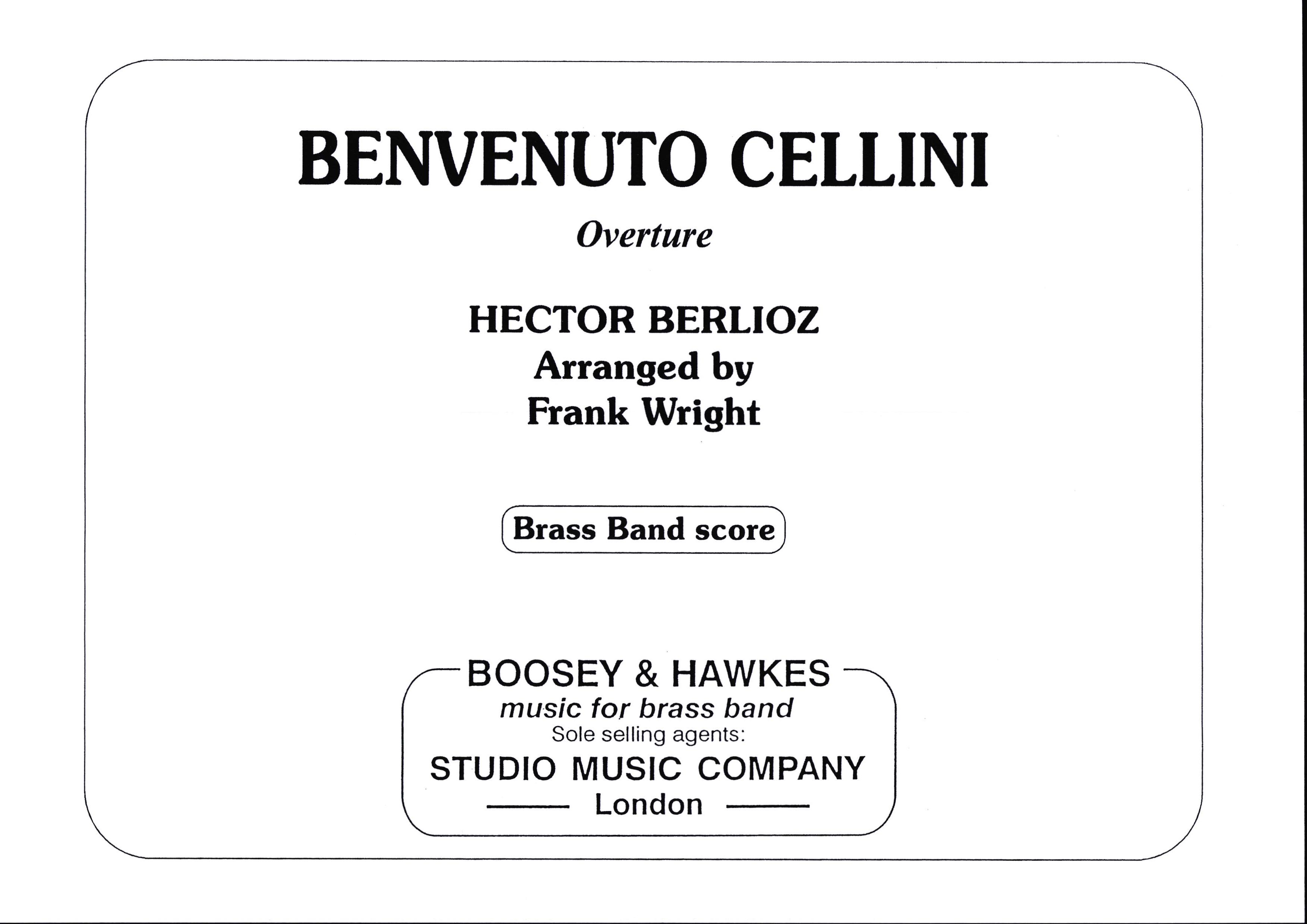
Benvenuto Cellini (Brass Band - Score only)
Berliozs opera Benvenuto Cellini was first produced in Paris in 1838 but was withdrawn as a failure, and it was not until the production in Dresden in 1888 that it was finally acclaimed by the Germans as a triumph. Adapted from certain episodes recorded in the memoirs of Benvenuto Cellini, Tuscan sculptor and goldsmith, the story, laid in Rome during the mid-sixteenth century, is not strictly historical. The short opening Allegro, marked deciso con impeto, is conceived in the most brilliant Berlioz manner, utilising full instrumentation. In the Larghetto we meet at once the first of the opera themes " the Cardinals aria (from the last act) introduced in the bass, quasi pizzicato. A second melody leads to a resumption of the Allegro, the contrasting second subject in the tenor horns being an adaptation of Teresas aria (Act I). Towards the end the Cardinal theme is re-introduced by trombones, fortissimo against an energetic cornet and euphonium passage (senza stringendo " without hurry, says the score). After a unison passage storming skywards, there is a sudden, dramatic three-bar silent pause broken by Eb basses alone, again stating the Cardinal theme. A simple molto crescendo on the dominant, begun piano, leads to the long, resounding chord.
Estimated dispatch 7-14 working days
-
 £82.95
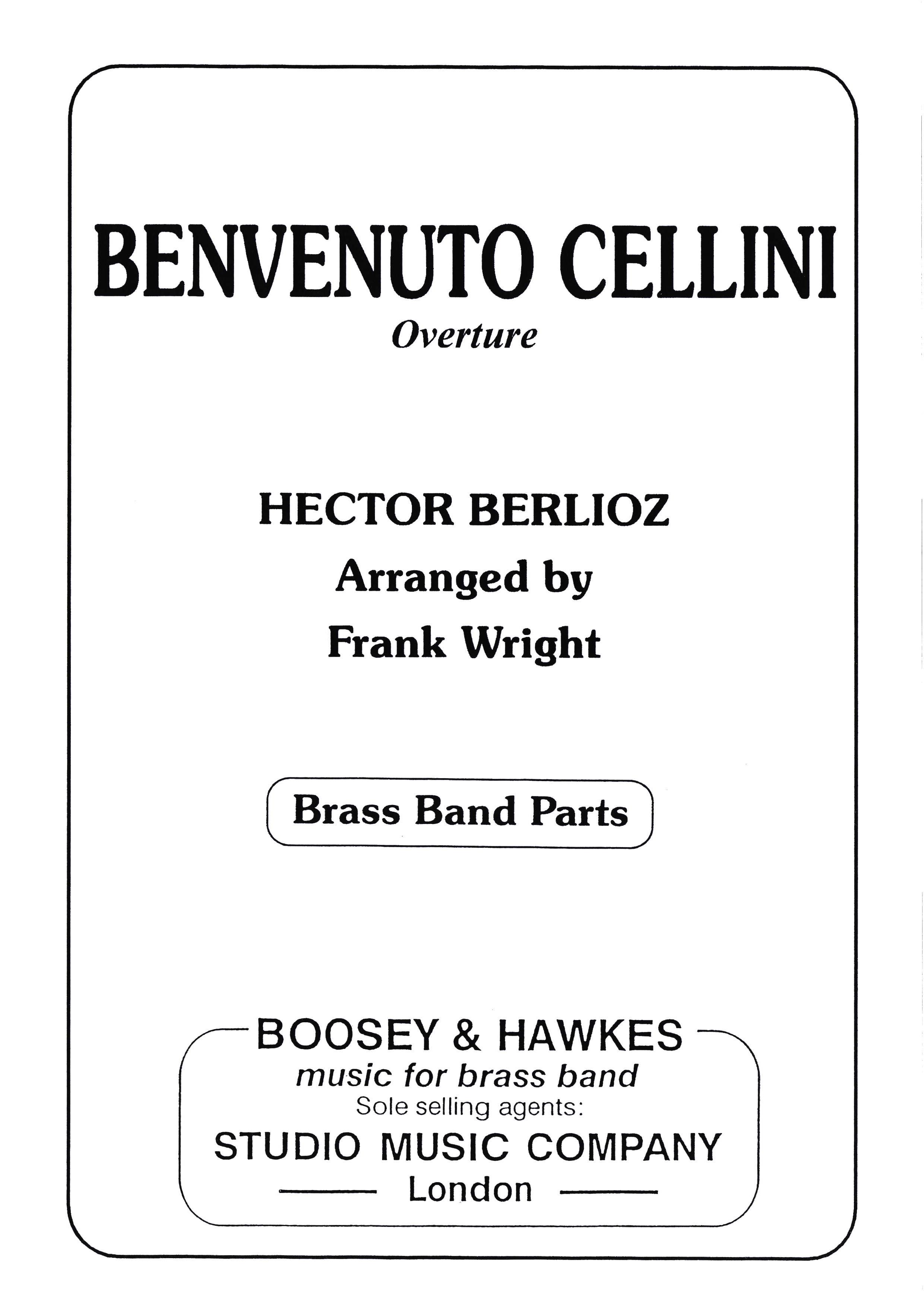
Benvenuto Cellini (Brass Band - Score and Parts)
Berliozs opera Benvenuto Cellini was first produced in Paris in 1838 but was withdrawn as a failure, and it was not until the production in Dresden in 1888 that it was finally acclaimed by the Germans as a triumph. Adapted from certain episodes recorded in the memoirs of Benvenuto Cellini, Tuscan sculptor and goldsmith, the story, laid in Rome during the mid-sixteenth century, is not strictly historical. The short opening Allegro, marked deciso con impeto, is conceived in the most brilliant Berlioz manner, utilising full instrumentation. In the Larghetto we meet at once the first of the opera themes " the Cardinals aria (from the last act) introduced in the bass, quasi pizzicato. A second melody leads to a resumption of the Allegro, the contrasting second subject in the tenor horns being an adaptation of Teresas aria (Act I). Towards the end the Cardinal theme is re-introduced by trombones, fortissimo against an energetic cornet and euphonium passage (senza stringendo " without hurry, says the score). After a unison passage storming skywards, there is a sudden, dramatic three-bar silent pause broken by Eb basses alone, again stating the Cardinal theme. A simple molto crescendo on the dominant, begun piano, leads to the long, resounding chord.
Estimated dispatch 7-14 working days