Searching for Wind Band Music? Visit the Wind Band Music Shop
We've found 349 matches for your search. Order by

Results

  • £29.50

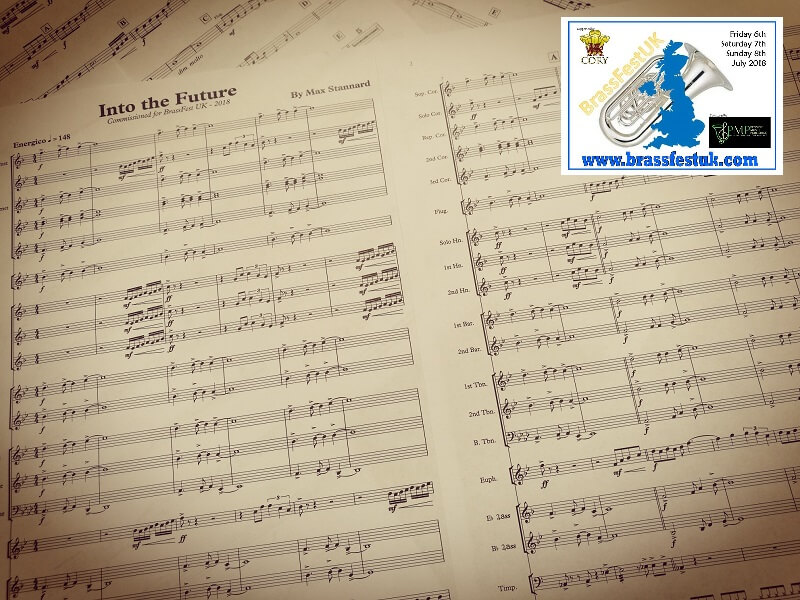
    Into The Future - Youth Band - Max Stannard

    With the success of the inaugural BrassFest UK events last year and along with it, the commssioned work to celebrate the Brass Band movement, the event this year threw the doors open with a competition to compose the 2018 anthem for bands across the country to enjoy. Judged by Philip Harper, Gavin Somerset and Christopher Bond, this winning work by Max Stannard was written with a view to celebrating the youngsters and future of the Brass Band movement.Click Here for the Senior Band edition

    In Stock: Estimated dispatch 1-3 working days

     PDF View Music

  • £29.50

    Masquerade - Carl Nielson - Bill Willis

    The opera, Masqurade, plot revolves around Leander and Leonora, two young persons who meet fortuitously at a masquerade ball, swear their undying love for each other and exchange rings. The following day, Leander tells a servant of his newfound love. He soon becomes distraught when informed by the servant that his parents have betrothed him in marriage to a neighbour's daughter. Things get complicated when Leonard, the neighbour whose daughter is the other part of the previously unknown arrangement, comes complaining to Leander's father that his daughter is in love with someone she met at the masquerade last night. In the third act, all is resolved when the various parties slip off to the night's masquerade, where all is revealed to everyone's mutual satisfaction. The overture is a stunning work, very entertaining for audiences and players alike.

    In Stock: Estimated dispatch 1-3 working days
  • £24.50

    Staff Of Faith - Swiss Traditional - Gavin Somerset

    No concert programme is complete these days without a hymn tune being given the treatment that only a brass band sound can deliver. It is therefore refreshing when a lesser known work becomes available for bands to perform. This Swiss traditional melody has grown in popularity over the last decade and is heard in churches across the globe sang to the words 'My Faith It Is An Oaken Staff' by Thomas Lynch. This setting by Gavin Somerset uses the full colours of the brass band spectrum and allows several instrumentalists the chance shine in this warm and entertaining work with a big finish ending.

    In Stock: Estimated dispatch 1-3 working days

     PDF View Music

  • £24.50

    A Yorkshire Manger - William Kirtpatrick - Stephen Tighe

    A new take on an old favorite. Based on the Carol "Away In A Manger", this arrangement adds a hint of Yorkshire flavour to it with, coupling it with the accompaniments from "Last Of The Summer Wine". A melodious opening from the horn section, with gentle sleigh bells to help us move along. This is sure to warm the hearts of all the listeners this Christmas. For Christmas 2020, we have made backing tracks of this title for you to download. These can be used either for personal playback use, or to create a virtual performance of the piece with your full band. To download the backing track, please RIGHT CLICK HERE & Save As .

    In Stock: Estimated dispatch 1-3 working days

     PDF View Music

  • £29.50

    March - Civic Society - Various - Alexander Scaife-McGee

    Civic society is a March written by Alexander Scaife-McGeethat came to their mind on last year's Remembrance Parade. the band of the South Wales Police. It struck me that on parade were representatives of all the Armed Forces, the emergency services and the numerous varieties of Scouts, from Brownies to Venture Scouts. This March is therefore a celebration of all of those who make up Civic Society on these important occasions.Melodies included;British GrenadiersColonel BogeyThe RAF March PastRule BritanniaHeart of OakA Policeman's Lot is not a Happy OneGing Gang Goolie

    In Stock: Estimated dispatch 1-3 working days

     MP3 Listen to MP3

     PDF View Music

  • £80.00

    St. Magnus - Kenneth Downie

    Dedicated to Alastair Massey, an inspirational music teacher. Commissioned by the Scottish Brass Band Association for the 2004 European Brass Band Championships in Glasgow. This music is a set of variations on the tune known as St Magnus, which is attributed to Jeremiah Clarke. Most people will associate it with Thomas Kelly's hymn which begins: "The Head that once was crowned with thorns is crowned with glory now". The tune is very simple, consisting of just two, four-bar phrases. Neither is there much in the way of rhythmic variety, every note being a crotchet with the exception of two quavers, and the last note in each phrase. Within such a simple structure, however, lies considerable strength. THEME The listener is given the opportunity of hearing it twice, in full, at the beginning, starting with one player but soon taken up by the full ensemble. It returns in the middle of the music and is stated again near the end. This has been done quite deliberately in the hope that there will be an appreciation of what material is being developed, by the listener as well as by those with access to the score, who are able to see the visual connections. VARIATION 1 This takes the rhythm of the last part of the theme and also uses the shape of the opening as a recurring figure. The mood is whimsical and skittish, with short, teasing rhythmic figures tossed around the band, and quick interplay with percussion, at a fast tempo. An energetic flourish finishes this variation before the Andante espress. VARIATION 2 This commences with chords related to the opening of Variation 1. The cantabile on solo comets establishes a new, lyrical mood and there is scope for expressive playing in a series of short solo passages. The theme works its way unobtrusively into the texture before a reprise of the solo cornet melody and some more lyrical interchanges between Eb bass, euphonium, flugel horn and comets. The variation ends serenely with clear references to the last phrase of the theme. VARIATION 3 The first idea to dominate is clearly linked to the shape of the theme's first phrase. There is a frenetic feel to much of this variation, with considerable energy and instability created by extensive use of cross-rhythms. A thinning-out of the score marks a clear change to development of the start of the second phrase of the theme. This proves to be short-lived however, and the opening material returns leading to a restatement of the theme, "Maestoso," after which a euphonium cadenza links to Variation 4. VARIATION 4 Here we have some solos for euphonium, cornet, trombone and Eb bass set against a background of horns and baritones presenting a pensive statement of the theme's opening. VARIATION 5 This commences Allegro, with lively work for cornet and euphonium spreading to the whole band before attention focuses on the beginning of the second phrase of the theme which is initially presented in diminution, then in regular rhythm, then in inversion. An increase in tempo coupled with a decrease in volume, requires dexterity and control, with several metrical challenges thrown in for good measure. The same fragment of phrase becomes an ostinato which generates a frenzied climax, punctuated by short, dramatic silence, before the opening figure returns and the music gradually winds down. The tubular bells herald the final return of the theme, in augmentation, marking the start of the Finale. FINALE This features the running semiquavers of the previous variation sounding in counterpoint. A fast, furious coda speeds the work to a conclusion while references to the opening of the theme are still trying to break into the texture of the music. Kenneth Downie

    Estimated dispatch 5-14 working days
  • £174.99

    Tales & Legends - Etienne Crausaz

    This three-movement work by the Swiss composer Etienne Crausaz reflects three true stories and fascinating legends from the Middle Ages. The first movement tells the dramatic story of the 'witch' Catherine 'Catillon' Repond (1662 1731). She was the last woman ever to be executed for sorcery. In the second movement, the famous court jester Girard Chalamala occupies centre stage. This jester, the last one at the castle of Count Greyerz, could make everyone laugh. The third movement tells the story of Count Michael. He went down in history as a spendthrift bon-vivant. His burden of debt became so high that he did a moonlight flit and never came back!

    Estimated dispatch 5-14 working days

     PDF View Music

  • £228.70

    Myte - Myth - Torstein Aagaard-Nilsen

    Commissioned by Radoy Brass for their 20 years anniversary.This version was first performed by Manger Skulemusikklag in 2005.The Work is devided into Five Scenes:1. Sverdet (The Sword) 3:452. Advarsel - fra en vis mann (Warning - from a Wise Man) 2:303. Dragen (The Dragon) 3:004. Advarsel II - fra syngende fugler (Warning II - from singing birds) 1:355. Gull - forbannelsen (Gold - The Curse) 2:50Total durata 13:30This work is based on five scenes from the tale about "Sigurd Favnesbane" (Sigurd the dragonslayer). Moods and atmospheres in the piece represent my way of retelling the old myth.1. The SwordThe dwarf blacksmith Regin is hammering and sharpening the edges of the magical sword Gram. After three attempts the sword is finally sharp enough to kill a dragon. 2. Warning - from a Wise manRichard Wagners opera Sigfried is based on the same story. In the opera the hero get warned by a wise man. He tells the secret of how to survive an attack of the dragon by hiding in a hole in the pathway and then kill the dragon with the sword as thedragon passes on its way to the river to drink water.3. DragonThe Dragon (Favne) guards a fantastic treasure, but he is also the brother of the blacksmith Regin. Favne get killed and his blood flows slowly while he laments (trombone/bass trombone).4. Warning II - from singing birdsWhile frying the heart, Sigurd burns his thumb and put it into his mouth to cool it down. Then he swallow a drop of fresh magic dragon blood which transfers the ability to understand the birdlanguage. The birds sing warnings to Sigurd telling himthat Regin will betray him and later kill him. Sigurd then kills Regin instead.5. Gold - the CurseSigurd takes the gold treasure and escapes on the horseback of Grane. But his robbery of the gold lead him into trouble: The gold is banned and a curse will hit everyone whotakes it...Myth is a programmatic work where the story is quite clearly illustrated throughout the piece:In the first movement you can hear the blacksmith working with hammer on ambolt while the heat is intense from the glows. The dwarf has got his own theme i lower brass (bar 4-5). The hero Sigurd has his own identifying chord (2 bars before F). Thechord is also a symbol of the sword.In the second movement the warning from the wise man is expressed in the lyric bass line.The airblow in instruments illustrate the dragon Favne on his way out of his cave, and later the blood flows slowly. The dragon takes his last deep breath after a painful duet in trombones. The birds sing their motifs (lightly, but not cheerfulthough), until Sigurd cuts the head off Regin and it hits the ground.The last movement describes the atmosphere andstate of mind as the curse infects the obsessed thief.

    Estimated dispatch 5-14 working days

     PDF View Music

  • £60.99

    Klezmeriana - Jan de Haan

    The instrumental music of the Yiddish-speaking Jews, especially those of Eastern Europe, is known as klezmer. This terminology was originally used in Jewish cultural life as the name of a musician who played at weddings. At Jewish weddings, which usually last several days, klezmer musicians played not only dance music but also ceremonial music - for example during the wedding ceremony, and also music that was listened to during the wedding feast. Originally, there was no special term for this style of music. It was simply referred to as 'Jewish wedding music'. In the 1970s, the music - which is actually a fusion of different influences - enjoyed a resurgence in popularity and came to be known as klezmer. This music contains not only the sounds of the Balkans, but also influences of oriental and gypsy music too. Jan de Haan used no original klezmer melodies for Klezmeriana, but composed a series of sound-alike in an instrumentation for brass band.

    Estimated dispatch 5-14 working days

     PDF View Music

  • £115.60

    Griffenfeldt - John Philip Hannevik

    Here we present "Griffenfeldt, a folk-dance in the style of a Norwegian reinlender.This arrangement can be used as the first item in a concert, or after an interval.The musicians can come on stage as they join in. That is why two of the measures are notated "repeat till ready", here you have to wait until everyone is in place! If everyone is ready from the start, the repetition can be omitted.Be sure to play with a bouncy but singing style, not with short and harsh articulations.Do the trills on the beat, but these can also be omitted if it makes it too difficult.To bring out the folk music style a little extra, you can ask the musicians to play on the "backbeat", i.e. emphasize the last half of each quarter-note.In addition, the music will really come to life if all "solo" places are done standing up.The musician Anon Egeland tells this story:This song got its name from a party where it all just got a bit too lively: one of the party-goers started shooting into the ceiling with a gun just as this reinlender was being played. The fiddler - or was it the man with the gun? - was called Griffenfeldt, and that gave the name for the song.

    Estimated dispatch 5-14 working days

     PDF View Music