
Results
-
 £54.99
You are not alone - Larry Foster
Michael Jackson, the King of Pop, died in Los Angeles on June 25th 2009. He can without any shadow of a doubt be compared with artists such as Elvis Presley, Jimi Hendrix, and John Lennon - all of them musicians who will never die in the hearts of their fans. Why not keep the legend of Michael Jackson alive in your next concert with this hit from Michael Jackson's repertoire arranged for Brass Band.
Estimated dispatch 5-14 working days
-
 £84.99
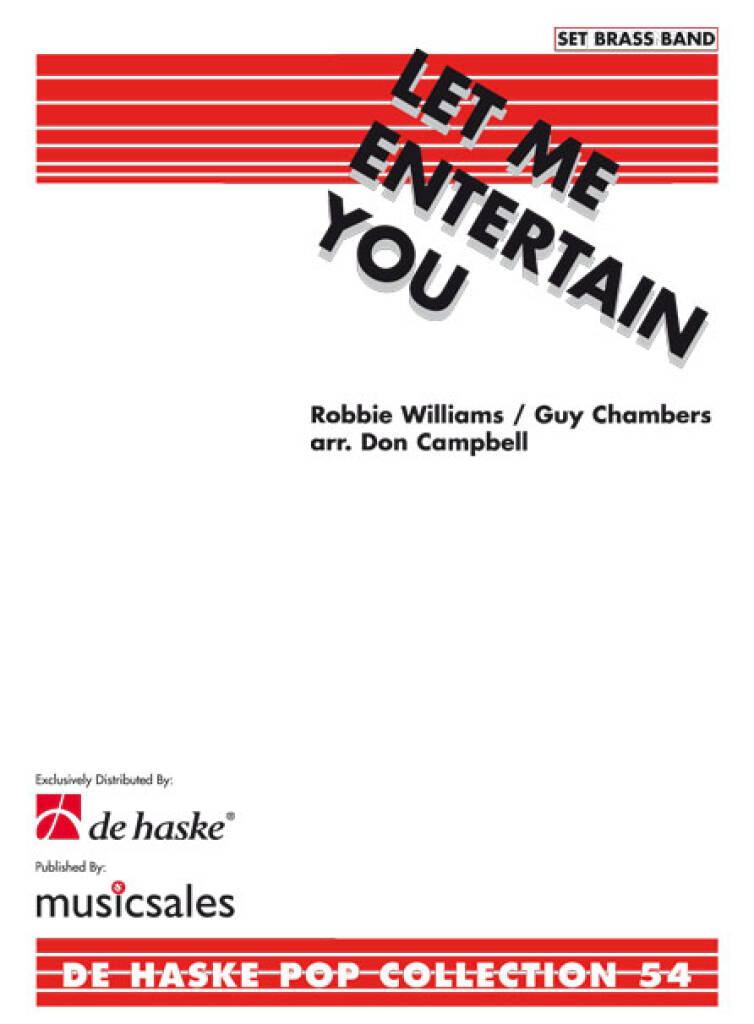
Let Me Entertain You - Don Campbell
This is a must-play item for any light concert programme. Robbie Williams is currently considered to be the king of pop, with his massive hit Angels being voted the number one song in many charts of all time greatest pop songs. He appeals to an extremely diverse audience ensuring every person at your concert will leave singing the songs from this superb work.
Estimated dispatch 5-14 working days
-
 £60.99
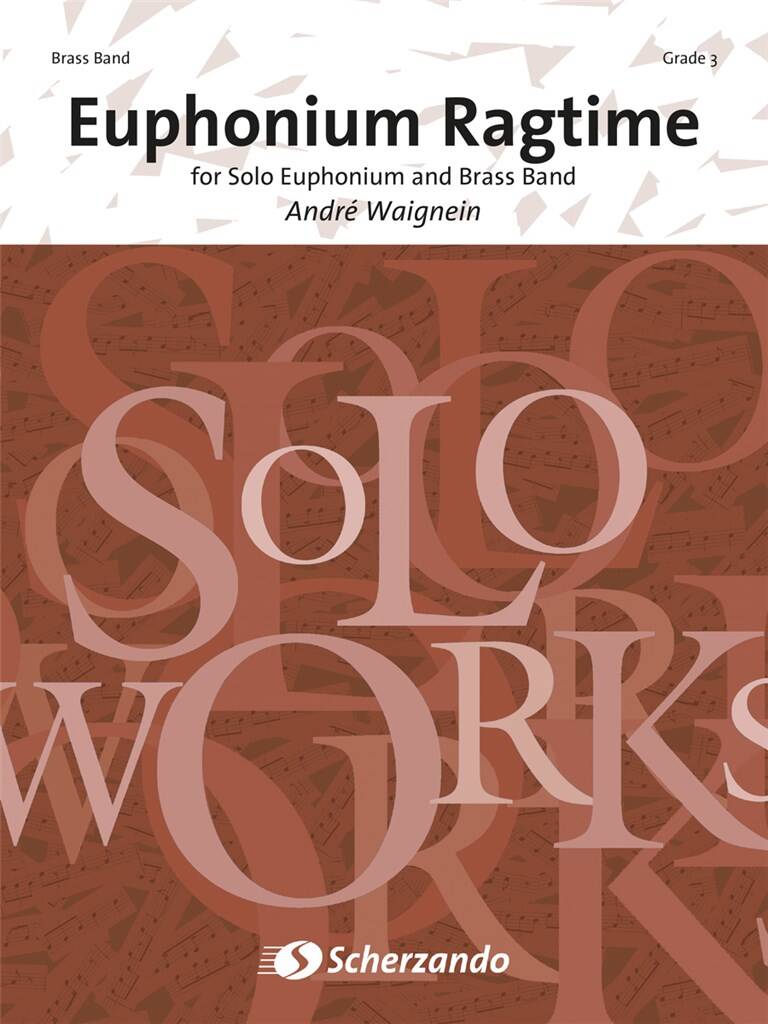
Euphonium Ragtime - André Waignein
Pieces that showcase the euphonium are few and far between. Andr Waignein decided to change this and set out to compose a piece specifically for the euphonium.What makes this composition even more unusual is that he wrote the piece in the style of a ragtime. Euphonium Ragtime provides an exciting and entertaining solo opportunity your audiences will love!
Estimated dispatch 5-14 working days
-
£54.99
Heal the World - Michael Jackson - Ron Sebregts
Michael Jackson, the King of Pop, died in Los Angeles on June 25th 2009. He can without any shadow of a doubt be compared with artists such as Elvis Presley, Jimi Hendrix, and John Lennon - all of them musicians who will never die in the hearts of their fans. Why not keep the legend of Michael Jackson alive in your next concert with this hit from Michael Jackson's repertoire arranged for Brass Band.
Estimated dispatch 5-14 working days
-
 £54.99
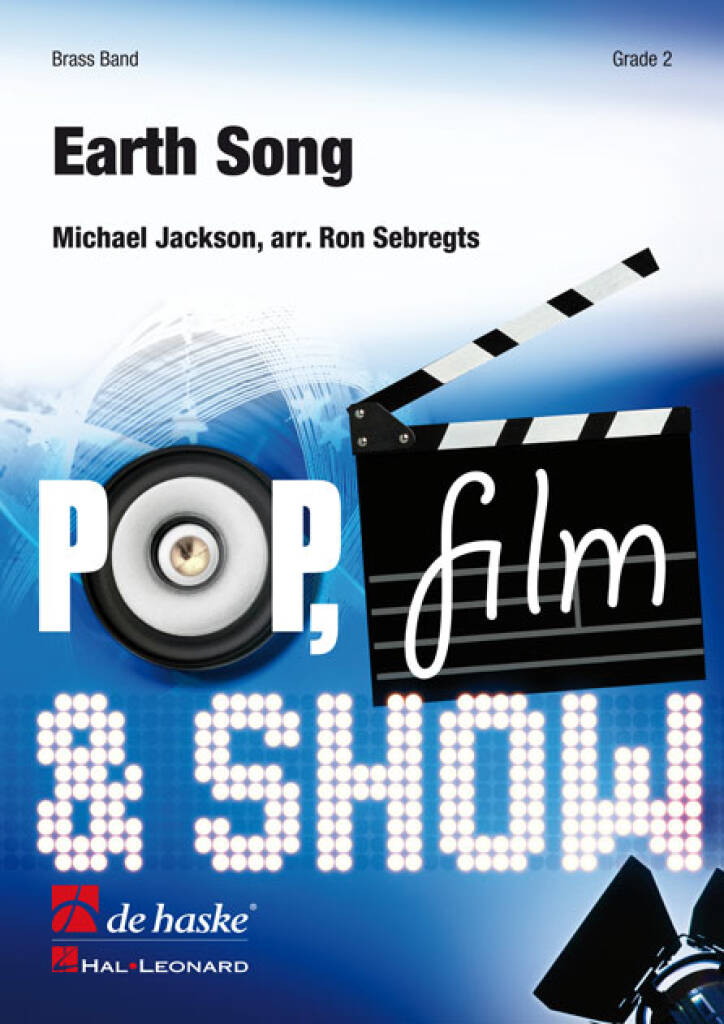
Earth Song - Ron Sebregts
Michael Jackson, the King of Pop, died in Los Angeles on June 25th 2009. He can without any shadow of a doubt be compared with artists such as Elvis Presley, Jimi Hendrix, and John Lennon - all of them musicians who will never die in the hearts of their fans. Why not keep the legend of Michael Jackson alive in your next concert with this hit from Michael Jackson's repertoire arranged for Brass Band.
Estimated dispatch 5-14 working days
-
 £76.99
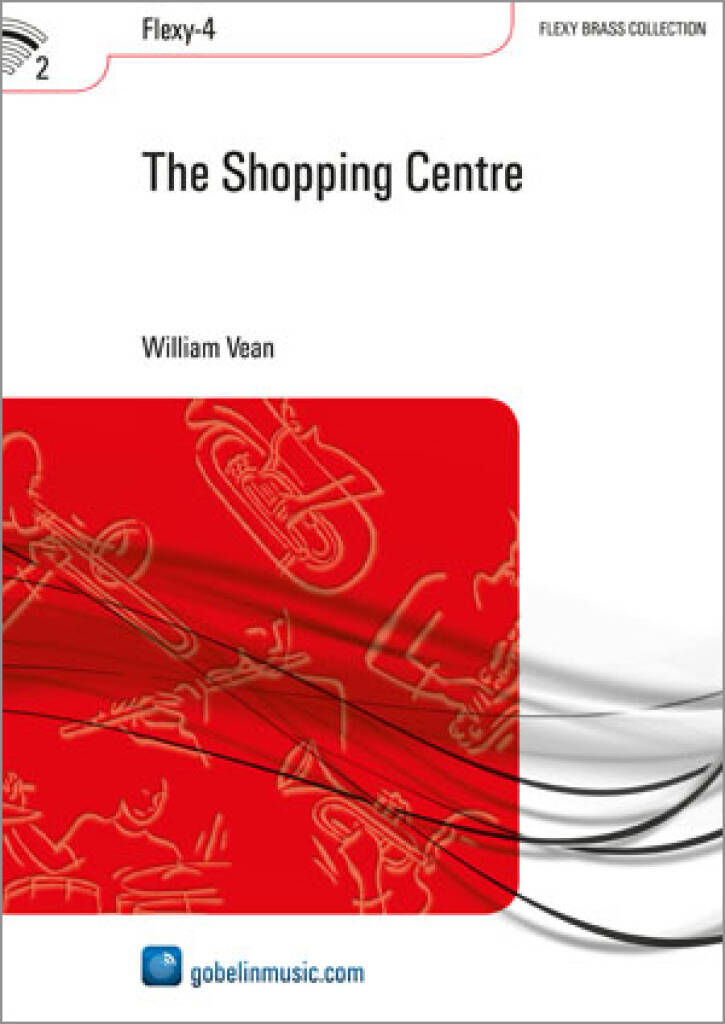
The Shopping Centre - William Vean
Many people when asked the question 'Do you have any hobbies?' will answer 'Shopping' (even though the female part of the population may be more interested in this than the male one). Of course it is great fun to walk about in a Shopping Mall, browsing in various small shops, looking for things you have always wanted to possess. This was what William Vean was doing one day when he came across the idea to write a composition in which several shops could try to sell their wares (and this idea didn't cost him a penny). First, the audience are taken to a 'Jeans store', then a 'Phone shop' is visited, after which a visit is made to a 'Perfumery'. Thefourth part depicts a profession which is practised in several premises, namely that of shoplifter. In the fifth part there is room for a bite to eat at a Chinese restaurant, and finally after a visit to the hairdresser's it's time to go home.
Estimated dispatch 5-14 working days
-
 £154.99
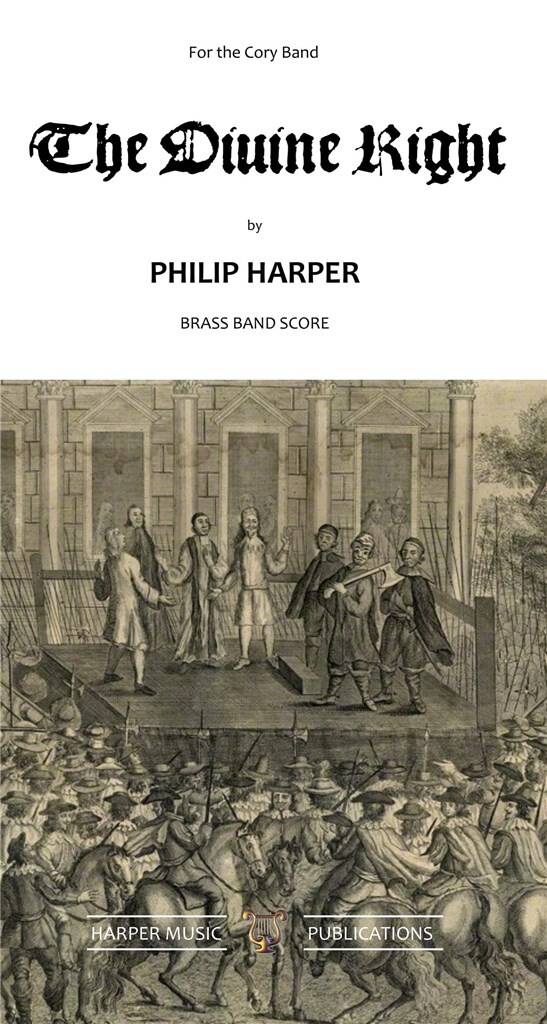
The Divine Right - Philip Harper
At the time of composing this piece, the Arab Spring was sweeping through the Middle East. It seemed that almost every week a new countrys people had risen up against the regimes and dictatorships which had prevailed for generations, leaving manynations at a defining crossroads in their history. There were so many possible ways ahead: so many hopes, yet so many uncertainties.My music is a depiction of these revolutionary times, and several musical themes are in turn presented, discussed, considered, fought over, altered, rejected or accepted. Most nations have had, or probably will have, their own Arab Spring, including my own, the United Kingdom. Events of 17th Century Britain provide the context for this piece, particularly those following the execution of the tyrant King Charles I on30 January 1649. The regicide was in part due to Charless steadfast belief in the Divine Right of Kings, and led to a tumultuous interregnum, where England stood at its own defining crossroads.The music begins turbulently, before King Charles appears and is led to the gallows outside Banqueting House in central London where he is brutally decapitated. From the assembled crowd rose, according to one observer, a moan as I never heard before and desire I may never hear again.The music descends to emptiness. The musical argument which follows is not strictly programmatic, but a number of musical themes are all thrown into the melting pot, representing ideas such as: religion; military force; reasoned Parliamentary debate; and the chattering,irrepressible voice of the people. Additionally, there are some quotations from the music of royalist composer Thomas Tomkins (1572-1656), who was often in tune with the feeling of the times. This defining episode in Englands history was brought to a close with the Restoration of the monarchy in 1660, and as the exiled King Charles II rode back into London the diarist John Evelyn wrote: Never was so joyful a day seen in this nation. I stood in the Strand and beheld it, and blessed God.At the end of the piece the bells ring out, and the musical appearance of the King has transformed from turbulent to triumphant. Philip Harper, 2013
Estimated dispatch 5-14 working days
-
£115.60
Speedy Dreams - Jerker Johansson
Speedy Dreams was premiered by Goteborg Wind Orchestra in 2013 with Fredrik Duvling as snare drum soloist. The composer Jerker Johansson is a percussionist himself, so through the years he has spent lots of time practising the snare drum. Theinspiration to the composition came to him in a dream, which was about yet another dream:On the evening of Christmas Eve a small child is trying to go to sleep. It is not so easy. Earlier in the day the child has got a small drum as aChristmas present. So instead of sleeping the child is fantasising about the new toy drum and how exciting it will be to learn how to play it.
Estimated dispatch 5-14 working days
-
£132.00
Myte - Torstein Aagaard-Nilsen
Commissioned by Radoy Brass for their 20 years anniversary.This version was first performed by Manger Skulemusikklag in 2005.The Work is devided into Five Scenes:1. Sverdet (The Sword) 3:452. Advarsel - fra en vis mann (Warning - from a Wise Man) 2:303. Dragen (The Dragon) 3:004. Advarsel II - fra syngende fugler (Warning II - from singing birds) 1:355. Gull - forbannelsen (Gold - The Curse) 2:50Total durata 13:30This work is based on five scenes from the tale about "Sigurd Favnesbane" (Sigurd the dragonslayer). Moods and atmospheres in the piece represent my way of retelling the old myth.1. The SwordThe dwarf blacksmith Regin is hammering and sharpening the edges of the magical sword Gram. After three attempts the sword is finally sharp enough to kill a dragon. 2. Warning - from a Wise manRichard Wagners opera Sigfried is based on the same story. In the opera the hero get warned by a wise man. He tells the secret of how to survive an attack of the dragon by hiding in a hole in the pathway and then kill the dragon with the sword as the dragon passes on its way to the river to drink water.3. DragonThe Dragon (Favne) guards a fantastic treasure, but he is also the brother of the blacksmith Regin. Favne get killed and his blood flows slowly while he laments (trombone/bass trombone).4. Warning II - from singing birdsWhile frying the heart, Sigurd burns his thumb and put it into his mouth to cool it down. Then he swallow a drop of fresh magic dragon blood which transfers the ability to understand the birdlanguage. The birds sing warnings to Sigurd telling him that Regin will betray him and later kill him. Sigurd then kills Regin instead.5. Gold - the CurseSigurd takes the gold treasure and escapes on the horseback of Grane. But his robbery of the gold lead him into trouble: The gold is banned and a curse will hit everyone whotakes it...Myth is a programmatic work where the story is quite clearly illustrated throughout the piece:In the first movement you can hear the blacksmith working with hammer on ambolt while the heat is intense from the glows. The dwarf has got his own theme i lower brass (bar 4-5). The hero Sigurd has his own identifying chord (2 bars before F). The chord is also a symbol of the sword.In the second movement the warning from the wise man is expressed in the lyric bass line.The airblow in instruments illustrate the dragon Favne on his way out of his cave, and later the blood flows slowly. The dragon takes his last deep breath after a painful duet in trombones. The birds sing their motifs (lightly, but not cheerful though), until Sigurd cuts the head off Regin and it hits the ground.The last movement describes the atmosphere andstate of mind as the curse infects the obsessed thief.
Estimated dispatch 7-14 working days
-
 £55.00
Triumph Series Brass Band Journal, Numbers 1355 - 1358, November 2023
1355: March Medley - Pardoned Forever (Keith Manners)This collection of Easter-themed melodies should be played with enthusiasm and vigour. Featuring the songs He lives (S.A.S.B. 229), Chris is alive! Let Christians sing (S.A.S.B. 217) and No more! No more! He remembers sins no more (S.A.S.B. 460), the positive message of Easter Sunday is reflected in this bright march style.1356: Selection - I love the sweetest name (Noel Jones)This devotional selection includes three songs that feature the name of Jesus and derives its title from the following lines of those songs; 'How sweet the name of Jesus sounds' (S.A.S.B. 78), 'O, how I love the Saviour's name! The sweetest name on earth' (S.A.S.B. 94) and 'Sweetest name on mortal tongue' (S.A.S.B. 93).1357: Renewal (Harold Burgmayer)Will J. Brand penned the song Renewal (S.A.S.B. 634), with music by Bramwell Coles, for 'Day of Renewal' meetings conducted by General Albert Orsborn in October 1949. It was published in that form in The Musical Salvationist in 1951. Over time these meaningful words of consecration became wedded to an alternative tune, a lovely melody by Oscar Ahnfelt known as Trust in God (T.B. 903). This setting for band is based on a male-voice arrangement, conceived for a time of renewed consecration, sung by massed bands at the Canadian Staff Band's 50th Anniversary Festival in 2019.1358: Groove Hosanna! (Munashe Chikwezvero)This is a funk setting of three well-known melodies associated with Jesus' triumphal entry into Jerusalem. Today, such celebratory processions, and indeed most large gatherings, usually feature rich forms of music-making. Music provides atmosphere and generates excitement, and it is hoped that a funk inspired arrangement of these songs will inspire listeners to 'move to the groove'. The first two songs, Children of Jerusalem (S.A.S.B. 356) and Give me joy in my heart, keep me praising (S.A.S.B. 362) encourage us to sing 'Loud hosannas to our King!'. The words of the third song, When his salvation bringing, remind us that he "smiled to hear their song".
Estimated dispatch 7-14 working days
 View Music