
Results
-
 £152.99
Between the Two Rivers (Brass Band - Score and Parts) - Sparke, Philip
Between the Two Rivers was commissioned by Fanfare Prins Hendrik, from Aalst in the Netherlands. The title derives from the fact that the town of Aalst lies between two tributaries of the River Dommel. The community is a highly religious one, so the famous Luther chorale, Ein' Feste Burg, was an obvious choice for Philip Sparke to use as the theme for this new work. It takes the form of a theme with four contrasting variations. Variation 1 is a moto perpetuo, variation 2 has a slower march like feel, variation 3 is a sinister slow movement and the final variation is in the form of a lyrical fugue. Between The Two Rivers is sure to become a major work in modern brass band repertoire.Duration: 15:00
Estimated dispatch 7-14 working days
-
£29.50
How Great Thou Art - Trad - Edward Knowles
Every year, bands up and down the country perform joint concerts with choirs around the UK & across the globe. Joint items between the two ensembles are wonderful viewing (& listening) for the audience and can work as a terrific finale. Now, with the release of this arrangement, bands and choir* can join together and perform this wonderful work. Featuring a Baroque fanfare to open and a fugue towards the end, this is a simply stunning way for band and voices to be brought together. The arrangement also features an optional cut which allows the work to be performed without a choir. However, this arrangement invites the band to sing the melody in 4 part harmony, giving a fantastic new dimension to your bands versatility. Full choir parts & a piano part (for choir rehearsal purposes) are included with this publication. This really is a fantastic item that can make the hairs on your neck rise.
In Stock: Estimated dispatch 1-3 working days
-
 £65.50
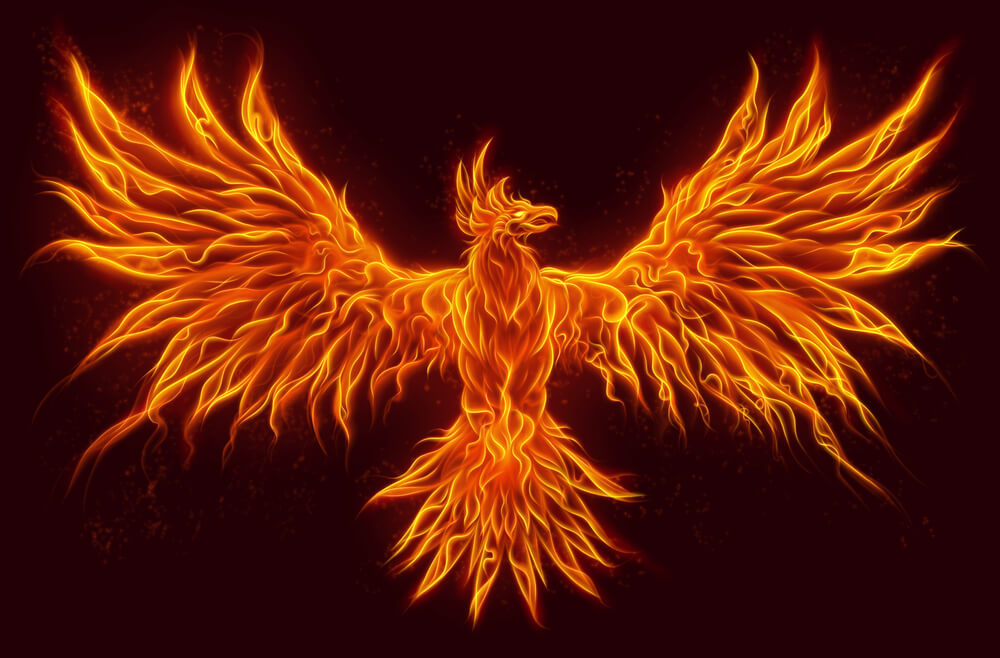
Phoenix - David Holling
Phoenix is a programmatic study depicting the life of the fascinating fictitious bird. The opening is dramatic and yet joyous, followed by the first theme that represents the bird in flight; light in style but relentless all the same. A touch of Latin imposes on a small part of the opening section before returning to the theme once again. The 'Tranquillo' section represents the calm dignity of the bird's fate before the tender slow movement conveys the Phoenix's death with a new theme. This is chance for the soloists to demonstrate musical and technical skill and should be treated interpretively, not mechanically. A fanfare then bursts forth followed by a serious but short fugal section as the Phoenix is reborn. The bird takes flight again in the closing section of music where the melodic content should always be at the forefront of the ensemble.
In Stock: Estimated dispatch 1-3 working days
-
 £27.95
Three Fanfares (Brass Ensemble - Score and Parts)
This set includes three fanfares by Edward Gregson for symphonic brass and percussion ensemble:Fanfare for a New EraFanfare for the NorthFanfare for EuropeFanfare for a New Era: This fanfare was commissioned by Lady Sheila Stoller to celebrate the opening of the Stoller Hall at Chetham's School of Music in Manchester (UK). It is dedicated to Sir Norman Stoller, who generously donated the funding for the new concert hall. It was first performed by students of Chetham's School of Music, conducted by Stephen Threlfall, at the Royal Opening of the Stoller Hall on 24 April 2017. Ideally, the fanfare should be performed using as much spatial arrangement as possible, so that the antiphonal effects are heard to their best advantage. Whatever the chosen lay-out, the 1st Trumpet should be positioned off-stage in a suitable position. This could be a rear balcony if the venue is not too large, or in a side balcony in a larger concert hall. Duration: 3.00Fanfare for the North: This fanfare was commissioned by the Gateshead Garden Festival of 1990 and was first performed by London Brass Virtuosi, directed by David Honeyball, at the Royal Opening by HM The Queen. Its four-note motif (G, A, E, D), which is heard throughout the fanfare, is derived from the letters of 'Gateshead'. Duration: 1.15Fanfare for Europe: This fanfare was specially commissioned for two concerts celebrating the UK's entry into Europe (or the European Economic Community as it was then known) in 1973. The first performances were given at York Minister and the Royal Albert Hall, London, in January 1973. The fanfare was also featured as the opening music for the first episode of a series of short documentary programmes made for BBC Radio 4 in 2018 by Mark Mardell entitled Brexit: A Love Story? Duration: 1.15Duration: 5.30
Estimated dispatch 7-14 working days
-
 £104.99
High Flyers - Andrew R. Mackereth
From the composer: High Flyers are regarded as people with promise and potential.They are winners. This is music for winners.The title, as well as being a play-on-words, implies the nature of the work. It is a bright, optimistic, and upbeat piece attempting to depict an exhilarating ride on flying carpet. The opening rising chords immediately suggest the gentle elevation of the carpets' ascent towards unknown heights, leading to a hint of a first theme in the horns at Fig. B. The first four notes provide the thematic material for the whole work: C F G A.A perpetual sense of movement is achieved through accented quaver chords punctuating the melodicmaterial of the first main theme. Fig. E sees the music of the opening bars fully realised, with flourishes from the euphonium and baritones representing swirling clouds, shooting stars, or passing birds in flight.The same subject is developed into a lyrical second theme with a new lush harmonic treatment, evocative of gliding over an expanse of sparse countryside.This section ends with a note of serenity but is shattered by the urgent insistence of the percussion rhythms.The third section introduces a new idea with a slightly distorted fanfare in the cornets and trombones. This figure suggests for the first time that there may be trouble ahead. In fact, there is no need to fear and the journey can continue without aggravation. This fanfare returns near the end to signal a final note of triumph.A new rhythmic variant of the cell motif emerges as the third theme now transformed by the addition of a triplet figure. The music steadily gains momentum before moving inexorably towards the climactic return of the music and tonality of the opening bars of the piece.
Estimated dispatch 5-14 working days
-
 £60.99
Signature - Jan Van der Roost
This opener was written for the 10th anniversary of Brass Band Midden Brabant (BBMB), the composer's own band. A soft and lyrical middle section follows on the powerful opening fanfare which, if the technical equipment is available, can be used as background music for a spoken text or presentation. The finale is distinctly rhythmical in character, and develops into a somewhat unusual ending. Here, the composer piles ten different notes on top of each other, representing the BBMB anniversary in a musical way. At a later date the composer made two new versions of Signature, namely for wind band and fanfare.
Estimated dispatch 5-14 working days
-
 £65.00
Four Sketches - Simon Dobson
Simon Dobson wrote his 'Four Sketches' at the request of Peter Bossano, Head of Brass at the Royal College of Music, in recognition of the 25th anniversary of Benjamin Britten's death. The first movement, 'Fanfare',quotes directly from the opening violin melody from Britten's song cycle Les Illuminations. This melodic line is superimposed upon sonorous Lydian mode chords to project a majestic sound. The second movement, 'Prayer', is adefinite contrast, being and much more reflective and pensive in it's mood, and featuring a dream like euphonium cadenza. The third movement, 'Funeral March', builds from a soft chordal opening to a chaotic andconfusedfortississimo climax with flourishes in the cornets and pounding tri-tones across the basses, before plunging into silence for a flugel cadenza to finish. The final Finale movement is much more positive from the off, withits jaunty melodies over a Brittenesque ostinato. The block chordal passages offer a crashing climax, making for an exciting conclusion to an excellent new work for the medium. Simon Dobson's 'Four Sketches' was the winningentry in the European Brass Band Composer Competition held in Brussels in March 2002.
Estimated dispatch 5-14 working days
-
 £90.00
Another world's hell - Simon Dobson
Another World's Hell was commissioned in versions for brass, wind and fanfare bands by the Socit Cantonale des Musiques Vaudoises and the Association Cantonale des MusiquesNeuchteloises for the 2013 Swiss Cantonales festivals. It is inspired by a passage in Aldous Huxley's classic 1932 science-fiction novel Brave New World, which describes in unusually close detail themusic that is being played at a dance. This is Dobson's interpretation of the imagined 'future music' that Huxley dreamed of. Brass Band Grade 5Duration: 13 minutes
Estimated dispatch 5-14 working days
-
 £119.99
Flashback - Jan de Haan
A flashback is an interesting psychological phenomenon: a seemingly random trigger can bring back long-forgotten memories from the subconscious mind. The composer underwent a similar experience before writing this piece. He was asked to write a piece for The National Youth Fanfare Band in the Netherlands, one which he heard perform many years ago. All of a sudden he remembered Deep Harmony, a piece frequently programmed back then. He used his own flashback-experience as an inspiration to weave an old English hymn into his new composition, much like a musical flashback. The right idea at the right moment, as this piece will prove!
Estimated dispatch 5-14 working days
-
£60.00
Manchester Concertino - Peter Meechan
Manchester Concertino is a concertino in three movements for trumpet or cornet. It was written in late summer/early autumn in, as the title suggests, Manchester, UK.The first movement, Fanfare, was written for Belgian cornetist Harmen Vanhoorne, and explores the main musical idea behind the piece, a minor third. The loud fanfare gives way to a cadenza over a timpani roll, before a reprise of the opening fanfare.The second movement, Dream, was commissioned by Keith Johnson and is dedicated to Jess Tredrea. It is a slow, lilting, movement - almost as if the listener was hearing the piece through a summer haze.The final movement is simply titled Finale and is dedicated to Roger Webster. New material is fused with the fanfare from the opening movement leading to a climatic finish to the work.
Estimated dispatch 12-14 working days
 View Music