
Results
-
 £52.00
Euphonium Music (Parts only) - Brian Bowen
Written in 1978, the work is constructed in three movements and is virtually a concerto for euphonium and band. The first movement begins with an unaccompanied motto theme, which uses all twelve notes of the scale but with a tonal feel. The slow second movement is based on an original song melody by the composer - 'The Eyes of God' - and affords lyrical and richly expressive playing that is typically euphonium. Movement three follows without a break - a capricious movement which ends triumphantly. Now available in versions for piano, brass band, wind band, and orchestra, Euphonium Music can be seen as a major contribution to the literature for the instrument. Duration: 15 minutes An orchestral version is available on hire.
Estimated dispatch 7-9 working days
-
 £54.50
Carnival of Venice (Bb Solo with Brass Band - Score and Parts)
Bb Solo with Brass BandThe Carnival Of Venice is arguably everyone's favourite solo, especially the version by Arban (1820 - 1869), author of the famous brass-playing method book still in regular use today. Young soloists aspire to master the necessary techniques, accomplished soloists know that it is a "sure fire" winner with audiences and listeners love to be dazzled by a virtuoso display of variations on a theme they easily recognise.The theme is a traditional Italian song and has inspired variations for almost every possible instrument. Arban's famous variations were written in 1864. The arrangement remains faithful to the original while maintaining interest in the accompaniments by varying the orchestration. Although the arrangement is listed as featuring the euphonium as the solo instrument, it can also be used successfully as accompaniment for a cornet soloist.The arrangement has been recorded by Jeff Binns, euphonium, and St Louis Brass Band, musical director Keith M Wilkinson, on the CD Strike Up The Band and by Anthony Avitollo, euphonium, and Cuyahoga Valley Brass Band, musical director Keith M Wilkinson, on the CD Around The World.
Estimated dispatch 7-14 working days
-
 £64.00
Fantasie Originale (Euphonium Solo with Brass Band - Score and Parts)
Simone Mantia (1873 - 1951) was born in Italy and moved with his family to USA in 1881. He developed an early interest in playing the euphonium and from 1898 to 1904 was the euphonium soloist of the Sousa Band. This solo was written by him to demonstrate both the operatic qualities of his instrument as well as its outstanding technical possibilities. The solo is based on themes by the Italian composer Ermano Picchi (1811 - 1856), Mantia weaving his virtuosic variations around the thematic material provided by Picchi.This arrangement was prepared at the request of Aaron VanderWeele, euphonium soloist of the New York Staff Band, for his UK tour in 2008.
Estimated dispatch 7-14 working days
-
 £76.00
Concerto for Euphonium (Parts only) - Philip Wilby
Completed on New Year's Eve 1995, Philip Wilby's concerto has already established itself as one of, if not the, greatest concerto for the instrument written so far. Its extended length seeks to explore that fine combination of sustained lyricism and explosive virtuosity which typifies the modern euphonium in the most expert hands. There are two parts which divide into four movements. Part One opens with a sonata structure movement which alternates between a melodic style and some rapid passage work. The intention of the music is a firm and cerebral development of the opening fourth-based motifs. At the tranquil conclusion of this music the second movement bursts in - Zeibekikos - a rapid and extrovert Greek Island dance complete with plate smashing! Part Two re-examines some of the opening material surrounded by cadenzas, and centred upon a short and sustained adagio. The final movement opens with a rapid fugal section which moves inexorably towards a climactic return of the music and tonality of the open
Estimated dispatch 7-9 working days
-
 £62.00
Concerto for Euphonium - Philip Wilby
Completed on New Year's Eve 1995, Philip Wilby's concerto has already established itself as one of, if not the, greatest concerto for the instrument written so far. Its extended length seeks to explore that fine combination of sustained lyricism and explosive virtuosity which typifies the modern euphonium in the most expert hands. There are two parts which divide into four movements. Part One opens with a sonata structure movement which alternates between a melodic style and some rapid passage work. The intention of the music is a firm and cerebral development of the opening fourth-based motifs. At the tranquil conclusion of this music the second movement bursts in - Zeibekikos - a rapid and extrovert Greek Island dance complete with plate smashing! Part Two re-examines some of the opening material surrounded by cadenzas, and centred upon a short and sustained adagio. The final movement opens with a rapid fugal section which moves inexorably towards a climactic return of the music and tonality of the open
Estimated dispatch 7-9 working days
-
 £33.62
Song of Peace (Cornet Duet or Bb Instrument Solo with Brass Band) Rob Wiffin
A reflective piece featuring two cornets and band, but also playable as a solo for cornet, trombone or euphonium. Song of Peace was written just after a close friend of the composer died suddenly - a cathartic piece, reflecting the release from pain to peace. It fits the expressive style and power of the solo brass instruments. Audio demo: https://soundcloud.com/user-565396545/song-of-peace-cornet-duet-or Duration: Approx. 3.40 minutes Difficulty Level (Band): Easy Soloist(s): Medium This PDF download includes the full score and parts. Sheet music available at www.brassband.co.uk (UK) or https://satradecentral.org (USA)
In Stock: Estimated dispatch 1-3 working days
-
 £60.00
Concerto for Euphonium (Parts only) - Kenneth Downie
An accessible and enjoyable showpiece for soloists of all ages. The concerto's three movements are in a tuneful, melodic style and bravura passages are mixed with others designed to exploit the singing qualities of the instrument. The first movement is a vigorous allegro in which the short, pithy motifs of the opening theme contrast with the broad sweep of the second subject. A short cadenza-like passage yields to a high-spirited episode before a reprise of the opening ends the movement quietly. The second movement opens with a warm, romantic melody which is soon taken up by the soloist. A short animated section gives way to the earlier tutti theme, this time with passionate decoration from the soloist before the music gently unwinds in a tranquil coda. The finale has a bouncy, festive feel. After the first subject runs its course there is a brief journey through a more contrapuntal style, before a spirited presto moves into a compound episode before returning to the opening idea. A jubilant coda brings the work to a conclusion.
Estimated dispatch 7-9 working days
-
 £127.95
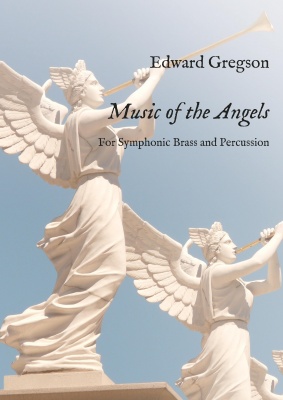
Music of the Angels (Symphonic Brass Ensemble - Score and Parts)
In 1998 Gregson was commissioned by conductor Martyn Brabbins to write a short concert opener with choir to mark his debut as Music Director of the Huddersfield Choral Society. Entitled ...and the seven trumpets... this ten minute flourish is founded on a verse from Chapter 8 of the Revelation To John (The Apocalypse), the last book in the Bible: 'and I saw the seven Angels which stood before God: and to them were given seven trumpets'. The performance employed the full power of the Huddersfield Town Hall organ and the brass section of the BBC Philharmonic, including seven trumpets and four horns placed strategically around hall.The following year, when Gregson received a commission from the Cheshire-based Foden's Brass Band (conducted at that time by Nicholas Childs) for a work to mark its centenary in 2000, he turned to the first portion of ...and the seven trumpets... as the basis for an ambitious celebratory work entitled The Trumpets of the Angels. "The opportunity to create an extended work which would break out of the brass band mould was an important milestone for me," the composer says. In 2015 he was asked by Nicholas Childs to create a new performing edition without organ for the Black Dyke Band. This received its first performance in April 2016 at the European Brass Band Festival in Lille. In 2018, Gregson revisited the music for a third time, returning the opening fanfares to orchestral brass and transforming substantial portions of the 'Black Dyke' version to create Music of the Angels, a dramatic canvas for symphonic brass and percussion.An array of bells and gongs offer an unmistakable key to the source of Gregson's inspiration. Inscribed In tribute to Olivier Messiaen, the work's principal material and its sound world, but crucially not the underlying musical processes, are influenced by Messiaen's masterpiece for wind and percussion, Et exspecto ressurectionem mortuorum (1964). Music of the Angels begins with braying of horns suggestive of the start of an ancient ritual. Six 'angel' trumpeters, set behind the ensemble, answer in sequence, with the evocative sound of tam-tams creating the Messiaen-like aura. Once the horns have reached the performing space, four of the trumpeters deliver highly contrasting fanfare cadenzas. At the climax of this episode, the individual fanfares are presented together, as if, perhaps, to reflect the Biblical writer's apocalyptic visions of hail, fire, seas of blood and the cataclysmic destruction of man and beast.This powerful vision of death and destruction gives way to a prayerful lament, re-imagining a sung Kyrie Eleison from the 'Black Dyke' edition, with flugel horn and euphonium obligati. The hushed atmosphere is broken by tenor and side drums, and trumpets five and six, which gallop away like the Horsemen of the Apocalypse. In the biblical account their steeds had 'heads like lions with fire and smoke and sulphur issuing from their mouths'.As the reverberation of a dramatic climax dies we hear the entry of the seventh trumpet, from 'on high', blazing forth with a version of the main that extends across the entire compass of the instrument - almost three octaves. Supported by a 'holy trinity' of gongs, an 'epic' final cadenza introduces new material which is further developed in a frenetic final section. This is announced by two sets of timpani, to the left and right. Braying brass (euphoniums and horns) once more adds an air of foreboding. As the music builds towards a magisterial conclusion, the Messiaen-inspired tritones of the principal motif are smoothed out into perfect 5ths and combined with the earlier material in a full-voiced chorale, over which the seventh trumpet blazes in triumph.- Programme note by Paul HindmarshScored for1 Trumpet in E flat (Trumpet 5)6 Trumpets in B flat (Trumpet 4 doubling Flugel Horn)4 Horns in F3 Tenor Trombones1 Bass TromboneEuphonium2 Tubas2 Timpani (Percussion 3 doubles Timpani 2)Percussion (3 players): 3 Tam-tams, 3 Suspended Cymbals, Bass Drum, Tenor Drum, Snare Drum, Tubular Bells.Duration: 16.00
Estimated dispatch 7-14 working days
-
 £54.50
Carnival of Venice (Bb Solo with Brass Band - Score and Parts) - Arban, Jean-Baptiste - Wilkinson, Keith M.
Bb Solo with Brass BandThe Carnival Of Venice is arguably everyone's favourite solo, especially the version by Arban (1820 - 1869), author of the famous brass-playing method book still in regular use today. Young soloists aspire to master the necessary techniques, accomplished soloists know that it is a "sure fire" winner with audiences and listeners love to be dazzled by a virtuoso display of variations on a theme they easily recognise.The theme is a traditional Italian song and has inspired variations for almost every possible instrument. Arban's famous variations were written in 1864. The arrangement remains faithful to the original while maintaining interest in the accompaniments by varying the orchestration. Although the arrangement is listed as featuring the euphonium as the solo instrument, it can also be used successfully as accompaniment for a cornet soloist.The arrangement has been recorded by Jeff Binns, euphonium, and St Louis Brass Band, musical director Keith M Wilkinson, on the CD Strike Up The Band and by Anthony Avitollo, euphonium, and Cuyahoga Valley Brass Band, musical director Keith M Wilkinson, on the CD Around The World.
Estimated dispatch 7-14 working days
-
 £44.95
Symphonic Rhapsody for Euphonium (Brass Band - Score and Parts) - Gregson, Edward
The Symphonic Rhapsody was published in 1976, although the genesis of the piece dates back to the early '60s when I was a teenager and played the euphonium in a Salvation Army band. The work incorporates an old gospel song - 'So we'll roll the old chariot along' - into a symphonically structured form. Motifs from the gospel song permeate the rest of the musical material so that the work hopefully has a unified whole. The 'variations' are less actual variations on the tune itself, but more a comment on certain melodic aspects.Although the writing is naturally virtuosic in a way which is obvious for such a solo instrument within the brass band, it never the less unfolds many more lyrical aspects of the instrument's capabilities. Towards the end of the piece the tune is heard once again in its full version, leading to a coda where the euphonium takes centre stage in a bravura manner.- Edward GregsonDuration: 10.00
Estimated dispatch 7-14 working days
 View Music