
Results
-
 £61.99
Balkan Dance (Brass Band - Score and Parts)
The Balkans region has always been a source of musical inspiration for composers throughout the centuries. Strong rhythms and often-abundant musical climaxes are two important characteristics of this rich and varied musical style. Etienne Crausaz took some of these elements and mixed it with elements of rock, turning this Balkan Dance into an exuberant and spectacular piece of music, during which no one can remain seated! Duration: 3.30
Estimated dispatch 7-14 working days
-
 £99.95
Malcolm Arnold Variations (Score and Parts)
MALCOLM ARNOLD VARIATIONS was commissioned by Philip Biggs and Richard Franklin for the 20th All England Masters International Brass Band Championship held in the Corn Exchange, Cambridge on 25 May 2008. The work is dedicated to Anthony Day, long time carer of Sir Malcolm Arnold in his final years. I first met Malcolm and Anthony in 1990 and remained in constant touch until Malcolm's passing in 2006. Anthony, of course, remains a friend and plays his own role subliminally in this piece. The work is not based on any of Malcolm Arnold's own themes, rather it is a portrait of him (and by association Anthony Day) through my eyes and as a result of my friendship with both parties over some 18 years. If there is any theme as such it is the personalities of the players, the protagonist and his carer placed together by my own efforts coloured and influenced by aspects of Arnold's style and technique without recourse to direct quotation but through allusion and parody. It is of course designed as a brass band test piece but in my eyes is first and foremost a musical challenge. The pyrotechnical elements are there but always secondary to the musical thrust of the work's structure. I have long beforehand submerged myself in Malcolm Arnold's music and ultimately delivered this tribute. Music Directors will be advised to acquaint themselves with the composer's personal music, particularly the film scores, symphonies, concertos and ballets: the solutions towards a successful interpretation of my piece are all in there - and YES, I want, and sanction, this piece to be interpreted, and therein lies the challenge for those of you 'up front'! The challenge for players is that of virtuosity, ensemble and careful attention to where they are individually in relation to their colleagues - a question of balance, taste and insight. With regard to tempi, as is my usual custom, I have indicated all metronome marks with the prefix circa. I would suggest that the fast music is played at these tempos but that the more rubato moments can be allowed some freedom in expression and fluidity of line. With regard to the type of mutes to be employed - this decision I leave to the discretion of players and conductors. Structurally the work is cast as an Introduction, 20 Variations and a Finale. Some variations are self contained, others run into each other as sequences in the same tempo. In other variations, segments are repeated and developed. I could describe the overall concept as a miniature ballet or a condensed film score - there is much drama and character and the repeated elements assist this in driving the action forward. I have deliberately avoided the more extremely dark qualities of Malcolm's own music in this, my celebration of this master-composer, as I have always viewed (and evidenced by my previous Masters scores Tristan Encounters and Chivalry) that the Cambridge contest is a 'sunshine- affair' and firmly believe that Malcolm Arnold would have had it no other way too!
Estimated dispatch 7-14 working days
-
 £49.95
Malcolm Arnold Variations (Score Only)
MALCOLM ARNOLD VARIATIONS was commissioned by Philip Biggs and Richard Franklin for the 20th All England Masters International Brass Band Championship held in the Corn Exchange, Cambridge on 25 May 2008. The work is dedicated to Anthony Day, long time carer of Sir Malcolm Arnold in his final years. I first met Malcolm and Anthony in 1990 and remained in constant touch until Malcolm's passing in 2006. Anthony, of course, remains a friend and plays his own role subliminally in this piece. The work is not based on any of Malcolm Arnold's own themes, rather it is a portrait of him (and by association Anthony Day) through my eyes and as a result of my friendship with both parties over some 18 years. If there is any theme as such it is the personalities of the players, the protagonist and his carer placed together by my own efforts coloured and influenced by aspects of Arnold's style and technique without recourse to direct quotation but through allusion and parody. It is of course designed as a brass band test piece but in my eyes is first and foremost a musical challenge. The pyrotechnical elements are there but always secondary to the musical thrust of the work's structure. I have long beforehand submerged myself in Malcolm Arnold's music and ultimately delivered this tribute. Music Directors will be advised to acquaint themselves with the composer's personal music, particularly the film scores, symphonies, concertos and ballets: the solutions towards a successful interpretation of my piece are all in there - and YES, I want, and sanction, this piece to be interpreted, and therein lies the challenge for those of you 'up front'! The challenge for players is that of virtuosity, ensemble and careful attention to where they are individually in relation to their colleagues - a question of balance, taste and insight. With regard to tempi, as is my usual custom, I have indicated all metronome marks with the prefix circa. I would suggest that the fast music is played at these tempos but that the more rubato moments can be allowed some freedom in expression and fluidity of line. With regard to the type of mutes to be employed - this decision I leave to the discretion of players and conductors. Structurally the work is cast as an Introduction, 20 Variations and a Finale. Some variations are self contained, others run into each other as sequences in the same tempo. In other variations, segments are repeated and developed. I could describe the overall concept as a miniature ballet or a condensed film score - there is much drama and character and the repeated elements assist this in driving the action forward. I have deliberately avoided the more extremely dark qualities of Malcolm's own music in this, my celebration of this master-composer, as I have always viewed (and evidenced by my previous Masters scores Tristan Encounters and Chivalry) that the Cambridge contest is a 'sunshine- affair' and firmly believe that Malcolm Arnold would have had it no other way too!
Estimated dispatch 7-14 working days
-
£110.00
The Final Frontier - Geert Jan Kroon
In The Final Frontier, the composer explores different associations with the universe. Inspired by Stephen Hawking's (1942-2018) book Brief Answers to the Big Questions, the piece describes the wonders and dangers of the universe, the big questions about the smallest elements, and the possibility of space travel. The work consists of four movements. The first movement, 'Energy and Space', is the exposition of both main materials. With energy and space, a universe can be created. The second movement, 'The Great Unknown', is a fast section in which the materials are further explored and depicts the dangers of the universe, like supernovae and black holes. The third movement, 'The Big Questions', is a slow movement with different soloists and music of a reflective nature. Imagine how in the tiniest elements, whole dimensions could be rolled up. Also, a Dutch pioneer in cosmology is hidden in the notes. The fourth movement, 'The Final Frontier', is a big build-up to a majestic finale, portraying the excitement of space travel. The Final Frontier was the set test piece of the 3rd section at the Dutch National Brass Band Championships.
-
 £75.00
De Profundis - john wallace, Tony George
An original composition for massed brass bands and brass quintet devised by John Wallace, Tony George and Svend McEwan-Brown. A cross-genre production work, including scene setting, lighting and the spoken word reciting associated poems, De Profundis was given its world premiere at the East Neuk Festival on 1 July 2017 at The Bowhouse, performed by The Wallace Collection, Tullis Russell Mills Band and friends.If you would like to perform this work, The Wallace Collection are able to provide production consultancy and supply the brass quintet elements of the production - if you would like to discuss potential performances, please contact them direct on [email protected] NotesDe Profundis is a large scale brass band performance piece created by John Wallace and Tony George, based upon an original idea by Svend McEwan-Brown. It was developed in sessions with members of the Tullis Russell Mills Band, commissioned and premiered at East Neuk Festival 2017 at The Bowhouse, St Monans, on 1st July 2017.It was supported by Creative Scotland, Fife Council, Toby and Kate Anstruther, Shields and Carol Henderson, Donald and Louise MacDonald.This project remembers and celebrates the lives and music of miners. It is designed to give brass bands a performance piece that uses elements of improvisation and participation, to offer the players a stimulating and inspiring experience beyondthe normal run of brass band repertoire.All the music is drawn from two settings of the psalm 'Out of the Deep" (De Profundis).Look and Listen (courtesy of Tullis Russell Mills Band and The Wallace Collection at 2017 East Neuk Festival):More InformationMore details about the De Profundis project is available on a dedicated web-page on The Wallace Collection website.
In Stock: Estimated dispatch 3-5 working days
-
 £65.00
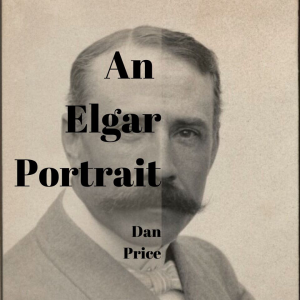
AN ELGAR PORTRAIT - D.Price
This work was composed in commemoration of the 150th Anniversary of the birth English Composer Sir Edward Elgar. The suite is in three movements: 'Introduction', 'Elegy' and 'March', each of which have been inspired by three of Elgar's most celebrated works; Chanson de Matin, Nimrod ('Variation IX' from the Enigma Variations) and Pomp and Circumstance No.1.'Introduction' - Hollybush HillHollybush Hill is the name of one of the peaks of the Malvern Hills in Worcestershire. The Malverns were a favourite walking area for Elgar and his wife, and their panoramic views inspired much of Elgar's music.'Elegy' - BroadheathBroadheath is the small village at the foot of the Malvern Hills where Elgar was born (and lived at various times throughout his life). Elgar is buried not far from Broadheath at St Wulstan's in Little Malvern. 'March' - Worcester CathedralMany of the Worcestershire ensembles and music festivals played an important role in Elgar's early musical education. He was heavily involved in The Three Choirs Festival and either conducted or played in many of the light orchestras and vocal groups that performed at venues across Worcester. A statue of Elgar overlooks the Cathedral at the end of Worcester High Street.An Elgar Portrait has been used regularly as an own-choice test-piece for Section 4 bands, and was also selected as the set work for the Swiss National Championships in 2007 as well as the Pontins Championships in 2008. The composer has slightly reworked this piece for the Section 4 Final of the National Brass Band Championships of Great Britain 2020 and it's this version that should be performed at the contest. If bands currently have an older version in their libraries, please contact us directly for more information.
In Stock: Estimated dispatch 3-5 working days
-
 £20.00
atrium phase
Descriptionatrium phase was inspired by listening to works performed at the 2013 Huddersfield Contemporary Music Festival in the atrium of the Huddersfield University Creative Arts Building. The atrium, despite being a functional area incorporating meeting areas and a cafe, has almost coincidentally evolved into a fantastic (if somewhat resonant) performance space. Performers can be positioned on three different sides and three different levels, making the atrium ideally suited to spatially separated performances of a variety of music from Gabrieli to Christian Wolff.In atrium phase the band is separated into four groups - ideally these should be positioned around the audience as follows: group A to the left of the audience, group B in front of the audience, group C to the right of the audience and group D (the four basses) behind the audience. The music "phases" between the groups in the manner of contemporary electroacoustic music, with the bass group acting as a kind of "subwoofer". Starting very slowly, the music accelerates using metrical modulations to finish at considerable speed.The music is intended to be performed without a conductor wherever possible - the three percussionists should set and control the tempo, and there are clear points of overlap for percussionists to allow synchronisation between groups.atrium phase won the inaugural Foden's Band Composition Competition in 2014 and the first performance was given on 24 January 2015 at the RNCM Festival of Brass by Foden's Band.Performance Notes:The band is separated into four groups - ideally these should be positioned around the audience as follows: group A to the left of the audience, group B in front of the audience, group C to the right of the audience and group D (the four basses) behind the audience. The music "phases" between the groups in the manner of contemporary electroacoustic music, with the bass group acting as a kind of "subwoofer". Starting very slowly, the music accelerates using metrical modulations to finish at considerable speed.Instruments in group A require cup mutes (soprano, 2 x cornets, horn, baritone, trombone, euph), group B harmon mutes (4 x cornets, baritone and trombone - the baritone should use a trombone mute) and group C require fibre straight mutes (3 x cornets, flugel, 2 x horns, euph., bass trom - NOT metal mutes if possible).Percussion instruments required are claves, wood block and 2 x temple blocks. The music is intended to be performed without a conductor wherever possible - the three percussionists should set and control the tempo, and there are clear points of overlap for percussionists to allow synchronisation between groups.Approximate duration 6'17"
Estimated dispatch 7-14 working days
-
 £49.20
Alchemists' Fire - Lucy Pankhurst
An original composition from Lucy Pankhurst and Winner of the 2011 John Golland Award, receiving its premiere at the RNCM Festival of Brass that same year.It is a complex, energetic and invigorating major work for brass band, and one which rightly demands attention through its intricate scoring, impact-making effects and bubbling brilliance!Comments from the composer on the work's title and its multi-purpose influence and inspiration upon her composition:"The phrase "Alchemists' Fire" has several possible connotations:Firstly, Alchemists' Fire is a magical weapon featured in the Dungeons & Dragon role playing game. It is a potion, so can be used to splash, throw or pour onto a target, dealing fire damage if it hits successfully.The second possible meaning comes from an historical source, where it was also known as Greek Fire, from which the D&D element takes its influence. This was an incendiary weapon used by the Byzantine Empire, typically used in naval battles to great effect, as it could continue to burn on water. It provided a technological advantage and was responsible for many key Byzantine victories. The manufacture of this 'fire' was kept a deadly secret; so much so that the formula was eventually lost and contemporary scientists and historians can only speculate at what the chemical make-up might have been.The final implication is a much more visual and sensory concept; that of the fire actually used by the Alchemist in his work - raging, dangerous and white-hot. Some sections of the work reflect the idea of 'magic' and ongoing experiments, some successful, some failing dangerously, in a cacophony of pops, fizzes and explosions amidst furious heat and brief moments of calm as the fire slowly cools, sizzling with residual components and elemental energy."
In Stock: Estimated dispatch 3-5 working days
-
 £30.00
On Ilkley Moor Pastiche
I was commissioned to write a piece for the RNCM Trombone Quartet by the bass trombonist Trevor Slade, a true Yorkshireman. I have created a full brass band version. There is an element of comedy, (though not irreverent). The introduction is a direct reference to a well known film theme about bouncing bombs! We then hear the famous Yorkshire melody with overtones of the old BBC Grandstand theme, (for those old enough to remember). A 'patriotic' section is a mixture of "Ilkley Moor", and those bouncing bombs again! We are then taken to a 'Dixieland' treatment, with 'overtones' of a 'Hootenannyish' piece, which every bandsman/woman is familiar with! What follows is a rather pretty 'Edmundo Ross(ish)' beguine. After a brief Beethovian bit, we are taken back once again to the original pastiche, with a BIG ending. A good piece for the lighter element of the concert programme.
In Stock: Estimated dispatch 3-5 working days
-
 £45.00
Starburst
Commissioned by the Greater Manchester Hub Youth Brass Band for their 2014 season, Starburst is a high-octane work in a contemporary style with elements of rock and funk fusion. The piece features soloistic input from all sections, with vibrant percussion colours adding to the overall effectiveness. Although the piece sounds extremely virtuosic it is accessible for most bands, and is fun to rehearse as well as exciting to listen to. Duration: 00:04:00 Grade: 3 (Works well when paired with Aurora Awakes)
Estimated dispatch 5-7 working days
 View Music