
Results
-
 £66.43
Armistice at Flanders Fields (Brass Band) Dwayne Bloomfield
This poignant and powerful work for brass band by Dwayne Bloomfield describes the day peace was announced to end World War I. The piece was written in 2023 to be played by bands around the world to mark Armistice Day. The composer writes: 'Unless you were there, it's impossible to imagine what it must have been like the day peace was announced ending World War I. The feelings soldiers experienced, who after years of fighting and suffering, to know it was over and they would return home to see family and loved ones again. This piece tries to tell their story. The work begins by approaching the front, distant artillery and battle sounds heard while the carnage and loss of lives was already known to the world. The band builds as we enter the thick of battle, the death and destruction, the conditions faced and the loss of hope of ever surviving. The next section, in 7/8 time, reflects the two sides fighting - both sides attacking and defending with mostly little result, but for the loss of more lives. Two euphoniums then depict the news and hope of peace talks. However, fighting did continue right up to the very end and on the last day there would be another 2,738 casualties. The Canadians were still battling to capture the town of Mons that morning. A song is sung in reflection of the estimated 5.5 million allied soldiers who lost their lives during World War I, then a clock ticks down the final minutes. The last three known casualties are depicted with French soldier Augustin Trebuchon, killed at 10:45am by a single shot as he rushed down the trenches to spread the news of coming peace; Canadian George Lawrence Price killed by a sniper round at 10:58am at the battle of Mons, and lastly a machine gun burst that killed American Henry Gunther, who is believed to have fallen on the 11th hour. Bells then toll ringing around the world announcing the end of the war. After years of war, it must have been jubilation for the families at home knowing their loved ones would be returning to them. The band builds with a hymn for peace as a final tribute to those who fought, before the piece resides with one of the most dreaded sounds at that time, the knock on the door from a telegram delivery boy or better known then as the Angels of Death. It wasn't just the 2,738 families from the casualties of the last day who would receive such a knock, but many more who expected their loved ones to be returning home would instead find out they were instead killed in the last weeks. So close. Driving around the battlefields today one comes across many intersections in the countryside which have cemetery signposts pointing in every direction. While the last post sounds in ceremonies today, this last bugle call instead depicts the horrors, devastation and death the soldiers faced during the war and right up the 11th hour of the 11th day of the 11th month, Armistice at Flanders Fields.' To view a video of Dallas Brass Band performing the work please visit https://www.youtube.com/watch?v=ljfyVz3cMgk Duration: Approx. 15.00 minutes Difficulty Level: 2nd Section + PDF download includes parts and score. Sheet music available from www.brassband.co.uk Instrumentation: Soprano Cornet Eb Solo Cornet Bb Repiano Cornet Bb 2nd Cornet Bb 3rd Cornet Bb Flugel Horn Bb Solo Horn Eb 1st Horn Eb 2nd Horn Eb 1st Baritone Bb 2nd Baritone Bb 1st Trombone Bb 2nd Trombone Bb Bass Trombone Euphonium Bb Bass Eb Bass Bb Percussion 1-3
In Stock: Estimated dispatch 1-3 working days
-
£35.00
Lament (from Macbeth) - Peter Meechan
Macbeth was commissioned by the Scottish Brass Band Association for the 2007 Scottish Open Championship, and takes itsa inspiration from the Shakespeare play of the same name.The Lament is the central, emotional core to the work. Although the play tells of Macbeth not feeling the pain of his wifeas death, this lament ponders not only her death, but the tale as a whole.
Estimated dispatch 12-14 working days
-
£70.00
Macbeth - Peter Meechan
Commissioned by the Scottish Brass Band Association for the 2007 Scottish Open Championship, Macbeth takes itsa inspiration from the Shakespeare play of the same name. Character portraits (Of the three witches as well as Macbeth himself), abstractions (The lament), and scenes (Macbethas final battle with Macduff) make up the nine sections of the piece.i: WitchesThe prophecies of the three witches are an integral part of the play, and in this opening section, these mysterious characters are represented by three different sections of music that introduces the listener to the musical material of the piece.ii: DaggerMacbethas aIs this a dagger I see before theea speech, where an imaginary dagger leads him to contemplate the pending murder, builds in intensity before the bell tolls at itsa conclusion - a sign from Lady Macbeth that Duncan is now alone.iii: General MacbethA character portrait of Macbeth - a fearless General who has led his armies to defeat foes from all over Europe. His ambition and flair that make him such a great General are also the characteristics that lead to his eventual downfall.iv: Contemplations of Lady MacbethAlone and mad, Lady Macbeth ponders all that has gone, before taking her own life.v: LamentAlthough the play tells of Macbeth not feeling the pain of his wifeas death, this lament ponders not only her death, but the tale as a whole.vi: Tomorrow and tomorrow and tomorrowIt is in this final soliloquy that we see the ultimate tragedy of Macbeth - the realisation that his life is ultimately worthless.vii: A spell still castThis acts as an prologue to section eight, restating the original awitchesa music, before heading into Macbethas final battle.viii: Final BattleMacbethas final battle, where he locks swords with Macduff.ix: Not of woman bornMacbethas realisation that the witches have misled him comes all too late, as Macduff beheads Macbeth, fulfilling the last prophecy.
Estimated dispatch 12-14 working days
-
 £30.00
Janacek's 'Taras Bulba' - Janacek
Comments from Tim Paton, the arranger of Janacek's 'Taras Bulba': "I will never forget the day in 1967 when I was introduced to the music of Leos Janacek, a Czech composer born in 1854, who died in 1928. Janacek was little known in Britain until the 1960's, when the conductor Charles Macherras introduced his unique music. I heard a recording of Macherras conducting the Pro Arte Orchestra in a performance of Janacek's "Sinfonietta".It was in 1969 that I first heard Janacek's Symphonic Rhapsody, "Taras Bulba".Janacek's music is exciting, powerful, emotive, impassioned and unpredictable.I have taken the first and third movements of this piece, and adapted them for Brass Band, which was at times extremely difficult, but rewarding. It sometimes took up to an hour to be satisfied that a mere several bars had been reproduced to convey the composer's intentions.The Death of AndriThe Cossaks, under the leadership of Taras Bulba, are fighting against the Poles in the 17th century. Taras's son Andri seeks to rescue his love, a Polish princess, from a city which is being besieged by the Cossaks. Having found her, he throws in his lot with the Poles, but is finally captured by his father, who executes him as a traitor before riding off again to battle.Prophesy and Death of Taras BulbaTaras himself is finally captured and condemned to be nailed to a tree and burned alive. As the flames creep around him, Taras has the satisfaction of seeing histroops escape, and as he dies, sees a vision of his country freed at last.This is incredibly descriptive music. The mood is constantly changing, creating feelings of love and anger, celebration and melancholy, despair and triumph.This Brass Band EditionThe duration of the original symphonic rhapsody, three movements, is approximately 23 minutes. I chose the first and third movements, so the Brass Band edition is approximately 14 minutes. The main reason is twofold: Being realistic about the demands this music would place on the stamina of the brass player; Keeping the piece less than 15 minutes, so that, if desired, it could be used on the contest platform.Two unique qualities of Janacek's music had to be taken into account when preparing this brass band version. His compositional technique was individual, at times not sticking to traditional expectations, in both form and orchestration. I imagined what the genius himself would have said looking at my work, and how to tackle a particular section to emulate his original intentions. This was particularly the case when dealing with high woodwind and violin parts, the use of tremolo in string parts, and the orchestral harp.Percussion: Janacek included timpani, side drum, cymbals, triangle and tubular bells. For reasons stated previously, I have also included xylophone and glockenspiel. I have also added the gong in a couple of places to enhance the dramatic effect of the music.
In Stock: Estimated dispatch 3-5 working days
-
 £58.00
Henry V (Score only) - William Walton
It takes a special ability to compose film scores which serve the images perfectly yet translate into first class concert music. William Walton was such a talent as the continuing popularity of his brilliantly evocative film music shows. Included are the poignant Death of Falstaff, the victorious Agincourt Song and Touch her soft lips and part - one of the most tender miniatures in all music. Winwood Music are delighted to bring this music from Laurence Olivier's classic film to the brass band world in a fabulous arrangement, including optional narrator, by Edward Watson - so idiomatic that you'll think this is the original version! Full Movement Listing: Fanfare Prologue: O For a Muse of Fire Interlude at the Boar's Head Inn The Death of Falstaff Touch Her Soft Lips Fanfare Fanfare The Battle of Agincourt Bailero Interlude at the French Court The Agincourt Song
Estimated dispatch 7-9 working days
-
 £74.00
Henry V (Parts only) - William Walton
It takes a special ability to compose film scores which serve the images perfectly yet translate into first class concert music. William Walton was such a talent as the continuing popularity of his brilliantly evocative film music shows. Included are the poignant Death of Falstaff, the victorious Agincourt Song and Touch her soft lips and part - one of the most tender miniatures in all music. Winwood Music are delighted to bring this music from Laurence Olivier's classic film to the brass band world in a fabulous arrangement, including optional narrator, by Edward Watson - so idiomatic that you'll think this is the original version! Full Movement Listing: Fanfare Prologue: O For a Muse of Fire Interlude at the Boar's Head Inn The Death of Falstaff Touch Her Soft Lips Fanfare Fanfare The Battle of Agincourt Bailero Interlude at the French Court The Agincourt Song
Estimated dispatch 7-9 working days
-
 £74.95
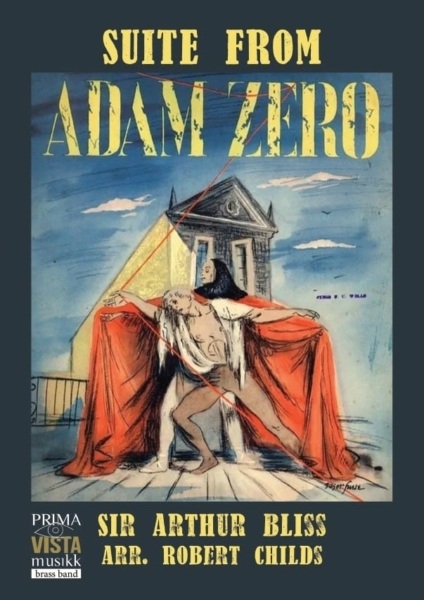
Adam Zero, Suite from (Brass Band - Score and Parts)
Selected as the Section 2 test piece for the National Brass Band Championships of Great Britain 2025Following his ballet Checkmate, Bliss composed another score for the, by then, Sadler's Wells Ballet, Miracle in the Gorbals, which was choreographed by Robert Helpmann, to a scenario by Michael Benthall. Premired in 1944, the ballet made a considerable impact and was a box-office success. It was followed in turn by a further collaboration with Helpmann and Benthall, Adam Zero. This would serve Helpmann, in the eponymous role, as a vehicle in two respects: demonstrating his gifts as a dancer-actor and as a choreographer. First performed at the Royal Opera House, Covent Garden, on 8 April 1946, Adam Zero was conducted by Constant Lambert, the work's dedicatee. Bliss considered it 'his most varied and exciting ballet score'. Benthall provided a synopsis for the programme:There is a philosophy that life moves in an endless series of timeless cycles. As Nature passes through Spring, Summer, Autumn and Winter, so man is born, makes a success in his own particular sphere, loses his position to a younger generation, sees his world crumble before his eyes and only finds peace in death. This age-old story is told in terms of a Company creating a ballet and calling on the resources of the theatre to do so. Lighting, stage mechanism, dance conventions, musical forms and costumes and scenery of all periods are used to symbolize the world of 'Adam Zero'.Apart from Adam, as the Principal Dancer, other main roles included the Stage Director (representing Omnipotence), and Adam's Fates (Designer, Wardrobe Mistress, and Dresser). 'The Woman in this allegory', wrote Bliss, 'under the symbol of the Choreographer, was both the creator and destroyer of Adam: his first love, his wife, his mistress, and finally the figure of beneficent Death.' When the curtain rose, the 'audience saw the Covent Garden stage right back to the wall, completely empty except for the protagonists, 'the Company poised, still and expectant, as they await the birth of... Adam Zero.'Unfortunately, soon after the premire, Helpmann injured himself and had to withdraw from the remaining performances. Despite generally positive reviews, the ballet did not capture the imagination of audiences and, to Bliss's considerable disappointment, was not revived. Seventy years would elapse before its first major return to the stage, in 2016, performed by the ballet company of Stadttheater Bremerhaven with choreography by Sergei Vanaev.Bliss extracted a concert suite from the ballet, conducting its first performance with the City of Birmingham Symphony Orchestra on 28 October 1948. For his own suite, arranged for brass band in 2023, Dr Robert Childs chose three dances linked to the seasons, book-ending them with the ebullient 'Fanfare Overture' and 'Fanfare Coda'. After Adam has grown to manhood, his Fates clothe him in a costume synonymous with confident youth, appropriate for the virile, ardent 'Dance of Spring'. In the 'Approach of Autumn', Adam, now wearing a sombre costume, has grown older: his Fates have streaked grey in his hair and put lines on his face. But they had earlier raised Adam to the zenith of his power, and the 'Dance of Summer' depicts him in the prime of life, in music of sweeping grandeur. The 'Fanfare Coda' signals that the next cycle of life is about to begin.Duration: 10.30
Estimated dispatch 7-14 working days
-
£31.95
Adam Zero, Suite from (Brass Band - Score only)
Selected as the Section 2 test piece for the National Brass Band Championships of Great Britain 2025Following his ballet Checkmate, Bliss composed another score for the, by then, Sadler's Wells Ballet, Miracle in the Gorbals, which was choreographed by Robert Helpmann, to a scenario by Michael Benthall. Premired in 1944, the ballet made a considerable impact and was a box-office success. It was followed in turn by a further collaboration with Helpmann and Benthall, Adam Zero. This would serve Helpmann, in the eponymous role, as a vehicle in two respects: demonstrating his gifts as a dancer-actor and as a choreographer. First performed at the Royal Opera House, Covent Garden, on 8 April 1946, Adam Zero was conducted by Constant Lambert, the work's dedicatee. Bliss considered it 'his most varied and exciting ballet score'. Benthall provided a synopsis for the programme:There is a philosophy that life moves in an endless series of timeless cycles. As Nature passes through Spring, Summer, Autumn and Winter, so man is born, makes a success in his own particular sphere, loses his position to a younger generation, sees his world crumble before his eyes and only finds peace in death. This age-old story is told in terms of a Company creating a ballet and calling on the resources of the theatre to do so. Lighting, stage mechanism, dance conventions, musical forms and costumes and scenery of all periods are used to symbolize the world of 'Adam Zero'.Apart from Adam, as the Principal Dancer, other main roles included the Stage Director (representing Omnipotence), and Adam's Fates (Designer, Wardrobe Mistress, and Dresser). 'The Woman in this allegory', wrote Bliss, 'under the symbol of the Choreographer, was both the creator and destroyer of Adam: his first love, his wife, his mistress, and finally the figure of beneficent Death.' When the curtain rose, the 'audience saw the Covent Garden stage right back to the wall, completely empty except for the protagonists, 'the Company poised, still and expectant, as they await the birth of... Adam Zero.'Unfortunately, soon after the premire, Helpmann injured himself and had to withdraw from the remaining performances. Despite generally positive reviews, the ballet did not capture the imagination of audiences and, to Bliss's considerable disappointment, was not revived. Seventy years would elapse before its first major return to the stage, in 2016, performed by the ballet company of Stadttheater Bremerhaven with choreography by Sergei Vanaev.Bliss extracted a concert suite from the ballet, conducting its first performance with the City of Birmingham Symphony Orchestra on 28 October 1948. For his own suite, arranged for brass band in 2023, Dr Robert Childs chose three dances linked to the seasons, book-ending them with the ebullient 'Fanfare Overture' and 'Fanfare Coda'. After Adam has grown to manhood, his Fates clothe him in a costume synonymous with confident youth, appropriate for the virile, ardent 'Dance of Spring'. In the 'Approach of Autumn', Adam, now wearing a sombre costume, has grown older: his Fates have streaked grey in his hair and put lines on his face. But they had earlier raised Adam to the zenith of his power, and the 'Dance of Summer' depicts him in the prime of life, in music of sweeping grandeur. The 'Fanfare Coda' signals that the next cycle of life is about to begin.Duration: 10.30
Estimated dispatch 7-14 working days
-
£21.95
Adam Zero, Suite from (Brass Band - Study Score)
Selected as the Section 2 test piece for the National Brass Band Championships of Great Britain 2025Following his ballet Checkmate, Bliss composed another score for the, by then, Sadler's Wells Ballet, Miracle in the Gorbals, which was choreographed by Robert Helpmann, to a scenario by Michael Benthall. Premired in 1944, the ballet made a considerable impact and was a box-office success. It was followed in turn by a further collaboration with Helpmann and Benthall, Adam Zero. This would serve Helpmann, in the eponymous role, as a vehicle in two respects: demonstrating his gifts as a dancer-actor and as a choreographer. First performed at the Royal Opera House, Covent Garden, on 8 April 1946, Adam Zero was conducted by Constant Lambert, the work's dedicatee. Bliss considered it 'his most varied and exciting ballet score'. Benthall provided a synopsis for the programme:There is a philosophy that life moves in an endless series of timeless cycles. As Nature passes through Spring, Summer, Autumn and Winter, so man is born, makes a success in his own particular sphere, loses his position to a younger generation, sees his world crumble before his eyes and only finds peace in death. This age-old story is told in terms of a Company creating a ballet and calling on the resources of the theatre to do so. Lighting, stage mechanism, dance conventions, musical forms and costumes and scenery of all periods are used to symbolize the world of 'Adam Zero'.Apart from Adam, as the Principal Dancer, other main roles included the Stage Director (representing Omnipotence), and Adam's Fates (Designer, Wardrobe Mistress, and Dresser). 'The Woman in this allegory', wrote Bliss, 'under the symbol of the Choreographer, was both the creator and destroyer of Adam: his first love, his wife, his mistress, and finally the figure of beneficent Death.' When the curtain rose, the 'audience saw the Covent Garden stage right back to the wall, completely empty except for the protagonists, 'the Company poised, still and expectant, as they await the birth of... Adam Zero.'Unfortunately, soon after the premire, Helpmann injured himself and had to withdraw from the remaining performances. Despite generally positive reviews, the ballet did not capture the imagination of audiences and, to Bliss's considerable disappointment, was not revived. Seventy years would elapse before its first major return to the stage, in 2016, performed by the ballet company of Stadttheater Bremerhaven with choreography by Sergei Vanaev.Bliss extracted a concert suite from the ballet, conducting its first performance with the City of Birmingham Symphony Orchestra on 28 October 1948. For his own suite, arranged for brass band in 2023, Dr Robert Childs chose three dances linked to the seasons, book-ending them with the ebullient 'Fanfare Overture' and 'Fanfare Coda'. After Adam has grown to manhood, his Fates clothe him in a costume synonymous with confident youth, appropriate for the virile, ardent 'Dance of Spring'. In the 'Approach of Autumn', Adam, now wearing a sombre costume, has grown older: his Fates have streaked grey in his hair and put lines on his face. But they had earlier raised Adam to the zenith of his power, and the 'Dance of Summer' depicts him in the prime of life, in music of sweeping grandeur. The 'Fanfare Coda' signals that the next cycle of life is about to begin.Duration: 10.30
Estimated dispatch 7-14 working days
-
 £34.95
Of Wind & Weeping - Christopher Bond
The relationship between Achilles and Patroclus is a key element of the myths associated with the Trojan war.. Its exact nature has been a subject of dispute in both the classical period and modern times. In the lliad, the two heroes have a deep and meaningful friendship. Achilles is tender towards Patroclus, while he is callous and arrogant towards others. Of Wind & Weeping (2015) is a flugel solo, with the soloist representing Greek warrior Achilles and the pain he faces following the death of Patroclus. For a brief moment, Achilles' character shifts from a strong and unbreakable warrior to an emotional and vulnerable character. The solo should be played with expression and feeling, a character who is mourning a loved one with mixed feelings of sadness, shock and vengeance. The work was written in early 2015 for flugel soloist David James and Tongwynlais Temperance Band, with whom he is a member.
Estimated dispatch 10-14 working days
 View Music