
Results
-
£32.95
Dance of the Three Old Maids - Roger Barsotti
Estimated dispatch 5-14 working days
-
 £32.95
DANCE OF THE THREE OLD MAIDS (Brass Band) - Porter-Brown, Reginald
Estimated dispatch 7-14 working days
-
 £95.00
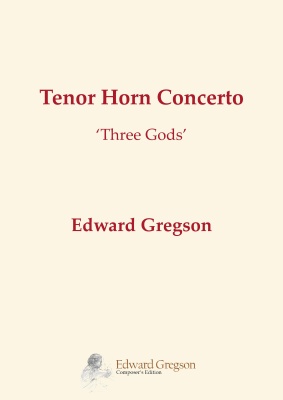
Tenor Horn Concerto 'Three Gods' (Tenor Horn Solo with Brass Band - Score and Parts)
Edward Gregson's Tenor Horn Concerto (Three Gods) was commissioned by the Belgian tenor horn soloist Tim de Maeseneer for a recording of commissioned works he made in 2024 with his own band, Brass Band Willebroek.The subtitle of 'Three Gods' refers to three mythological Greek Gods: Zeus, Hermes and Apollo. The idea for this came from Gregson's Viola Concerto, which he composed in 2023 and which was similarly subtitled 'Three Goddesses'. Indeed, the first movement of the horn concerto shares some common material with the viola concerto, although the other movements are newly composed.The concerto exploits the noble character of the horn, but the writing is also virtuosic in character as well as lyrical and melodic, demanding an extended playing range of nearly four octaves with a variety of colouration in its sonorities. The unifying motif of the whole concerto is the interval of a rising 5th, heard at the outset. The opening also has some other surprises (both seen and heard).The musical ideas, cast in three separate movements, take their starting point from the characters of the Three Gods in the title:Zeus, ruled as King of the Gods on Mount Olympus, and was the God of Thunder and Lightning and of War. His music is often threatening and violent, but also has a more tender side as portrayed in the lyrical second subject. However, the dominant mood is one of foreboding.Hermes was the great messenger to the Gods who could travel between realms on his winged sandals. Thus, his music is fast, fleet of foot, and mercurial - a dashing scherzo, but with lyrical and expressive moments.Apollo, the God of Music and Dance (and the Sun), symbolises virtue and beauty. This final movement, 'Hymn to Apollo', is mainly slow and hymn-like and cast in a continuous stream of melody passed between soloist and band. Brief fanfares herald a triumphant march, before the music returns to its quiet opening, gradually rising to a triumphant climax with glittering melodic percussion leading the way. The music ends in a blaze of glory!Duration: 17.00
Estimated dispatch 7-14 working days
-
 £174.10
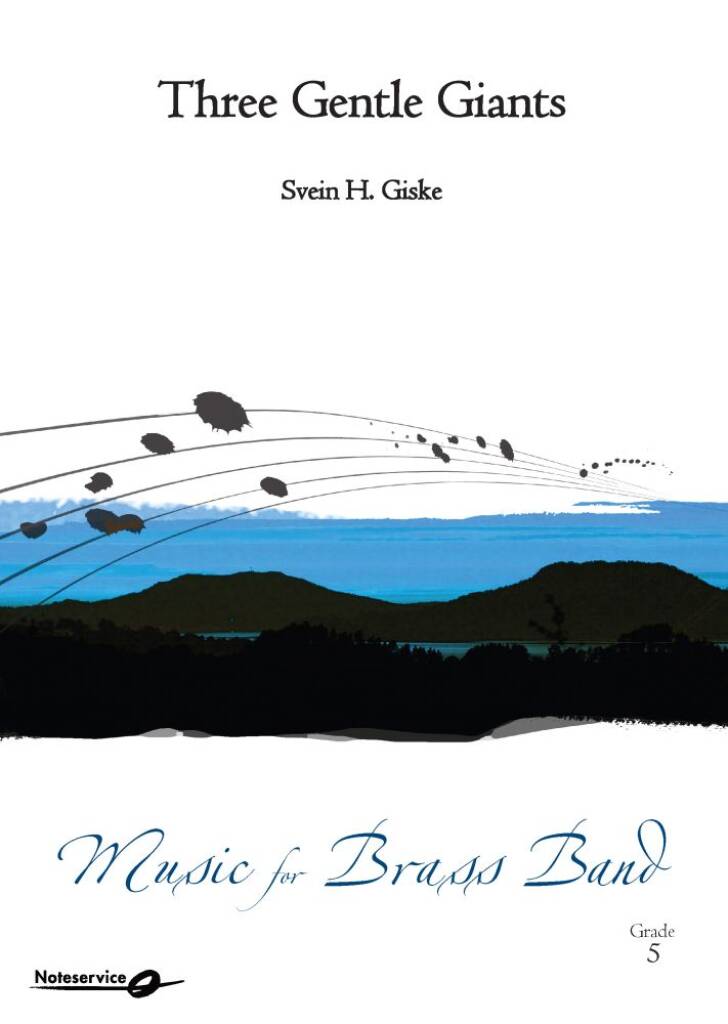
Three Gentle Giants - Svein H. Giske
Three Gentle Giantswas commissioned by Grenland International Brass Festival as a test piece for the 2nd division in 2008.Three Gentle Giants. The three giants each have their own monologue which leads into a conversation. They gather recognition and respect from each others views as the dialogue evolves. Eventually they find a more nutual and singular expression to their conversation.The giants are old with a long life behind them. This can be heard through a slow, melancholic waltz. A waltz is dance commonly linked to festiveoccasions, such as weddings, but for the giants it holds much more significance. It gives room to think about people they have met, placesthey have been, and all that life has given them.Quietly it ends, more or less like it began. We hear echoes of the past, before it all fades out.The giants wander off into a new beginning.Svein H. Giske- January 2023 -In Memoriam Thorvald, Finn and Thor Louis
Estimated dispatch 5-14 working days
-
 £37.35
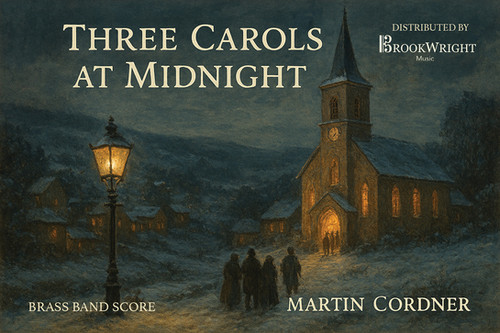
Three Carols at Midnight (Brass Band) Martin Cordner
Rooted in the sacred stillness of a French village on Christmas Eve, this suite by Martin Cordner draws upon traditional carols that have echoed through centuries of candlelit chapels and midnight vigils. Each movement offers a window into the Nativity story: I. Mystery: Noel Nouvelet (Christmas Comes Anew) opens with modal wonder, evoking the anticipation of Christ's coming and the quiet awe of Advent. II. Cradle: Entre le boeuf et l'ane gris (Between the Ox and the Grey Donkey) rests in pastoral tenderness, where the newborn Savior lies between humble beasts, watched over by angels and the Virgin. III. Joy: Il est ne, le divin enfant (He is born, the Divine Infant) bursts forth in celebration, proclaiming the divine birth with rustic dance and jubilant praise. Together, these carols form a musical triptych - moving from mystery to intimacy to exultation. Three Carols at Midnight invites listeners to step into the hush of a French Noel, where the sacred story is told not only in word, but in melody, memory, and light. All proceeds support the mission and ministry of The Salvation Army Delaware Command, USA. To view a rolling score video of the work please visit www.youtube.com/watch?v=fUcCluBS18Q Difficulty level: 4th Section + Duration: approx. 5.00 minutes This PDF download includes parts and score. Sheet music available at www.brassband.co.uk or www.durhammusicshop.co.uk (UK) or https://satradecentral.org (USA) Instrumentation: Soprano Cornet Eb 1st Cornet Bb 2nd Cornet Bb 1st Horn Eb 2nd Horn Eb 1st Baritone Bb 2nd Baritone Bb 1st Trombone Bb 2nd Trombone Bb Bass Trombone Euphonium Bb Bass Eb Bass Bb Percussion 1-2 Glockenspiel
In Stock: Estimated dispatch 1-3 working days
-
 £32.00
The Cistercians
DescriptionThe Cistercianswas written during December 2003 and January 2004 as an entry for Morecambe Band's Centenary New Music Competition, which it went on to win. The first two performances were at the final of this competition, part of the band's 100th Anniversary Concert at The Dome in Morecambe on 9 July 2004.The music was inspired by visits to three of Britain's great Cistercian Abbeys; Valle Crucis, Fountains and Rievaulx. The Cistercian Order was founded at Citeaux in France in the 11th Century and was based on the principles of austerity, humility and piety. Cistercian Abbeys were deliberately sited in remote, difficult areas. Despite this many of them, especially Rievaulx, became immense centres of commerce and power, with ever more complex administration and hierarchies.In a way the music reflects this; all the material in the piece is derived from two simple motifs played by flugel and solo horn in the opening bars and becomes more complex and further removed from the original material as the piece develops. After a tranquil opening section a fugal chorale develops over a medieval-style "tenor" - a stretched out version of one of the original motifs. A burst of semiquavers leads into a faster, folk-dance type section - our medieval abbey has become a bustling trade centre - before rhythmic quaver pulses in the horns and cornets accompany powerful chords in the low brass; this is another "tenor" derived from the opening motifs. A short development section, including the folk dance "hocketing" round the band and a slightly disjointed 10/8 section leads to a restatement of the fugal chorale from the beginning before a frenetic coda brings the work to a triumphant conclusion.Performance Notes:Percussion instruments required are Bass Drum, Suspended Crash Cymbal, Glockenspiel, 2 x Tom-toms, Snare Drum, Tambourine, Tam-Tam, 2 x Timpani (G-C, C-F), Triangle, Wood Block. All cornets will require metal stratight mutes and all except soprano require cup mutes. All trombones require cup and metal straight mutes.You can follow a preview of the score in the video below.
Estimated dispatch 7-14 working days
-
 £95.00
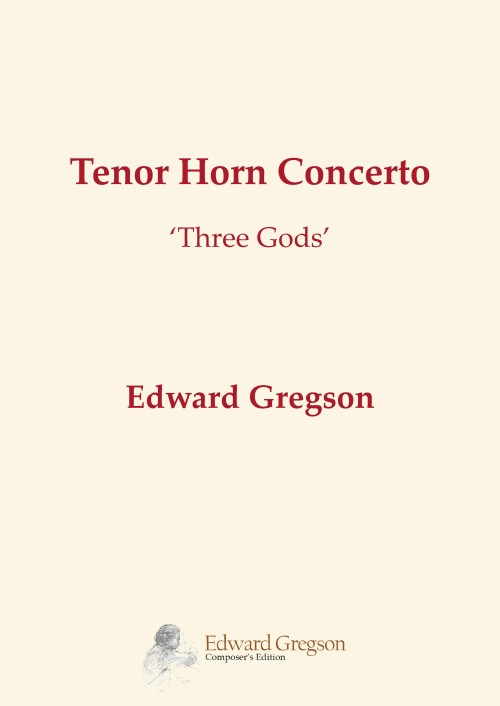
Tenor Horn Concerto 'Three Gods' (Tenor Horn Solo with Brass Band - Score and Parts) - Gregson, Edward
Edward Gregson's Tenor Horn Concerto (Three Gods) was commissioned by the Belgian tenor horn soloist Tim de Maeseneer for a recording of commissioned works he made in 2024 with his own band, Brass Band Willebroek.The subtitle of 'Three Gods' refers to three mythological Greek Gods: Zeus, Hermes and Apollo. The idea for this came from Gregson's Viola Concerto, which he composed in 2023 and which was similarly subtitled 'Three Goddesses'. Indeed, the first movement of the horn concerto shares some common material with the viola concerto, although the other movements are newly composed.The concerto exploits the noble character of the horn, but the writing is also virtuosic in character as well as lyrical and melodic, demanding an extended playing range of nearly four octaves with a variety of colouration in its sonorities. The unifying motif of the whole concerto is the interval of a rising 5th, heard at the outset. The opening also has some other surprises (both seen and heard).The musical ideas, cast in three separate movements, take their starting point from the characters of the Three Gods in the title:Zeus, ruled as King of the Gods on Mount Olympus, and was the God of Thunder and Lightning and of War. His music is often threatening and violent, but also has a more tender side as portrayed in the lyrical second subject. However, the dominant mood is one of foreboding.Hermes was the great messenger to the Gods who could travel between realms on his winged sandals. Thus, his music is fast, fleet of foot, and mercurial - a dashing scherzo, but with lyrical and expressive moments.Apollo, the God of Music and Dance (and the Sun), symbolises virtue and beauty. This final movement, 'Hymn to Apollo', is mainly slow and hymn-like and cast in a continuous stream of melody passed between soloist and band. Brief fanfares herald a triumphant march, before the music returns to its quiet opening, gradually rising to a triumphant climax with glittering melodic percussion leading the way. The music ends in a blaze of glory!Duration: 17.00
Estimated dispatch 7-14 working days
-
£40.00
Tenor Horn Concerto 'Three Gods' (Tenor Horn Solo with Brass Band - Score only) - Gregson, Edward
Edward Gregson's Tenor Horn Concerto (Three Gods) was commissioned by the Belgian tenor horn soloist Tim de Maeseneer for a recording of commissioned works he made in 2024 with his own band, Brass Band Willebroek.The subtitle of 'Three Gods' refers to three mythological Greek Gods: Zeus, Hermes and Apollo. The idea for this came from Gregson's Viola Concerto, which he composed in 2023 and which was similarly subtitled 'Three Goddesses'. Indeed, the first movement of the horn concerto shares some common material with the viola concerto, although the other movements are newly composed.The concerto exploits the noble character of the horn, but the writing is also virtuosic in character as well as lyrical and melodic, demanding an extended playing range of nearly four octaves with a variety of colouration in its sonorities. The unifying motif of the whole concerto is the interval of a rising 5th, heard at the outset. The opening also has some other surprises (both seen and heard).The musical ideas, cast in three separate movements, take their starting point from the characters of the Three Gods in the title:Zeus, ruled as King of the Gods on Mount Olympus, and was the God of Thunder and Lightning and of War. His music is often threatening and violent, but also has a more tender side as portrayed in the lyrical second subject. However, the dominant mood is one of foreboding.Hermes was the great messenger to the Gods who could travel between realms on his winged sandals. Thus, his music is fast, fleet of foot, and mercurial - a dashing scherzo, but with lyrical and expressive moments.Apollo, the God of Music and Dance (and the Sun), symbolises virtue and beauty. This final movement, 'Hymn to Apollo', is mainly slow and hymn-like and cast in a continuous stream of melody passed between soloist and band. Brief fanfares herald a triumphant march, before the music returns to its quiet opening, gradually rising to a triumphant climax with glittering melodic percussion leading the way. The music ends in a blaze of glory!Duration: 17.00
Estimated dispatch 7-14 working days
-
 £94.95
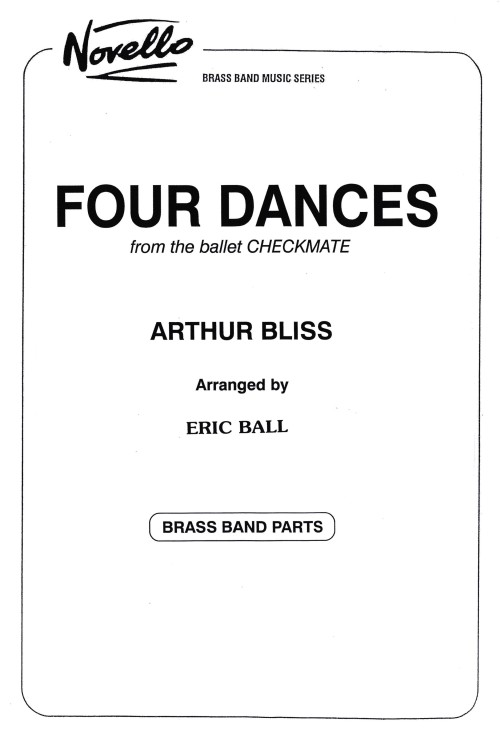
Four Dances from Checkmate (Brass Band - Score and Parts)
Selected as the Section 1 test piece for the National Brass Band Championships of Great Britain 2025Section 1 finalists will perform three of the four dances at the competition: 'Dance of the Four Knights', 'Ceremony of the Red Bishops', and 'Checkmate'. Selected for 2013 NABBA 1st Section.
Estimated dispatch 7-14 working days
-
 £44.95
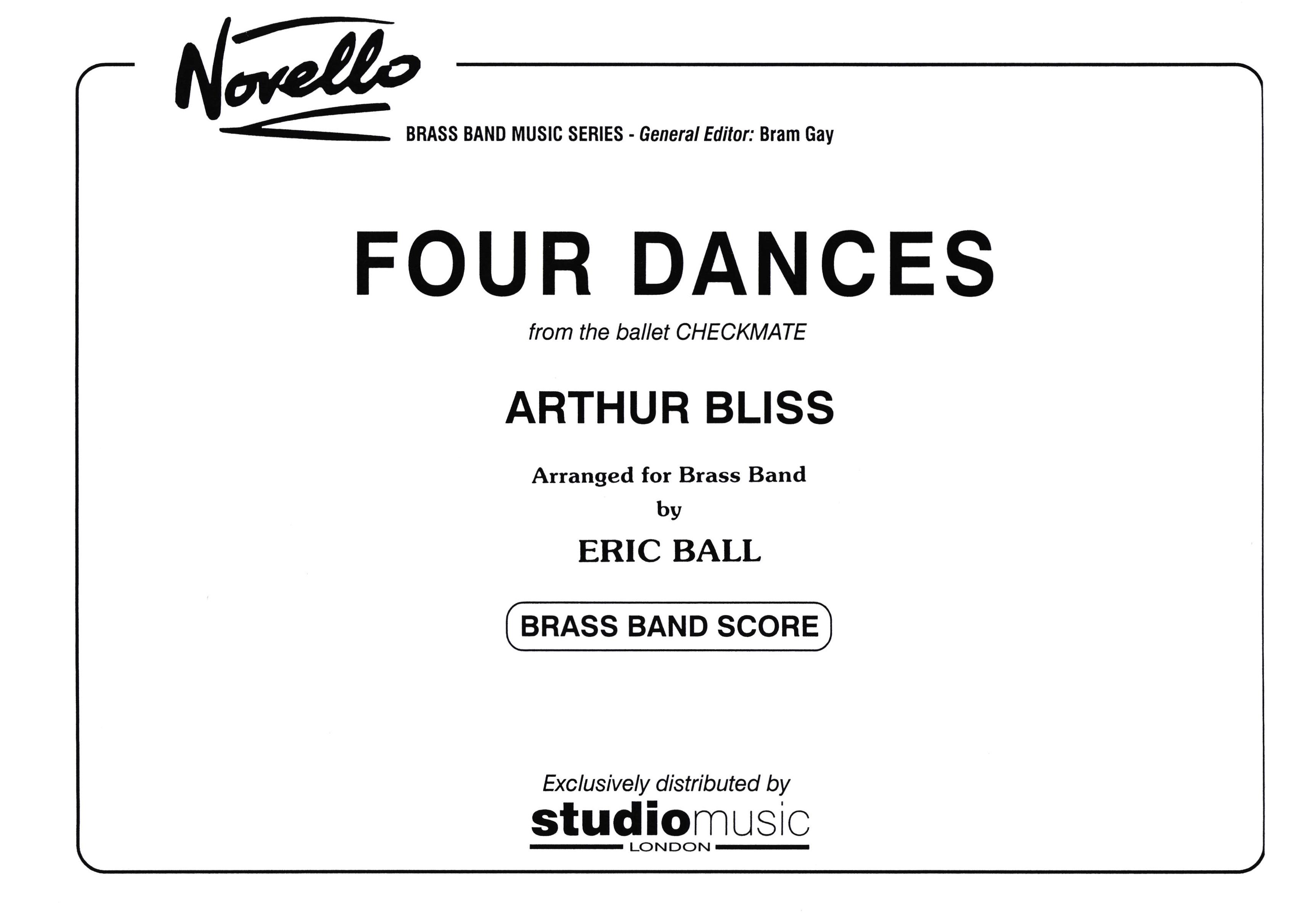
Four Dances from Checkmate (Brass Band - Score only)
Selected as the Section 1 test piece for the National Brass Band Championships of Great Britain 2025Section 1 finalists will perform three of the four dances at the competition: 'Dance of the Four Knights', 'Ceremony of the Red Bishops', and 'Checkmate'. Selected for 2013 NABBA 1st Section.
Estimated dispatch 7-14 working days
 View Music