
Results
-
 £59.99
Sanctuary - Philip Sparke
Sanctuary was commissioned by Eastern Bay of Plenty Brass from New Zealand and was performed as an own choice piece at the 2018 New Zealand National Brass Band Championships. It opens with an expressive cornet solo, hymn-like in mood. A slightly faster central section builds to a change of key and an expansive return of the opening melody, this time scored for full band. After an emotional climax the mood subsides, leading to a quiet close.
Estimated dispatch 5-14 working days
-
 £228.70
Fanfare and Chorale - Egil Hovland - Ray Farr
This arrangement (or edition) for brass band will give the possibility for more performances of this fine work by Hovland. The composer, before his death, examined my work and made no suggestions for changes, and his approving comments were complimentary and encouraging. The work was originally written for Concert Band in 1966 as Op. 54a to St. Olaf College Band in the US. It was transcribed in 1967 for symphony orchestra as Op. 54b by the composer himself. The challenges in arranging the piece for brass band were mostly concerned with satisfactorily covering the upper register used by piccolo, flutes and clarinets, and while there are wonderful brass players around who have amazing high registers, I have aimed this edition at a level achievable by reasonably good brass band players who are willing to give time and effort into the proper preparation and delivery of the music. Having worked on this new edition with a top-class brass band, I think it sounds wonderful and interestingly different to the original. Besides the obvious differences of tone-colour and absent high notes, I have used in my scoring, the option for using a vibraphone in place of a celeste. Vaughan Williams, in his Variations for brass band writes for celeste, but because the instrument is quite rare, performances have been mostly given using a glockenspiel- but this, of course sounds two octaves higher than it was intended. I think that vibraphone and brass is an excellent combination and recommend it without hesitation in this piece. Every detail of articulation and dynamic has been considered, so in order to keep the integrity of the music, please do not change anything in the name of "interpretation". As Ravel says- "What is there to interpret?" Ray Farr
Estimated dispatch 5-14 working days
-
 £104.99
A Fanfare of Bells - Hermann Pallhuber
A Fanfare of Bells is festival music composed for a particular occasion: in 2012 the young 3BA Brass Band from Germany took part in the champion section of the Flemish Open Brass Band Championship in Mechelen, Belgium, for the first time: a festival of premieres. A Fanfare of Bells, accordingly, is music that creates festival atmosphere. Big melodies designed to touch the heart are cut through with brilliant fanfares. The piece contains lyrical and melodic passages that bring the skills and general musicianship of the 3BA Brass Band to the fore, along with various technical passages that spotlight the excellence of the individual musicians. Peels of bells at thestart and end of the work ring in a new atmosphere for brass band music in Germany and Austria. A Fanfare of Bells is, however, also a tribute to the wonderful sound of brass instruments, that blend together to create the most subtle sonorities: bells as a symbol of the beauty of the instruments--both sonically and visually: let the bells ring...
Estimated dispatch 5-14 working days
-
 £87.99
Prelude, Dance and March - Malcolm Arnold - Robin Norman
Malcolm Arnold is one Britain's best-loved composers. In 1948 he composed a very short suite for the National Youth Orchestra of Great Britain - entitled simply To Youth. Seven years later he took To Youth and made some fairly major revisions, including a complete new movement, and the Little Suite for Orchestra was born. The Little Suite for Orchestra follows a very similar pattern to the later suites for brass band, starting with a bold, strident Prelude, which strangely ends quietly before a lovely, lilting, Dance composed in 3/8 time. Finally a rollicking and militaristic March brings the suite to a conclusion. This arrangement for brass band by Robin Norman is sure tobecome a classic in the brass band repertoire.
Estimated dispatch 5-14 working days
-
 £80.00
St. Magnus - Kenneth Downie
Dedicated to Alastair Massey, an inspirational music teacher. Commissioned by the Scottish Brass Band Association for the 2004 European Brass Band Championships in Glasgow. This music is a set of variations on the tune known as St Magnus, which is attributed to Jeremiah Clarke. Most people will associate it with Thomas Kelly's hymn which begins: "The Head that once was crowned with thorns is crowned with glory now". The tune is very simple, consisting of just two, four-bar phrases. Neither is there much in the way of rhythmic variety, every note being a crotchet with the exception of two quavers, and the last note in each phrase. Within such a simple structure, however, lies considerable strength. THEME The listener is given the opportunity of hearing it twice, in full, at the beginning, starting with one player but soon taken up by the full ensemble. It returns in the middle of the music and is stated again near the end. This has been done quite deliberately in the hope that there will be an appreciation of what material is being developed, by the listener as well as by those with access to the score, who are able to see the visual connections. VARIATION 1 This takes the rhythm of the last part of the theme and also uses the shape of the opening as a recurring figure. The mood is whimsical and skittish, with short, teasing rhythmic figures tossed around the band, and quick interplay with percussion, at a fast tempo. An energetic flourish finishes this variation before the Andante espress. VARIATION 2 This commences with chords related to the opening of Variation 1. The cantabile on solo comets establishes a new, lyrical mood and there is scope for expressive playing in a series of short solo passages. The theme works its way unobtrusively into the texture before a reprise of the solo cornet melody and some more lyrical interchanges between Eb bass, euphonium, flugel horn and comets. The variation ends serenely with clear references to the last phrase of the theme. VARIATION 3 The first idea to dominate is clearly linked to the shape of the theme's first phrase. There is a frenetic feel to much of this variation, with considerable energy and instability created by extensive use of cross-rhythms. A thinning-out of the score marks a clear change to development of the start of the second phrase of the theme. This proves to be short-lived however, and the opening material returns leading to a restatement of the theme, "Maestoso," after which a euphonium cadenza links to Variation 4. VARIATION 4 Here we have some solos for euphonium, cornet, trombone and Eb bass set against a background of horns and baritones presenting a pensive statement of the theme's opening. VARIATION 5 This commences Allegro, with lively work for cornet and euphonium spreading to the whole band before attention focuses on the beginning of the second phrase of the theme which is initially presented in diminution, then in regular rhythm, then in inversion. An increase in tempo coupled with a decrease in volume, requires dexterity and control, with several metrical challenges thrown in for good measure. The same fragment of phrase becomes an ostinato which generates a frenzied climax, punctuated by short, dramatic silence, before the opening figure returns and the music gradually winds down. The tubular bells herald the final return of the theme, in augmentation, marking the start of the Finale. FINALE This features the running semiquavers of the previous variation sounding in counterpoint. A fast, furious coda speeds the work to a conclusion while references to the opening of the theme are still trying to break into the texture of the music. Kenneth Downie
Estimated dispatch 5-14 working days
-
 £59.99
The Conqueror - Philip Sparke
This fantastic contest march was composed for the Alexander Brass Band from Stavanger, Norway, who wanted a brand new march to play when they took part in the world-renowned Whit Friday March Contest. In the march Philip Sparke has followed the traditional brass band contest march format and it is named as a tribute to Alexander the Great, rather than the Alexander brass band, who were actually named after their local pub!
Estimated dispatch 5-14 working days
-
 £95.00
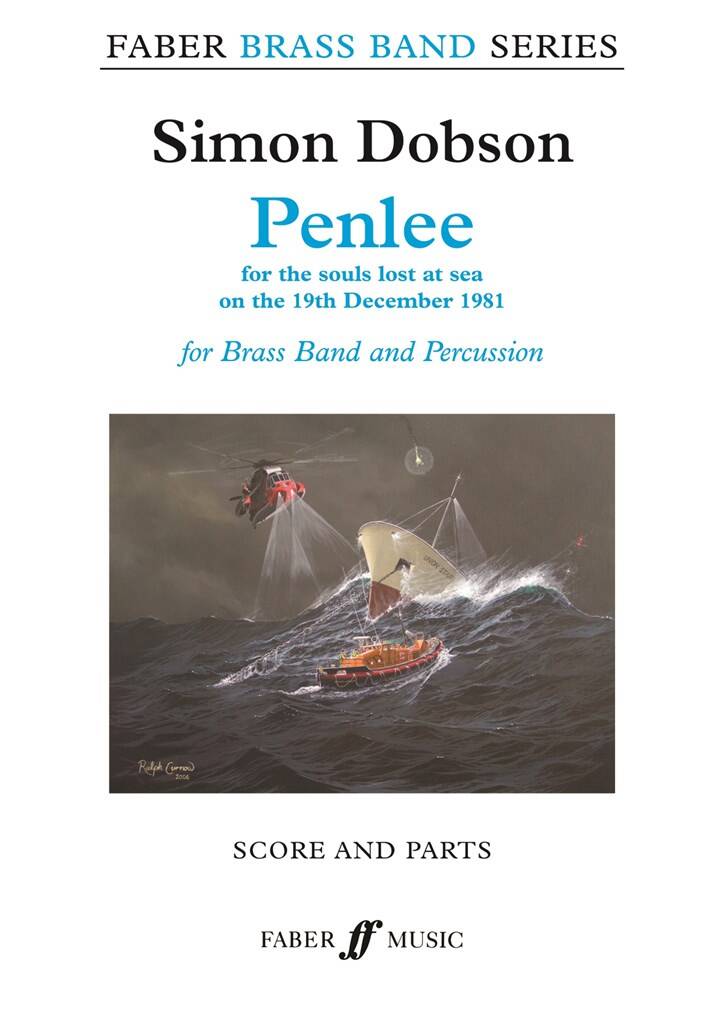
Penlee - Simon Dobson
To some, the tragic story of the Penlee lifeboat, Solomon Browne, would need no introduction, and to some the pain felt is still very much a reality. The composer, born just a few weeks before that fateful night on the19th December 1981, has created this work as a musical homage to the bravery of the souls who lost their lives and has dedicated it to their memory. Penlee was commissioned by the Cornwall Youth BrassBand using funds bequeathed by Michael Pickett. The first performance was given by the Cornish Youth Brass Band, conducted by Ian Porthouse, at St. Michael's Church, Newquay, on 30th December 2008.Penleehas been voted into the Classic FM Hall of Fame 2011 at No.106. Not only is it the first time a brass work has been featured in the Hall of Fame, but it was also thehighest new entry. The work has subsequently been recorded by the Leyland Band, conducted by Jason Katsikaris, on the CD entitled Penlee.Brass Band Grade 4: Advanced Youth and 3rd Section Duration: 13 minutes
Estimated dispatch 5-14 working days
-
 £59.95
Essay - Edward Gregson
This work was specially commissioned as the test piece for a new brass band competition in 1971, held at the Royal Albert Hall, London. It is in three movements, the titles of which all have literary connotations. The first movement, Dialoguetakes the form of 'conversations' between the instruments. The second movement, Soliloquy is dedicated to the memory of Gilbert Vinter - a composer who did so much in the 1960s to bring the brass band into the modern world. The final movement,Epigram, creates strong rhythmic contrasts and exploits the more virtuoso character of the brass band.
Estimated dispatch 5-14 working days
-
 £23.50
A Brussels Requiem - SCORE ONLY - Bert Appermont
The attacks in Brussels on 22 March 2016 created a shockwave throughout Belgium and the rest of the world. Equally, the attacks in Paris and Nice led to great public indignation, fear and disbelief. What has happened to the western world? Have our cultures grown apart to such an extent that we do not understand each other anymore? Bert Appermont's intention was to voice certain emotions that these acts of terror have caused: particularly fear, grief, anger, and helplessness. He uses the French children's song Au Claire de la Lune as a connecting thread throughout the work. This piece is also about hope and faith in another world, and is meant to pay homage to all victims, resulting in a dignified remembrance. The musical development is presented in four through-composed parts, titled Innocence, In Cold Blood, In Memoriam - We Shall Rise Again and A New Day. This work was commissioned by the Brassband Oberosterreich (Brass Band Upper Austria) to be played at the European Brass Band Championships 2017.
Estimated dispatch 5-14 working days
-
 £49.99
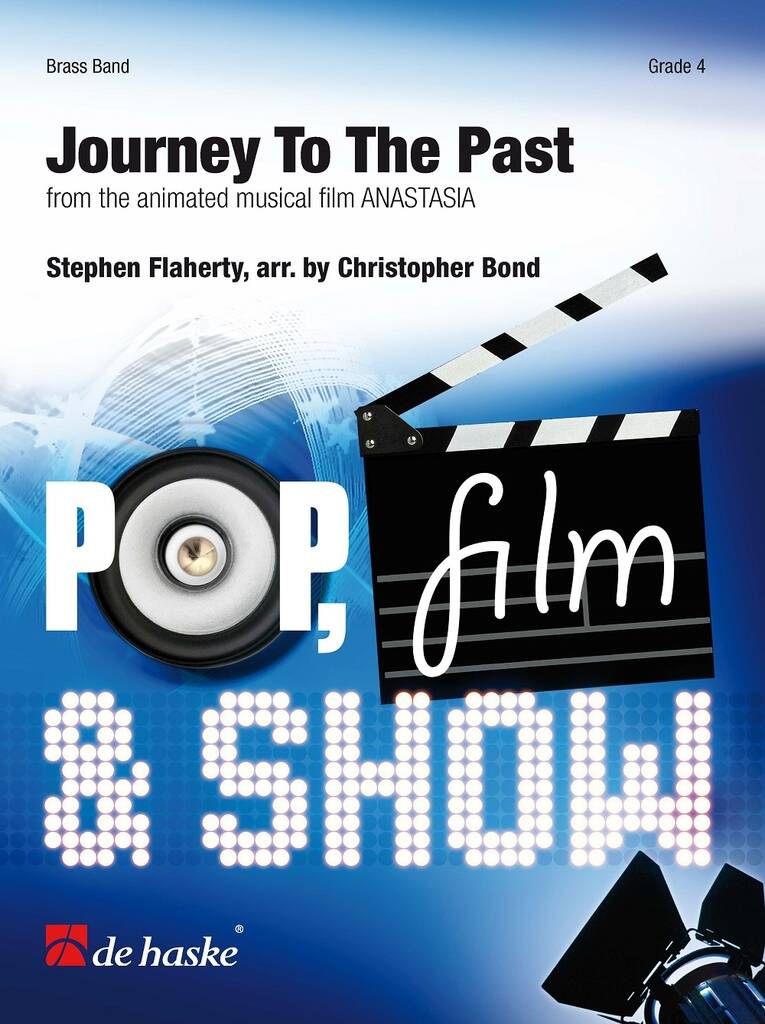
Journey To The Past - Stephen Flaherty - Christopher Bond
Step into an enchanting world of nostalgia with the compelling sounds of Journey To The Past, a wonderful little gem by Stephen Flaherty, magically arranged for brass band by Christopher Bond. This song, originally composed for the popular animated film Anastasia, tells a story of hope, discovery and finding one's true self. The warm brass band sounds add a new dimension, infusing each note with emotion and passion.
Estimated dispatch 5-14 working days
 View Music