
Results
-
 £49.99
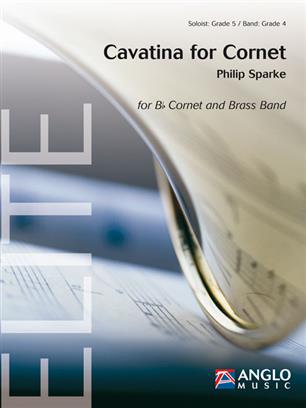
Cavatina for Cornet (Cornet Solo with Brass Band - Score and Parts)
In this solo work - a commission for an 18th birthday present - the opening mood of a brooding modal blues gives way momentarily to a more optimistic central section.Following an emotional climax and reflective cadenza, the opening material returns, but now tying in with the central section, and the piece finally ends in a more positive mood.
Estimated dispatch 7-14 working days
-
 £104.99
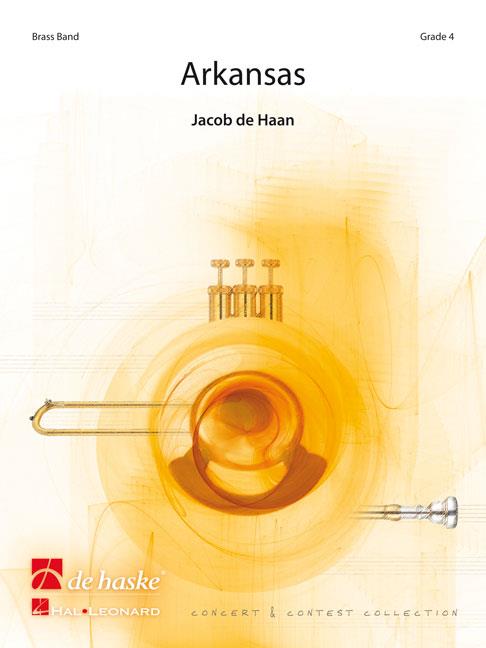
Arkansas (Brass Band - Score and Parts)
This concert work, the latest of Jacob de Haan works based on American states, is a suite in three movements, based on a well-known folk tune from Arkansas. In the course of this varied work the folk song appears in its complete form and in fragments, in major and in minor, as a ballad in a lyrical orchestration, as a blues, accompanied by a jazzy rhythm and at the end again in its pure form. In the process, all instrumental groups of the brass band get their chance to shine!Duration: 9:30
Estimated dispatch 7-14 working days
-
£38.50
Gospel Brass Machine
A funky upbeat piece that will go down a storm with both band and audience alike.Mark Taylor wrote the trumpet feature Scream Machine for a vinyl album of the same name released in 1985 by the Army Blues Jazz Ensemble. Featuring four 'screamer' trumpet parts, it was later published in a slightly simpler version called Brass Machine. This arrangement for brass band includes a middle gospel section.
Estimated dispatch 7-14 working days
-
 £37.50
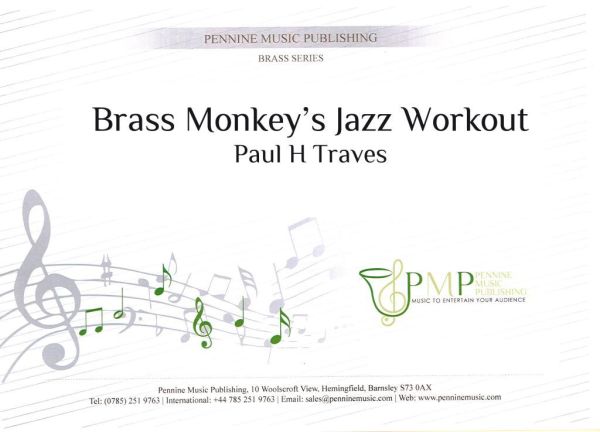
Brass Monkey's Jazz Workout
This huge release brings together a selection of music composed by Paul H Traves that introduces your learners to the different style of Jazz that is available. Naturally, the rhythmic work required to play such styles means that this publication will push your learners on and will challenge them at a new level. Syncopation and swing are at the heart of the music in this collection and it is the perfect way to get your learners playing in new styles not always covered by training band music. This title offers excellent value for money with seven titles included. This publication features:SNAKES & LADDERS - (teaching dynamics and expressive playing)CHROMATICS - (As the title suggest, ensuring every valve us used!)ROCKIN' GERONIMO - (featuring triplets and accidentals)TRUMPET DRIFT - (introducing crotchet triplets & syncopation)J.B.'s 12 BAR BLUES - (a well-known style that feature sharp key signatures)J.B.'s CALYPSO (unison playing and tight rhythmic playing required)ZIG-ZAG (getting players into a lazy swing style)
Estimated dispatch 7-14 working days
-
£32.00
Let's Dance Volume 4 - Gunter Noris
Rock Your Blues Away / Romancing / Old Fashioned Romance / Rush Hour / Mountain Rock / Rumba Of Love
Estimated dispatch 7-14 working days
-
£32.00
Play With Your Band Volume 1 - Jerome Naulais
Amor Y Sol / As You Like / Bahia Blues / Bayside / Belo Horizonte
Estimated dispatch 7-14 working days
-
 £76.99
Variazioni in Blue (Brass Band - Score and Parts) - De Haan, Jacob
Variazioni in Blue is a series of variations in which elements from the Blues, such as the specific blue notes, run throughout the piece. Following a stately introduction, which includes part of the theme, is an ornamental variation in classical style. We then hear a variation in Blues style, followed by a fast variation with an Eastern European folklore feel. The Andante con espressivo is particularly fine with its attractive harmonic changes. This variation develops into a repeat of the previous folklore variations with its major variation forming a climax towards the end.Duration: 6:30
Estimated dispatch 7-14 working days
-
 £64.95
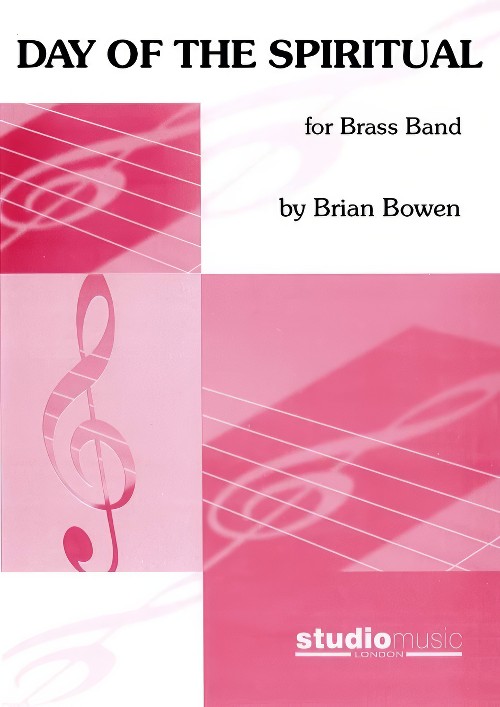
Day of the Spiritual (Brass Band - Score and Parts) - Bowen, Brian
Early African-American songs contain a wealth of human expression, based on a yearning for freedom and biblical deliverance. This rhapsodic work combines Spirituals and Blues as the composer visualises a Camp Meeting where ecstatic utterances and spontaneous solo outbursts occur. These eventually become disorderly and uncontrollable, leading to a frenzy and collapse. With order and calm resorted, the music leads to an exultant conclusion. Included: I Stood on the River of Jordan; Balm in Gilead; Michael, Row the Boat Ashore; Wade in the Water.
Estimated dispatch 7-14 working days
-
 £95.00
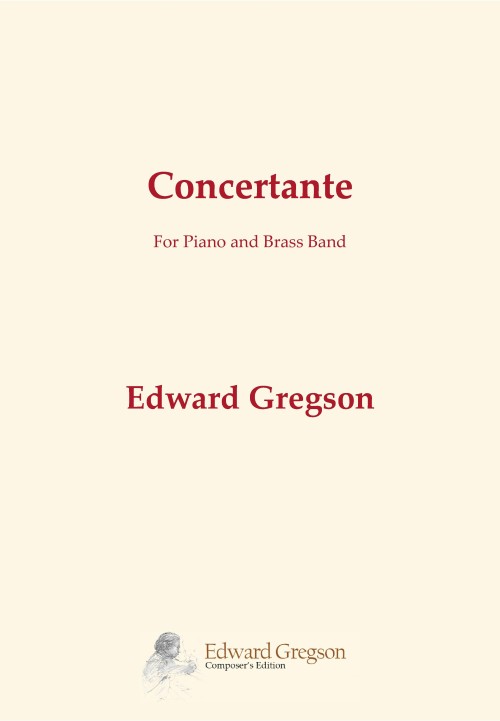
Concertante (Piano Solo with Brass Band - Score and Parts) - Gregson, Edward
This work was written in 1966, when I was a student at the Royal Academy of Music in London. It was the first major work to be written for this combination. The Concertante is unashamedly romantic in idiom and is cast in three movements: Prelude, Nocturne and Rondo.The Prelude is in sonata form with a contracted recapitulation. There are two main themes, the first announced after the opening flourish on piano. The second theme is lyrical in character and the interplay between these two themes forms the main focus of the movement.The pensive Nocturne opens with an introduction from the band which contains hints of the two main ideas to follow. The solo piano announces the main theme, which has a slightly 'blues' character in its flattened third and seventh notes of the scale. The band enters with the chorale theme already heard in the introduction. Eventually the first theme returns, this time from piano and band and building to a powerful climax before subsiding to a peaceful ending.The Rondo is full of energetic rhythms and changing time patterns. The main theme is 'giocoso' in character and in the first episode there is more than a hint of the tune 'Onward Christian Soldiers' in what amounts to a good humoured parody. Before the final coda there is a long piano cadenza underlying the virtuoso element of the work.The work had a number of public performances leading up to a memorable one in the Royal Albert Hall in 1989 as part of the Gala Concert that used to be held after the National Brass Band Championship in the Royal Albert Hall. That year, the 'centre band' in the massed bands concert were the GUS Band (then known for sponsorship reasons as 'Rigid Containers Group Band'!) conducted by my great friend and champion, Bramwell Tovey, with myself as the soloist.- Edward GregsonDuration: 18.00
Estimated dispatch 7-14 working days
-
£35.00
Concertante (Piano Solo with Brass Band - Score only) - Gregson, Edward
This work was written in 1966, when I was a student at the Royal Academy of Music in London. It was the first major work to be written for this combination. The Concertante is unashamedly romantic in idiom and is cast in three movements: Prelude, Nocturne and Rondo.The Prelude is in sonata form with a contracted recapitulation. There are two main themes, the first announced after the opening flourish on piano. The second theme is lyrical in character and the interplay between these two themes forms the main focus of the movement.The pensive Nocturne opens with an introduction from the band which contains hints of the two main ideas to follow. The solo piano announces the main theme, which has a slightly 'blues' character in its flattened third and seventh notes of the scale. The band enters with the chorale theme already heard in the introduction. Eventually the first theme returns, this time from piano and band and building to a powerful climax before subsiding to a peaceful ending.The Rondo is full of energetic rhythms and changing time patterns. The main theme is 'giocoso' in character and in the first episode there is more than a hint of the tune 'Onward Christian Soldiers' in what amounts to a good humoured parody. Before the final coda there is a long piano cadenza underlying the virtuoso element of the work.The work had a number of public performances leading up to a memorable one in the Royal Albert Hall in 1989 as part of the Gala Concert that used to be held after the National Brass Band Championship in the Royal Albert Hall. That year, the 'centre band' in the massed bands concert were the GUS Band (then known for sponsorship reasons as 'Rigid Containers Group Band'!) conducted by my great friend and champion, Bramwell Tovey, with myself as the soloist.- Edward GregsonDuration: 18.00
Estimated dispatch 7-14 working days
 View Music