
Results
-
 £105.20
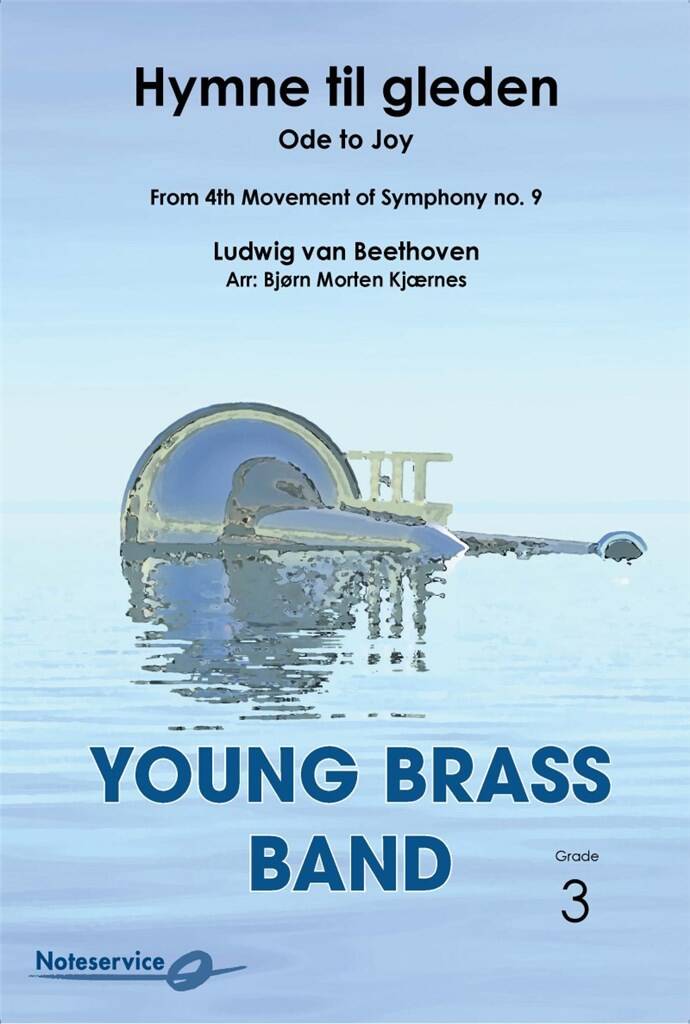
Hymne til gleden - Ludwig van Beethoven - Bjorn Morten Kjaernes
Schiller's text of 1785 was partially used by Beethoven in1824 when he did finish the 4th movement of his 9th Symphony. The melody has later been used in very many contexts. As the anthem of the European Union, a lot of movies (A clockwork Orange, Die Hard, etc.), music to video games, as the anthem of Rhodesia, as rebel song in Chile and by FIFA. Therefore, it can be used in most settings This Young Band arrangement focuses on the main melody. In the original, the B part is repeated in each variation, but to get three variations (out of four), this repetition has been cut. The first variation should be played as soft as possible, but still with a nice sound. Crescendo to forte(f) and going back to pp should be as a surprise.
Estimated dispatch 5-14 working days
-
 £22.00
Little Hymn - Simon Dobson
Little Hymn was composed by award-winning composer Simon Dobson (b.1981) to provide an alternative to the traditional hymn tune settings that provide one of the foundations of the brass band repertoire. This simple, hauntingmelody begins on a brass quartet without cornets. The full band joins for the second part, which rises to a richly textured climax before receding to a quiet, reflective close.
Estimated dispatch 5-14 working days
-
 £127.30
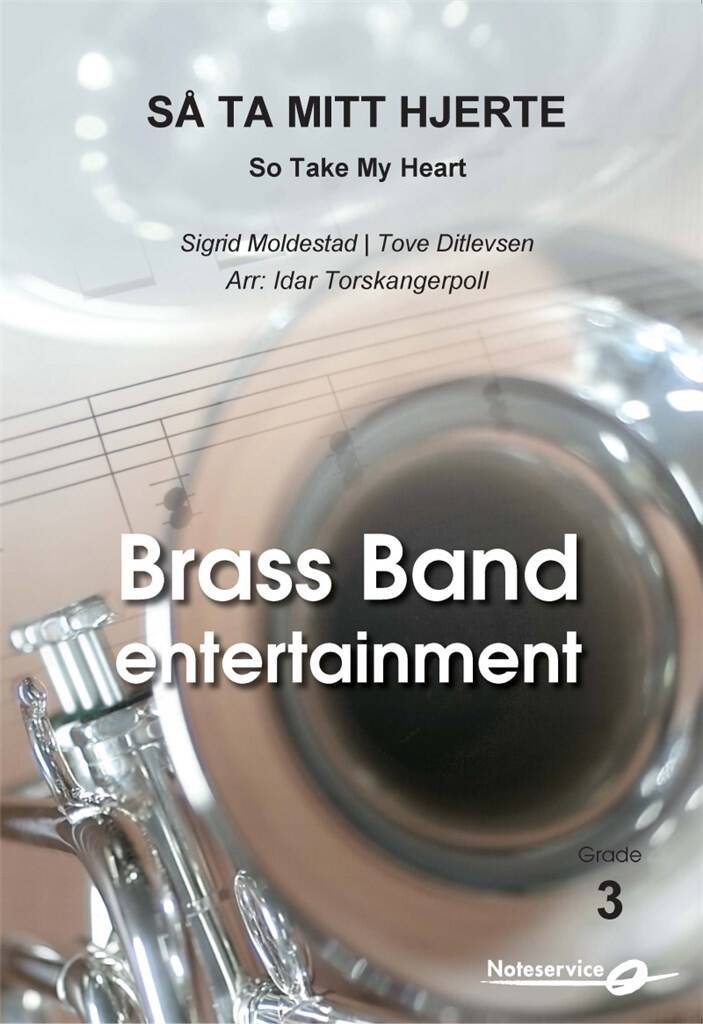
Sa ta mitt hjerte - Moldestad - Idar Torskangerpoll
This is a tune by Sigrid Moldestad (b. 1972), a Norwegian folk artist. She has based it on a warm and beautiful poem by Danish author Tove Ditlefsen. A text for and about love. Sigrid Moldestad won the "Spellemannsprisen" (the Norwegian equivalent to Grammy) in 2005 as a part of the group Gamaltnymalt. She won the price two years later, this time as solo artist for the record album Taus. Both times in the Folk Music category. So Take My Heart was released in 2012 as a part of the album Himlen har sove bort morkret.
Estimated dispatch 5-14 working days
-
 £59.99
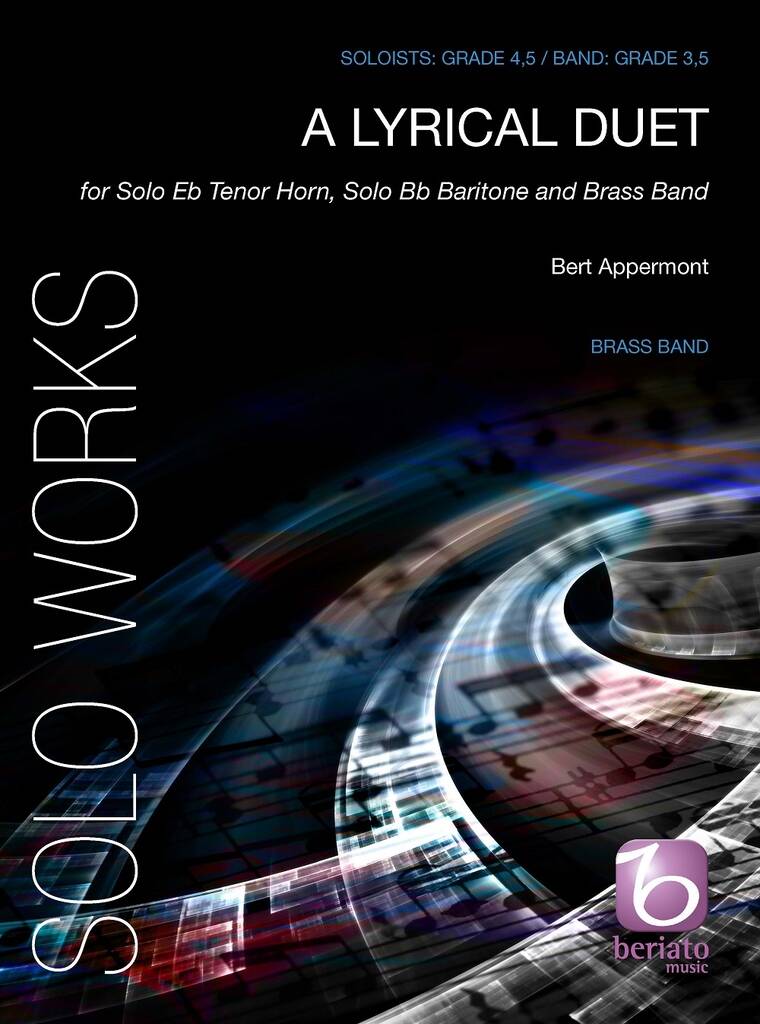
A Lyrical Duet - Bert Appermont
This attractive composition focuses on the lyrical qualities of two solo instruments: tenor horn and baritone. An expressive theme is initially performed by the baritone; then the tenor horn takes over this melody. A rich dialogue arises, in which the soloists make music in sweet harmony, and then in a 'call-and-response game'. In the B section, the lyricism becomes more virtuosic, and a more playful character comes to light. There is then a gradual build-up to a grand tutti in which the opening theme resounds again. The work ends in a reverie, echoing the dreamy beginning.A Lyrical Duet was commissioned by tenor horn artist, conductor, and teacher Tim De Maeseneer, and is dedicated to him and Katrina Marzella. The work can be heard on Tim's solo CD, Beyond the Paradox, a project that was created in collaboration with Brass Band Willebroek and its conductor Frans Violet.
Estimated dispatch 5-14 working days
-
 £54.99
My First Solo - Jerry B. Bensman
You only have had a couple of months of lessons and already you are to play a solo at your band's annual gala concert. in a big concerthall, on a huge platform and in front of people from your own town or village. Now there's something ! This circumstance inspired Jerry Bensman into writing your very first solo piece with band accompaniment. The solo part may be played by various instruments and was kept very simple indeed. Parts are available in various transpositions and keys.
Estimated dispatch 5-14 working days
-
 £54.99
Just for Friends - Jerry B. Bensman
The rock ballad Just for Friends is a gem for the conductor and the band. A marvellous number that allows the bandleader to show off the qualities of various solo-instruments.
Estimated dispatch 5-14 working days
-
£54.99
Reach Out / I'll Be There - Klaas van der Woude
Love, happiness and romance play the leading role in the song lyrics of The Four Tops. This popular quartet was founded in 1953 and produces songs with both gospel and R & B elements such as Reach Out (I'll Be There).
Estimated dispatch 5-14 working days
-
 £20.00
atrium phase
Descriptionatrium phase was inspired by listening to works performed at the 2013 Huddersfield Contemporary Music Festival in the atrium of the Huddersfield University Creative Arts Building. The atrium, despite being a functional area incorporating meeting areas and a cafe, has almost coincidentally evolved into a fantastic (if somewhat resonant) performance space. Performers can be positioned on three different sides and three different levels, making the atrium ideally suited to spatially separated performances of a variety of music from Gabrieli to Christian Wolff.In atrium phase the band is separated into four groups - ideally these should be positioned around the audience as follows: group A to the left of the audience, group B in front of the audience, group C to the right of the audience and group D (the four basses) behind the audience. The music "phases" between the groups in the manner of contemporary electroacoustic music, with the bass group acting as a kind of "subwoofer". Starting very slowly, the music accelerates using metrical modulations to finish at considerable speed.The music is intended to be performed without a conductor wherever possible - the three percussionists should set and control the tempo, and there are clear points of overlap for percussionists to allow synchronisation between groups.atrium phase won the inaugural Foden's Band Composition Competition in 2014 and the first performance was given on 24 January 2015 at the RNCM Festival of Brass by Foden's Band.Performance Notes:The band is separated into four groups - ideally these should be positioned around the audience as follows: group A to the left of the audience, group B in front of the audience, group C to the right of the audience and group D (the four basses) behind the audience. The music "phases" between the groups in the manner of contemporary electroacoustic music, with the bass group acting as a kind of "subwoofer". Starting very slowly, the music accelerates using metrical modulations to finish at considerable speed.Instruments in group A require cup mutes (soprano, 2 x cornets, horn, baritone, trombone, euph), group B harmon mutes (4 x cornets, baritone and trombone - the baritone should use a trombone mute) and group C require fibre straight mutes (3 x cornets, flugel, 2 x horns, euph., bass trom - NOT metal mutes if possible).Percussion instruments required are claves, wood block and 2 x temple blocks. The music is intended to be performed without a conductor wherever possible - the three percussionists should set and control the tempo, and there are clear points of overlap for percussionists to allow synchronisation between groups.Approximate duration 6'17"
Estimated dispatch 7-14 working days
-
£87.00
Stormseye (Bra) - Stijn Aertgeerts
With 'Stormseye', the composer describes the passing of a storm. The calm joyful opening by the cornets reflects the open blue sky. The weather very quickly turns as the music clearly becomes more and more chaotic. The storm gains momentum and the band also becomes more and more tempestuous. The solos in the flugelhorn, cornet and euphonium, among others, reflect a moment of tranquillity, with a growing anxiety about what is to come. The quietness of the eye of the storm before all hell breaks loose again. The music then builds to a grand finale that combines the opening theme with the storm's thematic material. The storm is overcome and the sky clears completely! 'Stormseye' was written as a test piece for the B division of the 'Flemish Open Brass Band Championship' 2024 in Mechelen (B).
Estimated dispatch 7-14 working days
-
Peterborough Mass - Jeremy Cladd - Len Jenkins
Peterborough Mass comprises 5 Movements, Kyrie, Gloria, Sanctus, Benedictus and Agnus Dei. It was composed by Jeremy Cladd who became Head Chorister during his teenage yearsat Peterborough Cathedral. Total immersion in the music within such an inspiring building caused Jeremy to look deeper into the liturgical aspects of the Mass in order to understand the origins of the literary text being sung, so that he could paint a musical landscape based upon his interpretation of the text. From a musical perspective, Jeremy's Kyrie takes its inspiration from Philippians 2 vv1-11 (NIV) "Imitating Christ's Humility", and is structured AB where A refers to humility and submission "lord have mercy" and B relates to "united with Christ", with the latter evoking feelings of salvation and joy. In sympathy with the literary text, the Kyrie has a short introduction, and then a ternary form ABA structure where A is influenced by polyphonic choral writing and B by homophonic choral writing. This is the first of the five Movements to be arranged for Brass Band with Choir and comprises a full brass band score, parts for all instruments and a choral practice score.
 View Music