
Results
-
 £87.99
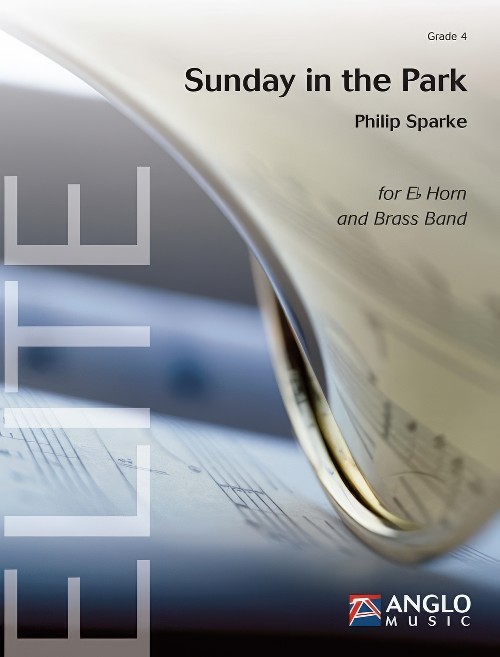
Sunday in the Park (Tenor Horn Solo with Brass Band - Score and Parts) - Sparke, Philip
Sunday in the Park was written for tenor horn virtuoso Sheona White, and commissioned by her partner, Matt Wade, as a Christmas present. Composer Philip Sparke had known and admired Sheona's playing for many years, having produced her first solo CD and written pieces for her previously. Both composer and performer are huge fans of the late Karen Carpenter, Sheona in part modelling her sound on the singer's sultry voice; so it was decided that this new solo would be a piece which, whilst not being a 'Carpenters' pastiche, paid tribute to their relaxed style and rich harmonic language. Sunday in the Park opens with an accompanied cadenza for the soloist, which leads to a gentle rhythmic melody with a laid-back feel. This is taken up by the band but the soloist sparks a change of mood by introducing a faster light rock interlude. This reaches a climax, at which point the music unwinds until the original mood returns. A variation on the original melody leads to a short cadenza from the soloist, which brings the work to a peaceful close.Duration: 7:00
Estimated dispatch 7-14 working days
-
 £84.95
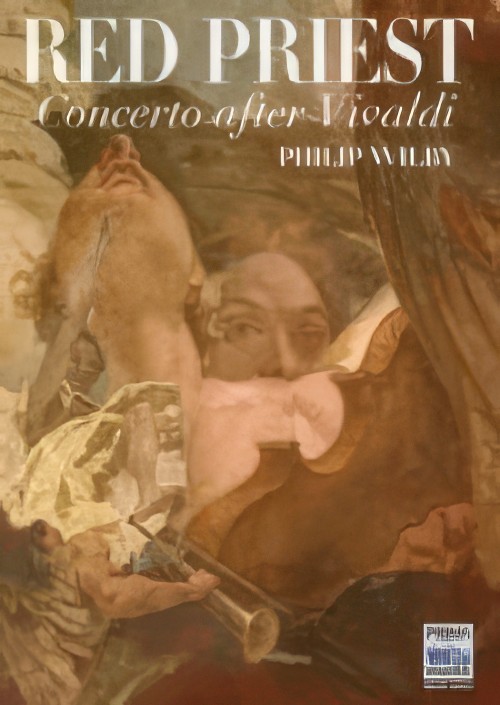
Red Priest (Brass Band - Score and Parts) - Wilby, Philip
Concerto After VivaldiDuring his lifetime, Antonio Vivaldi was known as 'il Prete Rosso', the Red Priest, thanks to his youthful ordination and his flaming red hair. The son of a violinist at San Marco in Venice, Vivaldi's musical pedigree was impeccable and an excellent start to his career was coupled with astounding energy and productivity. His vast output of concerti grossi, using soloists in groups, inspired this composition and performers may choose appropriate stage positions for the various groupings of cornets and trombones, spaced around the performance area. The score quotes freely from some of Vivaldi's most popular compositions, including 'Winter' from The Four Seasons, the motet Nisi Dominus, the famous Gloria and the fugue from the Concerto grosso in D minor found in L'Estro Armonico.However, it is the musical spirit of Vivaldi, a close contemporary of both Handel and Casanova, that inspired this music, which should be played with a mixture of accuracy and abandoned virtuosity. The musical images in this piece have clear associations in the composer's mind with individual Venetian locations, ranging from bustling street scenes to vaulted interiors, and describing the famous journey down the Grand Canal, past the Doge's Palace, to the Ospedale della Pieta where Vivaldi worked for so many years.Suitable for Championship Section BandsDuration: 14.00
Estimated dispatch 7-14 working days
-
 £60.99
Laudatio (Brass Band - Score and Parts)
This piece was commissioned by a brass band from the Jura in Switzerland to thank its resigning conductor for his loyalty and work. The first and last sections of this composition develop a joyful and highly energetic theme which expresses the complete commitment required of a conductor in order to get the best out of the musicians. The central passage mirrors an atmosphere full of nostalgia. After so many years of intense and relentless work, it is always difficult for a keen conductor to retire. 06:15
Estimated dispatch 7-14 working days
-
 £29.50
Songs of the North & South - Andi Cook
BrassFesk UK is back for 2022 after a break following the pandemic and with it, comes the traditional new commission and anthem. Recorded by the European Champions, the Cory Band, this year's anthem is an arrangement of well-known UK traditional songs to coincide with the Queen's Jubilee. The work has been written in the style of Gordon Langford, one of the Brass Band world's leading arrangers and so as you expect, there are some fantastic parts to play for all areas of the band to enjoy. This foot-tapping release continues to follow the previous BrassFest UK anthems that have gone before it, ensuring a fun piece of music to both play and listen to. You can see Cory Band performing the work here:- https://youtu.be/MrqVf328tFI
In Stock: Estimated dispatch 1-3 working days
-
 £29.50
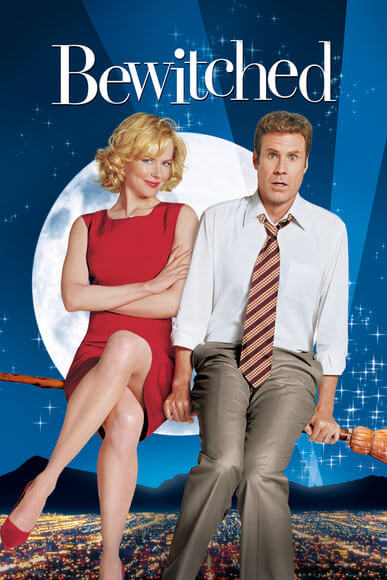
Bewitched - Howard Greenfield - Gavin Somerset
In 1964, the pilot to the new American sitcom 'Bewitched' was completed. The original screening used Frank Sinatra's 'Witchcraft' as the music for the opening titles, however, the production company did not want to pay the large fee to use this track and so, Greenfield & Keller were asked to compose an alternative. The foot-tapping swing piece they produced was reduced to an instrumental version with a light orchestra for the opening credits. However, the song has now been recorded several times. The most famous recording by Steve Lawrence was also featured in the film 'Bewitched' released in 2005. Since then, it has also appeared on the X-Factor a number of times. This fantastic swing item now comes arranged for brass band with the option of playing it at the Steve Lawrence song tempo, or the fast, big band instrumental tempo used in the TV Series. An optional, lower pitched part is also included between letters E-F for the cornet section & flugel to make the item more accessible to lower section bands. This item is a great swing number that audiences of all ages will recognize, a great piece for your new program & a must for every band looking to inject some life into their concerts.
In Stock: Estimated dispatch 1-3 working days
-
 £24.50
Seren Fach - Nigel Lawless
Meaning Little Star, this work is so beautiful and simplistic that is raises smiles from all who hear it. Whilst playing with James Shepherd Versatile Brass, Euphonium & trombone player, Nigel Lawless penned this new work as a gift to Rob & Claire Westacott on the birth of their daughter, Jessica. Now cleverly scored for full band, the work combines the two famous melodies of Twinkle, Twinkle Little Star and Brahms lullaby. Playable by most standards of bands, this slow melodic piece fits easily into any concert programme and provides a chance to showcase lyrical soloistic playing and delicate accompanying skills. The work was recorded on the JSVB final CD release, Legacy.
In Stock: Estimated dispatch 1-3 working days
-
 £29.50
The Land Before Time - James Horner - Gavin Somerset
The music of James Horner is known around the world for his strong, heart-warming melody lines that featured in such films at 'Titanic' and 'An American Tail'. Released in 1988, 'The Land Before Time' was made by the same film creators of 'An American Tail' and so, James Horner and Will Jennings were the obvious choice to create the movie's soundtrack, following the success of 'Somewhere Out There' (from 'An American Tail'). They didn't disappoint, and the main title track 'If We Hold On Together' became a success both on the screen and off when it was released as a single by Diana Ross in 1989. Now arranged by Gavin Somerset, this release will take a generation back in time to the story of Littlefoot, who embarks upon journey with 4 friends as they search for the Great Valley. A great item for all bands
In Stock: Estimated dispatch 1-3 working days
-
 £15.00
Capriccio Italiane - Tchaikovsky
Programme Notes by Andrew Duncan:This arrangement is fairly simple and the strong melodic and rhythmic lines should help introduce inexperienced players to the concept of playing in 3 time. The triplets in the 3rd cornet/trumpet part and the 1st Baritone/Euphonium/Trombone part (and in the tambourine part) are played in unison and will greatly help to move the rhythm forward.The tune is in the 1st cornet/trumpet part up until letter B when it is played by the horns (in unison) and in harmony by the 1st Baritone/Euphonium/Trombone part, so there is plenty for all to play throughout the piece.The Percussion part is written for a Tambourine, and although it is optional, it would add colour to a performance of the arrangement.The Flexi-Collection ApproachFlexible scoring tailored to your needs - A perfect solution for expanding the repertoire of training and junior brass bands. The Flexi-Collection currently offers two series - Popular Classics and World Tour. Based on four-part harmony, these collections provide groups with the advantage of complete flexibility when they may not be balanced. If players or instruments are missing, the show can still go on!The Flexi-Collection - Popular Classics Series, encapsulates all that is great about the wonderful range of musical styles produced by Holst, Elgar, Handel, Verdi, Tchaikovsky, Grieg, Bizet and Parry.The thoughtful scoring and arranging by Andrew Duncan now means that groups of all abilities have access to a truly flexible set of music for their needs. With world parts, rudimentary theory, terminology translations and large format typesetting, The Flexi-Collection ticks all the boxes when it comes to bringing interesting music to the training and junior band/brass group environment.Available individually or as part of the money-saving Flexi-Collection Popular Classics Album. Scored for Brass Band and supplied with additional Easy Bb, Easy Eb and world parts - The Flexi-Collection offers flexibility in every sense of the word.
In Stock: Estimated dispatch 3-5 working days
-
 £77.00
General Series Brass Band Journal, Numbers 2234 - 2237, August 2023
2234: Festival March - Above all names (Geoff McCorriston)This Festival March was originally written for the Camberwell Citadel Band, Melbourne, Australia. This composition marks the composers debut within our band journals. Geoff McCorriston served as Deputy Bandmaster at Preston Corps (Australia) for many years before joining the Camberwell Citadel Band. He has also been a member of the Melbourne Red Shield Band. Above all names is distinct from a standard street march in that it is more developed, both rhythmically and thematically. It is an original march that references We plough the fields and scatter (S.A.S.B. 70) and Camberwell (T.B. 182).2235: Flugel Horn Solo - Father, Creator (Simon Gash)Emma Pears has a gift for contemporary song-writing, with several of her songs featuring in the Sing to the Lord publication. The style and relaxed nature of the melody of Father, Creator (first published in the Children's Voices Series in 2011, and later in the Mixed Voices in 2014) seemed a perfect fit for the Flugel Horn. Throughout the piece, juxtaposed with Father, Creator, we hear snippets of the tune St Theodulph (T.B. 231), which outline the first lines of Albert Chesham's words, 'O Father and Creator, Thou God of perfect love' (S.A.S.B. 46).2236: A winter's carol (trs. Neil Smith)The history of the carol O come, Immanuel (C.C. 62) is, like the carol itself, a little mysterious! The melody was conceived as a monastic chant during the 8th century. It was not until 1851 that the priest and hymn writer John Mason Neale translated the verses into English, exposing the carol to a wider audience. There is an aura and enigmatic feel to this melody which is captivating to so many who hear it. This setting was originally conceived for wind band by American composer Mark Williams. The brass band transcription introduces a new name to our journals, Bandmaster Neil Smith, who is the Territorial Music Director for the USA Western Territory.2237: Mighty to keep (Eiliv Herikstad)Mighty to keep marks the composer's first publication since his Promotion to Glory in April 2023. Bandmaster Eiliv Herikstad served faithfully in his native Norway throughout his life, and since the early 1970s, has provided The Salvation Army with a wealth of original compositions and skilful arrangements. Eiliv explored many styles of big-band and jazz writing which, in the 70s, were not commonplace amongst brass bands, particularly in The Salvation Army. Music Editorial are grateful to Eiliv for using his gifts to support Salvation Army music ministry.The subject of this piece is Herbert Booth's song Mighty to keep, which was first published by The Salvation Army in 1889. The chorus of the song is more well-known that the verse and was included in the chorus section of the 1986 Salvation Army Song Book.
Estimated dispatch 7-14 working days
-
 £30.00
Is That The Time ? - Paul Mottram
Is That The Time ? was written in 2014 for UK national award winning band 'Youth Brass 2000'. It's a showpiece in a jazzy fusion idiom with a full and central role for the kit drummer and percussionists. The temptation must be resisted to play the piece too quickly and in so doing losing the 16th note syncopations inherent within the rhythmic groove. The challenge is not so much one of getting the notes, although there are a few harmonic surprises along the way, as one of playing as a cohesive rhythmic unit.
 View Music