
Results
-
£39.95When Thunder Calls (Brass Band - Score and Parts)
When Thunder Calls was commissioned by Dr Nicholas Childs and the Black Dyke Band for their performance at the Gala Concert of the Swiss Open Championships in September 2011. When composing this piece, I decided to focus on both the music and the stage presentation. The way the piece has been composed and designed makes it a very effective way of starting a concert or a second half of a concert.At the start of the piece, the percussion enter the stage and take their positions in their usual place behind the band. They begin playing the piece without a conductor. They keep repeating the opening section while the Basses, Horns, Baritones and Euphoniums march onto the stage.This group of musicians take their seats with the Horns, Baritones and Euphoniums sitting where they usually sit in the band but the Basses sit where the solo cornets usually sit, forming an inner semi-circle of lower brass. When seated and when the music gets to the end of bar 4 the piece continues onto section A. All performers keep repeating this next 4-bar phrase until the trombones march onto stage and stand at the front of the stage with the Bass Trombone standing in between the other two trombones.All performers then play from figure B to C with the trombones taking the lead at the front. When the performers get to rehearsal figure C they repeat this section (the same as section A) while the trombones move from the front of the stage and take their positions where the Basses would normally sit (between the horns and the percussion) and remain standing. Meanwhile, the flugel enters the stage and stands at the front of the stage (standing where the trombones did). When in position the flugel soloist picks up into rehearsal figure D.When the flugel soloist finishes playing, just before rehearsal figure F they then move to their normal seat in the band. At figure F the cornets march onto the stage from either side, they turn and stand side by side each other facing outward towards the audience forming two 'fanfare' lines either side of the lower brass. The conductor follows the cornets on stage and on cue they lift their instruments at the same time and perform when the piece gets to figure G.There is no more moving around from this point on other than the solo cornet to move forward with the solo euphonium and perform their duet at letter H. Also the horns are required to stand and play at letter I and then sit just before J.When performed with all the choreography, this piece makes for an exciting addition to any concert repertoire both for the performer and the audience.Suitable for 3rd Section Bands and Above
Estimated dispatch 7-14 working days
-
£30.00Love Unknown (Brass Band - Score and Parts)
This is a beautiful setting of a John Ireland favourite (Ireland composed the melody over lunch one day at the suggestion of organist and fellow-composer Geoffrey Shaw).The arrangement offers a tranquil moment for a concert programme, using a mixture of light and heavier scoring to bring the melody to life.The final verse pulls together the full band sound and then concludes with a reduced ensemble to produce a moment of peace and reflection in the performance.
Estimated dispatch 7-14 working days
-
£74.95Hungerford Town (Brass Band - Score and Parts)
2011 Butlins 3rd SectionHungerford Town was commissioned by Tim Crouter and the Hungerford Town Band.The piece is in four movements played through without a break:The Black Prince: Opens with a short motif on which most of the following music is based. The music settles down into a mysterious mood that builds to the first transformation of the opening theme. The music is solid and rugged.The Coach Road: Hungerford was always a popular resting place for the horse drawn coaches on the way to London. The music is light and cheerful and features the soprano cornet and solo horn as postilions.St. Lawrence's Church: The previous motif from the first baritone becomes the main theme for this section that gives plenty of scope for warm and expressive playing. Music from the start of the suite is heard before it moves into a celebratory march.The Bear: The Bear Is a local inn frequented by travellers. The opening theme is heard again and brings the work to a triumphant close.Suitable for 4th Section Bands and above
Estimated dispatch 7-14 working days
-
£37.95Hungerford Town (Brass Band - Score only)
2011 Butlins 3rd SectionHungerford Town was commissioned by Tim Crouter and the Hungerford Town Band.The piece is in four movements played through without a break:The Black Prince: Opens with a short motif on which most of the following music is based. The music settles down into a mysterious mood that builds to the first transformation of the opening theme. The music is solid and rugged.The Coach Road: Hungerford was always a popular resting place for the horse drawn coaches on the way to London. The music is light and cheerful and features the soprano cornet and solo horn as postilions.St. Lawrence's Church: The previous motif from the first baritone becomes the main theme for this section that gives plenty of scope for warm and expressive playing. Music from the start of the suite is heard before it moves into a celebratory march.The Bear: The Bear Is a local inn frequented by travellers. The opening theme is heard again and brings the work to a triumphant close.Suitable for 4th Section Bands and above
Estimated dispatch 7-14 working days
-
£59.95Festival Suite (Brass Band - Score and Parts)
This three movement suite for brass band was commissioned by the Solothurnischer Blasmusikverband (SOBV) in Switzerland for their 2009 Festival. The first movement, Energy, is appropriately lively in character. It is dominated by an agitated theme on trombones and cornets, driven by a percussion accompaniment, and complemented by pulsating counterpoint from the rest of the band. The second movement is called Repose and its opening melodious theme on cornets provides a welcome respite from the restlessness and verve of the opening movement. The lyrical nature of the music is sustained throughout. The finale, Suspense, opens with a theme containing more than a hint of foreboding which recurs several times. There are numerous abrupt changes of dynamics, and also a brightening of mood, before everything finishes in a blaze of sound.
Estimated dispatch 7-14 working days
-
£59.95Swedish Festival Music (Brass Band - Score and Parts)
This three-movement suite was commissioned by the Swedish Brass Band Association as the test piece for the Championship Section of their 2008 National Contest. The first movement is inspired by the magnificent Swedish hymn 'How Great Thou Art'. Indeed the influence of that hymn can be traced in all three movements. The declamatory style of the opening gives way to other, more reflective expressions of awe and wonder. A more animated section develops before a final, triumphant statement of the 'How Great' idea returns to finish the movement. The slow second movement features another much-loved Swedish hymn. The music provides plenty of scope for expressive playing, and a feeling of intimacy should be created by the use of several short solo passages. The third movement Allegro brings a totally different, dance-like mood with frequent references to a reel from the region of Uppland. This eventually brings a return to the opening subject and a final, triumphant reference to 'How Great Thou Art'.
Estimated dispatch 7-14 working days
-
£104.99Arkansas (Brass Band - Score and Parts)
This concert work, the latest of Jacob de Haan works based on American states, is a suite in three movements, based on a well-known folk tune from Arkansas. In the course of this varied work the folk song appears in its complete form and in fragments, in major and in minor, as a ballad in a lyrical orchestration, as a blues, accompanied by a jazzy rhythm and at the end again in its pure form. In the process, all instrumental groups of the brass band get their chance to shine!Duration: 9:30
Estimated dispatch 7-14 working days
-
£10.00Infinity (Brass Band - Study Score)
In the post-modern age in which we live, 'absolutes' are difficult for many to comprehend. Yet infinity, which means absolute, total, all-embracing, having no limits or boundaries in time, space, extent, or magnitude, has always been central to the Christian's concept of God.Through the ages, as human understanding has grown, particularly at a remarkable rate from the latter part of the twentienth century, Christianity has been continually challenged to interpret traditional beliefs in the light of new discoveries, but always within the reality of the infinite Being. In addition, scripture tells us that 'humanity was made in God's image'. Humankind is part of God's creation and as such, responsible for its upkeep. Such a commission has never been more relevant than in this present age. Psalm 8 creates a great picture of the majesty, eternal, infinte quality of God and yet reveals the desire of God to share in spirit with humankind. It recognises humankind as being, not a tool of the infinite, but as a creative contributing part of the ongoing movement and activity of the infinite. The music is deliberately melodic in context, creating a sense of unity with the infinite, in tandem with the varying expressions of individuality. It is not based on the Psalm but reflects some of the sentiments lying therein. The 'hymn-like' theme expresses the nature of the Divine using the Old Testament image of the infinite God coming to finite humankind, not in the 'wind', the 'earthquake', the 'fire', but in the 'still small voice' of quietness (1 Kings 19: 11-13). The ensuing musical development, in different styles and patterns, expresses this continual link between infinite and finite. Thus the conclusion, rather than being a symbol of might, power and magnificence, reflects the same sentiment as the opening.
Estimated dispatch 7-14 working days
-
£29.95Aria for Philip (Brass Quintet - Score and Parts)
Instrumentation:2 Trumpets in CHorn in FTromboneTubaWritten in memory of Philip Jones, this short work was first performed at his memorial concert held at the Royal Northern College of Music in 2000. Scored for Brass Quintet, it was performed by former members of the Philip Jones Brass Ensemble.My friendship with Philip Jones stretched back to my student days, when my Quintet for Brass was performed during my final year at the Royal Academy of Music. Philip was present at that premiere in 1967, and soon after that his ensemble performed and broadcast the Quintet on a UK Tour, including a performance in the finals of the BBC Young Composer's Competition. I owe him a huge debt of gratitude for promoting a work by a then unknown young composer.I use a brief quote from the opening of my 1967 Brass Quintet in this work, which is generally rather sombre in character, except for the sudden change of mood and tempo in the short final section, when the clouds suddenly lift and the sun shines through.- Edward GregsonDuration: 5.00
Estimated dispatch 7-14 working days
-
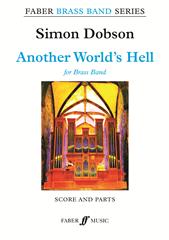
£89.95Diversions for Brass Band, Op.97 (Brass Band - Score and Parts)
This work was commissioned in1985 by Skellerup, Christchurch, New ZealandMovements:Allegro VivaceAndante Con Moto Molto ExpressivoAllegro VivaceDerek Bourgeois wrote Diversions in the summer of 1985 to a commissioned from the Skellerup Brass Band.Bourgeois previous test piece, Blitz, was aggressive and forceful, therefore the composer decided to write a work of a completely different character, which although technically very demanding, is light-hearted in style, and easy on the ear, as the title suggests.The first and third movements share the same tempo, but are rather different in character. The first movement is a sonata allegro contrasting two main themes. The first is bold and jaunty and is heavily scored, the second announced by the solo horn is more lyrical in character. The development section and recapitulation are merged into a continuous interplay of the two themes.The second movement is an expressive andante in free rondo form. It is lightly scored for the most part with a lot of solo passages that make demands on the musicianship of the players and conductor alike. The very simplicity of its textures and the breadth of its melodic writing demand firm control of vibrato, phrasing and rubato.The brief finale is nothing short of a romp. Its ternary structure is highly rhythmic in character and only rarely do the performers enjoy the luxury of two consecutive bars in the same time signature!Duration: 11.00
Estimated dispatch 7-14 working days
