Results
-
£82.95The Flowers of the Forest (Brass Band - Score and Parts) - Bennett, Richard Rodney - Hindmarsh, Paul
In a preface to the score, the composer explains that 'the folk song The Flowers of the Forest is believed to date from 1513, the time if the battle of Flodden, in the course of which the archers of the Forest (a part of Scotland) were killed almost to a man'. Bennett had already used the same tune in his Six Scottish Folksongs (1972) for soprano, tenor and piano, and it is the arrangement he made then that forms the starting-point for the brass-band piece. A slow introduction (Poco Adagio) presents the folk song theme three times in succession - on solo cornet, on solo cornets and tenor horns, and on muted ripieno cornets in close harmony - after which the work unfolds through five sections and a coda. Although played without a break, each of these five sections has its own identity, developing elements of the tune somewhat in the manner of variations, but with each arising from and evolving into the next. The first of these sections (Con moto, tranquillo) is marked by an abrupt shift of tonality, and makes much of the slow rises and falls characteristic of the tune itself. The tempo gradually increases, to arrive at a scherzando section (Vivo) which includes the first appearance of the theme in its inverted form. A waltz-like trio is followed by a brief return of the scherzando, leading directly to a second, more extended, scherzo (con brio) based on a lilting figure no longer directly related to the theme. As this fades, a single side drum introduces an element of more overtly martial tension (Alla Marcia) and Bennett says that, from this point on, he was thinking of Debussy's tribute to the memory of an unknown soldier (in the second movement of En Blanc et noir, for two pianos). Bennett's march gradually gathers momentum, eventually culminating in a short-lived elegiac climax (Maestoso) before the music returns full-circle to the subdued melancholy of the opening. The work ends with a haunting pianissimo statement of the original tune.
Estimated dispatch 7-14 working days
-
£44.95The Flowers of the Forest (Brass Band - Score only) - Bennett, Richard Rodney - Hindmarsh, Paul
In a preface to the score, the composer explains that 'the folk song The Flowers of the Forest is believed to date from 1513, the time if the battle of Flodden, in the course of which the archers of the Forest (a part of Scotland) were killed almost to a man'. Bennett had already used the same tune in his Six Scottish Folksongs (1972) for soprano, tenor and piano, and it is the arrangement he made then that forms the starting-point for the brass-band piece. A slow introduction (Poco Adagio) presents the folk song theme three times in succession - on solo cornet, on solo cornets and tenor horns, and on muted ripieno cornets in close harmony - after which the work unfolds through five sections and a coda. Although played without a break, each of these five sections has its own identity, developing elements of the tune somewhat in the manner of variations, but with each arising from and evolving into the next. The first of these sections (Con moto, tranquillo) is marked by an abrupt shift of tonality, and makes much of the slow rises and falls characteristic of the tune itself. The tempo gradually increases, to arrive at a scherzando section (Vivo) which includes the first appearance of the theme in its inverted form. A waltz-like trio is followed by a brief return of the scherzando, leading directly to a second, more extended, scherzo (con brio) based on a lilting figure no longer directly related to the theme. As this fades, a single side drum introduces an element of more overtly martial tension (Alla Marcia) and Bennett says that, from this point on, he was thinking of Debussy's tribute to the memory of an unknown soldier (in the second movement of En Blanc et noir, for two pianos). Bennett's march gradually gathers momentum, eventually culminating in a short-lived elegiac climax (Maestoso) before the music returns full-circle to the subdued melancholy of the opening. The work ends with a haunting pianissimo statement of the original tune.
Estimated dispatch 7-14 working days
-
£164.99Music of the Spheres (Brass Band - Score and Parts)
Music of the Spheres was commissioned by the Yorkshire Building Society Band and first performed by them at the European Brass Band Championships in Glasgow, May 2004. The piece reflects the composers fascination with the origins of the universe and deep space in general. The title comes from a theory, formulated by Pythagoras, that the cosmos was ruled by the same laws he had discovered that govern the ratios of note frequencies of the musical scale. ('Harmonia' in Ancient Greek, which means scale or tuning rather than harmony - Greek music was monophonic). He also believed that these ratios corresponded to the distances of the six known planets from the sun and thatthe planets each produced a musical note which combined to weave a continuous heavenly melody (which, unfortunately, we humans cannot hear). In this work, these six notes form the basis of the sections Music of the Spheres and Harmonia. The pieces opens with a horn solo called t = 0, a name given by some scientists to the moment of the Big Bang when time and space were created, and this is followed by a depiction of the Big Bang itself, as the entire universe bursts out from a single point. A slower section follows called The Lonely Planet which is a meditation on the incredible and unlikely set of circumstances which led to the creation of the Earth as a planet that can support life, and the constant search for other civilisations elsewhere in the universe. Asteroids and Shooting Stars depicts both the benign and dangerous objects that are flying through space and which constantly threaten our planet, and the piece ends with The Unknown, leaving in question whether our continually expanding exploration of the universe will eventually lead to enlightenment or destruction.Duration: 18:00
Estimated dispatch 7-14 working days
-

£59.99Bofors To The Fore Joseph Knight
This piece was a commission to commemorate the memory of Gunner A. E. Collins who during the second world war was engaged in an action where during an advance through Belgium heavy resistance was met and he and an officer had to cover a retreat using Bofors guns. In the final report the title of this piece was actually used by the commanding officer.The piece its self is in three movements and follows the flow of the battle. The first movement called "Advance" is cautious and has the hint of battle. It starts quietly and then builds up slowly and finishes unresolved. Movement two "Engagement" starts suddenly in 7/8 and uses cyclical rhythms and clustered chords to show the horror and chaos of battle and also the firing the Bofors guns. The third movement "Safe Return" brings all of the themes from the first two movements and finishes with "The End Of The Day". The commission stated that bugle calls and "The End Of The Day" should be included.The piece is suitable for a concert work or indeed the contest stage.J Knight 2022.
Estimated dispatch 5-9 working days
-
£64.95Lift High The Cross - Jonathan Bates
DURATION: 12'00. DIFFICULTY: 2nd+. 'Lift High The Cross' was commissioned by the Armagh Brass Band Summer School in Northern Ireland to celebrate the 350th anniversary of the First Presbyterian Church in Armagh in 2023. The extended work utilises 2 hymn tunes; 'Lift High The Cross' and 'How Lovely Is Thy Dwelling Place' as it's core and - despite it's nature as either an extended concert work or test piece - aims to pay tribute to the warm and welcoming way in which the church and it's community has welcomed brass music of all genres across the years, notably through it's connection for over 25 years with the Foden's Band (UK).
In Stock: Estimated dispatch 1-3 working days
-
£25.00From Waterloo To The Somme - Brass Band - LM774
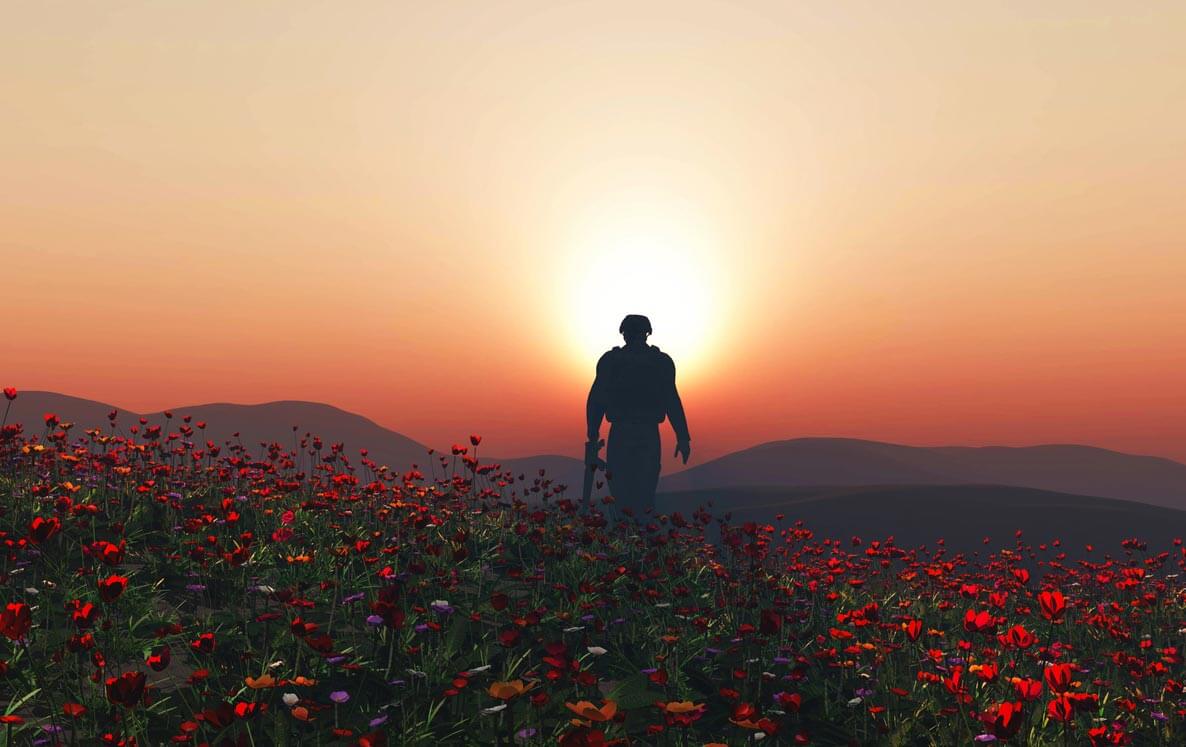
COMPOSER: Traditional, Rossini, Will D. Cobb & Frederic WeatherlyARRANGER: Laurie JohnstonA great collection of war songs from The Battle of Waterloo to The SommeThe four main melodies in this piece are..1 Over the hills and Far Away.This song dates back as far as Queen Anne but was popular among soldiers during the Napoleonic Wars. Probably the most well known version these days is that by John Tams from the television series Sharpe.2 The Green Hills of Tyrol.This is one of the oldest tunes played by pipe bands today although originally written by Rossini for the William Tell ballet music. Pipe major John MacLeod of the 93rd Sutherland Highlanders heard it played by a Sardinian Military band during the Crimean War and transcribed it for pipes as a tribute to the number of VC's won by Scottish regiments in this conflict. It became very well known when Andy Stewart took the tune for his song The Scottish Soldier.3 Goodbye Dolly Gray.This is a music hall song by Will D. Cobb and was popularised as a Boer War anthem. It was written during the earlier Spanish - American and held it's popularity through to the first world war.4 Roses of Picardy.Written by Frederick Wetherly in 1916 it became a very big hit with the soldiers fighting in the trenches. Picardy is a region of northern France where the Somme battlefields are to be found which among other things possibly accounts for the songs great popularity. It sold on average 50.000 copies a month during the great war.
In Stock: Estimated dispatch 3-5 working days
-
£36.00Edward Gregson: The World Rejoicing
DescriptionComposer's NoteIn searching for a common link between the brass band traditions of the various European countries that commissioned this work, I considered the fact that hymns have always played an important role in the relationship that brass bands have with their particular communities; and thus I turned to a well-known Lutheran chorale, Nun danket alle Gott (Now thank we all our God), written around 1636 by Martin Rinkart, with the melody attributed to Johann Cruger. A number of composers have incorporated this chorale into their music, most famously J.S.Bach in his Cantatas no. 79 and 192, and Mendelssohn in the Lobsegang movement of his 2nd Symphony (the harmonization of which is usually used when this hymn is sung).It seemed fitting therefore for me to return to a compositional form I have used many times before (Variations) and to write a work based on this hymn. I have used it in a similar way to that which I employed in my Variations on Laudate Dominum of 1976 - that is, rather than writing a set of variations using elaborations of the complete tune, I have taken various phrases from the chorale and used them within the context of other musical material, applying an overall symphonic process of continuous variation and development. The structure, or sub-divisions of the work, which is through composed and plays without a break, is as follows: Prelude, Capriccio, La Danza 1, Processional, La Danza 2, Arias and Duets, Fuga Burlesca, Chorale, and Postlude.The work is also partly autobiographical - in the manner say of Strauss's Ein Heldenleben - in that I have incorporated into the score brief quotations from many of my other major works for brass band. In that respect, The World Rejoicing sums up a particular facet of my life as a composer, and reflects the admiration I have always had for what is surely one of the great amateur music-making traditions in the world.The World Rejoicing is dedicated 'in loving memory of my brother', Bramwell Logan Gregson, who sadly passed away in the Autumn of 2018.Edward Gregson
Estimated dispatch 7-14 working days
-
£44.95
VICTOR, The (Brass Band Set) - Kenneth Downie
Written for the Melbourne Staff Band, this march features the hymn tune, 'Millennium'. While the origins of the tune are unclear, it has a distinct character; from the opening rising fourth interval through to its conclusion, it embodies strength and vigour. The composer has hinted at the style brilliantly employed by the great Australian march writer, Arthur Gullidge, by opting for a minor key in the first section offset by a melodious trio section in a major key.
Estimated dispatch 7-14 working days
-
£59.95
ELLACOMBE CHRONICLES, The (Brass Band Set) - James Curnow
This piece was commissioned by Brass Band of Columbus for the occasion of the band's 25th anniversary in 2009. It is dedicated to current and former members of the band and its founding Director, Dr Paul Droste. The hymns of Isaac Watts (1674 - 1748) have been a source of inspiration for musical thought and development by composers for over 200 years. His glorious hymn 'I sing the mighty power of God' has been coupled with the hymn tune 'Ellacombe' in many hymnals over these two centuries. This work was created and inspired by Isaac Watts's text and chronicles the three verses of the hymn through a set of diverse variations on the hymn tune 'Ellacombe'. The opening fanfare is intended to capture the joy and exuberance of the first phrase of the first verse, 'I sing the mighty power of God that made the mountains rise'. The developmental material following the fanfare gives a hint of the three large variations that are extracted from the tune.
Estimated dispatch 7-14 working days
-
£60.99Meet the Band! - John Blanken
Meet the Band! was written as an 'opening work', but it is also perfectly suitable for performing halfway through a concert programme. During the introduction, the cornet players are lined up on both sides of the stage, while the trombone players take centre stage. Gradually all the sections of the band are introduced to the audience. Meet the Band? You certainly have!
Estimated dispatch 5-14 working days