Searching for Wind Band Music? Visit the Wind Band Music Shop
We've found 543 matches for your search. Order by

Results

  • £15.00

    My Love is Like a Red, Red Rose - Helen Douthwaite

    Robert Burns' beautiful melody is brought to life as a euphonium solo with brass band accompaniment in this simple, yet highly effective, arrangement by Helen Douthwaite.Originally arranged by Helen for the Kirkintilloch Youth Band, the piece not only features the soloist with a carefully crafted, accessible solo line, but also enables the rest of the band to shine through the tutti elements.Set includes score and parts for:Solo CornetRepiano Cornet2nd Cornet3rd CornetFlugelhornSolo Eb Tenor Horn1st Eb Tenor Horn2nd Eb Tenor Horn1st Baritone2nd Baritone1st Trombone2nd TromboneBass TromboneEuphoniumEb BassBb Bass (optional)GlockenspielPercussionAdditional world parts also provided include F Horn 1/2/3, Baritone 1/2 in bass clef, Trombone 1/2 in bass clef, Euphonium in bass clef, Tuba.

    In Stock: Estimated dispatch 3-5 working days
  • £30.00

    There and Back - Martyn Brabbins

    An original composition for brass band by Martyn Brabbins.This work was created by Brabbins early in his career and combines his creativity and passion for the sounds of brass bands . It is one of two compositions from that era (the other being Here and There) which have now been given a new lease of life and made available to the general public through The Music Company (UK) Ltd.A fast-paced and lyrical piece lasting just over 2 minutes. It's a piece which can work well across a concert programme - giving flourish as an opener and equally effective if placed between longer content.Available here for brass band and also available orchestral wind, brass & percussion.**Brass Band version for purchase/orchestral wind, brass and percussion version for hire only.Listen InFind out more about Martyn Brabbins, listen in to the fascinating podcast presented as part of the British Bandsman's On The Record series:Apple podcasts:apple.co/3ufSsfXSpotify:spoti.fi/3duqoj5Podbean:bit.ly/3k3B75h

    In Stock: Estimated dispatch 3-5 working days
  • £25.00

    All Shall Be Well - Brass Band Sheet Music Full Score & Parts - LM931

    COMPOSER: Tamsin TateCOMPOSERS NOTE"All shall be well" was composed during the first lockdown of the Covid crisis, from May 2020.This was a worrying time for many and a time of great anxiety and sadness for some.I have always tried to be practically optimistic in trying times, but still I needed hope.I am lucky to have a faith in God which gives me hope and assurance that things will be better,and I also know that music, particularly playing it, can help express some of these emotions.Certainly, music through the crisis was a wonderful, enjoyable escape for meand one I shared with my family and my band family through our online recordings.Julian of Norwich was an anchoress in the 14th Century.She set herself apart for God and spent a lot of time in prayer.Interestingly, she was the first published woman in the English language.Julian of Norwich is quoted as saying "all shall be well, all shall be well,and all manner of thing shall be well." The paraphrase of this spurred me on to develop this piece for brass band.Hopefully you will also find that the music portrays the worries and trials of this uniquetime through the natural minor key, with the rhythm hinting towards the phrase"All shall be well" and then the dawning transition to the major keyfollowed by a triumphant ending with the whole band joining together.Thanks to Adam Cable and the Martlesham Brass family for support and encouragement always.Thanks also to Alan Fernie and his supportive critique of my initial efforts.LM931 - ISMN : 9790570009312

    In Stock: Estimated dispatch 3-5 working days
  • £84.99

    Creamy and Crispy - Marc Cunningham

    This composition of Marc Cunningham has four parts, and takes place on a sunny day in a picturesque town. 1. Promenade Many people walk through the city. The band passes through the streets. People are strolling along the avenues and amorous couples are sitting on a park bench. 2. Lovey Dovey One of these couples is knee-deep in love. 3. Crispy and Creamy Here the contrasts between a crisp staccato section in two-four time signature and a smooth legato section in three-four time signature are depicted. Is Crispy the boy and Creamy the girl? 4. Farewell In the last particle the couple says goodbye. We still think back tothe walk through the city. It sounds a little less happy now. Not everyone is good at saying goodbye, sometimes a tear flows.

    Estimated dispatch 5-14 working days

     PDF View Music

  • £79.95

    Amundsen - Jonathan Bates

    DURATION: 14'00". DIFFICULTY: 1st+. 'Amundsen' was commissioned by rskog Brass, Norway for their winning performance at the 2020 Norwegian National Championships held at the Grieghallen in Bergen. In December 1911, Norwegian Roald Amundsen gained global fame by becoming the first explorer to lead a team to the geographic South Pole. Amundsen and 4 other members of his team arrived 5 weeks ahead of a rival team from the UK led by Robert Falcon Scott, all of which perished on their attempted return from the pole. Initially when Amundsen's team set out in 1910, they were under the impression that they would be making the far shorter journey to the arctic drift to attempt to reach the North Pole, but Amundsen had received news that American explorers Peary and Cook had beaten them to this goal, and so Amundsen's focus changed southward. 'Fram, Forward' - 'Fram' (translating to English as "forward") was the name of the ship Amundsen used for this particular polar expedition. Amundsen had only informed 2 people of his real intentions of conquering the South Pole when the ship first left port in Kristiansand before heading south to the Portuguese island of Madeira in the Atlantic Ocean. After weeks at sea - causing the uninformed members of the crew to raise a number of questions and produce a general feel of uncertainty and low spirits - it was here that Amundsen announced his true plans to the rest of his crew. They were asked whether they wished to continue with their expedition, to which all - some begrudgingly - agreed to sail on to the South Pole, through the great Ice Barrier before docking in the Bay of Whales on the Ross Ice Shelf. 'Ross Ice Shelf' - Upon Amundsen's arrival in the Bay of Whales, the team were greeted by the sight of the enormous ice plateau's and glaciers, towering into the Antarctic sky. In 1907, Ernest Shackleton had attempted - and failed - to reach the South Pole, but his route and mapping was by now well documented. Scott and the UK team were to follow this route, whereas Amundsen and his men forged their own way to the pole through unchartered territory and deadly terrain littered with deep crevasses and canyons. The music here though, is a picture of tranquility. The eerie silence of total emptiness with only the heavy snow falling around Amundsen as Fram and the Bay of Whales disappears into the distance, faced by the maginute of the expedition ahead. 'Advance to Polheim' - The first new challenge Amundsen discovered on this route was a rough, sharp and extremely steep glacier (which was later named the Axel heiberg Glacier after the Norwegian monarch who funded much of the expedition), which would take his team up from sea level to an altitude of over 9,000ft in just 20 miles, with most of this over just 7 miles. Once scaled, only the vast Antarctic Plateau stood between Amundsen and the pole. Here the race began, with only one aim - victory for himself, his team, and for the whole of Norway. .

    In Stock: Estimated dispatch 1-3 working days
  • £30.00

    Repton (Sir Hubert Parry arr. by David Grace) - Brass Band Sheet Music Full Score & Parts - LM557

    COMPOSER: Sir Hubert ParryARRANGER: David Grace"Dear Lord and Father of Mankind" is ahymnwith words taken from a longer poem, "The Brewing of Soma" by AmericanQuakerpoetJohn Greenleaf Whittier. The adaptation was made byGarrett Horderin his 1884Congregational Hymns.In many countries the hymn is most usually sung to thetune"Repton" byHubert Parry; however, in the United States, the prevalent tune is "Rest" byFrederick Charles Maker.The text set appears below. Some hymnal editors omit the fourth stanza or resequence the stanza so that the fifth stanza as printed here comes last.If sung to Parry's tune, "Repton", the last line of each stanza is repeated.It is often customary, when singing the final stanza as printed here, to gradually sing louder from "Let sense be dumb...", reaching a crescendo on "...the earthquake, wind and fire", before then singing the last line "O still, small voice of calm" much more softly.Dear Lord and Father of mankind,Forgive our foolish ways!Reclothe us in our rightful mind,In purer lives Thy service find,In deeper reverence, praise.In simple trust like theirs who heardBeside the Syrian seaThe gracious calling of the Lord,Let us, like them, without a wordRise up and follow Thee.O Sabbath rest by Galilee!O calm of hills above,Where Jesus knelt to share with TheeThe silence of eternityInterpreted by love!With that deep hush subduing allOur words and works that drownThe tender whisper of Thy call,As noiseless let Thy blessing fallAs fell Thy manna down.Drop Thy still dews of quietness,Till all our strivings cease;Take from our souls the strain and stress,And let our ordered lives confessThe beauty of Thy peace.Breathe through the heats of our desireThy coolness and Thy balm;Let sense be dumb, let flesh retire;Speak through the earthquake, wind, and fire,O still, small voice of calm.

    In Stock: Estimated dispatch 3-5 working days
  • £183.20

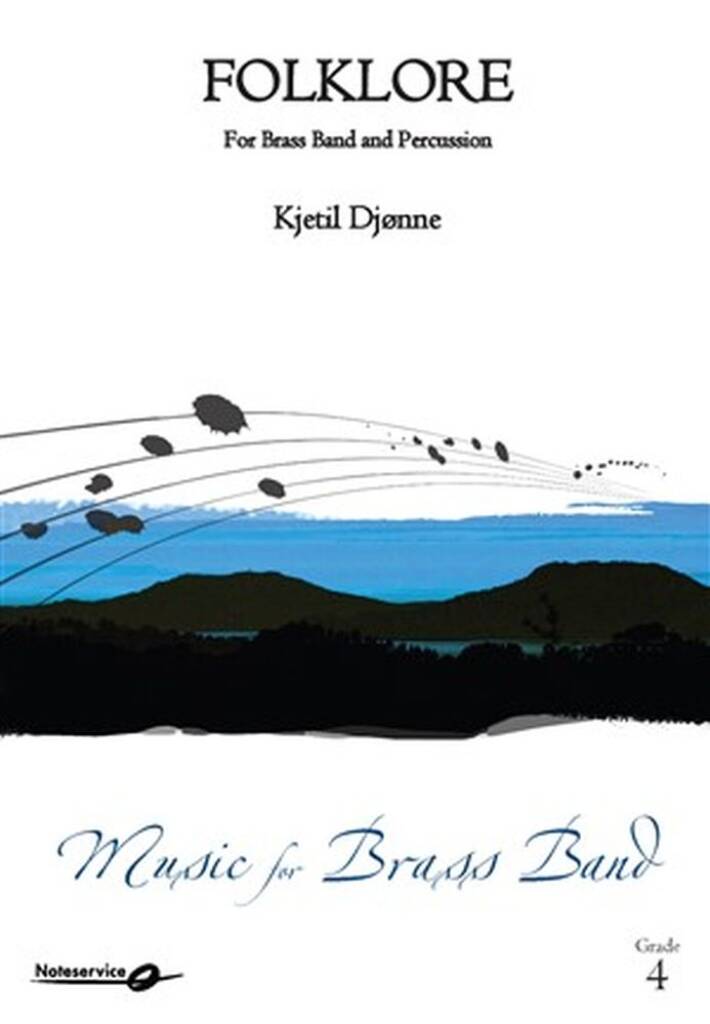
    Folklore - Kjetil Djønne

    "Folklore" is a work for brass band and percussion loosely based on the story of the Norwegian woman accused of witchcraft, Anne Pedersdotter. She was sentenced to be burned at the stake in Bergen in the spring of 1590 and has since been frequently highlighted as Norway's most famous and talked-about witch.The work begins with the movement "Lyderhorn," depicting the mountain outside Bergen where witches gathered to plan magical actions against the city. Here, we hear the quietness of nature and the wind blowing through the trees before a new theme appears, which will come to life in the next movement. In the distance, the witches have started their ceremony.In the next movement, "Walpurgis Night," the witches perform their rituals to afflict the city with fire, disease, and natural disasters. The ceremony becomes more and more chaotic, violent, and compelling until the darkness of the night envelops us, concluding the section.The third movement describes the women's inner struggle against the harassment they faced when the people of Bergen suspected them of being witches. Rumors often turned into formal accusations from the legal system, and many were sentenced to death after undergoing trial. "From life to death through the fire."The fourth and final movement, "The Pyre," depicts the actual death sentence. You can hear the pyre being ignited and the flames growing and intensifying. It all culminates in a chorale as a memorial to the lives that were taken.

    Estimated dispatch 5-14 working days
  • £115.60

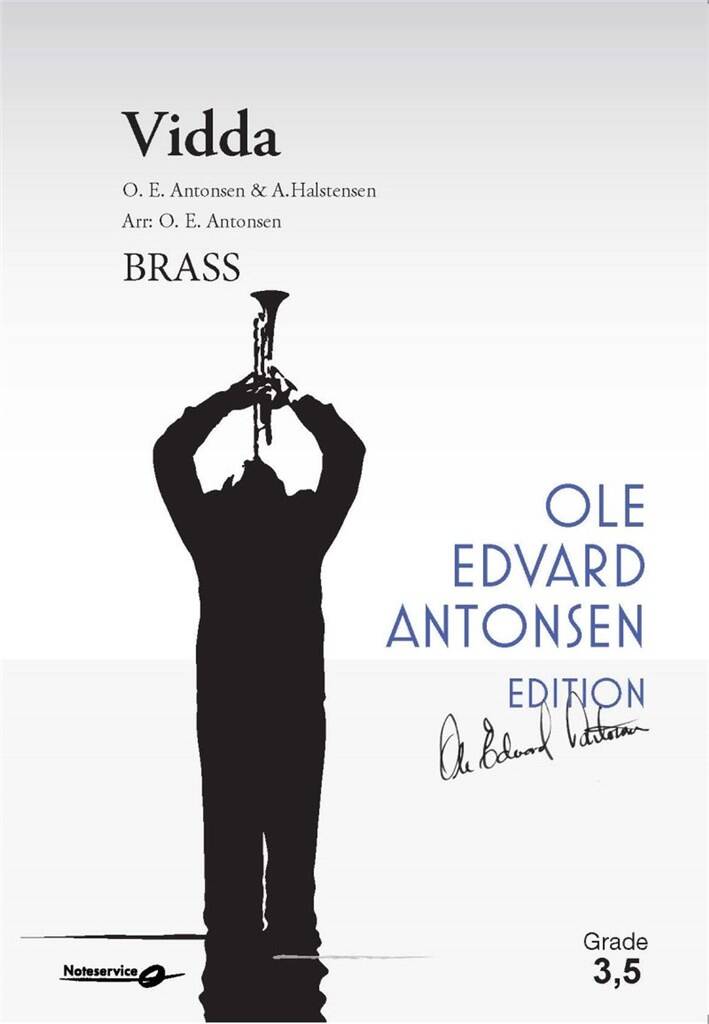
    Vidda - Ole Edvard Antonsen - Ole Edvard Antonsen

    I composed the song "Vidda" after I got my ultimate boy's dream fulfilled; To fly one of the Air Force's F-16 fighter jets! We flew out from Norwegian city Bodo on to the Finnmark plateau, where we flew so-called "low level" (at low altitude). It was such a great experience for me that I immediately wrote the song "Vidda" based on my experience of the trip. Here, I try to describe the meeting between the technical perfection of a machine that surpasses most of the various forces in it's escape through the magnificent scenery passing at great speed, and the pilot who is alone with both the adventure and responsibility. The drums which start the song is meant to describes theenergy in the power of the plane, while the lonely and kind of melancholy melody from the trumpet in the beginning describes the feelings of the pilot. As the song develop, we pass both the mountains and big beautiful plateaus with g-forces quivering body. Hopefully you will share some of my experiences through this song. Have a nice flight! Ole Edvard Antonsen

    Estimated dispatch 5-14 working days

     PDF View Music

  • £94.95

    Of Men and Mountains - Edward Gregson

    Of Men and Mountains was commissioned by the Netherlands Brass Band Championships for their tenth anniversary contest in Drachten in December 1990. In July the previous year, Edward Gregson and his wife took the Trans Canadian Railway from Toronto to Vancouver. The journey through the Rocky Mountains was the starting point for Of Men and Mountains. Gregson writes that: 'its high peaks and shafts of sunlight breaking through the clouds, its canyons and ferocious rapids made me understand a little more about the majesty of nature and the fragility of humanity. The eternal struggle between man and nature was personified in the building of this incredible railway... hence my title (after Blake).' The work is dedicated to the memory of Eric Ball, who died shortly before the writing of the work was commenced. Of Men and Mountains is in one continuous movement with a duration of approximately 17 minutes. Its form is difficult to describe because of its motivic and accumulative nature, but it is essentially a symphonic tone poem in search of a theme, which eventually comes in its final and complete state in the majestic ending after an ever-increasing paced scherzo. Of Men and Mountains has been selected as the test pieces for the 2023 National Brass Championships of Great Britain at the Albert Hall.

    Estimated dispatch 5-14 working days
  • £119.99

    Stonehenge - Jan Van der Roost

    This piece attempts to portray atmospheric pictures through music. The opening section evokes the somewhat misty and hazy early morning atmosphere surrounding the ancient monument. When the band reaches its first dynamic climax it is as if the massive boulders are audible, even touchable through the use of minor 3rd chords. The main theme - constructed on the notes CAFBG symbolises the arrangement of the central boulders in the shape of a horseshoe, which forms the focal point of this huge collection of stones. Towards the end of the work you will experience a fantastic effect when five soloists play a five part hymn whilst other members of the band create a specialatmosphere by imitating a choir of monks and druids. A fantastic major new concert work for advanced bands.

    Estimated dispatch 5-14 working days

     PDF View Music