
Results
-
 £60.99
Pastorale (Brass Band - Score and Parts) - De Haan, Jan
A great traditional slow piece from the standard repertoire. Perfect to work on sound, phrasing and intonation.Duration: 4:00
Estimated dispatch 7-14 working days
-
 £30.25
Zephyrus - Andrew Duncan
The Big Blow', was a formal record attempt to create the largest brass band in the world. It took place at Butlin's Resort, Skegness on 20 January 27 and in addition to the fun generated by the event itself, it's main goal was to raise money in support of the work of Brass Band Aid, and specifically to provide long-term sponsorship for two children in the village of Adet, Ethiopia.The Music Company (UK) Ltd were one of the Official Partners of The Big Blow, providing the performance piece for the record attempt. As Editorial Director of the company, Andrew Duncan wrote 'Zephyrus' to mark the occasion.Originally presented at the event as 'March - The Big Blow', the published re-titling of 'Zephyrus' provides a more subtle alternative, taking its name from the Greek God of the West Winds.'Zephyrus' is a traditional British brass band march with an interesting African-feel lilt to the trio. This is enhanced by optional percussion instruments including djembi and bongos, which can also be covered by standard drum kit. A positive, upbeat concert march to reflect the sentiment behind 'The Big Blow' record attempt.There were 443 participants in total, including:Soprano Cornets x 12Cornets x 152Flugels x 19Tenor Horns x 68Baritones x 32Euphoniums x 32Trombones x 55Eb Basses x 35Bb Basses x 17Percussionists x 21The Music Company are pleased to continue their support of Brass Band Aid by offering a donation to this worthy charity for every set of this music sold.
In Stock: Estimated dispatch 3-5 working days
-
 £36.30
Here's That Rainy Day
Trombone Solo.In 1953, a new musical by Johnny Burke and Jimmy Van Heusen was staged, "Carnival in Flanders". Unfortunately, it was not successful. However, one of the songs, "Here's that Rainy Day" became a standard on the cabaret scene.I have arranged this memorable song for solo trombone and brass band. It begins in a Latin style, then moves to the famous Jazz Big Band style. Good key players make the band parts playable by most bands - as long as they like to 'swing'! The trombone part is not easy, on the other hand, neither is it aimed at the 'select few' virtuoso players. Impressive stuff though, with 'written' sections that sound like improvisation.
In Stock: Estimated dispatch 3-5 working days
-
 £76.99
Match-Rhythm - Jan Bosveld
Match-Rhythm was the compulsory work for the B-division during the European Brass Band Championships of 2005 taking place in Groningen. It is a rhythmical (Rhythm) oriented opening work in which the bands have the opportunity to present themselves during the indisputable competitive character (Match) of these championships. To achieve the high standard required is intensive preparation alone not sufficient. The bands increase their level op performance during the customary try-out concerts so that a kind of competitive rhythm (Match) is acquired.
Estimated dispatch 5-14 working days
-
 £54.99
Sgt. Pepper's Lonely Hearts Club Band - John Lennon - Philip Harper
Sgt. Pepper's Lonely Hearts Club Band is the most famous album by The Beatles, and perhaps of all time. When it came out in 1967 it was remarkable not only for its many great songs, but also because of the innovative recording techniques that were used on the record for the very first time, setting a new standard for many decades to come. Conductor, arranger and composer Philip Harper is a huge Beatles fan himself and had a great time creating this grade 4 arrangement!
Estimated dispatch 5-14 working days
-
 £60.99
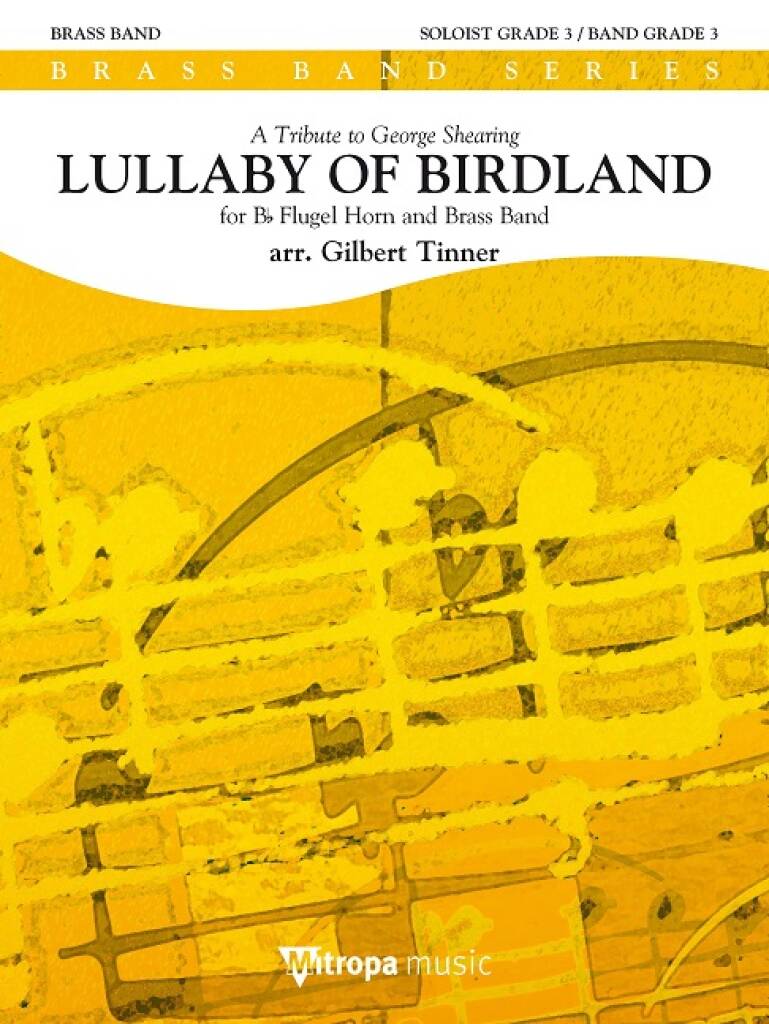
Lullaby of Birdland - Gilbert Tinner
'Ive been arguably credited with having written some 300 songs, 299 of which enjoyed a rather bumpy ride from relative obscurity to total oblivion. Heres the other one.' These are the words of the great Jazz pianist and composer George Shearing about his hit of the century Lullaby of Birdland.The list of famous artists who performed this Jazz standard runs from From Ella Fitzgerald to Amy Winehouse. Gilbert Tinner wrote this arrangement for Brass Band preserving the distinctive George Shearing Sound.
Estimated dispatch 5-14 working days
-
 £60.99
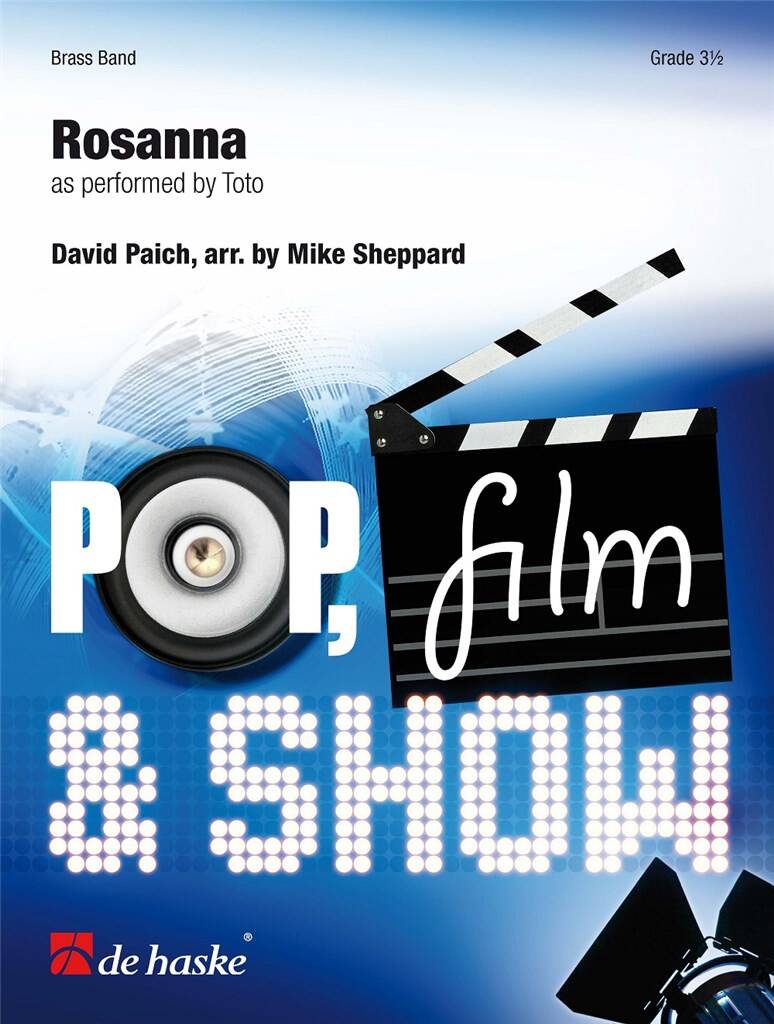
Rosanna - David Paich - Mike Sheppard
In 1982, rock band Toto scored a worldwide hit with Rosanna. This song is more than five minutes long, much longer than was usual for hits at the time, though perhaps it was exactly this fact that contributed to its enormous success. The London arranger Mike Sheppard, who knows the pop and rock scene through and through, made a wonderfully colourful version of this rock standard.
Estimated dispatch 5-14 working days
-
 £76.99
Hymn of Brotherhood - Egbert van Groningen
In this colorful ballad is charity high in standard. Egbert van Groningen composed Hymn of Brotherhood for the youthband of St. Jan in Wierden (NL). The music exudes respect, appreciation and devotion. In our current increasingly individualized society, a beautiful reflective, contemplative time.
Estimated dispatch 5-14 working days
-
 £114.99
Fantasia on a Theme by Henry Purcell - Paul Mealor
Written for standard brass band instrumentation plus timpani and two percussionists. This 12 minute fantasia was commissioned by the National Youth Brass Band of Wales and first performed by them in a series of concerts conducted by Tom Davoren, on their summer course, July 2016.
Estimated dispatch 5-14 working days
-
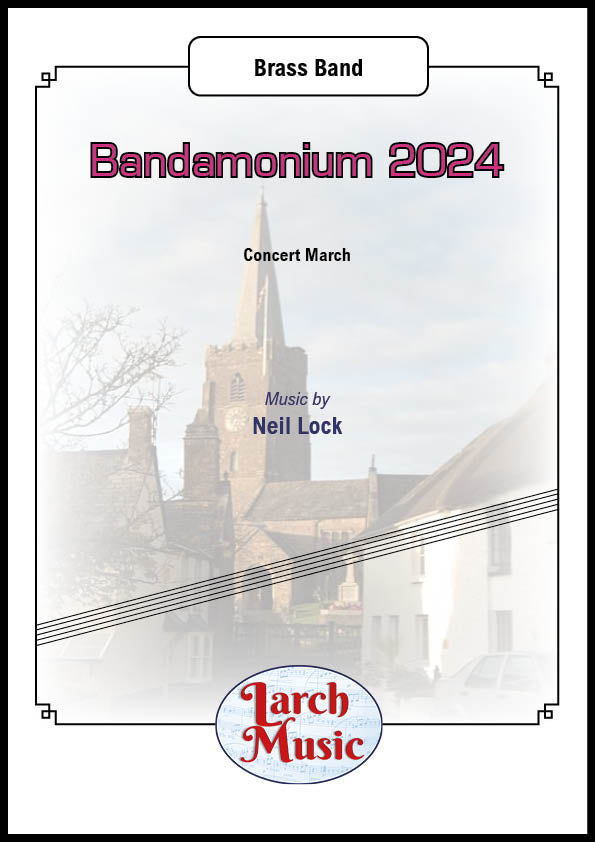 £30.00
Bandamonium 2024 (Neil Lock) - Brass Band Sheet Music Full Score & Parts - LM541
COMPOSER: Neil LockThis march was submitted to the march composers' competition for "Bandamonium 3"in Hatherleigh, Devon in July 2024. The winning march was played by massed bands at the conclusion of the celebrations on Saturday 27th July 2024. Unfortunately, this march took second place in the competition, behind the march of Paul Pennicotte-Henrie, conductor of Okehampton Silver Band.The march can be played with or without the singing. (Even at the Whit Friday marches, begad!) I suggest that it should be introduced by 3-beat rolls.When played with singing, the "Bandamonium" lyrics (bars 10-13 and 56-57) are to be sung by all players, keeping to their own parts, with appropriate octave adjustment for their individual singing voices. Conductor and percussionists should sing with the main theme (Db and C at bars 10-13, F at 56-57). Listen to the 3rd cornet players!There is an additional part for Singers, in which the trio melody (bars 58 onwards) can be sung by Soprano and Tenor singers at a moderate choir standard. An octave-down option is also provided in the higher bars. This part can be given to "spare" singers within the band, or to singers external to the band if opportunity permits. The lyrics are:We are in Devon,We're in Hatherleigh,Whit Friday heaven,But we're marching free!Now it's past seven,Time to party,At BandamoniumIn Hatherleigh!LM541 - ISMN : 9790570005413
In Stock: Estimated dispatch 3-5 working days
 View Music